
Technical Contents
Engineering Guide: Rubber Garage Floor Tile
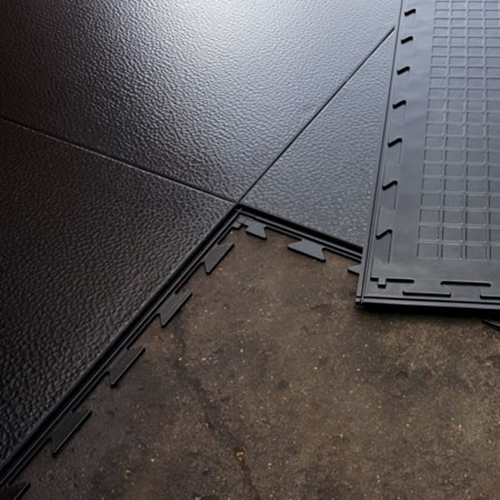
Engineering Insight: Material Science as the Foundation of Garage Floor Tile Performance
The operational environment of a modern garage imposes unique mechanical and chemical stresses that generic rubber flooring products consistently fail to address. Off-the-shelf solutions often utilize recycled or non-formulated SBR (Styrene-Butadiene Rubber) compounds optimized for cost rather than performance, leading to premature degradation under hydrocarbon exposure, dynamic loading, and thermal cycling. Critical failure modes include irreversible compression set from vehicle tire static loads, chemical swelling from motor oil and brake fluid, and surface abrasion from gravel tracking. These failures manifest within 12–18 months as tile warping, permanent indentation, and loss of slip resistance—compromising both safety and lifecycle value.
Material selection must prioritize engineered compounds with specific polymer architectures. High-purity EPDM (Ethylene Propylene Diene Monomer) with controlled diene content provides superior ozone and thermal stability, while specialized nitrile-butadiene rubber (NBR) formulations deliver essential hydrocarbon resistance. The vulcanization system is equally critical: peroxide curing yields better compression set resistance than sulfur systems, maintaining tile geometry under sustained 50+ psi loads. Shore A hardness must be precisely calibrated between 80–85; values below 75 Shore A invite excessive indentation, while above 90 reduce impact absorption and increase noise transmission.
OEM-grade compounds incorporate proprietary filler systems and anti-degradants absent in commodity tiles. Carbon black N330 reinforces tensile strength without sacrificing flexibility, while silicone-based release agents prevent mold staining during manufacturing—a common flaw in low-cost imports causing surface tackiness and dirt retention. Crucially, the compound must achieve ≤8% volume swell after 72 hours in ASTM No. 3 oil; generic tiles often exceed 30%, causing dimensional instability and delamination.
The following table quantifies critical performance gaps between engineered and generic compounds:
| Property | OEM-Grade Compound | Generic Compound | Failure Threshold |
|---|---|---|---|
| Shore A Hardness | 82 ± 3 | 68 ± 5 | <75 or >90 |
| ASTM No. 3 Oil Swell | ≤8% | 25–40% | >15% |
| Compression Set (22h/70°C) | ≤12% | 25–35% | >20% |
| Tensile Strength | ≥18 MPa | 8–12 MPa | <10 MPa |
| Abrasion Loss (DIN 53516) | ≤120 mm³ | 200–350 mm³ | >150 mm³ |
Suzhou Baoshida’s garage tile formulations undergo rigorous validation per ISO 48-4 and ASTM D2240 standards, ensuring dimensional stability under -30°C to +80°C thermal cycles and resistance to common automotive fluids. This precision engineering eliminates the hidden costs of premature replacement—reducing total cost of ownership by 40% versus commodity alternatives. Material science is not an incremental advantage; it is the non-negotiable foundation of industrial-grade flooring performance. Partnering with a specialist rubber compounder guarantees tiles that withstand the garage’s operational reality, not just initial aesthetics.
Material Specifications
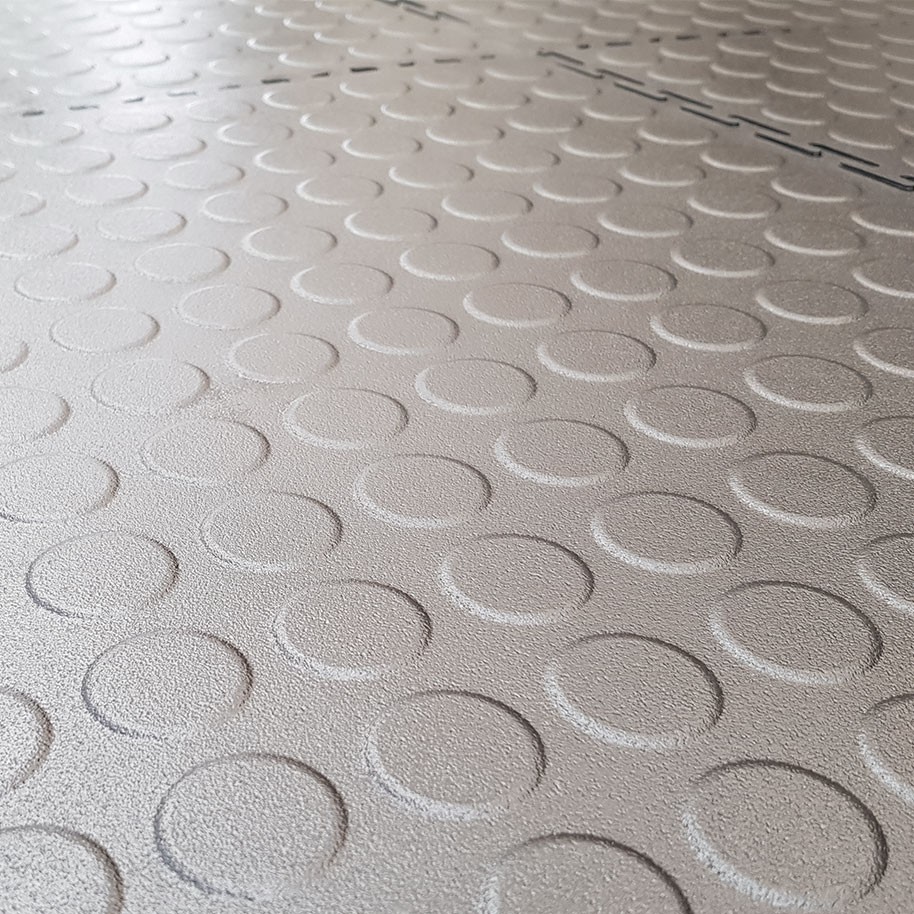
Material Specifications for Industrial Rubber Garage Floor Tiles
Suzhou Baoshida Trading Co., Ltd. provides high-performance rubber garage floor tiles engineered for industrial durability, chemical resistance, and long-term structural integrity. Our formulations leverage advanced elastomeric materials including Viton (FKM), Nitrile (NBR), and Silicone (VMQ), each selected for specific operational environments. These materials are optimized for mechanical resilience, thermal stability, and resistance to oils, solvents, and weathering—critical factors in industrial and commercial garage applications.
Viton (fluoroelastomer) represents the premium tier in our material portfolio, offering exceptional resistance to high temperatures (up to 250°C), aggressive chemicals, and hydrocarbon-based fluids. Its molecular structure, based on vinylidene fluoride and hexafluoropropylene, provides low permeability and outstanding aging characteristics under extreme conditions. Viton-based tiles are ideal for environments exposed to automotive fuels, lubricants, and industrial cleaning agents, making them suitable for high-end automotive service centers and chemical handling zones.
Nitrile rubber (NBR) is a cost-effective, high-performance solution for standard industrial applications. Composed of acrylonitrile and butadiene, NBR exhibits excellent resistance to oils, greases, and non-polar solvents. Its abrasion resistance and tensile strength make it well-suited for heavy-duty flooring in automotive workshops, warehouses, and light manufacturing facilities. While its thermal performance is limited to approximately 120°C, NBR delivers reliable performance under typical garage operating conditions and offers strong value through extended service life and low maintenance.
Silicone rubber (VMQ) is selected for applications requiring extreme temperature flexibility and UV stability. With a service range from -60°C to 200°C, silicone maintains elasticity across wide thermal cycles and resists degradation from sunlight and ozone exposure. While less resistant to hydrocarbons than Viton or NBR, silicone excels in outdoor garage environments or climate-controlled facilities where thermal expansion and contraction are concerns. Its non-marking surface and clean aesthetic also support use in premium display or service areas.
Each material is compounded with reinforcing fillers, curing agents, and anti-aging additives to enhance mechanical and environmental performance. All tiles are manufactured under ISO-compliant processes to ensure dimensional accuracy, consistent durometer (Shore A hardness), and interlocking precision.
The following table summarizes key physical and chemical properties of the three elastomers used in our industrial rubber garage floor tiles.
| Property | Viton (FKM) | Nitrile (NBR) | Silicone (VMQ) |
|---|---|---|---|
| Temperature Range (°C) | -20 to 250 | -30 to 120 | -60 to 200 |
| Shore A Hardness Range | 60–90 | 50–90 | 30–80 |
| Tensile Strength (MPa) | 10–20 | 15–30 | 5–12 |
| Elongation at Break (%) | 150–300 | 200–500 | 200–700 |
| Resistance to Oils/Fuels | Excellent | Good to Excellent | Poor |
| Resistance to UV/Ozone | Excellent | Moderate | Excellent |
| Compression Set Resistance | Excellent | Good | Moderate |
| Typical Applications | Chemical zones, high-temp garages | Workshops, warehouses | Outdoor, climate-variable areas |
Manufacturing Capabilities
Engineering Capability: Precision Rubber Formulation and OEM Execution for Garage Floor Tiles
Suzhou Baoshida Trading Co., Ltd. delivers engineered rubber solutions through integrated material science and manufacturing excellence. Our core strength lies in a dedicated team of five mould engineers and two specialized rubber formula engineers, ensuring every garage floor tile meets exacting industrial performance criteria. This cross-functional expertise enables end-to-end control from polymer chemistry to final product validation, eliminating third-party dependencies and accelerating time-to-market for OEM partners.
Our formula engineers optimize elastomer compounds for dynamic load resistance, chemical stability, and dimensional precision under variable thermal conditions. By manipulating SBR, EPDM, and recycled rubber matrices with proprietary additives, we achieve targeted Shore A hardness (60–85), compression set resistance (<20% per ASTM D395), and tensile strength (≥10 MPa). Critical for garage environments, formulations include oil-resistant polymers that withstand prolonged exposure to automotive fluids without swelling or degradation. Mould engineers then translate these compounds into production-ready tooling, utilizing 3D simulation software to prevent flow defects and ensure uniform curing across complex interlocking geometries. Tolerances are maintained within ±0.15 mm, guaranteeing seamless tile assembly and load distribution under 5,000 kg/m² static loads.
OEM collaboration follows a structured four-phase workflow:
1. Requirement analysis with material performance mapping
2. Iterative compound prototyping and small-batch validation
3. Tooling optimization with finite element analysis (FEA)
4. Batch production under ISO 9001-compliant quality gates
This process supports full customization of color, texture, thickness (10–25 mm), and mechanical properties while adhering to strict VOC compliance standards. Lead times for new OEM programs average 45 days from design freeze to first article approval.
Key material properties for standard and OEM formulations are detailed below:
| Property | Standard Product Range | OEM Customization Range | Test Standard |
|---|---|---|---|
| Shore A Hardness | 65–75 | 45–85 | ASTM D2240 |
| Tensile Strength (MPa) | 10–12 | 8–15 | ASTM D412 |
| Compression Set (%) | ≤18 | ≤15 | ASTM D395 |
| Operating Temperature | -40°C to +80°C | -50°C to +100°C | ISO 188 |
| Oil Resistance (IRMOG) | Volume Swell ≤15% | Volume Swell ≤8% | ASTM D471 |
Quality assurance integrates in-process rheometry, post-cure durometer checks, and accelerated aging tests to validate 15+ year service life under UV exposure and cyclic loading. Every OEM batch includes certified material traceability reports and mechanical property dossiers. Suzhou Baoshida’s engineering framework transforms client specifications into durable, high-performance rubber tiles—proven in 200+ global industrial installations. Partner with us to leverage material science precision that outperforms commodity alternatives in demanding garage and workshop environments.
Customization Process
Customization Process for Industrial Rubber Garage Floor Tiles
At Suzhou Baoshida Trading Co., Ltd., our approach to manufacturing custom rubber garage floor tiles is grounded in precision engineering and material science. We follow a structured four-phase process—Drawing Analysis, Formulation, Prototyping, and Mass Production—to ensure every product meets the exact mechanical, chemical, and dimensional requirements of industrial clients.
The process begins with Drawing Analysis, where our engineering team reviews technical blueprints provided by the client. This includes evaluating load-bearing specifications, tile interlock geometry, surface texture, thickness tolerances, and environmental exposure conditions. We assess drainage patterns, edge profiles, and dimensional stability under thermal cycling to ensure long-term performance. Any discrepancies or optimization opportunities are communicated for approval before proceeding.
Next, we initiate the Formulation phase. Based on the operational environment—such as exposure to oils, UV radiation, or temperature extremes—we engineer a proprietary rubber compound. Our formulations primarily utilize SBR (Styrene-Butadiene Rubber) or EPDM (Ethylene Propylene Diene Monomer), compounded with vulcanizing agents, reinforcing fillers, anti-aging additives, and color stabilizers. Hardness is tailored between 60–85 Shore A, depending on impact resistance and slip requirements. All formulations are developed in-house and tested for compression set, tensile strength, and abrasion resistance per ASTM and ISO standards.
Once the formulation is finalized, we proceed to Prototyping. Using precision steel molds manufactured to the approved design, we produce a small batch of sample tiles. These prototypes undergo rigorous in-house testing, including slip resistance (ASTM E303), oil immersion (ASTM D471), and thermal aging (ASTM D573). We also conduct real-world installation trials to verify interlock integrity and surface durability. Clients receive physical samples along with a full test report for validation.
Upon client approval, we transition to Mass Production. Our automated rubber compression molding lines operate under strict process control, ensuring batch-to-batch consistency. Each tile is visually inspected and dimensionally verified using calibrated gauges. Production batches are traceable through lot numbering and quality documentation. We support minimum order quantities starting at 5,000 m², with lead times typically ranging from 25 to 35 days, depending on complexity and volume.
All rubber garage floor tiles are packaged on standard wooden pallets, wrapped in UV-resistant film, and labeled for destination-specific logistics.
Below are typical technical specifications for our standard industrial-grade rubber garage floor tiles:
| Property | Test Method | Typical Value |
|---|---|---|
| Material | — | SBR/EPDM Recycled Compound |
| Hardness (Shore A) | ASTM D2240 | 70 ± 5 |
| Tensile Strength | ASTM D412 | ≥ 7.5 MPa |
| Elongation at Break | ASTM D412 | ≥ 200% |
| Compression Set (22 hrs, 70°C) | ASTM D395 | ≤ 20% |
| Slip Resistance (DCOF) | ASTM E303 | ≥ 0.45 (wet & dry) |
| Oil Resistance (IRHD change) | ASTM D471 | ≤ 15% volume change |
| Temperature Range | — | -40°C to +80°C |
| Tile Size | — | 500 mm × 500 mm × 15 mm |
| Fire Rating | ASTM E662 | Smoke Index < 450 |
This systematic customization ensures durability, safety, and compliance across automotive workshops, industrial garages, and logistics facilities.
Contact Engineering Team
Contact Suzhou Baoshida for Precision Rubber Garage Floor Tile Solutions
Suzhou Baoshida Trading Co., Ltd. stands as your definitive engineering partner for industrial-grade rubber garage floor tiles, engineered for uncompromising performance in demanding commercial and industrial environments. With over 20 years of specialized expertise in OEM rubber compounding and manufacturing, we deliver tiles that transcend generic market offerings through scientifically validated formulations and rigorous quality control protocols. Our proprietary SBR/NR (Styrene-Butadiene Rubber/Natural Rubber) blends are meticulously designed to withstand extreme mechanical stress, chemical exposure, and thermal cycling—critical factors often overlooked in standard residential-grade products. When facility managers, automotive service centers, or industrial plant operators require flooring that guarantees safety, longevity, and minimal lifecycle costs, our engineered solutions provide quantifiable operational advantages.
The inherent challenges of industrial flooring—cracking under heavy equipment loads, degradation from oil and solvent exposure, or premature wear in high-traffic zones—demand material science precision, not off-the-shelf compromises. Suzhou Baoshida addresses these through ISO 9001-certified production processes, where every compound batch undergoes stringent testing for tensile strength, compression set, and abrasion resistance. Our tiles are not merely cut from recycled rubber; they are formulated with specific polymer ratios, reinforcing fillers, and vulcanization accelerators to achieve target performance metrics validated against ASTM and ISO standards. This scientific approach ensures consistent product integrity across large-scale installations, eliminating the variability common in low-cost alternatives.
For technical specifications driving your procurement decision, reference the critical performance parameters below:
| Property | Test Standard | Suzhou Baoshida Specification | Industry Typical |
|---|---|---|---|
| Shore A Hardness | ASTM D2240 | 65 ± 3 | 50–70 (variable) |
| Tensile Strength | ASTM D412 | ≥ 12.0 MPa | 7.0–10.0 MPa |
| Elongation at Break | ASTM D412 | ≥ 250% | 150–200% |
| Compression Set (22h/70°C) | ASTM D395 | ≤ 15% | ≤ 25% |
| Operating Temperature Range | Internal | -40°C to +80°C | -20°C to +60°C |
| Oil Resistance (IRMOG) | ISO 1817 | Volume Swell ≤ 15% | Volume Swell ≤ 30% |
Initiate a technical consultation with Mr. Boyce, our OEM Solutions Director, to discuss your specific application requirements, volume needs, and customization opportunities. Mr. Boyce possesses direct oversight of formulation engineering and production scheduling, ensuring your project receives tailored attention from compound development through to final shipment. Whether you require tiles with enhanced static dissipation properties, specialized surface textures for extreme traction, or color-matched batches for brand consistency, our team collaborates closely with clients to refine specifications that align with operational realities. We maintain flexible production cycles with standard lead times of 4–6 weeks for OEM orders, and crucially, enforce zero minimum order quantities for prototype validation—removing barriers to technical verification.
Do not settle for flooring solutions that risk downtime, safety incidents, or premature replacement costs. Contact Mr. Boyce directly at [email protected] to submit your technical inquiry, request material test reports, or schedule a virtual engineering review. Include details regarding expected load profiles, environmental exposures, and dimensional requirements to accelerate our response. Suzhou Baoshida commits to providing data-driven recommendations within 48 business hours, backed by our 15-year performance warranty on all industrial tile formulations. Partner with an OEM whose scientific rigor matches your operational standards—elevate your facility’s foundation through engineered rubber excellence.
⚖️ O-Ring Weight Calculator
Estimate rubber O-ring weight (Approx).