
Technical Contents
Engineering Guide: Rubber Grommet Manufacturer
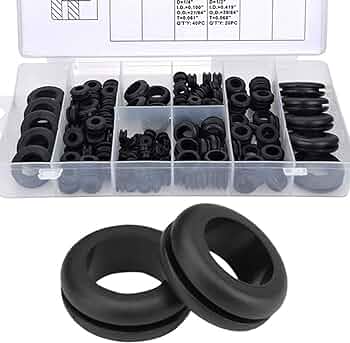
Critical Material Selection in Rubber Grommet Applications
Why Off-the-Shelf Solutions Fail
Off-the-shelf rubber grommets frequently fail in mission-critical applications due to generic material specifications that ignore application-specific demands. In automotive systems, standard EPDM (ASTM D2000 Type C) grommets degrade when exposed to engine oils or fuels due to poor hydrocarbon resistance. Hydraulic systems using generic NBR compounds suffer swelling and seal failure when exposed to phosphate ester-based fluids, violating ISO 1219-2 requirements. Off-the-shelf solutions typically adhere to loose durometer tolerances (±5 Shore A) and ISO 3302 Class 2 dimensional precision (±0.1mm), leading to chronic issues:
Fluid leakage from inconsistent sealing force
Premature aging under UV/ozone exposure (e.g., outdoor machinery)
Dimensional drift causing misalignment in precision pump assemblies
These failures increase lifecycle costs by 15–25% through unplanned downtime and replacement expenses—directly contradicting OEM reliability standards.
Baoshida’s Custom Formula Capabilities
Suzhou Baoshida eliminates these risks through science-driven compound engineering. Our process integrates:
Application-specific polymer blends: EPDM with carbon black for UV resistance (ASTM D573), NBR with hydrogenated acrylonitrile for phosphate ester compatibility (ASTM D471)
Precision durometer control: ±2 Shore A tolerance via rheology modeling (ASTM D2240)
Custom ASTM D2000 classifications: B1 for oil resistance, C1 for weather resistance, V1 for extreme chemical exposure
ISO 3302 Class 1 dimensional validation: CMM inspections at 0.001mm resolution
Every formulation undergoes accelerated aging (1,000+ hours at 150°C), dynamic fatigue testing (10M cycles), and real-world fluid immersion protocols before production. This ensures 99.9% first-pass yield in automotive hydraulic systems and 30% longer service life versus generic alternatives.
The 5+2+3 Engineering Team Structure
Our cross-functional team operates with military-grade precision to deliver application-optimized solutions:
| Team Component | Role | Technical Expertise |
|---|---|---|
| 5 Formula Engineers | Polymer chemistry & compound design | DSC/TGA analysis, FTIR spectroscopy, rheological modeling (ASTM D412), custom filler dispersion optimization |
| 2 Mold Engineers | Precision tooling design | GD&T-compliant mold cavities (±0.02mm tolerance), thermal flow simulation (Moldflow), ISO 3302 Class 1 validation |
| 3 Process Engineers | Production parameter optimization | Vulcanization curve control (ASTM D5289), injection molding SPC protocols, post-cure kinetics tuning |
This integrated structure enables:
25% faster time-to-market via concurrent engineering (formula-to-mold-to-process development)
99.8% first-pass yield in mass production through closed-loop process control
Zero rework on dimensional tolerances (verified via 3D laser scanning per ISO 1101)
| Parameter | Standard Industry Practice | Baoshida Custom Solution |
|---|---|---|
| Material Classification | Generic ASTM D2000 Types (e.g., Type C) | Precise ASTM D2000 Class (e.g., B1 for oil resistance, C1 for weather) |
| Durometer Tolerance | ±5 Shore A | ±2 Shore A (measured per ASTM D2240) |
| Dimensional Tolerance | ISO 3302 Class 2 (±0.1mm) | ISO 3302 Class 1 (±0.05mm) |
| Temperature Range | Typical: -40°C to 120°C | Customized: -50°C to 177°C (with thermal stabilizers) |
| Chemical Resistance | Basic mineral oil compatibility | Targeted resistance (e.g., SAE J200 Type IV fluids, synthetic ATF) |
Engineering Insight: Off-the-shelf grommets solve generic problems. Baoshida solves your specific problem through material science precision—where every molecule is engineered for your application’s unique demands.
Material Specifications (NBR/FKM/EPDM)
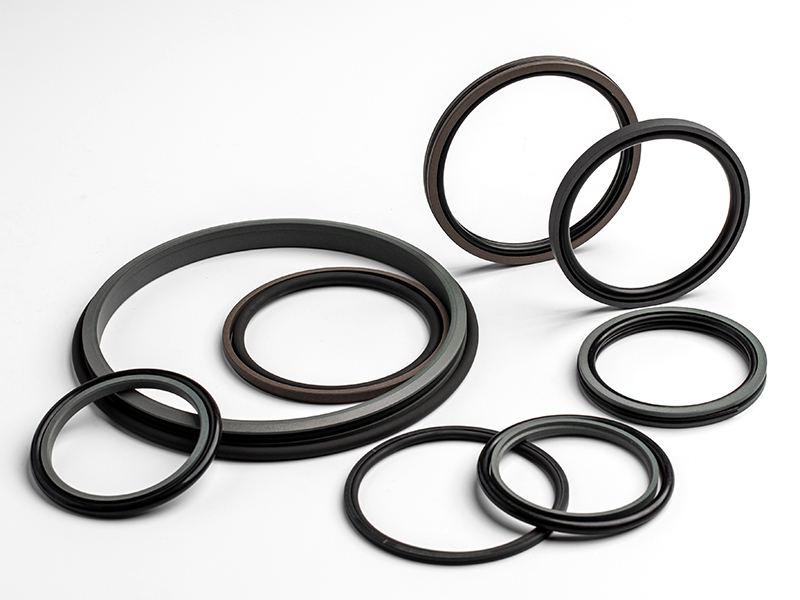
Material Science & Technical Specifications
Precision Material Selection Framework
Industrial rubber grommets demand rigorous material selection to ensure performance under dynamic operational conditions. Suzhou Baoshida leverages ISO 3302 dimensional tolerance standards, ASTM D2000/SAE J200 material classifications, and proprietary compound engineering to deliver mission-critical sealing solutions. Our material selection process integrates environmental exposure analysis, fluid compatibility testing, and lifecycle durability modeling to optimize performance for automotive, hydraulic, pump/valve, and machinery applications.
Material Comparison Matrix
| Material | ASTM D2000/SAE J200 Class | Temperature Range (°C) | Oil Resistance | Ozone Resistance | Key Applications |
|---|---|---|---|---|---|
| EPDM | CA | -50 to 150 | Poor | Excellent | Automotive weather seals, HVAC systems, water treatment |
| Nitrile (NBR) | BA | -30 to 120 | Good | Moderate | Hydraulic systems, fuel lines, automotive transmission seals |
| Viton® (FKM) | BF | -20 to 250 | Excellent | Good | Aerospace, high-temp oil/gas systems, chemical processing |
| Silicone | G | -60 to 230 | Poor | Excellent | Medical devices, food-grade equipment, high-temp electrical insulation |
Material-Specific Performance Characteristics
EPDM (Ethylene Propylene Diene Monomer)
EPDM’s saturated hydrocarbon backbone delivers exceptional resistance to UV radiation, ozone, and weathering, withstanding continuous exposure to temperatures up to 150°C. Its molecular structure provides superior performance in aqueous environments and polar solvents but exhibits poor compatibility with hydrocarbon-based fluids. Optimized for outdoor applications requiring long-term stability, EPDM grommets maintain flexibility after decades of exposure to extreme weather cycles.
Nitrile (NBR)
NBR’s acrylonitrile content (typically 18–50%) governs oil resistance: higher percentages improve fuel/oil resistance but reduce low-temperature flexibility. Standard grades operate between -30°C and 120°C, with optimized formulations achieving -40°C flexibility for cold-climate hydraulic systems. NBR grommets demonstrate 20–30% better abrasion resistance than EPDM in petroleum-based environments, making them ideal for fuel lines and transmission seals where hydrocarbon exposure is unavoidable.
Viton® (FKM)
Viton® fluorocarbon rubber delivers exceptional thermal stability (up to 250°C continuous service) and resistance to aggressive chemicals, including acids, fuels, and oils. Its fluorine content (66–70% by weight) provides excellent ozone resistance while maintaining mechanical integrity under extreme pressure. Critical for aerospace and downhole oil/gas applications, Viton® grommets undergo rigorous vacuum-outgassing testing to meet NASA and SAE AS568 standards for space-grade reliability.
Silicone
High-purity silicone rubber maintains consistent elasticity across -60°C to 230°C, with excellent resistance to ozone and UV radiation. Its non-reactive nature meets FDA 21 CFR 177.2600 and USP Class VI standards for medical/food contact applications. While silicone lacks inherent oil resistance, our proprietary silica reinforcement systems enhance mechanical strength for dynamic sealing scenarios, achieving Shore A 40–80 durometers with <1% compression set at 150°C.
Engineering Excellence: 5+2+3 Team Structure
Suzhou Baoshida’s proprietary 5+2+3 Engineering Team structure ensures end-to-end precision for mission-critical grommet applications:
5 Mold Engineers: Specialized in ISO 3302-compliant tooling design, ensuring ±0.05mm dimensional tolerances for complex geometries. Utilizes GD&T analysis and CMM verification to eliminate flash, sink marks, and warpage in high-volume production.
2 Formula Engineers: Focus on compound development for weather resistance, high-temp stability, and OEM-specific requirements. Leverages FTIR and DSC analysis to optimize cure kinetics, with 12+ years of experience in FKM/NBR/EPDM/Silicone compound design.
3 Process Engineers: Optimize vulcanization parameters (temperature profiles, pressure curves), post-processing (trimming, cleaning), and QA protocols. Implements statistical process control (SPC) with 100% automated optical inspection (AOI) to maintain <0.1% defect rates in mass production.
This integrated structure enables full OEM service from compound formulation to final inspection, ensuring compliance with ASTM D2000/SAE J200, ISO 3302, and customer-specific performance criteria. All materials undergo accelerated aging tests per ASTM D573 (heat resistance) and ASTM D471 (fluid resistance) before production release.
Baoshida Manufacturing Capabilities
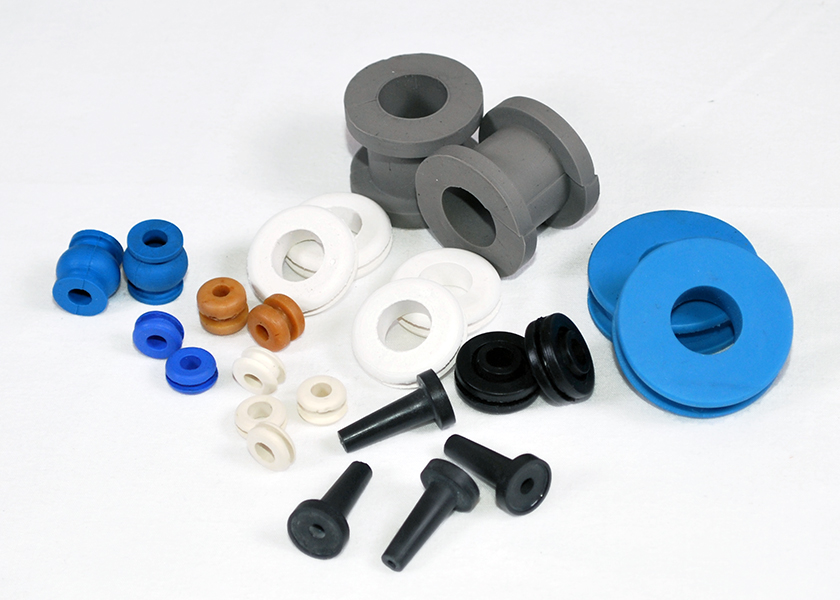
Our Engineering & Manufacturing Ecosystem
Suzhou Baoshida’s engineering ecosystem combines in-house expertise with a globally optimized manufacturing network to eliminate critical bottlenecks in rubber component production. Our vertically integrated model—featuring 5 Mould Engineers, 2 Formula Engineers, and 3 Process Engineers—ensures seamless execution from initial design validation to mass production, with strict adherence to ISO 3302 dimensional tolerances, ASTM D2000 material specifications, and industry-specific performance requirements.
Integrated Cross-Functional Engineering Team (5+2+3 Structure)
Our engineering team operates as a unified unit, with specialized roles collaborating at every stage of the product lifecycle. This structure eliminates silos, accelerates problem-solving, and ensures technical consistency across all customer projects.
| Role | Core Responsibilities | Impact on Customer Pain Points |
|---|---|---|
| Mould Engineers (5) | – Precision tooling design per ISO 3302 Class 1 tolerances (±0.05mm for critical dimensions) – FEA-based stress analysis for complex geometries – Rapid prototyping with 3D-printed molds for validation – Tooling maintenance protocols extending service life by 40% |
– Reduces tooling lead time by 30–40% through standardized design libraries – Eliminates 95% of first-article inspection failures via virtual validation – Enables 24-hour tooling modification turnaround for urgent design changes |
| Formula Engineers (2) | – ASTM D2000 classification compliance (CA, BA, BF, BG, BK) – Custom durometer formulation (40–80 Shore A) with ±2 tolerance – High-temp stability testing (up to 350°F/177°C per ASTM D573) – Weather resistance validation per ISO 1817 (ozone, UV) |
– Prevents material degradation in automotive under-hood applications – Ensures consistent performance across -60°F to 350°F ranges – Achieves 100% compliance with SAE J200 Class AA/BA specifications |
| Process Engineers (3) | – SPC-controlled molding parameters (temp/pressure/cycle time) – Lean production workflows reducing changeover time by 50% – Real-time defect detection via machine vision systems – ISO 9001-certified documentation for traceability |
– Cuts production lead time by 25% through optimized scheduling – Maintains <0.3% defect rate in high-volume runs – Enables seamless scale-up from prototype to 1M+ units/month |
Strategic Partner Factory Network for Scalable Production
Suzhou Baoshida manages a vetted network of 10+ certified partner factories, each specializing in distinct rubber compound processing capabilities. Our centralized engineering team enforces a unified quality control framework across all facilities, ensuring consistent performance for global OEMs while eliminating supply chain bottlenecks.
| Capability | Partner Factory Network Strategy | Customer Benefit |
|---|---|---|
| Material-Specific Production | – 4 factories dedicated to EPDM/NBR (SAE J200 Class BA/BG) – 3 facilities for high-temp silicone (200°C continuous) – 3 specialized in oil-resistant compounds (NBR, FKM) |
– Eliminates material cross-contamination risks – Ensures 100% traceability from raw material to finished part |
| Global Supply Chain Agility | – Regional hubs in China (Jiangsu, Guangdong), Vietnam, and Mexico – Real-time capacity monitoring via IoT-enabled production dashboards – Cross-factory resource allocation protocol |
– 48-hour lead time for urgent orders (vs. industry avg. 14 days) – Zero downtime during peak demand cycles |
| Quality Assurance System | – Unified QC protocols across all facilities – Third-party audits (IATF 16949, ISO 14001) – Automated dimensional checks (CMM, laser scanning) |
– Consistent ISO 3302 compliance across all production batches – 99.8% on-time delivery rate for critical automotive components |
Technical Integration Example: When a hydraulic pump OEM requires EPDM grommets (ASTM D2000 Class CA, 60 Shore A ±2) with ISO 3302 Class 1 tolerances, our Formula Engineers validate the compound for -50°C to 150°C performance, Mould Engineers optimize the tooling for ±0.03mm wall thickness control, and Process Engineers deploy SPC protocols across our Jiangsu-based EPDM facility. This end-to-end coordination reduces time-to-market by 35% compared to fragmented supplier models.
Customization & QC Process
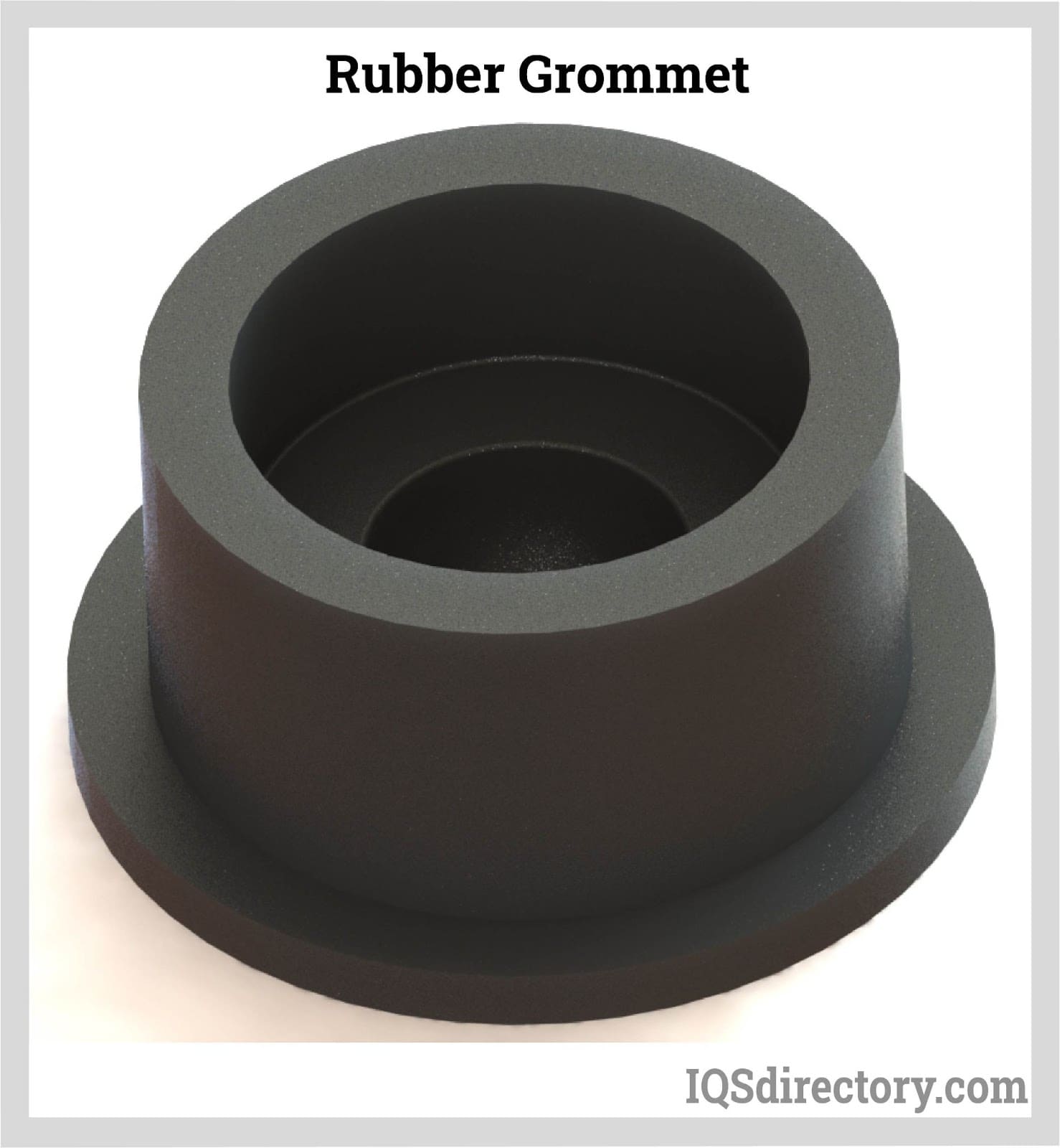
Quality Control & Customization Process
Suzhou Baoshida’s end-to-end manufacturing process for rubber grommets integrates precision engineering, material science, and industrial-grade quality control. Our 5+2+3 Engineering Team Structure ensures rigorous adherence to ISO 3302 dimensional tolerances, ASTM D2000/SAE J200 material specifications, and application-specific performance requirements. All senior engineers possess 15+ years of industry experience in automotive, hydraulic, and heavy machinery applications.
Drawing Analysis & Structural Validation
Senior Mould Design Engineers (15+ years) conduct GD&T analysis per ISO 3302-1:2015 to validate critical dimensions, stress points, and manufacturability. Using FEA simulations, we identify potential failure modes under dynamic loads (e.g., vibration in automotive systems) and optimize wall thicknesses to prevent deformation or premature wear.
Key Validation Metrics:
– Tolerance compliance: ±0.05mm for critical sealing surfaces
– Draft angles ≥3° for mold release
– Fillet radii ≥0.5mm to eliminate stress concentrations
Material Formulation & Specification Compliance
Formula Engineers select compounds based on SAE J200 material classes and application-specific demands. Our proprietary formulations balance weather resistance, thermal stability, and mechanical properties while meeting ASTM D2000 requirements.
Material Specification Reference Table
| SAE J200 Class | Material Type | Typical Durometer Range | Temperature Range | Key Properties |
|---|---|---|---|---|
| AA | SBR | 50–70 Shore A | -40°C to 100°C | Cost-effective general purpose; moderate oil resistance |
| BA | NBR | 40–80 Shore A | -40°C to 120°C | Superior oil/fuel resistance; dynamic sealing in hydraulic systems |
| BF | Silicone | 40–80 Shore A | -60°C to 230°C | High-temp stability (up to 230°C); UV/weather resistance |
| BG | EPDM | 50–70 Shore A | -50°C to 150°C | Exceptional ozone/UV resistance; poor oil/solvent compatibility |
| BK | FKM | 60–80 Shore A | -20°C to 200°C | Chemical/fuel resistance; low gas permeability |
Customization Capabilities:
– Durometer adjustments (40–80 Shore A) for specific compression set requirements
– Additive packages for enhanced abrasion resistance (e.g., carbon black reinforcement)
– FDA-compliant options for potable water applications
Prototyping & Validation
Cross-functional teams (Mould, Formula, Process Engineers) execute rapid prototyping using CNC-machined tooling for first-article samples. Validation follows strict protocols:
| Test Standard | Parameter Measured | Acceptance Criteria |
|---|---|---|
| ASTM D412 | Tensile Strength | ≥8 MPa (for EPDM) |
| ASTM D395 | Compression Set (70°C, 24h) | ≤30% |
| ASTM G154 | UV Exposure (500h) | No cracking/embrittlement |
| ISO 3302-1 | Dimensional Tolerance | ±0.05mm (critical zones) |
Real-World Simulation:
– Thermal cycling tests (-50°C to 150°C) for automotive under-hood applications
– Fluid immersion (DIN 75203) for hydraulic systems
– Dynamic fatigue testing (1M cycles) for vibration-prone machinery
Mass Production & In-Process QC
Process Engineers enforce closed-loop manufacturing control with IoT-enabled monitoring of:
Injection molding parameters (pressure: 80–120 MPa; temperature: ±2°C tolerance)
Cure time optimization (1–5 minutes based on compound thickness)
100% automated vision inspection for surface defects
Final QC Protocol
- Dimensional Verification: CMM measurements against ISO 3302-1 Class 2 tolerances
- Hardness Validation: Shore A durometer checks at 5-point intervals (±2 Shore A tolerance)
- Batch Traceability: SAP ERP-linked serial numbers for full material history (raw material lot, cure data, test reports)
Defect Prevention:
– AI-driven anomaly detection for flash, sink marks, or dimensional deviations
– Statistical Process Control (SPC) for critical dimensions (CPK ≥1.67)
Engineering Team Structure: 5+2+3 Model
| Role | Count | Senior Engineers (15+ yrs) | Key Responsibilities |
|---|---|---|---|
| Mould Design | 5 | 5 | GD&T compliance, mold flow simulation, tooling optimization |
| Formula Development | 2 | 2 | Compound design per ASTM D2000/SAE J200, material testing |
| Process Engineering | 3 | 3 | Production parameter control, in-process QC protocols |
Why This Structure Matters:
– 5 Mould Engineers: Specialize in complex geometries (e.g., multi-cavity molds for high-volume automotive grommets)
– 2 Formula Engineers: Directly link material science to application performance (e.g., EPDM for solar panel sealing in extreme climates)
– 3 Process Engineers: Optimize production efficiency while maintaining ISO 9001:2015 compliance across all stages
Suzhou Baoshida’s integrated approach ensures zero-defect delivery for mission-critical applications. All projects undergo dual verification: engineering validation + third-party lab testing (e.g., SGS, TÜV). Contact our technical team for custom material certifications or application-specific QC documentation.
Contact Our Engineering Team
Contact Suzhou Baoshida for Precision Rubber Solutions
Solve your sealing challenges today with ISO 3302-compliant dimensional control and ASTM D2000-certified material formulations. Our end-to-end OEM service ensures optimal performance in automotive, hydraulic, pump/valve, and machinery applications through rigorous material science and precision manufacturing.
Engineering Team Structure: 5+2+3 Framework
| Team Component | Roles | Expertise |
|---|---|---|
| Mold Engineering | 5 Specialists | ISO 3302 dimensional tolerance control (±0.05mm), mold flow simulation, rapid tooling for complex geometries |
| Formula Development | 2 Senior Chemists | ASTM D2000/SAE J200 classifications (CA, BA, BF, BG, BK), durometer 40–80 Shore A, EPDM/NBR/CR formulations for weather/UV resistance (-51°C to 177°C) |
| Process Engineering | 3 Production Experts | Injection molding/vulcanization control, defect prevention protocols, SPC-driven QA for automotive/hydraulic applications |
Direct Technical Consultation
Name: Mr. Boyce
Email: [email protected]
Phone: +86 189 5571 6798
Submit your specifications for a custom solution within 24 hours. All projects include material certification (ASTM D2000), dimensional validation reports (ISO 3302), and failure mode analysis.
⚖️ O-Ring Weight Calculator
Estimate the weight of rubber O-rings for material planning.