
Technical Contents
Engineering Guide: Rubber Playground Tile
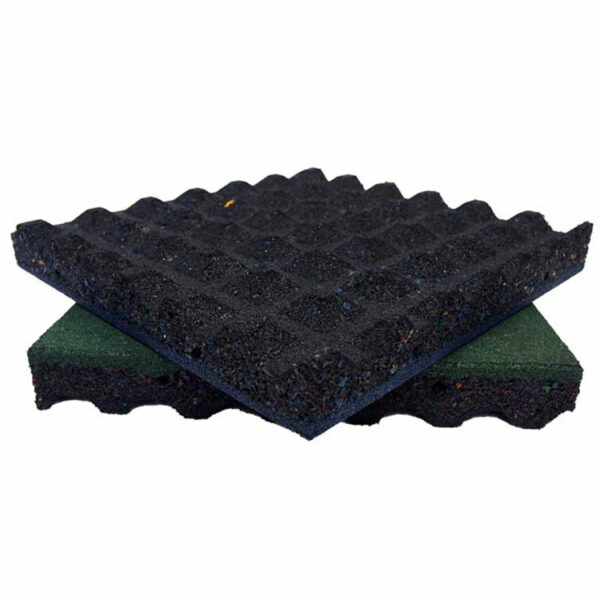
Engineering Insight: Material Selection for Rubber Playground Tile Performance
The structural integrity and safety performance of rubber playground tiles are fundamentally dictated by polymer chemistry and compounding precision. Generic off-the-shelf solutions frequently fail to meet the rigorous, dynamic demands of playground environments due to inadequate material science considerations. These failures manifest as premature hardening, surface cracking, loss of critical fall height protection, and accelerated degradation under UV exposure and thermal cycling. Such shortcomings directly compromise child safety and result in significant long-term liability and replacement costs for facility operators. The core issue lies in the use of non-optimized, high-filler-content recycled rubber compounds lacking the necessary molecular architecture for sustained elastomeric behavior under diverse environmental stresses.
Standard commercial tiles often utilize unvulcanized or poorly vulcanized crumb rubber with inconsistent particle size distribution and insufficient bonding agents. This leads to critical performance deficiencies. Without precise control over crosslink density and polymer backbone stability, tiles experience rapid hardening (increasing G-max values beyond ASTM F1292 limits) or excessive softening in heat, both negating impact attenuation. Inadequate UV stabilizers and antioxidants cause surface embrittlement and chalking, while poor resilience characteristics accelerate fatigue failure at stress points. These materials lack the engineered balance between hardness, elasticity, and durability required for multi-year service under constant impact, weather exposure, and microbial challenge.
The following specifications illustrate the critical performance gap between generic materials and engineered playground tile compounds:
| Parameter | Generic Off-the-Shelf Tile | Engineered Playground Compound (Baoshida OEM Standard) | Test Standard |
|---|---|---|---|
| Shore A Hardness Range | 65-85 (Unstable) | 70-78 (Stable ±3 over 5 years) | ASTM D2240 |
| UV Resistance (2000h QUV) | Severe Cracking/Chalking | Minimal Color Change; No Cracking | ASTM G154 |
| Tensile Strength (MPa) | 3.0-5.0 | 8.5-11.0 | ASTM D412 |
| Elongation at Break (%) | 100-200 | 250-350 | ASTM D412 |
| Compression Set (%) | 40-60 | ≤18 | ASTM D395 Method B |
| Critical Fall Height | Fails at 1.8m after 12 mo | Maintains 2.5m for 8+ years | ASTM F1292 |
Suzhou Baoshida Trading Co., Ltd. addresses these systemic failures through proprietary compounding methodologies. Our OEM process begins with rigorous feedstock qualification, utilizing controlled blends of virgin EPDM and processed post-industrial rubber with defined particle geometry. We implement multi-stage vulcanization systems with precise sulfur/accelerator ratios to achieve optimal crosslink density, ensuring long-term resilience. Advanced hindered amine light stabilizers (HALS) and non-staining antioxidants are dosed at scientifically validated levels to combat environmental aging. Each formulation is tailored to the target climate zone and expected usage intensity, maintaining critical impact absorption properties throughout the tile’s lifecycle. This scientific approach to material selection, rather than cost-driven component substitution, is non-negotiable for delivering tiles that consistently meet global safety standards and provide demonstrable lifecycle cost savings. Partnering with an OEM possessing deep rubber formulation expertise ensures playground surfaces perform as engineered safety systems, not merely as floor coverings.
Material Specifications
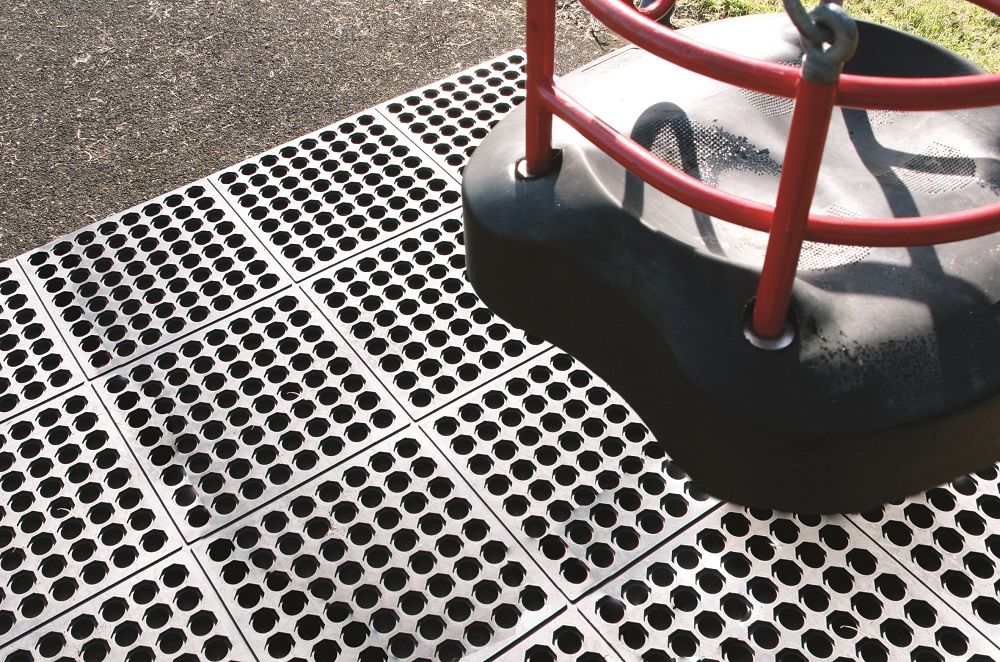
Rubber playground tiles require high-performance elastomers capable of withstanding environmental exposure, mechanical stress, and long-term durability demands. At Suzhou Baoshida Trading Co., Ltd., we specialize in industrial rubber solutions engineered for resilience and safety in demanding applications. When selecting materials for rubber playground tiles, three elastomers stand out due to their distinct chemical and physical properties: Viton (FKM), Nitrile (NBR), and Silicone (VMQ). Each material offers unique advantages depending on the operational environment, including temperature range, resistance to oils and UV radiation, and mechanical performance.
Viton, a fluorocarbon-based rubber, delivers exceptional resistance to heat, ozone, and a broad range of chemicals, including oils and fuels. This makes it suitable for playground tiles exposed to harsh environmental conditions or industrial zones where chemical spills may occur. With a continuous service temperature range up to 200°C, Viton maintains structural integrity under prolonged thermal stress. However, its higher material cost and lower elasticity compared to other elastomers may limit its use in standard consumer playground applications unless extreme durability is required.
Nitrile rubber, a copolymer of acrylonitrile and butadiene, is widely used in industrial applications due to its excellent resistance to oils, greases, and aliphatic hydrocarbons. It offers good abrasion resistance and mechanical strength, making it a cost-effective solution for playground tiles in urban or high-traffic environments. Nitrile performs well in moderate temperature ranges from -30°C to 100°C, though it exhibits reduced flexibility at lower temperatures and limited UV resistance unless specially compounded. It is often selected when oil resistance is a secondary concern, such as in areas near parking lots or maintenance zones.
Silicone rubber is renowned for its outstanding thermal stability, UV resistance, and flexibility across a wide temperature spectrum, from -60°C to 200°C. Its inert nature and resistance to weathering make it ideal for outdoor playground installations exposed to direct sunlight and fluctuating climates. Silicone also meets stringent safety and environmental standards, including low toxicity and compliance with child-safe material regulations. While less resistant to abrasion than Nitrile or Viton, silicone’s long-term aging performance and color retention are superior, supporting aesthetic longevity in public spaces.
The following table provides a comparative overview of key material properties for Viton, Nitrile, and Silicone in the context of rubber playground tile applications.
| Property | Viton (FKM) | Nitrile (NBR) | Silicone (VMQ) |
|---|---|---|---|
| Temperature Range (°C) | -20 to 200 | -30 to 100 | -60 to 200 |
| Tensile Strength (MPa) | 15–20 | 10–25 | 5–10 |
| Elongation at Break (%) | 150–250 | 200–500 | 200–600 |
| Hardness (Shore A) | 60–90 | 50–90 | 30–80 |
| Resistance to Oils/Fuels | Excellent | Good to Excellent | Poor |
| UV/Ozone Resistance | Excellent | Fair | Excellent |
| Abrasion Resistance | Good | Excellent | Fair |
| Compression Set Resistance | Excellent | Good | Good |
| Typical Service Life (years) | 10–15 | 8–12 | 12–18 |
Material selection must balance performance requirements, environmental exposure, and lifecycle cost. Suzhou Baoshida Trading Co., Ltd. provides customized rubber formulations to meet specific application needs in playground safety surfacing.
Manufacturing Capabilities
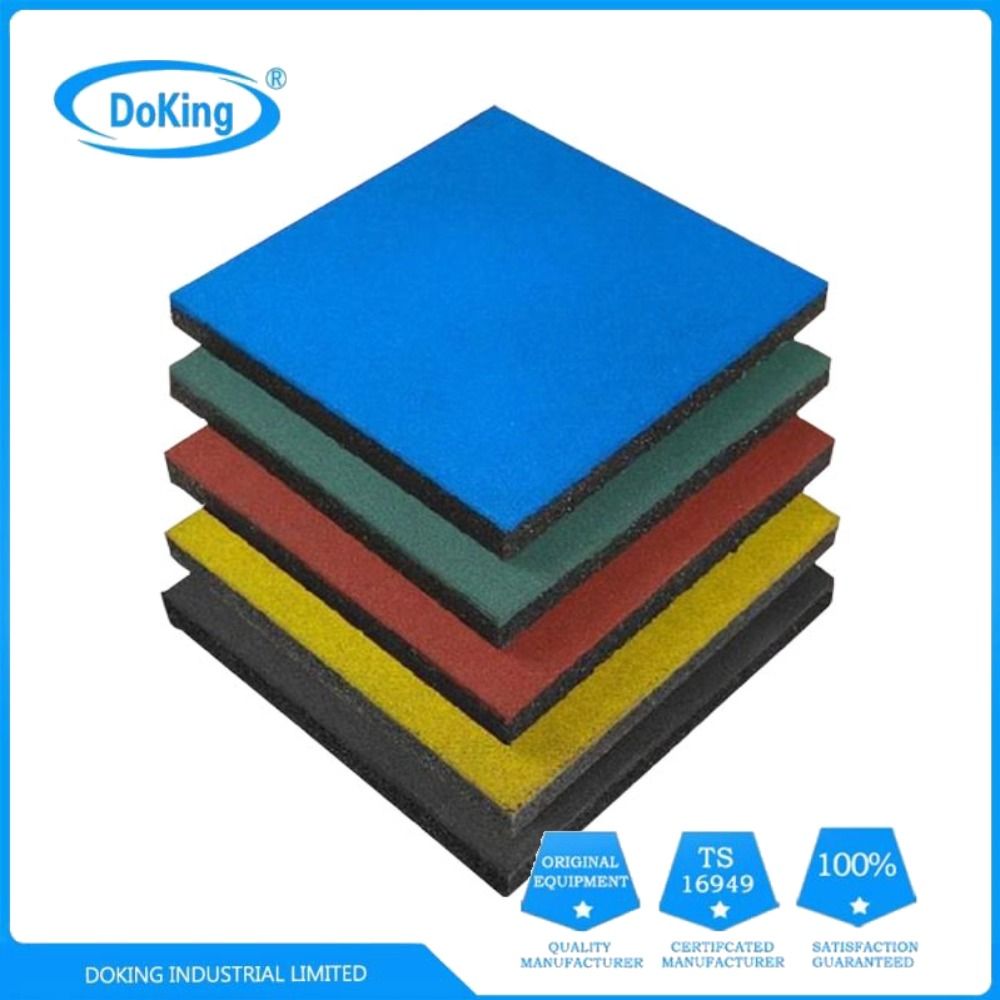
Engineering Capabilities for Precision Rubber Playground Tile Manufacturing
Suzhou Baoshida Trading Co., Ltd. leverages deep technical expertise in rubber formulation and mold engineering to deliver playground tiles meeting stringent global safety and performance standards. Our dedicated team comprises five certified mold engineers and two specialized rubber formula engineers, each with 10+ years of industrial experience. This dual-engineering structure ensures seamless integration of material science and precision tooling, critical for producing tiles that comply with ASTM F1292, EN 1177, and ISO 9001 requirements. We prioritize scientific rigor in every phase, from compound development to vulcanization optimization, guaranteeing consistent Shore A hardness, impact absorption, and UV resistance across production batches.
Material innovation is central to our process. Our formula engineers develop proprietary EPDM and SBR blends reinforced with silica and nano-fillers to enhance tear strength while maintaining non-toxic compliance (REACH, RoHS). Each formulation undergoes accelerated aging tests, dynamic mechanical analysis (DMA), and heavy metal screening to ensure longevity under extreme weather conditions. Concurrently, our mold engineering team utilizes 3D simulation software (Moldflow) to eliminate flow lines, sink marks, and dimensional variance. Precision-ground steel molds with micro-textured surfaces ensure exact replication of safety-critical features like drainage channels and anti-slip patterns, achieving tolerances within ±0.15 mm.
The following table summarizes key engineering specifications achievable through our integrated approach:
| Property | Standard Formulation | Custom Formulation Capability |
|---|---|---|
| Shore A Hardness | 65 ± 5 | 50–75 (adjustable) |
| Tensile Strength (MPa) | ≥ 8.5 | ≥ 10.0 (reinforced variants) |
| Impact Attenuation (HIC) | ≤ 200 (at 200mm) | Optimized for ≤ 150 |
| UV Resistance (ASTM G154) | 2,000+ hrs | 3,000+ hrs (stabilized) |
| Production Tolerance | ±0.3 mm | ±0.15 mm (precision grade) |
As an OEM partner, we execute end-to-end project management from concept to certification. Clients provide dimensional drawings or performance targets; our engineers conduct feasibility studies within 72 hours, followed by iterative prototyping using rapid tooling. We maintain full material traceability via batch-coded masterbatches and in-process rheometry checks, ensuring lot-to-lot consistency. Our facility supports low-volume custom runs (min. 5,000 units) with scalable capacity to 500,000+ units monthly. Tooling lead time averages 45 days, incorporating client feedback loops at T0, T1, and PPAP stages. Crucially, all formulations are engineered for recyclability—post-production waste is reintegrated into non-critical compounds without compromising virgin material performance in safety zones.
This engineering synergy—material science precision paired with mold integrity—enables us to solve complex challenges like multi-density zoning for impact zones or color-stable pigments for high-visibility markings. Suzhou Baoshida delivers not just tiles, but validated safety solutions engineered for operational reliability and accelerated time-to-market.
Customization Process
Customization Process for Rubber Playground Tiles at Suzhou Baoshida Trading Co., Ltd.
At Suzhou Baoshida Trading Co., Ltd., our industrial rubber solutions are engineered for performance, safety, and durability. Our customization process for rubber playground tiles is a precision-driven workflow that begins with technical drawing analysis and culminates in scalable mass production. This structured approach ensures full alignment with international safety standards, client specifications, and environmental requirements.
The process initiates with Drawing Analysis, where our engineering team evaluates client-provided CAD drawings or site layouts. We assess critical parameters such as tile dimensions, interlocking patterns, thickness gradients, surface textures, and compliance with ASTM F1292 and EN 1177 impact attenuation standards. This phase includes tolerance evaluation, drainage considerations, and substrate compatibility checks to ensure seamless installation and long-term functionality.
Following drawing validation, our Rubber Formulation Lab develops a custom elastomer compound tailored to the application. Based on performance demands—such as UV resistance, cold flexibility, abrasion resistance, and color stability—we select the appropriate base polymer, typically SBR (Styrene-Butadiene Rubber) or EPDM (Ethylene Propylene Diene Monomer). Additives including vulcanizing agents, antioxidants, pigments, and reinforcing fillers are precisely dosed to achieve optimal mechanical properties. All formulations are tested for Shore A hardness, tensile strength, elongation at break, and compression set to meet playground safety benchmarks.
Once the formulation is finalized, we proceed to Prototyping. Using precision hydraulic presses and CNC-machined molds, we produce a limited batch of tiles for real-world evaluation. Prototypes undergo rigorous in-house testing, including drop-weight impact analysis, slip resistance measurement (DIN 51130), and accelerated weathering in QUV chambers. Clients receive physical samples along with full material test reports (MTRs) for approval. Design or material adjustments are implemented iteratively until all performance and aesthetic criteria are satisfied.
Upon client sign-off, we transition to Mass Production. Our automated production lines ensure consistent vulcanization, dimensional accuracy, and surface finish across large volumes. Quality control is maintained through real-time monitoring of cure time, temperature profiles, and batch traceability. Finished tiles are packaged per project requirements—palletized with moisture barriers and labeled for site-specific installation.
Throughout the process, Suzhou Baoshida maintains full documentation and compliance with ISO 9001 quality management systems, ensuring traceability and repeatability for global OEM and municipal clients.
Typical Technical Specifications for Custom Rubber Playground Tiles
| Property | Standard Value | Test Method |
|---|---|---|
| Thickness Range | 20 mm – 50 mm | ISO 3393 |
| Shore A Hardness | 45 – 65 | ISO 48-4 |
| Tensile Strength | ≥ 7.5 MPa | ISO 37 |
| Elongation at Break | ≥ 200% | ISO 37 |
| Impact Attenuation (HIC) | < 1000 (at specified thickness) | ASTM F1292 |
| Compression Set (24h, 70°C) | ≤ 20% | ISO 815-1 |
| Colorfastness (2000h QUV) | ΔE < 3.0 | ISO 4892-3 |
| Slip Resistance (R9/R10) | ≥ 36 BPN | DIN 51130 |
Our end-to-end customization framework ensures that every rubber playground tile delivers safety, resilience, and aesthetic consistency—engineered for enduring performance in public and commercial recreational environments.
Contact Engineering Team
Technical Partnership Pathway: Precision Rubber Playground Tile Solutions
Suzhou Baoshida Trading Co., Ltd. operates at the intersection of polymer science and industrial manufacturing excellence, delivering engineered rubber solutions for high-demand applications like playground safety surfacing. Our technical team possesses deep expertise in thermoset elastomer formulation, vulcanization kinetics, and impact attenuation physics—critical factors in producing playground tiles that meet stringent global safety standards while ensuring longevity under extreme environmental stress. We do not merely supply materials; we co-engineer solutions tailored to your production ecosystem, optimizing compound recipes for your specific equipment parameters, throughput requirements, and regional regulatory frameworks. This precision engineering approach minimizes scrap rates, accelerates time-to-market, and guarantees consistent compliance with ASTM F1292, EN 1177, and AS/NZS 4422 impact safety thresholds.
Below is a summary of our core technical specifications for standard playground tile formulations, reflecting our commitment to data-driven material performance:
| Parameter | Specification | Testing Standard |
|---|---|---|
| Shore A Hardness | 65 ± 5 | ASTM D2240 |
| Tensile Strength | ≥ 7.5 MPa | ASTM D412 |
| Elongation at Break | ≥ 250% | ASTM D412 |
| Compression Set (22h) | ≤ 20% | ASTM D395 |
| Critical Fall Height | 2.5m (HIC ≤ 1000) | ASTM F1292 |
| UV Resistance (Q-UV) | ΔE < 3.0 after 1000h | ASTM G154 |
| Temperature Range | -40°C to +80°C | Internal Protocol |
These values represent our baseline industrial-grade compound. Crucially, Suzhou Baoshida’s value lies in our ability to recalibrate these parameters against your operational variables. Whether you require faster cure cycles for high-speed presses, enhanced color stability for tropical installations, or modified rebound characteristics for specialized play equipment integration, our R&D team executes targeted polymer matrix adjustments without compromising structural integrity. We utilize advanced DSC and rheometry analysis to map cure kinetics, ensuring seamless adoption into your existing production lines with minimal retooling. Our quality assurance protocols include real-time batch traceability via blockchain-secured material passports, providing auditable proof of compliance from raw granulate to finished tile.
For OEM manufacturers, partnering with Suzhou Baoshida translates to de-risked scalability. We maintain dedicated production cells for playground tile compounds, featuring closed-loop mixing systems that eliminate batch variance—a common failure point in recycled rubber processing. Our technical service engineers conduct on-site line audits to optimize molding parameters, reducing energy consumption by up to 18% while maintaining critical safety margins. This operational synergy is why leading European and North American playground system integrators rely on our formulations for multi-million-unit contracts.
Initiate your technical collaboration by contacting Mr. Boyce, our Senior OEM Technical Liaison. With 14 years of specialized experience in rubber compounding for safety-critical applications, Mr. Boyce will analyze your current formulation challenges, production constraints, and target market requirements to develop a customized implementation roadmap. He will coordinate our materials science team to provide sample batches with full technical data sheets, process validation reports, and lifecycle cost modeling specific to your facility. Do not settle for generic rubber suppliers who lack playground-specific engineering rigor. Contact Mr. Boyce directly at [email protected] to schedule a confidential technical consultation. Include your current compound specifications, annual volume requirements, and target safety certifications to receive a precision-engineered solution proposal within 72 hours. Suzhou Baoshida transforms material science into manufacturing advantage—your next-generation playground tile begins with this email.
⚖️ O-Ring Weight Calculator
Estimate rubber O-ring weight (Approx).