
Technical Contents
Engineering Guide: Rubber Plow Cutting Edge
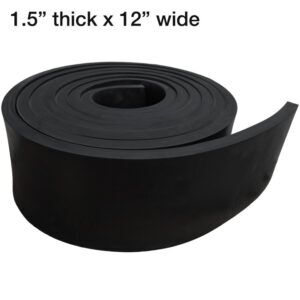
Engineering Insight: The Critical Role of Material Selection in Rubber Plow Cutting Edges
In industrial plowing applications, the rubber plow cutting edge serves as the primary interface between the equipment and abrasive terrain. Its performance directly influences operational efficiency, maintenance frequency, and overall equipment longevity. Despite its seemingly simple function, the cutting edge is subject to extreme mechanical stress, continuous friction, and exposure to environmental contaminants such as gravel, ice, and road salts. Under these conditions, material selection is not merely a design consideration—it is a decisive engineering factor.
Off-the-shelf rubber plow cutting edges often fail prematurely due to a fundamental mismatch between standardized material formulations and site-specific operational demands. Generic compounds typically employ medium-hardness SBR (styrene-butadiene rubber) or low-grade natural rubber blends optimized for cost, not performance. These materials lack the resilience required for sustained contact with high-abrasion surfaces, leading to rapid wear, edge curling, and structural tearing. Additionally, they exhibit poor low-temperature flexibility, making them prone to cracking in sub-zero environments—a critical flaw in winter maintenance operations.
At Suzhou Baoshida Trading Co., Ltd., we emphasize engineered material solutions tailored to the mechanical and environmental parameters of each application. High-performance cutting edges require a balanced formulation that integrates abrasion resistance, tensile strength, and temperature stability. For instance, a custom EPDM (ethylene propylene diene monomer) compound with reinforced carbon black filler provides superior ozone and UV resistance, ideal for prolonged outdoor use. Alternatively, hydrogenated nitrile (HNBR) offers exceptional mechanical durability and oil resistance, making it suitable for mixed-service environments where fuel or hydraulic fluid exposure is likely.
The failure of generic products stems from their one-size-fits-all approach, which neglects dynamic variables such as plow speed, ground clearance, and surface composition. A cutting edge operating on coarse asphalt requires a different durometer and reinforcement structure than one used on snow-packed roads. Without precise material calibration, energy transfer inefficiencies occur, increasing strain on the plow frame and hydraulic systems.
To illustrate the performance differential, consider the following comparative specifications:
| Property | Standard SBR Compound | Custom HNBR Compound (Baoshida) | Test Method |
|---|---|---|---|
| Hardness (Shore A) | 65 | 75 | ASTM D2240 |
| Tensile Strength (MPa) | 12 | 28 | ASTM D412 |
| Abrasion Loss (mm³) | 180 | 65 | ASTM D5963 |
| Operating Temperature Range | -20°C to +80°C | -40°C to +150°C | ISO 1817 |
| Tear Resistance (kN/m) | 25 | 68 | ASTM D624 |
These metrics underscore why precision in material science is non-negotiable. At Baoshida, our rubber plow cutting edges are not manufactured—we engineer them. By aligning compound properties with real-world operational data, we deliver solutions that resist premature degradation, reduce downtime, and extend service life across demanding industrial cycles.
Material Specifications
Material Specifications for Rubber Plow Cutting Edges
Suzhou Baoshida Trading Co., Ltd. prioritizes material science precision in industrial rubber solutions, particularly for plow cutting edges subjected to extreme abrasion, chemical exposure, and mechanical stress in agricultural and earthmoving equipment. The cutting edge must balance flexibility, durability, and resistance to degradation under operational loads. Viton (FKM), Nitrile (NBR), and Silicone (VMQ) represent the core elastomers deployed in these applications, each engineered for specific environmental and performance demands. Material selection directly impacts service life, operational efficiency, and total cost of ownership. Viton excels in high-temperature and chemical-intensive scenarios, Nitrile offers optimal cost-performance for hydrocarbon exposure, and Silicone provides unmatched low-temperature flexibility. Understanding these distinctions ensures alignment with OEM equipment specifications and field requirements.
Viton (FKM) delivers superior resistance to fuels, oils, and aggressive chemicals, maintaining integrity at temperatures up to 230°C. Its molecular structure incorporates fluorine-carbon bonds, providing exceptional stability against ozone, acids, and solvents common in fertilizer and pesticide applications. However, its higher raw material cost necessitates strategic deployment in high-risk operational zones. Nitrile (NBR) remains the industry standard for general-purpose plow edges due to its robust resistance to petroleum-based fluids, moderate cost, and excellent abrasion resistance. Optimized formulations achieve 70–90 Shore A hardness, ensuring edge retention against soil debris while accommodating dynamic flexing during operation. Silicone (VMQ) is reserved for extreme cold environments where flexibility below -50°C is critical, though its low tensile strength and poor abrasion resistance limit use to non-primary cutting interfaces.
Critical performance metrics are quantified below per ASTM international standards. These values reflect compression-molded test specimens cured under industrial conditions, ensuring real-world relevance.
| Material | Temperature Range (°C) | Hardness (Shore A) | Tensile Strength (MPa) | Abrasion Resistance (DIN 53516, mm³) | Key Chemical Resistances |
|---|---|---|---|---|---|
| Viton (FKM) | -20 to 230 | 70–85 | 12–18 | 80–110 | Fuels, oils, acids, solvents, ozone |
| Nitrile (NBR) | -30 to 120 | 70–90 | 15–25 | 60–90 | Petroleum oils, hydraulic fluids, water |
| Silicone (VMQ) | -55 to 200 | 40–70 | 6–10 | 120–180 | Water, steam, oxygen, weak acids/bases |
Abrasion resistance values indicate volume loss per 1.61 km test distance; lower numbers denote superior wear performance. Nitrile’s dominance in abrasion resistance explains its prevalence in soil-contact applications, while Viton’s chemical resilience justifies its use in chemical-handling machinery. Silicone’s high abrasion loss precludes primary edge deployment despite thermal advantages.
Suzhou Baoshida’s engineering team validates all formulations against ISO 188 (heat aging) and ISO 1817 (fluid resistance) protocols. For plow cutting edges operating in mixed-agricultural environments with intermittent chemical exposure, Nitrile-based compounds with 80 Shore A hardness and 15 MPa tensile strength provide the optimal equilibrium of cost, durability, and processability. Viton is recommended exclusively for specialized equipment handling concentrated agrochemicals above 150°C. Silicone variants require rigorous field validation due to rapid wear in abrasive soils. OEM specifications must reference these material properties to prevent premature edge failure and ensure compliance with global agricultural machinery standards.
Manufacturing Capabilities
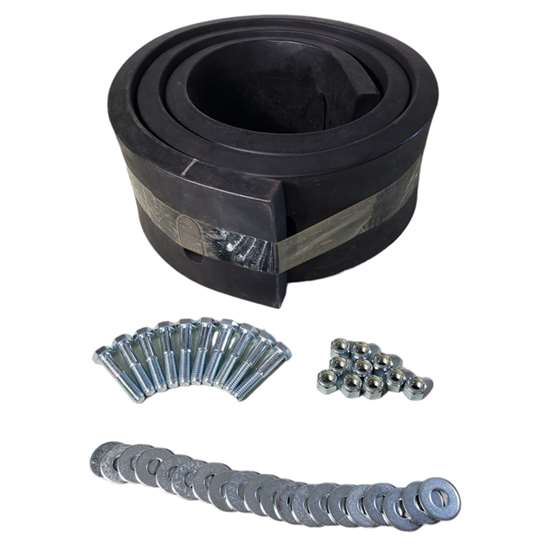
Engineering Excellence in Rubber Plow Cutting Edge Development
At Suzhou Baoshida Trading Co., Ltd., our engineering capability forms the backbone of our industrial rubber solutions, particularly in the design and production of high-performance rubber plow cutting edges. With a dedicated team comprising five specialized mould engineers and two advanced formula engineers, we maintain full in-house control over material science and tooling precision. This integrated approach ensures optimal performance, durability, and consistency tailored to the demanding requirements of agricultural, construction, and earthmoving equipment.
Our formula engineers focus on polymer chemistry and compound optimization, developing custom rubber formulations that balance abrasion resistance, flexibility, and wear life. Through rigorous testing and iterative refinement, we formulate elastomers based on natural rubber (NR), styrene-butadiene rubber (SBR), and nitrile rubber (NBR), selecting the ideal base compound according to operational conditions such as soil composition, moisture levels, and operating speed. Additives including reinforcing fillers, anti-oxidants, and vulcanizing agents are precisely dosed to enhance mechanical properties and environmental resistance.
Complementing material development, our five mould engineers ensure that every rubber plow cutting edge is manufactured with dimensional accuracy and structural integrity. Utilizing CAD/CAM software and CNC machining, they design and produce precision steel moulds that support consistent vulcanization and part replication. Mould flow analysis and thermal simulation are employed to eliminate defects such as air traps, under-curing, or flash, resulting in a clean, high-tolerance final product. Our tooling team also supports rapid prototyping and low-volume trial runs, accelerating time-to-market for OEM partners.
We offer comprehensive OEM services, enabling original equipment manufacturers to co-develop application-specific plow cutting edges under strict confidentiality and quality control. From initial concept and material selection to prototype validation and serial production, our engineers collaborate closely with client technical teams to meet exact performance benchmarks and integration requirements. All developments adhere to ISO 9001 quality management standards, with traceability maintained throughout the production lifecycle.
The following table outlines key technical specifications achievable through our engineering and manufacturing platform:
| Parameter | Typical Value / Range | Test Standard |
|---|---|---|
| Hardness (Shore A) | 55–75 | ASTM D2240 |
| Tensile Strength | 18–28 MPa | ASTM D412 |
| Elongation at Break | 350–550% | ASTM D412 |
| Tear Strength | 80–120 kN/m | ASTM D624 |
| Abrasion Loss (DIN) | ≤120 mm³ | ISO 4649 |
| Operating Temperature Range | -30°C to +80°C | — |
| Mould Tolerance | ±0.2 mm | ISO 2768 |
By combining deep expertise in rubber compounding and precision mould engineering, Suzhou Baoshida delivers technically superior plow cutting edges that extend service life and reduce downtime. Our OEM partnerships are built on engineering transparency, technical agility, and a commitment to solving real-world wear challenges in demanding field environments.
Customization Process
Rubber Plow Cutting Edge Customization Process
At Suzhou Baoshida Trading Co., Ltd., our customization process for rubber plow cutting edges integrates material science with precision manufacturing to deliver OEM solutions optimized for extreme agricultural and industrial soil engagement. This four-phase methodology ensures technical alignment with client specifications while maximizing wear life and operational efficiency under abrasive conditions.
Drawing Analysis initiates the workflow, where our engineering team conducts a granular review of client-provided technical drawings. Critical parameters assessed include dimensional tolerances, cross-sectional geometry, mounting interface compatibility, and environmental exposure factors such as soil abrasiveness, moisture levels, and temperature ranges. We verify geometric feasibility against rubber flow dynamics during molding and identify potential stress concentration zones requiring reinforcement. This phase culminates in a formal Design for Manufacturability (DFM) report, highlighting modifications to enhance durability without compromising functional intent.
Formulation Development leverages the DFM insights to engineer a proprietary rubber compound. Base polymers (typically NR/SBR blends) are selected for their balance of tear strength and low-temperature flexibility. Key additives include high-abrasion carbon black for wear resistance, specialized antioxidants to counter ozone degradation, and processing oils ensuring uniform filler dispersion. Cure kinetics are precisely tuned to achieve optimal crosslink density—balancing hardness retention with energy absorption during impact. Each formulation undergoes computational simulation to predict performance under dynamic soil shear forces, minimizing trial iterations.
Prototyping translates the validated formula into physical samples using client-specified tooling or our rapid prototyping molds. Samples undergo rigorous laboratory testing per ASTM standards, including:
Abrasion resistance (DIN Abrader, ISO 4649)
Tensile properties (ASTM D412)
Compression set (ASTM D395)
Adhesion strength to metal substrates (if applicable)
Field trials in controlled soil conditions further validate wear rates and debris clearance efficiency. Client feedback on prototype performance triggers iterative refinements until all KPIs are met.
Mass Production commences only after sign-off on final prototypes. Our ISO-certified facility employs automated mixing systems with ±0.5% batch consistency, precision hydraulic presses with ±1°C temperature control, and inline vision inspection for dimensional accuracy. Every production lot undergoes statistical process control (SPC) monitoring of critical properties, with full traceability from raw material certificates to final test reports.
Critical Performance Specifications for Rubber Plow Cutting Edges
| Property | Test Method | Target Value | Tolerance |
|---|---|---|---|
| Hardness (Shore A) | ASTM D2240 | 65–75 | ±2 |
| Tensile Strength | ASTM D412 | ≥18 MPa | Min. 16 MPa |
| Abrasion Loss (100 rev) | ISO 4649 | ≤120 mm³ | Max. 140 mm³ |
| Compression Set (24h) | ASTM D395 | ≤25% | Max. 30% |
| Adhesion Strength | ASTM D429 B | ≥6 kN/m | Min. 5 kN/m |
This structured approach guarantees rubber plow cutting edges that withstand high-impact soil engagement while maintaining precise edge geometry throughout their service life. Suzhou Baoshida’s closed-loop engineering process eliminates guesswork, delivering OEM components that directly enhance equipment uptime and operational cost efficiency.
Contact Engineering Team
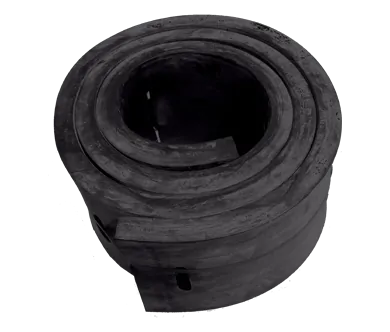
Contact Suzhou Baoshida for Premium Rubber Plow Cutting Edge Solutions
At Suzhou Baoshida Trading Co., Ltd., we specialize in high-performance industrial rubber components engineered for durability, precision, and operational efficiency. Our rubber plow cutting edges are designed to meet the rigorous demands of agricultural, construction, and material handling equipment, delivering superior wear resistance and consistent performance under extreme conditions. As a trusted OEM partner, we combine advanced rubber compounding expertise with strict quality control to ensure every product exceeds industry standards.
If your operation requires customized rubber plow cutting edges tailored to specific machinery or environmental challenges, our engineering team is ready to collaborate. We offer full technical support from material selection to prototype validation, ensuring the final component delivers optimal traction, flexibility, and longevity. Whether you are replacing worn components or developing a new equipment line, Suzhou Baoshida provides scalable manufacturing solutions with competitive lead times and global logistics support.
For immediate assistance, contact Mr. Boyce, our dedicated OEM Manager and Rubber Formula Engineer. With over 15 years of experience in industrial elastomer applications, Mr. Boyce leads our technical client engagements, ensuring every solution is grounded in scientific formulation and real-world performance data. He is available to discuss your project requirements, review technical drawings, or provide sample specifications for evaluation.
Reach out via email at [email protected] to initiate a technical consultation. We respond to all inquiries within 12 business hours and can provide material data sheets, hardness certifications, and performance test reports upon request. For urgent project timelines, we offer expedited sampling and rapid prototyping services using our in-house mixing and molding facilities located in Suzhou, China.
Below are key technical specifications for our standard rubber plow cutting edge formulation. Custom compounds are available to meet specific Shore A hardness, temperature resistance, or oil/fuel exposure requirements.
| Property | Standard Value | Test Method |
|---|---|---|
| Hardness (Shore A) | 70 ± 5 | ASTM D2240 |
| Tensile Strength | ≥18 MPa | ASTM D412 |
| Elongation at Break | ≥400% | ASTM D412 |
| Tear Resistance | ≥100 kN/m | ASTM D624 |
| Compression Set (24h at 70°C) | ≤25% | ASTM D395 |
| Operating Temperature Range | -30°C to +80°C | Internal Testing |
| Abrasion Loss (DIN 53516) | ≤120 mm³ | DIN 53516 |
All products undergo batch testing and are supplied with traceable quality documentation. Suzhou Baoshida adheres to ISO 9001 standards in all manufacturing and quality assurance processes.
Partner with us to enhance your equipment’s durability and field performance. Contact Mr. Boyce today at [email protected] to request samples, discuss customization, or receive a formal quotation.
⚖️ O-Ring Weight Calculator
Estimate rubber O-ring weight (Approx).