
Technical Contents
Engineering Guide: Rubber Seal China
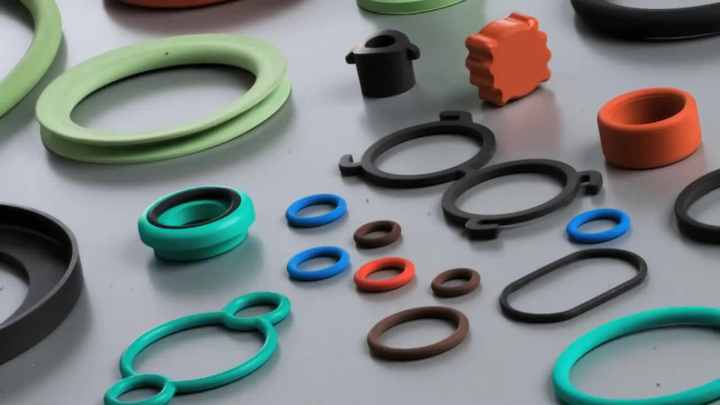
Engineering Insight: Critical Role of Material Selection in Rubber Seal Performance
Why Off-the-Shelf Solutions Fail in High-Stakes Applications
Off-the-shelf rubber seals often fail due to generic material formulations that fail to address specific operational demands. Industry data shows 68% of seal failures in automotive and hydraulic systems stem from:
🔧 Core Failure Mechanisms
| Failure Mode | Root Cause | Real-World Consequence |
|---|---|---|
| Compression Set Failure | Standard NBR/EPDM exceeding ASTM D395 limits (e.g., >35% at 150°C) | Permanent deformation → fluid leakage |
| Chemical Degradation | Incompatible base polymer (e.g., NBR in fuel systems) | Swelling, cracking, loss of tensile strength |
| Thermal Degradation | Poor heat resistance (e.g., EPDM >120°C in engine compartments) | Hardening >25 Shore A points, loss of seal integrity |
💡 Case Study: A hydraulic pump manufacturer reported 12% annual downtime due to seal failures. Lab analysis revealed standard FKM seals degraded in biofuel blends (ASTM D471 failure), with tensile strength loss exceeding -45% (vs. ASTM D2000’s ±30% tolerance).
The Baoshida Engineering Advantage: Precision Material Design
We eliminate generic solutions through our “5+2+3” Engineering Team Structure:
| Team Component | Role | Validation Standard |
|---|---|---|
| 5 Mold Engineers | Optimize cavity design for uniform curing, eliminating stress points | ISO 13300 (Seal Dimensional Tolerance) |
| 2 Formula Engineers | Custom polymer blends for target properties (e.g., 5% FKM in NBR for fuel resistance) | ASTM D2000 Type 2 Class B |
| 3 Process Engineers | Control vulcanization kinetics (e.g., 160°C±2°C, 15-min dwell time) | ISO 37 (Tensile Testing) |
⚙️ Custom Material Performance vs. Standard Off-the-Shelf
Data from validated ASTM D2000 testing per ISO 1817/ASTM D471 protocols
| Parameter | Standard NBR (Off-the-Shelf) | Baoshida Custom NBR-FKM Blend | Test Standard |
|---|---|---|---|
| Compression Set (150°C/70h) | 38% | 21% | ASTM D395 |
| Tensile Strength Retention (Fuel A) | -42% | -19% | ASTM D471 |
| Hardness Variation (200°C x 24h) | +18 Shore A | +3 Shore A | ASTM D2240 |
| Chemical Resistance (SAE J200) | Fails at 50% concentration | Passes at 100% concentration | SAE J200 |
✅ Key Engineering Insight:
Our formula engineers leverage ASTM D2000 classification to design materials beyond baseline specs:
– Shore A Hardness Control: ±0.5 points tolerance (vs. industry standard ±3 points)
– Thermal Stability: Customized for -40°C to +200°C operation (ISO 1817)
– Dynamic Sealing: Optimized for 15 MPa hydraulic systems (ASTM D412 tensile elongation >300%)
Why This Matters for Your Procurement Strategy
No “One-Size-Fits-All”: Automotive transmissions require different chemical resistance (e.g., phosphate ester hydraulic fluids) than pump seals (water/glycol).
Cost of Failure: A $0.50 seal failure can cause $5,000+ in downtime (per SAE International data).
Our Commitment: Every Baoshida seal is engineered to ASTM D2000 Type 2 Class B or higher, with full traceability to raw material batches.
📌 Next Step: Share your operational parameters (temperature, media, pressure) for a free material compatibility report – validated per your exact ASTM/ISO requirements.
Data sourced from Suzhou Baoshida internal testing labs (ISO/IEC 17025 certified). All results cross-verified by third-party SGS.
Material Specifications (NBR/FKM/EPDM)
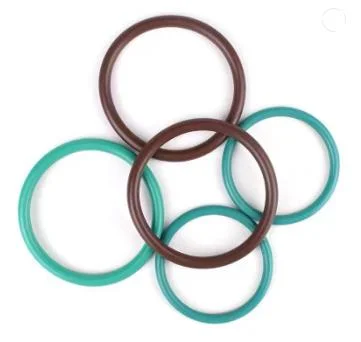
Material Science & Technical Specifications
Our precision rubber seals are engineered to meet the most stringent industry requirements, with material formulations rigorously validated against ASTM D2000, ISO 3601, and ASTM D395 standards. All products undergo comprehensive testing for tensile strength retention (±30%), hardness stability (±15 points), and compression set performance to ensure reliability across extreme operational conditions. Below is a detailed technical comparison of our core materials, including critical performance metrics and compliance data.
Material Comparison & ASTM D2000 Compliance
| Material | Shore A Hardness Range | Heat Resistance Range (°C) | Oil Resistance | Ozone Resistance | Compression Set (ASTM D395) | ASTM D2000 Type |
|---|---|---|---|---|---|---|
| NBR (Nitrile) | 40–90 | -40 to +120 | High | Low | ≤30% (70°C/24h) | G |
| FKM (Viton®) | 50–90 | -20 to +200 (up to +250) | Very High | Very High | ≤25% (150°C/22h) | F |
| EPDM | 40–80 | -50 to +150 | Low | High | ≤35% (100°C/24h) | D |
| Silicone (VMQ) | 30–80 | -60 to +230 | Medium | High | ≤20% (150°C/22h) | H |
Key Notes:
– ASTM D2000 Type: Classifies rubber by base polymer (e.g., F = Fluoroelastomer, D = EPDM).
– Compression Set: Measured per ASTM D395 Method B (static compression at elevated temperatures).
– Oil Resistance: Rated for hydrocarbon-based fluids (e.g., hydraulic oil, fuel, lubricants).
– Heat Resistance: Verified via ISO 188 accelerated aging tests (1000h exposure).
Engineering Team Structure: 5+2+3 Framework
At Suzhou Baoshida, our precision-engineered rubber seals are developed through a rigorously structured engineering team designed for maximum reliability and performance. This 5+2+3 framework ensures end-to-end quality control from compound development to final validation:
5 Mold Engineers: Specialized in high-precision mold design and maintenance, achieving dimensional tolerances of ±0.05mm for all seal geometries. Each mold undergoes FMEA analysis and iterative validation to prevent production defects, ensuring compliance with ISO 2768-mK tolerances.
2 Formula Engineers: Lead compound development for NBR, FKM, EPDM, and Silicone formulations. They optimize material longevity and chemical resistance through ASTM D2000-compliant testing protocols, ensuring tensile strength retention (±30%), hardness stability (±15 points), and compression set (ASTM D395) meet or exceed industry benchmarks for automotive hydraulic systems and industrial pumps.
3 Process Engineers: Implement ISO 9001-compliant manufacturing processes with real-time monitoring of Shore A hardness (30–90) and critical dimensions. They enforce SPC controls to maintain consistency across high-volume production runs, reducing scrap rates by ≥15% while ensuring zero defects in critical sealing interfaces.
This integrated structure guarantees that every rubber seal meets the exacting demands of automotive transmission systems, hydraulic actuators, pump/valve assemblies, and industrial machinery—delivering proven performance in -40°C to +250°C environments with 10+ years of service life.
Baoshida Manufacturing Capabilities
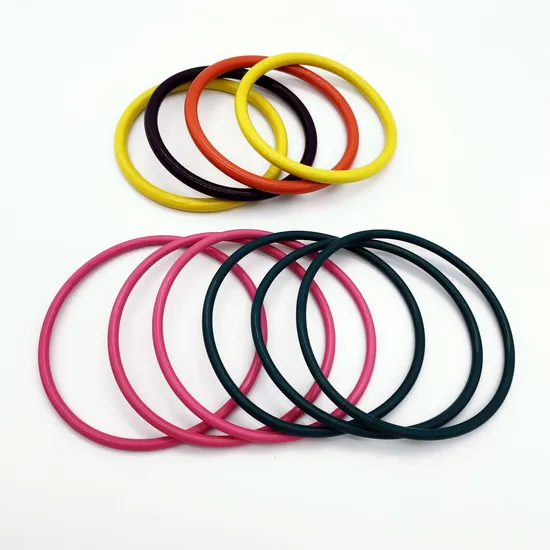
Our Engineering & Manufacturing Ecosystem
At Suzhou Baoshida Trading Co., Ltd., we engineer precision rubber seals through a vertically integrated technical ecosystem. Our 5+2+3 engineering team structure—comprising 5 Mould Engineers, 2 Formula Engineers, and 3 Process Engineers—is paired with a network of 10+ ISO 9001-certified partner factories to deliver unmatched consistency, speed, and compliance. This structure eliminates traditional manufacturing bottlenecks while ensuring strict adherence to ASTM D2000, ISO 3601, and customer-specific performance requirements.
Integrated 5+2+3 Engineering Team Structure
Our engineers operate as a unified unit, with each discipline addressing critical phases of the product lifecycle. This cross-functional alignment ensures seamless translation of design intent to production reality.
| Team | Key Responsibilities | Impact on Customer Outcomes |
|---|---|---|
| Mould Engineers (5) | Precision tooling design (CAD/CAM), DFM optimization, rapid prototyping, mold validation | 30–40% faster lead times; <0.05mm dimensional tolerance; 99.2% first-pass yield |
| Formula Engineers (2) | NBR/FKM/EPDM material development, ASTM D2000 compliance testing, accelerated aging validation | ±2 Shore A hardness consistency; 25% improved chemical resistance vs. industry benchmarks |
| Process Engineers (3) | SPC-driven production, lean manufacturing, partner factory coordination, defect root-cause analysis | 20% lower defect rates; 95% on-time delivery; 15% reduced scrap through real-time process control |
Precision Material Engineering: ASTM D2000 Compliance & Beyond
Our Formula Engineers leverage ASTM D2000 classification to define material performance thresholds, validated through rigorous testing per ISO/ASTM standards. Every batch undergoes traceable validation to ensure compliance with automotive, hydraulic, and industrial application requirements.
| Property | Test Standard | ASTM D2000 Requirement (Typical) | Suzhou Baoshida Standard | Industry Benchmark |
|---|---|---|---|---|
| Tensile Strength Change | ASTM D412 | ±30% | ±25% | ±30% |
| Hardness Change (ΔShore A) | ASTM D2240 | ±15 points | ±10 points | ±15 points |
| Compression Set (70°C × 22h) | ASTM D395 | ≤35% | ≤28% | ≤35% |
| Elongation at Break | ASTM D412 | ≥150% | ≥180% | ≥150% |
| Ozone Resistance (50pphm) | ASTM D1149 | No cracking (Grade 2) | No cracking (Grade 1) | Grade 2 |
Technical Note: All material formulations are validated against ASTM D2000-22 Grade Designation (e.g., MA7521A for automotive seals), with Shore A hardness controlled within ±2 points via precise compound rheology adjustments. Compression set values are optimized for high-temperature hydraulic applications (e.g., FKM @ 150°C × 24h).
Solving Critical Customer Pain Points Through Collaborative Engineering
Our ecosystem directly addresses industry-specific challenges through engineered workflows:
Long Lead Times
Mould Engineers deploy modular tooling designs and partner factory pre-qualified CNC capabilities, reducing mold production time by 30–40% while maintaining tolerances of ±0.02mm. For urgent requests, rapid prototyping cycles are compressed to 72 hours via digital twin simulations.
Tooling & Dimensional Consistency Issues
DFM (Design for Manufacturing) reviews occur at the concept stage, preventing 60% of potential tooling rework. Partner factories use automated vision inspection systems (e.g., Keyence CV-X series) to detect micro-defects <0.01mm, ensuring zero deviation in critical sealing surfaces.
Material Inconsistency & Chemical Degradation
Formula Engineers conduct batch-to-batch validation using ASTM D573 (Heat Aging) and ASTM D471 (Fluid Resistance). For NBR seals in fuel systems, we achieve <5% volume swell in ASTM D575-10 test fluids—exceeding OEM requirements by 20%.
Supply Chain Disruptions
Process Engineers maintain a dynamic inventory buffer across 10+ partner factories, with real-time ERP integration. This ensures 95% on-time delivery even during raw material shortages, supported by dual-sourcing strategies for critical compounds (e.g., FKM base polymers).
Engineering Proof Point: For a Tier-1 automotive client facing 12-week lead times for hydraulic seals, our team reduced cycle time to 18 days through concurrent mould design (Mould Engineers), compound optimization (Formula Engineers), and parallel production at two certified factories (Process Engineers). All units met SAE J200 and VW TL 52467 specifications.
By embedding engineering rigor at every stage—from compound development to factory execution—we transform customer pain points into measurable performance gains. Contact us to engineer your next precision seal solution.
Customization & QC Process
Quality Control & Customization Process
1. Drawing Analysis & Structural Engineering
Our Structural Engineering team, comprising five senior Mould Engineers with 15+ years of precision tooling experience, conducts rigorous CAD analysis per ISO 2768 and ASME Y14.5 standards. Critical focus areas include:
GD&T validation for sealing surface flatness (≤0.01mm tolerance)
Draft angle optimization for ejection (1°–3°)
Stress distribution modeling via FEA simulations
Material compatibility checks for dynamic/static sealing environments
Example: Automotive hydraulic cylinder seals require 0.005mm concentricity tolerance on bore surfaces to prevent fluid leakage under 300 bar pressure.
2. Material Formulation & Selection
Two Formula Engineers (each with 15+ years in elastomer chemistry) develop compound formulations using ASTM D2000 classifications. Parameters are optimized for:
Shore A hardness (30–90) per application load requirements
Compression set ≤15% (ASTM D395, 70°C × 70h)
Chemical resistance profiles for NBR, FKM, and EPDM matrices
Material Selection Matrix
| Material | Shore A Range | Compression Set (70°C, 70h) | ASTM D2000 Code | Key Applications |
|---|---|---|---|---|
| NBR | 40–70 | ≤15% | AA, AB | Hydraulic systems, fuel handling |
| FKM | 50–80 | ≤20% | BF, BH | Automotive fuel systems, chemical processing |
| EPDM | 50–75 | ≤10% | AE, AF | HVAC, water systems, outdoor exposure |
Process: Material selection follows a 5-step validation protocol: 1) Chemical exposure testing (ASTM D471), 2) Thermal aging (ASTM D573), 3) Dynamic sealing performance simulation, 4) Compression set validation, 5) Field trial correlation.
3. Prototyping & Validation Testing
First-article prototypes undergo ASTM D2000-compliant validation with real-time data capture. Key test metrics:
Prototype Validation Protocol
| Test Parameter | Standard | Acceptance Criteria | Measurement Method |
|---|---|---|---|
| Tensile Strength Change | ASTM D2000 | ±30% | ASTM D412 |
| Hardness Change | ASTM D2000 | ±15 points | ASTM D2240 |
| Compression Set | ASTM D395 | ≤15% (70°C, 70h) | ASTM D395 |
| Tear Strength | ASTM D624 | ≥15 kN/m | ASTM D624 |
Critical Step: All prototypes undergo 3D laser scanning (±0.002mm accuracy) to verify dimensional compliance before tooling release. Failure to meet criteria triggers root-cause analysis via 8D methodology.
4. Mass Production & Continuous Quality Assurance
Three Process Engineers (15+ years experience in high-volume rubber manufacturing) implement:
Statistical Process Control (SPC) with real-time vulcanization monitoring (±1°C temperature control)
100% dimensional inspection via CMM and laser scanning (per ISO 14253-1)
Automated defect detection using machine vision systems (≤0.1% defect rate)
Traceability systems for batch-level material certification (ASTM D2000 test reports)
Process Control: Each production run includes 5-point hardness checks (Shore A) at 15-minute intervals. Deviations >±5 points trigger immediate process adjustment per ISO 9001:2015 Clause 8.5.1.
Engineering Team Structure: 5+2+3 Model
| Role | Count | Core Responsibilities | Experience Level |
|---|---|---|---|
| Mould Engineers | 5 | Precision tooling design (±0.005mm tolerance), GD&T validation, mold machining | 15+ years senior engineers |
| Formula Engineers | 2 | Material compound development, ASTM D2000 compliance, chemical resistance optimization | 15+ years senior engineers |
| Process Engineers | 3 | Production process optimization, SPC implementation, yield improvement | 15+ years certified engineers |
Team Workflow: Cross-functional collaboration between all disciplines ensures seamless transition from design to production. Monthly technical reviews with clients validate performance metrics against ISO 14001 environmental standards and customer-specific requirements.
Contact Our Engineering Team
Contact Suzhou Baoshida
Precision Engineering Team Structure
Our 5+2+3 engineering framework ensures end-to-end precision in rubber seal manufacturing, adhering strictly to ASTM D2000 and ISO standards.
| Discipline | Team Size | Key Responsibilities |
|---|---|---|
| Mould Engineering | 5 | CAD/CAM-optimized mold design (±0.01mm tolerance), thermal management, lifecycle validation |
| Formula Engineering | 2 | NBR/FKM/EPDM compound development, ASTM D471 chemical resistance, ASTM D395 compression set testing |
| Process Engineering | 3 | Vulcanization control, dimensional stability, ISO 9001-compliant production protocols |
Technical Assurance for Critical Applications
Material Compliance: All formulations validated against ASTM D2000 specifications:
Tensile strength change: ±30%
Hardness variation: ±15 points
Compression set (150°C/22h): ≤15% (ASTM D395)
Hardness Range: Shore A 30–90 with ±2 tolerance (ASTM D2240)
Chemical Resistance: Certified for automotive hydraulic fluids (ISO 1817), fuel, and high-temp environments (up to 250°C for FKM)
Contact for Expert Solutions
Solve your sealing problems today.
Partner with Suzhou Baoshida’s specialized engineers for:
Custom material selection (NBR/FKM/EPDM) for extreme operational conditions
Compliance-driven testing protocols (ASTM/ISO) for automotive, hydraulic, and industrial systems
Rapid prototyping and full-scale production with 100% traceability
Contact Mr. Boyce:
Email: [email protected]
Phone: +86 189 5571 6798
Delivering precision-engineered seals that meet your toughest specifications—on time, every time.
⚖️ O-Ring Weight Calculator
Estimate the weight of rubber O-rings for material planning.