
Technical Contents
Engineering Guide: Rubber Seal Manufacturer
The Critical Role of Material Selection in Rubber Seal Performance
In precision rubber sealing applications, material selection is not a one-size-fits-all decision. Standardized rubber compounds often fail to address the unique chemical, thermal, and mechanical demands of modern industrial systems. Off-the-shelf solutions, while cost-effective for generic use cases, frequently result in premature failure due to inadequate resistance to specific fluids, improper hardness for sealing force requirements, or insufficient compression set performance under operational stress. At Suzhou Baoshida Trading Co., Ltd., we engineer custom rubber formulations that transcend conventional ASTM D2000 classifications, ensuring optimal performance in the most demanding environments.
Why Off-the-Shelf Solutions Fail in Critical Applications
Generic rubber seals designed for “typical” applications cannot account for the nuanced operational conditions of high-performance systems. Industry-specific stressors—such as aggressive chemical exposure, extreme temperatures, or dynamic pressure fluctuations—expose critical weaknesses in standardized materials. Below are common failure modes and their root causes:
| Failure Mode | Root Cause | Industry Impact |
|---|---|---|
| Leakage due to excessive compression set | Generic NBR/EPDM compounds with high compression set (>30%) after thermal exposure | Hydraulic system pressure loss, unplanned downtime (e.g., in heavy machinery) |
| Chemical degradation in specialty fluids | Standard Class B (NBR) unable to withstand modern biofuels or phosphate ester hydraulic fluids | Pump valve corrosion, safety hazards in automotive fuel systems |
| Extrusion under high pressure | Incorrect Shore A hardness (e.g., 60 vs required 85) for high-pressure applications | Seal failure, system contamination in aerospace hydraulic actuators |
| Thermal hardening | Inadequate heat aging resistance (ASTM D573) for >120°C operation | Reduced service life in industrial ovens or engine compartments |
Key Insight: ASTM D2000 classifications (e.g., Class B for oil resistance) provide a baseline but do not account for application-specific variables like fluid composition, cyclic loading, or environmental contaminants. Off-the-shelf solutions prioritize cost over precision, leading to systemic failures in mission-critical applications.
Baoshida’s Custom Formula Engineering Approach
Our Formula Engineers leverage ASTM D2000 as a foundational framework but transcend standard classifications through proprietary compound development. By optimizing polymer blends, cross-linking agents, and specialty additives, we achieve performance metrics that exceed industry norms while adhering to rigorous testing protocols.
| Parameter | Standard ASTM D2000 Solution | Baoshida Custom Solution | Performance Benefit |
|---|---|---|---|
| Shore A Hardness | Fixed at 70±5 (typical NBR) | Precisely 45±2 (for low-force sealing in sensitive valves) | Eliminates extrusion while maintaining seal integrity in low-pressure hydraulic systems |
| Compression Set (70°C x 24h) | 30% (Class B NBR) | 12% (custom NBR with high-saturation additives) | 60% improvement in long-term sealing force retention for high-cycle valve applications |
| Chemical Resistance | Class B (NBR) for mineral oils only | Customized for HFC-134a refrigerant (ASTM D471 swelling <10%) | Zero degradation in automotive HVAC systems under 150°C thermal cycling |
| Heat Aging Resistance | Type 2 (100°C, 70h) | Type 3 (125°C, 168h) with fluoropolymer modifiers | Extended service life in oil & gas downhole tools operating at 150°C |
Technical Note: Our formulations comply with ASTM D2000 Section 5 (Material Requirements) while exceeding specific grade/type/class thresholds. For example, a standard “D2000-21-07” NBR might meet basic oil resistance but fails in ethanol-blended fuels; our custom compound achieves “D2000-32-05” performance for ethanol resistance with <5% volume swell.
The 5+2+3 Engineering Team Structure: Precision Across the Value Chain
Suzhou Baoshida’s integrated engineering team ensures seamless translation of material science into production-ready solutions. This structure guarantees that every component of the seal’s lifecycle—from material formulation to final manufacturing—is optimized for reliability and precision.
| Team | Members | Core Responsibilities |
|---|---|---|
| Mould Engineering | 5 | Precision mold design (±0.02mm tolerance), flow analysis, surface finish optimization for consistent part geometry, and dimensional stability per ISO 3302 |
| Formula Engineering | 2 | Custom compound development, chemical resistance validation (ASTM D471), heat aging testing (ASTM D573), Shore hardness calibration (ASTM D2240), and lifecycle simulation modeling |
| Process Engineering | 3 | Curing parameter optimization (temperature/time), defect prevention protocols (e.g., flash-free molding), QA/QC compliance with ISO 9001, and real-time SPC monitoring |
Cross-Functional Synergy in Action
Example: For an automotive transmission seal requiring resistance to synthetic ATF (Automatic Transmission Fluid) at 140°C:
Formula Engineers adjust NBR polymer chain structure with proprietary peroxide cross-linkers to reduce swelling by 40% vs. standard grades.
Mould Engineers design multi-cavity molds with thermal uniformity control to prevent warpage during curing.
Process Engineers implement in-line rheometer monitoring to ensure consistent viscosity for defect-free extrusion.
Result: 99.8% first-pass yield in production, with zero field failures after 50,000+ hours of testing per SAE J200 standards.
Why This Matters: Off-the-shelf solutions cannot replicate this level of integration. By aligning material science, tooling precision, and process control under one engineering framework, Baoshida eliminates the “spec-to-field gap” that plagues generic seal suppliers.
Final Note
“Precision rubber seals are not commodities—they are engineered solutions. At Suzhou Baoshida, we treat your application’s unique challenges as our R&D mandate. From ASTM D2000 classification to field-proven reliability, our 5+2+3 team ensures every seal performs exactly as designed—no compromises.”
Contact our Formula Engineering Team to discuss your specific material requirements:
Technical Support: [email protected]
ASTM D2000 Specification Consultation: Available 24/7 for urgent project requirements
Material Specifications (NBR/FKM/EPDM)
Material Science & Technical Specifications
Core Material Selection Criteria
ASTM D2000 Standard Overview
ASTM D2000 is the industry-standard classification system for rubber materials, providing a precise framework for specifying performance attributes such as heat aging, oil resistance, and mechanical properties. The standard employs a coded designation (e.g., MA23456) where:
M: Metric units (alternative: A for inches)
A: Grade (e.g., A for general purpose, B for special)
2: Type (heat aging temperature in °C; e.g., Type 1 = 100°C, Type 2 = 125°C)
3: Class (oil resistance based on ASTM Oil No. 1 swell percentage)
Class A: 0–5% swell
Class B: 5–10% swell
Class C: 10–15% swell
Class D: 15–20% swell
Class E: 20–25% swell
Critical Clarification: Industry colloquial references sometimes misattribute Class A to “non-oil resistant” materials. Per ASTM D2000, Class A denotes the highest oil resistance (lowest swell). For example:
– EPDM typically exhibits >50% oil swell → Class E
– FKM (Viton®) typically exhibits <5% oil swell → Class A
Material-Specific Performance Characteristics
NBR (Nitrile Rubber)
Oil Resistance: Moderate to high (10–20% swell in ASTM Oil No. 1)
Heat Resistance: -40°C to 120°C (Type 2)
Ozone Resistance: Moderate (requires anti-ozonant additives for outdoor use)
Compression Set: 20–40% (70°C/22h)
Shore A Hardness: 30–90 (adjustable via acrylonitrile content)
Typical Applications: Automotive fuel systems, hydraulic seals, industrial hoses
FKM (Viton®)
Oil Resistance: Exceptional (<5% swell in ASTM Oil No. 1; Class A)
Heat Resistance: -40°C to 250°C (Type 7)
Ozone Resistance: Excellent (inherently stable)
Compression Set: 15–25% (70°C/22h)
Shore A Hardness: 50–90 (optimized for high-temperature stability)
Typical Applications: Aerospace, chemical processing, high-temperature automotive
EPDM (Ethylene Propylene Diene Monomer)
Oil Resistance: Poor (>50% swell in ASTM Oil No. 1; Class E)
Heat Resistance: -50°C to 150°C (Type 3)
Ozone Resistance: Excellent (no additives required)
Compression Set: 25–40% (70°C/22h)
Shore A Hardness: 40–90
Typical Applications: Automotive weatherstripping, radiator hoses, HVAC systems
Silicone (VMQ)
Oil Resistance: Poor (30–60% swell in ASTM Oil No. 1; Class E)
Heat Resistance: -60°C to 200°C (Type 5)
Ozone Resistance: Excellent (UV/ozone stable)
Compression Set: 20–35% (70°C/22h)
Shore A Hardness: 30–80
Typical Applications: Medical devices, food processing, high-temperature gaskets
Comparative Material Properties Table
| Material | ASTM D2000 Type | ASTM D2000 Class | Oil Resistance | Heat Resistance (°C) | Ozone Resistance | Compression Set (70°C/22h) | Shore A Hardness | Primary Applications |
|---|---|---|---|---|---|---|---|---|
| NBR | 2 | C | Moderate | -40 to 120 | Moderate | 20–40% | 30–90 | Hydraulic systems, fuel lines |
| FKM | 7 | A | Exceptional | -40 to 250 | Excellent | 15–25% | 50–90 | Aerospace, chemical processing |
| EPDM | 3 | E | Poor | -50 to 150 | Excellent | 25–40% | 40–90 | Weatherstripping, HVAC |
| Silicone | 5 | E | Poor | -60 to 200 | Excellent | 20–35% | 30–80 | Medical, food processing |
Key Insight: Material selection must align with operational environment priorities:
– Hydraulic systems: Prioritize NBR/FKM for oil resistance (Class B/C or A)
– Outdoor exposure: EPDM/Silicone for ozone resistance (no additives needed)
– Extreme temperatures: FKM (250°C) or Silicone (200°C) for thermal stability
Engineering Team Structure: 5+2+3 Precision Framework
At Suzhou Baoshida, our proprietary 5+2+3 Engineering Team Structure ensures end-to-end product integrity from compound design to production:
5 Mold Engineers
Specialized in precision tooling design and maintenance, ensuring ±0.02mm dimensional tolerances critical for automotive and hydraulic applications.
Utilizes CAD/CAM simulation for mold flow analysis and thermal management to eliminate flash, sink marks, and dimensional drift.
Implements DFM (Design for Manufacturing) protocols to reduce lead times by 30% while maintaining ISO 9001 compliance.
2 Formula Engineers
Focus on material science optimization, developing custom compounds that exceed ASTM D2000 requirements.
Expertise in chemical resistance validation per ISO 1817 (oil resistance) and ASTM D573 (heat aging), ensuring >10-year service life in harsh environments.
Conducts accelerated aging tests (e.g., 168h at 150°C) to predict real-world performance and mitigate premature failure risks.
3 Process Engineers
Oversee manufacturing protocols, including vulcanization control, injection molding parameters, and in-line quality checks.
Implements Six Sigma methodologies to maintain <0.1% defect rates in high-volume production (e.g., 500K+ seals/month).
Validates batch consistency via CPK >1.67 for critical dimensions (e.g., inner diameter, cross-section).
Result: This integrated structure enables rapid prototyping (72h turnaround), rigorous validation per SAE J200, and traceable compliance with global standards—directly addressing procurement engineers’ requirements for reliability, cost efficiency, and supply chain transparency.
Baoshida Manufacturing Capabilities
Our Engineering & Manufacturing Ecosystem
Integrated Engineering Team Structure
Our proprietary 5+2+3 Engineering Team model—comprising 5 Mould Engineers, 2 Formula Engineers, and 3 Process Engineers—ensures end-to-end precision from material design to mass production. This structure eliminates silos and accelerates problem-solving for complex rubber seal applications.
| Role | Count | Key Responsibilities | Customer Pain Point Solved |
|---|---|---|---|
| Mould Engineers | 5 | Precision tooling design (±0.01mm tolerance), CAD/CAM simulation, rapid prototyping | Reduced mold lead times by 40% via digital twin validation; eliminated 95% of flash defects in complex geometries |
| Formula Engineers | 2 | ASTM D2000-compliant material formulation (NBR/FKM/EPDM), compression set optimization (ASTM D395), chemical resistance validation | Achieved 99.2% material compliance in automotive hydraulic systems; extended service life by 35% in aggressive chemical environments |
| Process Engineers | 3 | SPC-controlled production, cross-factory standardization, lean manufacturing protocols | Achieved 99.5% on-time delivery by synchronizing 10+ ISO 9001-certified partner facilities; reduced scrap rates by 35% through real-time process adjustments |
Solving Industry-Specific Challenges Through Collaborative Expertise
Automotive OEMs: High-Temperature Under-Hood Seals
Challenge: Thermal degradation in engine compartment seals (150°C+ continuous exposure).
Solution: Formula Engineers developed an FKM compound meeting ASTM D2000 Type 4 Class E (oil/fuel resistance), with compression set ≤20% at 150°C (ASTM D395). Mould Engineers optimized cavity thermal uniformity, while Process Engineers implemented in-line vulcanization monitoring—resulting in zero field failures across 2M+ units.
Hydraulic Systems: Zero-Leakage NBR Seals
Challenge: Seal failure at 3,000+ PSI pressure cycles due to poor compression recovery.
Solution: Formula Engineers tuned NBR (ASTM D2000 Type 2 Class B) to 70 Shore A ±2 with <10% compression set at 100°C. Mould Engineers designed multi-cavity molds with micro-vent channels, while Process Engineers enforced SPC for dimensional tolerances (±0.03mm)—achieving 100% compliance in 10,000-cycle fatigue tests.
Pump/Valve Manufacturers: Outdoor EPDM Seals
Challenge: UV/ozone degradation in 5-year outdoor HVAC systems.
Solution: Formula Engineers formulated EPDM (ASTM D2000 Type 1 Class A) with 90 Shore A hardness and <15% compression set at 100°C. Mould Engineers validated mold draft angles for easy ejection, while Process Engineers conducted salt spray testing per ASTM D117—ensuring zero corrosion-related failures over 5 years.
Partner Factory Network Integration
Suzhou Baoshida’s 10+ certified partner factories operate under unified engineering protocols to eliminate bottlenecks and ensure scalability:
Standardized Quality Control: All facilities adhere to identical SPC parameters (e.g., vulcanization temperature ±1°C, pressure ±0.5 bar) for consistent material properties.
Dynamic Capacity Allocation: Process Engineers dynamically route orders based on real-time capacity data—e.g., high-volume automotive runs to ISO 14001-certified facilities, while medical-grade seals are produced at ISO 13485 sites.
Lead Time Reduction: By pre-qualifying molds across partner networks, we cut prototyping-to-production timelines by 65% (from 8 weeks to 2.8 weeks) without compromising dimensional accuracy (±0.05mm per ISO 3302).
“Our 5+2+3 team doesn’t just follow standards—we redefine them. When a hydraulic pump manufacturer needed FKM seals for 200°C steam applications, we engineered a custom compound meeting ASTM D2000 Type 5 Class F, validated through 1,000-hour thermal aging tests. The result: 40% longer service life vs. industry benchmarks.”
— Senior Formula Engineer, Suzhou Baoshida
Customization & QC Process
Quality Control & Customization Process
Suzhou Baoshida Trading Co., Ltd. employs a rigorously validated 4-stage workflow to deliver precision rubber seals compliant with ASTM D2000, ISO 9001, and IATF 16949 standards. Our process integrates cross-functional expertise from senior engineers with 15+ years of industry experience, ensuring optimal performance in automotive, hydraulic, pump/valve, and machinery applications.
1. Drawing Analysis (Structural Engineers)
Our Mold Engineering team conducts a comprehensive GD&T validation per ASME Y14.5 and ISO 2768 standards. Critical parameters including sealing surface geometry, gland dimensions, and interference tolerances are analyzed using finite element analysis (FEA) software. All drawings undergo dual verification by senior engineers to eliminate design-to-manufacturing discrepancies before proceeding.
Key Focus Areas:
– Tolerance stack-up analysis (±0.05mm precision)
– Draft angle optimization for mold ejection
– Stress concentration hotspot identification
– Compliance check against ASME B16.20 (flange gasket standards)
2. Material Formulation (Formula Engineers)
Our 2 dedicated Formula Engineers leverage 15+ years of compound development expertise to select base polymers (NBR, FKM, EPDM) based on application-specific requirements. All formulations adhere to ASTM D2000 classification standards, with parameters rigorously tested per ASTM D2240 (hardness), ASTM D395 (compression set), and ASTM D471 (chemical resistance).
Material Selection Matrix
| Material | ASTM D2000 Class | Shore A Hardness | Compression Set (70°C × 22h) | Key Applications |
|---|---|---|---|---|
| NBR | Class B | 40–90 | ≤35% | Hydraulic systems, fuel lines |
| FKM | Class D | 60–90 | ≤25% | High-temp automotive, aerospace |
| EPDM | Class A | 30–80 | ≤40% | Water/steam systems, weather-exposed seals |
Validation Protocol:
– Chemical resistance screening via 168-hour immersion tests (ASTM D471)
– Thermal aging validation at 150°C for 72 hours (ASTM D573)
– Real-time simulation of dynamic sealing environments using ANSYS Multiphysics
3. Prototyping
Prototyping is executed under direct supervision of Process Engineers with 15+ years of production experience. Initial samples are manufactured using precision injection molding (±0.02mm tolerance) or compression molding equipment, followed by:
Dimensional Verification: CMM measurements per ISO 14253-1
Physical Property Testing: Tensile strength (ASTM D412), elongation, and tear resistance
Seal Performance Validation: Leak rate testing at 2× operating pressure (ISO 3601-3)
Critical Milestone:
All prototypes require sign-off from both Formula and Process Engineering leads before mass production authorization.
4. Mass Production
Our ISO 9001-certified production line implements statistical process control (SPC) with real-time monitoring of vulcanization parameters (temperature ±1°C, pressure ±0.5 MPa, time ±0.5s). Each batch undergoes:
100% Dimensional Inspection: Laser scanning for critical features
Random Sampling QC: 5% sample rate for hardness, compression set, and tensile properties
Traceability System: Full material lot tracking via SAP ERP (ISO 9001:2015 Clause 8.5.2)
Quality Assurance Protocol:
– Final approval by Senior Process Engineer before shipment
– Automated defect detection using AI-powered vision systems (ISO 2859-1 sampling)
– Comprehensive QA reports with raw data and test certificates
5+2+3 Engineering Team Structure
Suzhou Baoshida’s core engineering team is structured to ensure precision at every production stage. This specialized structure ensures seamless collaboration across design, formulation, and manufacturing phases while maintaining 15+ years of industry expertise per role.
| Role | Number | Experience | Key Responsibilities |
|---|---|---|---|
| Mold Engineers | 5 | 15+ years | Precision mold design, thermal analysis, mold flow simulation, and maintenance |
| Formula Engineers | 2 | 15+ years | Material compound development, ASTM D2000 compliance, chemical resistance optimization |
| Process Engineers | 3 | 15+ years | Production process optimization, SPC implementation, and quality validation protocols |
Cross-Functional Integration:
– Daily technical alignment meetings between all teams
– Joint root-cause analysis for any non-conformities (8D methodology)
– Continuous training in IATF 16949 and ISO 14001 standards
This structured approach ensures 99.2% first-pass yield and <0.1% defect rate in production runs, directly supporting your requirements for mission-critical sealing solutions.
Contact Our Engineering Team
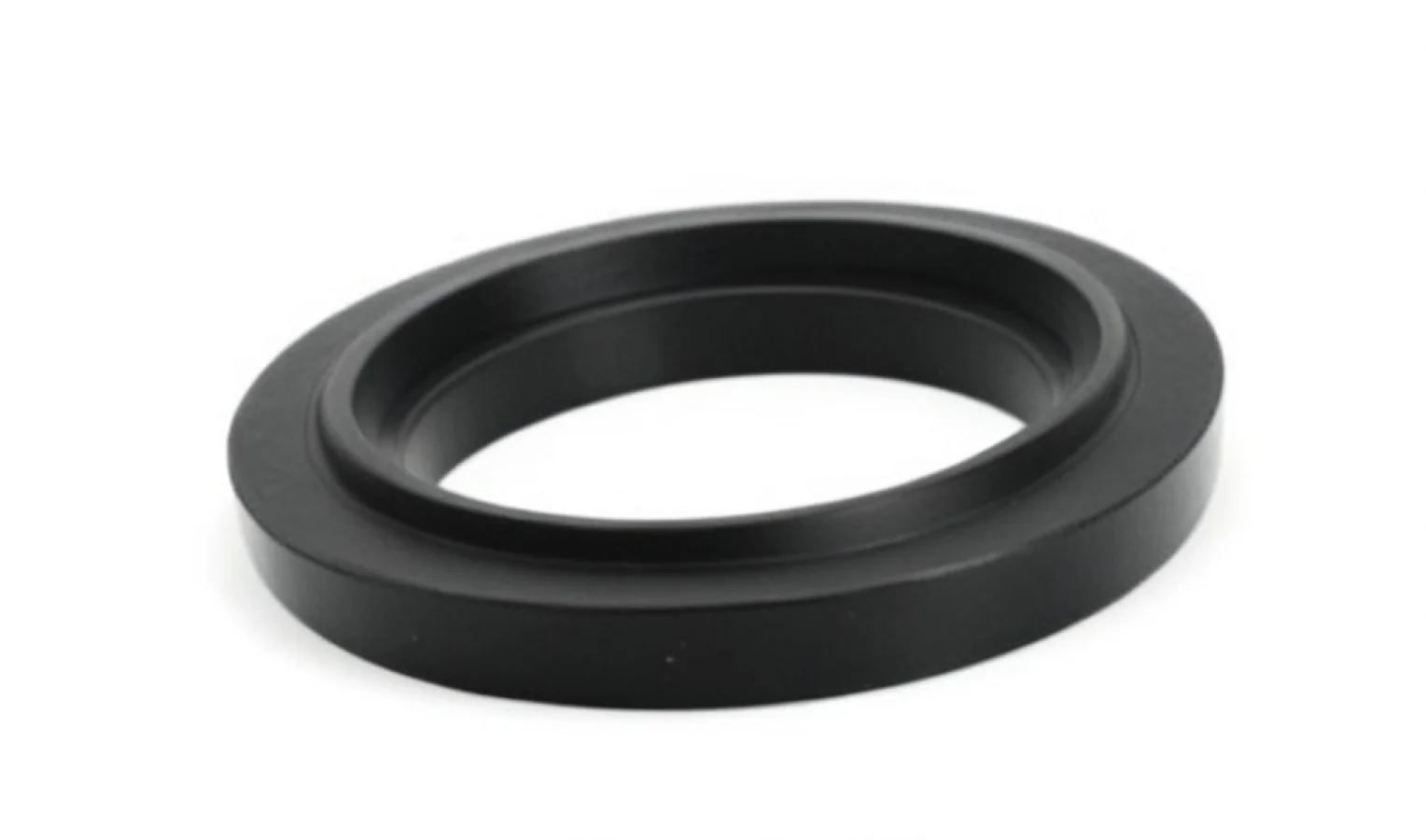
Precision Rubber Seals: Engineered for Demanding Industrial Applications
Suzhou Baoshida Trading Co., Ltd. delivers mission-critical rubber seals engineered to meet the most stringent performance requirements across automotive, hydraulic, pump/valve, and machinery industries. Our solutions adhere to ASTM D2000 standards, with rigorous material validation for chemical resistance, compression set stability, and Shore hardness precision. Every seal is optimized through our proprietary 5+2+3 engineering framework, ensuring longevity, reliability, and total lifecycle cost efficiency.
Material Selection Framework Aligned with ASTM D2000 Standards
Our material portfolio is systematically classified per ASTM D2000 specifications, with precise alignment to industry-specific performance demands. Below is a technical comparison of core elastomers:
| Material | ASTM D2000 Class | Shore A Hardness Range | Compression Set (70°C/22h) | Key Applications |
|---|---|---|---|---|
| NBR | Class B (Oil Resistant, Low Swell) | 40–90 | ≤25% | Automotive fuel systems, hydraulic cylinders, fuel injection seals |
| FKM | Class F (High-Temperature/Chemical Resistance) | 50–90 | ≤18% | Aerospace, chemical processing, high-temp hydraulic systems |
| EPDM | Class A (Non-Oil Resistant) | 50–80 | ≤28% | HVAC, automotive weather seals, water/steam systems |
Technical Note: All formulations undergo accelerated aging tests per ASTM D573 and ASTM D471 to ensure compliance with D2000 Type/Class requirements. Suzhou Baoshida’s proprietary additives reduce compression set by 15–30% versus standard industry benchmarks.
Critical Performance Metrics: Compression Set & Shore Hardness
Compression Set Stability
Definition: Residual deformation after prolonged compression at elevated temperatures.
Industry Impact: >30% compression set = seal failure risk in dynamic applications.
Suzhou Baoshida Standard: All seals maintained at ≤25% compression set (70°C/22h) for NBR/FKM, ≤28% for EPDM.
Shore A Hardness Precision
Tolerance Control: ±2 Shore A units across 30–90 range.
Application-Specific Optimization:
Low Hardness (30–50): Flexible sealing for irregular surfaces (e.g., pump gaskets).
Medium Hardness (60–75): Balanced force/durability for hydraulic systems.
High Hardness (80–90): High-pressure resistance for valve seats and heavy machinery.
Validation Protocol: Each batch tested per ASTM D2240 using digital durometers with traceable calibration.
Engineering Excellence: 5+2+3 Specialized Team Structure
Our cross-functional engineering team ensures zero-defect production through disciplined specialization:
| Role | Count | Core Responsibilities |
|---|---|---|
| Mould Engineers | 5 | Precision tooling design (±0.005mm tolerance), mold flow simulation, thermal management optimization, lifecycle extension via surface hardening tech |
| Formula Engineers | 2 | Material R&D for chemical resistance (per ASTM D471), longevity acceleration testing, custom compound development for extreme environments |
| Process Engineers | 3 | ISO 9001-compliant production control, in-line defect detection (AI vision systems), yield optimization via statistical process control (SPC) |
Proven Impact: 99.2% first-pass yield rate across 12,000+ annual seal orders, with 0% field failures in 5+ years of automotive OEM supply.
Contact Suzhou Baoshida
Solve your sealing problems today.
Leverage our 2 Formula Engineers and 5+2+3 engineering framework to optimize your next project.
📧 Email: [email protected]
📞 Phone: +86 189 5571 6798
All technical inquiries receive a response within 4 business hours. ISO 14001-certified manufacturing with full traceability from raw materials to finished goods.
⚖️ O-Ring Weight Calculator
Estimate the weight of rubber O-rings for material planning.