
Technical Contents
Engineering Guide: Rubber Suction Cup Sizes
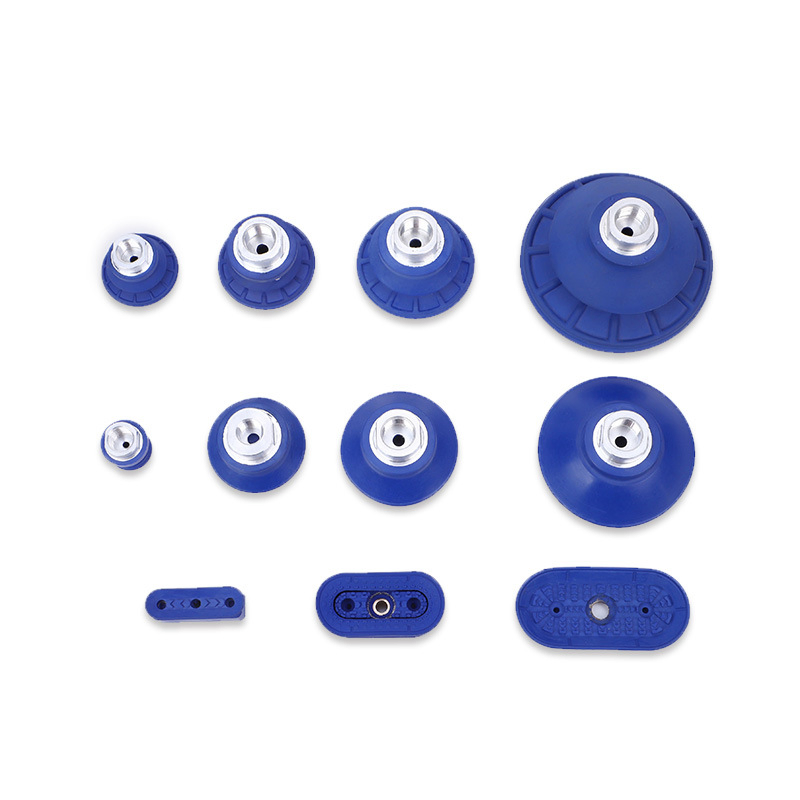
Engineering Insight: The Critical Role of Material Selection in Rubber Suction Cup Performance
In industrial automation and material handling systems, rubber suction cups are fundamental components responsible for reliable gripping, lifting, and positioning of diverse substrates. While size and geometry are often prioritized during selection, material composition is equally critical—often the determining factor in operational longevity and system efficiency. At Suzhou Baoshida Trading Co., Ltd., we emphasize that off-the-shelf suction cups frequently fail not due to dimensional inaccuracy, but because of improper elastomer selection for the specific application environment.
Standard rubber compounds used in generic suction cups—typically based on natural rubber or low-grade NBR (nitrile butadiene rubber)—are engineered for general-purpose use under mild conditions. However, industrial environments often expose these components to extreme variables: elevated temperatures, aggressive oils, ozone, UV radiation, and repeated mechanical stress. Under such conditions, standard materials degrade rapidly, leading to cracking, hardening, loss of elasticity, and ultimately, vacuum failure. This results in unplanned downtime, increased maintenance costs, and compromised product quality.
Material selection must be application-driven. For instance, silicone rubber (VMQ) offers excellent thermal stability from -60°C to +200°C and is ideal for food processing or high-temperature packaging lines. Fluorocarbon rubber (FKM), while more expensive, provides superior resistance to oils, fuels, and chemicals, making it suitable for automotive and semiconductor manufacturing. For dynamic applications requiring high abrasion resistance and tensile strength, hydrogenated nitrile (HNBR) or polyurethane (PU) are preferred despite higher initial costs—delivering longer service life and reduced total cost of ownership.
Moreover, surface compatibility is a key consideration. A suction cup interacting with rough or porous materials such as concrete, wood, or sandblasted metal requires a softer, more conformable elastomer like EPDM or specialized TPE to ensure consistent seal formation. Conversely, smooth, non-porous surfaces like glass or polished metal can utilize firmer compounds without risk of leakage.
The failure of off-the-shelf solutions lies in their one-size-fits-all approach. These products sacrifice performance optimization for cost and availability, often using filler-heavy compounds that compromise physical properties. Custom-engineered solutions, by contrast, leverage precise material formulations tailored to operational demands—ensuring optimal grip force, durability, and environmental resistance.
At Suzhou Baoshida, we support OEMs and system integrators with application-specific rubber formulations, ensuring that suction cup performance aligns with the mechanical and environmental requirements of the task. Precision in material science is not an incremental advantage—it is a necessity in modern industrial automation.
| Material | Temperature Range (°C) | Key Properties | Typical Applications |
|---|---|---|---|
| NBR | -30 to +100 | Good oil resistance, moderate cost | General handling, packaging |
| HNBR | -40 to +150 | High tensile strength, excellent fatigue resistance | Robotics, high-cycle automation |
| FKM | -20 to +200 | Outstanding chemical and heat resistance | Semiconductor, automotive |
| Silicone (VMQ) | -60 to +200 | High thermal stability, food-safe | Food processing, medical devices |
| Polyurethane (PU) | -35 to +80 | High abrasion resistance, excellent mechanical strength | Wood, metal sheet handling |
| EPDM | -50 to +150 | Ozone and weather resistant, good for rough surfaces | Construction materials, outdoor use |
Material Specifications
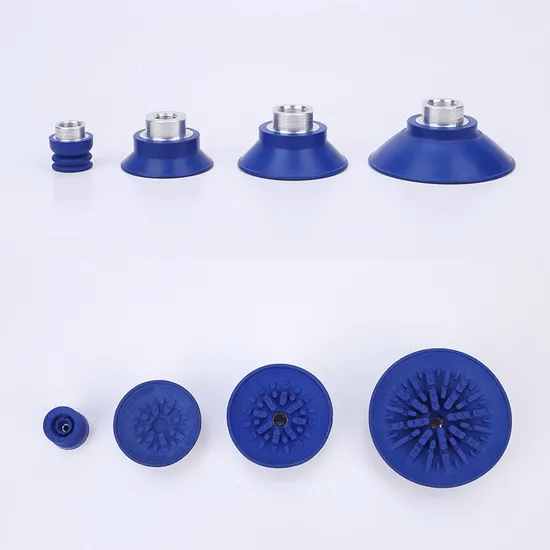
Material Specifications for Industrial Rubber Suction Cups
Material selection critically determines the operational efficacy, longevity, and safety compliance of rubber suction cups in automated handling systems. At Suzhou Baoshida Trading Co., Ltd., we engineer formulations to meet exacting OEM requirements across diverse industrial environments. The elastomer must balance sealing integrity, chemical resistance, thermal stability, and mechanical resilience under cyclic stress. Viton, Nitrile, and Silicone represent three primary material solutions, each with distinct performance boundaries. Incorrect material specification risks premature failure due to swelling, hardening, or tensile loss when exposed to incompatible media or temperatures. Hardness (Shore A) directly influences grip force and sealing dynamics; deviations beyond ±5 Shore A from the target specification compromise vacuum integrity. Dimensional stability during compression set is equally vital, as excessive permanent deformation degrades reusability.
The comparative analysis below details core specifications for standard suction cup formulations. All values reflect industry-standard test methods per ASTM D2000 and ISO 37, validated through Suzhou Baoshida’s in-house QC laboratory.
| Property | Viton (FKM) | Nitrile (NBR) | Silicone (VMQ) |
|---|---|---|---|
| Temperature Range (°C) | -20 to +230 | -30 to +120 | -60 to +200 |
| Hardness Range (Shore A) | 60–90 | 50–90 | 30–80 |
| Tensile Strength (MPa) | 12–20 | 10–30 | 5–12 |
| Compression Set (22h/150°C) | ≤25% | ≤35% | ≤20% |
| Key Chemical Resistance | Fuels, oils, acids, halogens | Aliphatic hydrocarbons, water, hydraulic fluids | Ozone, UV, steam, mild chemicals |
| Key Limitations | Poor ketone/ester resistance; high cost | Limited high-temp stability; poor ozone resistance | Low tear strength; permeable to gases |
Viton excels in aerospace and semiconductor applications requiring resistance to aggressive chemicals like jet fuels, acids, and halogenated solvents. Its high-temperature stability ensures reliability in furnace loading or paint-spray environments where NBR would rapidly degrade. However, ketone exposure (e.g., acetone cleaning) causes severe swelling, necessitating strict media compatibility checks.
Nitrile remains the cost-optimized solution for general manufacturing, particularly in automotive assembly lines handling lubricants and hydraulic fluids. Its robust resistance to aliphatic hydrocarbons and water-based coolants provides economical performance below 120°C. Users must avoid ozone-rich settings (e.g., near welding stations), as NBR cracks under prolonged exposure.
Silicone dominates extreme-temperature scenarios, from cryogenic handling to food-grade sterilization cycles. Its biocompatibility and steam resistance suit pharmaceutical and food packaging, though lower tensile strength demands careful design to prevent tearing during high-speed pick-and-place operations. Gas permeability may limit use in vacuum systems requiring ultra-low leakage rates.
Suzhou Baoshida mandates material validation against actual operating conditions, including dynamic stress testing under simulated production cycles. Consult our engineering team to align material properties with your suction cup’s size tolerances, vacuum pressure requirements, and environmental exposures. Precision in elastomer selection directly translates to system uptime and total cost of ownership.
Manufacturing Capabilities
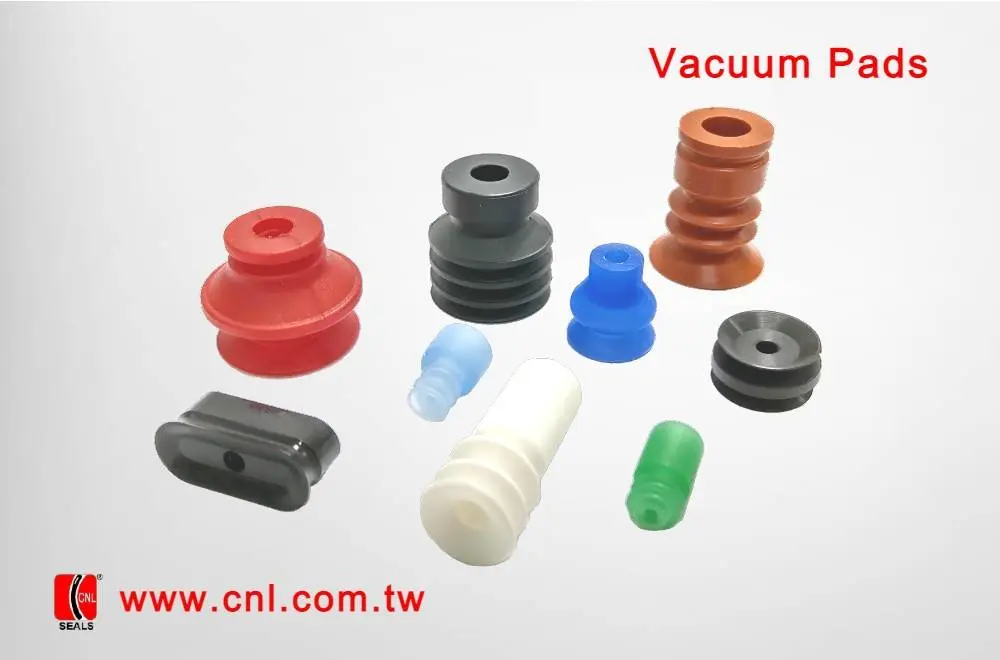
Engineering Excellence in Rubber Suction Cup Design and Manufacturing
At Suzhou Baoshida Trading Co., Ltd., our engineering capability forms the backbone of our industrial rubber solutions, particularly in the precision design and production of rubber suction cups. With a dedicated team of five professional mould engineers and two specialized rubber formula engineers, we deliver technically advanced, application-specific suction cup solutions tailored to the rigorous demands of automation, material handling, and industrial robotics.
Our mould engineering team leverages advanced CAD/CAM software and precision CNC machining to develop high-tolerance moulds that ensure consistent part geometry, optimal sealing performance, and extended service life. Each suction cup mould is engineered with attention to draft angles, parting lines, venting, and ejection dynamics to minimize defects and maximize production efficiency. This level of precision enables us to manufacture suction cups across a wide dimensional spectrum, from miniature 3 mm diameter components for electronics handling to large 150 mm industrial-grade cups used in construction and automotive assembly.
Complementing our mould expertise is our in-house rubber formulation capability. Our two rubber formula engineers specialize in compounding elastomers to meet specific performance criteria, including hardness, elasticity, temperature resistance, and chemical stability. We routinely develop custom rubber blends using NBR, silicone, EPDM, and FKM to suit operating environments ranging from -40°C to +250°C. This allows us to produce suction cups that perform reliably under extreme vacuum conditions, oily surfaces, or abrasive industrial atmospheres.
Our OEM manufacturing services are built on a foundation of technical collaboration. We work directly with clients to reverse-engineer existing components, optimize designs for manufacturability, and validate prototypes through iterative testing. Whether scaling up from a sample part or developing a new profile from technical drawings, our engineering team ensures dimensional accuracy, material compatibility, and long-term durability.
All suction cups are manufactured under strict quality control protocols, with every batch traceable to raw material lot numbers and process parameters. This integrated approach—combining advanced tooling, scientific material development, and responsive OEM support—positions Suzhou Baoshida as a trusted partner for mission-critical rubber components.
Below are representative specifications for our standard suction cup production range:
| Parameter | Range | Notes |
|---|---|---|
| Outer Diameter | 3 mm – 150 mm | Custom sizes available |
| Hardness (Shore A) | 30° – 80° | Adjustable per application |
| Operating Temperature | -40°C to +250°C | Depends on rubber compound |
| Vacuum Compatibility | Up to 99.9% vacuum | Tested under ISO 3691-4 conditions |
| Standard Materials | NBR, Silicone, EPDM, FKM | Custom compounds available |
| Tensile Strength | 6 MPa – 18 MPa | Based on ASTM D412 |
| Elongation at Break | 200% – 600% | Varies by formulation |
Our engineering-driven approach ensures that every suction cup we produce meets the highest standards of performance, reliability, and repeatability in industrial applications.
Customization Process
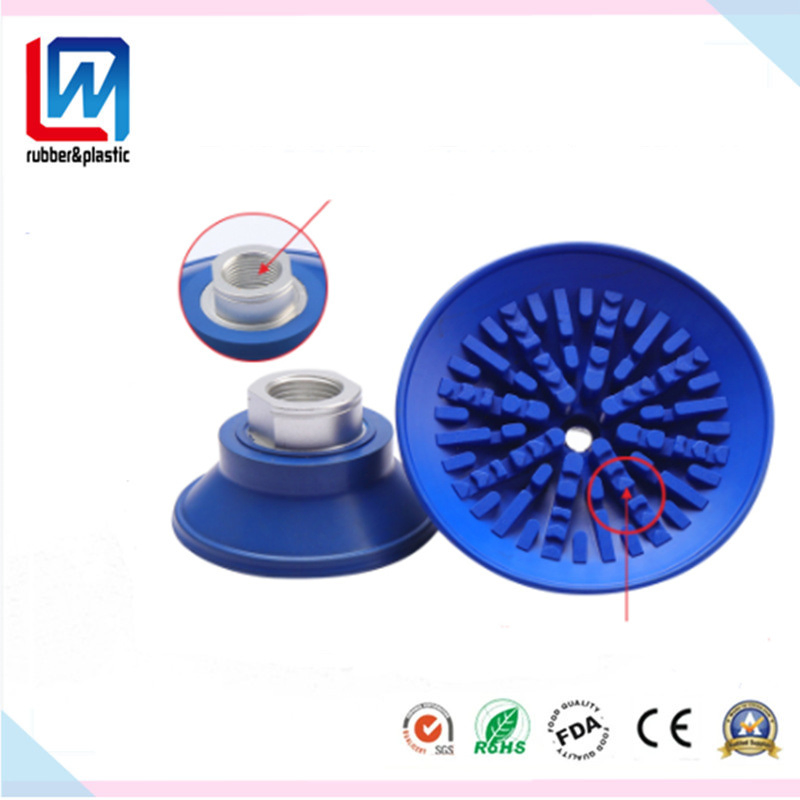
Rubber Suction Cup Customization Process: Precision Engineering for Industrial Applications
At Suzhou Baoshida Trading Co., Ltd., our suction cup customization workflow integrates material science with rigorous manufacturing protocols to deliver mission-critical vacuum handling solutions. This process ensures dimensional accuracy, vacuum retention, and longevity under cyclic industrial stress. We execute four sequential phases: Drawing Analysis, Formulation, Prototyping, and Mass Production.
Drawing Analysis initiates the workflow. Our engineering team scrutinizes client-provided CAD files or sketches against ISO 10243 and ASTM D395 standards. Critical parameters include outer diameter (OD), inner diameter (ID), lip thickness, and mounting interface geometry. We verify tolerance stacks for vacuum seal integrity, rejecting designs with undercut risks or insufficient material margins. Thermal expansion coefficients are cross-referenced against the target operating environment (-40°C to 150°C). Non-compliant submissions receive actionable feedback within 72 hours, emphasizing manufacturability without compromising functional requirements.
Formulation follows dimensional validation. Our rubber chemists select base polymers—typically NBR for oil resistance, silicone for extreme temperatures, or HNBR for abrasion-heavy settings—based on the application’s chemical exposure and load profile. Hardness (Shore A) is calibrated between 40–80 to balance seal conformity and structural resilience. Key additives include silica for tear strength and peroxide curing systems for low-compression-set performance. Material batches undergo Mooney viscosity testing (ASTM D1646) to ensure consistent flow during molding.
Prototyping validates the engineered solution. Using CNC-machined aluminum molds, we produce 10–15 sample cups for client evaluation. Each unit undergoes vacuum decay testing (ISO 3509) at 0.8 bar differential pressure, with leakage rates measured via mass flow sensors. Physical validation includes 10,000-cycle fatigue tests on automated handling rigs and surface adhesion trials on substrates like glass, steel, and composites. Iterations address grip slippage or seal failure, typically resolving issues within two prototype rounds.
Mass Production commences after client sign-off. We deploy multi-cavity silicone rubber injection molding (SRIM) presses with ±0.05 mm positional accuracy. In-process quality checks include laser micrometer scans of critical dimensions and 100% vacuum integrity screening. Final batches include material certificates (RoHS/REACH compliant) and statistical process control (SPC) data logs. Lead times average 25 days from approved prototype to shipment, with lot traceability via serialized batch codes.
The following table summarizes standard suction cup specifications achievable through our process:
| Parameter | Standard Range | Critical Tolerance | Test Method |
|---|---|---|---|
| Outer Diameter (OD) | 10–300 mm | ±0.15 mm | ISO 3302-1 |
| Lip Thickness | 0.8–5.0 mm | ±0.08 mm | ASTM D3767 |
| Hardness (Shore A) | 40–80 | ±3 points | ASTM D2240 |
| Operating Temp | -40°C to +150°C | N/A | ISO 188 |
| Vacuum Decay Rate | ≤0.05 bar/min @ 0.8 bar | ±0.01 bar/min | Internal Protocol |
This structured approach eliminates guesswork in suction cup deployment, transforming client specifications into field-proven components. Suzhou Baoshida guarantees repeatability through embedded metrology and polymer expertise—ensuring every cup meets the uncompromising demands of automated manufacturing systems.
Contact Engineering Team
For industrial manufacturers and automation integrators seeking precision-engineered rubber suction cup solutions, Suzhou Baoshida Trading Co., Ltd. stands as a trusted partner in high-performance rubber components. Our expertise in industrial rubber technology ensures that every suction cup we supply meets stringent requirements for durability, sealing efficiency, and operational consistency across demanding environments. Whether your application involves material handling, robotic automation, vacuum lifting, or precision placement, our engineering team delivers tailored solutions calibrated to your exact operational parameters.
Our rubber suction cups are manufactured using advanced compounding techniques and high-grade elastomers, including NBR, silicone, EPDM, and FKM, to ensure compatibility with diverse temperature ranges, chemical exposures, and surface types. Each product is subjected to rigorous quality control protocols, including tensile strength testing, compression set analysis, and vacuum performance validation, to guarantee long service life and reliable performance under continuous cycling.
When selecting the correct suction cup size and configuration, dimensional accuracy and material compatibility are critical. Below is a representative specification table for our standard rubber suction cup series, commonly used in automated assembly and handling systems:
| Model Code | Outer Diameter (mm) | Inner Diameter (mm) | Height (mm) | Material | Hardness (Shore A) | Max. Operating Temp. (°C) | Application Type |
|---|---|---|---|---|---|---|---|
| SBD-NC-30 | 30 | 18 | 12 | NBR | 60 ± 5 | 100 | General Purpose |
| SBD-SI-40 | 40 | 25 | 15 | Silicone | 50 ± 5 | 200 | High Temp |
| SBD-EP-50 | 50 | 32 | 18 | EPDM | 65 ± 5 | 150 | Chemical Resistant |
| SBD-FK-35 | 35 | 22 | 14 | FKM | 70 ± 5 | 250 | Aggressive Media |
| SBD-NC-60 | 60 | 40 | 22 | NBR | 60 ± 5 | 100 | Heavy Duty |
These dimensions and material properties are customizable based on client specifications. We support OEM/ODM projects with full technical documentation, 3D modeling, and on-site testing support to ensure seamless integration into existing systems.
For technical consultation, sample requests, or volume procurement planning, contact Mr. Boyce, OEM Account Manager at Suzhou Baoshida Trading Co., Ltd. With over 15 years of experience in industrial rubber applications, Mr. Boyce specializes in translating operational challenges into engineered suction cup solutions that enhance system reliability and reduce lifecycle costs. He is available to review application data, recommend optimal cup geometries, and coordinate prototype delivery within 7–10 business days.
Reach out directly via email at [email protected] to initiate a technical discussion. Include details such as operating environment, load requirements, cycle frequency, and target mounting interface for rapid solution development. Our team supports English and Mandarin communication and provides responsive engineering feedback within 24 hours. Partner with Suzhou Baoshida for precision rubber components built to perform—where material science meets industrial demand.
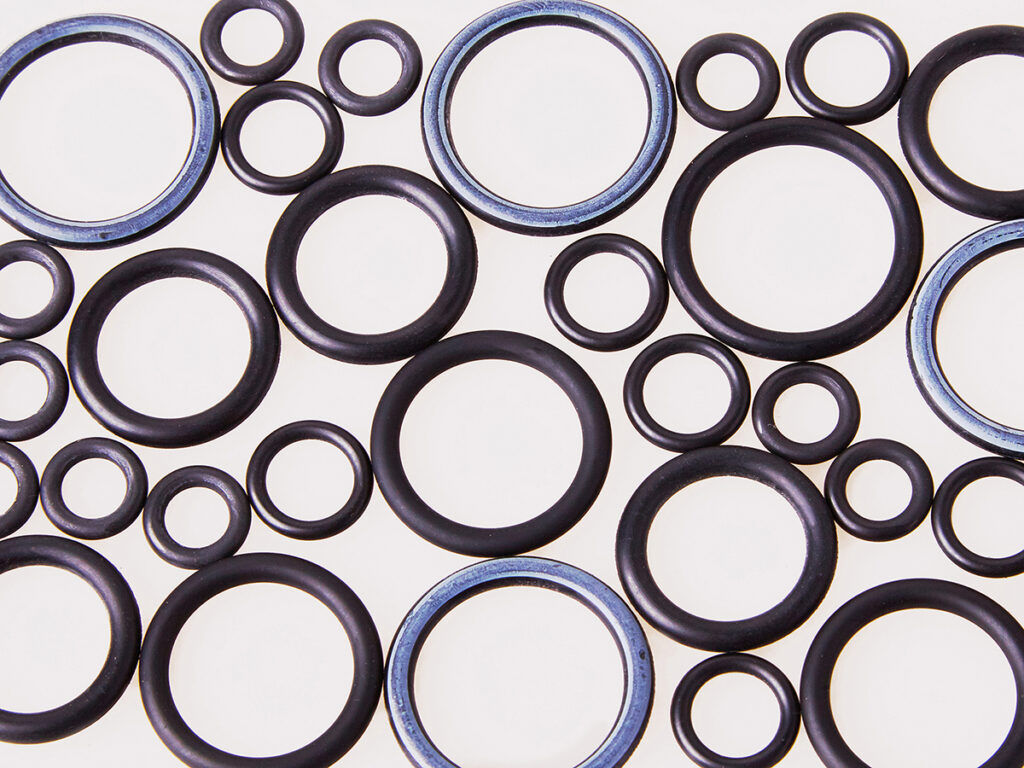
⚖️ O-Ring Weight Calculator
Estimate rubber O-ring weight (Approx).