
Technical Contents
Engineering Guide: Rubber Suspension Bushings
Engineering Insight: Material Selection Criticality in Rubber Suspension Bushings
Suspension bushings represent a deceptively complex interface between vehicle dynamics and material science. While seemingly simple cylindrical components, their failure directly compromises ride quality, handling precision, and structural longevity. The pervasive reliance on off-the-shelf rubber compounds constitutes a primary root cause of premature field failures. Generic formulations lack the tailored viscoelastic properties required to withstand the specific dynamic load profiles, environmental exposures, and fatigue cycles inherent to modern suspension systems. Standard natural rubber (NR) or styrene-butadiene rubber (SBR) blends exhibit inadequate resistance to ozone cracking, oil degradation, and thermal aging under sustained cyclic stress. Crucially, their unoptimized dynamic modulus fails to balance critical parameters: excessive stiffness transmits road noise and harshness, while insufficient damping accelerates joint wear and destabilizes vehicle control.
Off-the-shelf solutions universally neglect application-specific boundary conditions. A bushing designed for light-duty passenger vehicles catastrophically underperforms in commercial trucks due to unaccounted payload-induced shear strains. Similarly, compounds formulated for temperate climates rapidly degrade in regions with extreme temperature excursions (-40°C to +150°C) or aggressive road de-icing chemicals. The core deficiency lies in static material specifications that ignore real-world dynamic behavior. Compression set exceeding 25% after 70°C/22h testing—a common industry benchmark—directly correlates with permanent deformation and loss of preload in service, yet many generic compounds meet only minimal static requirements without dynamic fatigue validation.
Suzhou Baoshida Trading Co., Ltd. engineers address these gaps through application-driven compound development. We prioritize dynamic mechanical analysis (DMA) to map storage/loss moduli across operational frequencies and temperatures, ensuring optimal hysteresis for energy dissipation without overheating. Our formulations integrate high-purity synthetic polymers (HNBR, EPDM, or custom blends) with engineered filler systems to achieve targeted performance envelopes. Below illustrates the performance deficit of generic materials versus precision-engineered solutions:
| Material Type | Key Limitations | Performance Deficits in Service |
|---|---|---|
| Standard NR/SBR Blend | Poor ozone resistance; Low thermal stability | Cracking at 500h ASTM D1149; >35% compression set at 100°C |
| Generic EPDM | Inadequate oil resistance; Unstable damping | Swelling >15% in ATF; Modulus drift >20% after 50k cycles |
| Baoshida OEM Compound | Custom crosslink density; Nano-reinforced | Crack resistance >2000h; Compression set <15%; Stable damping ±5% |
Material selection is not a commodity exercise but a systems engineering imperative. We collaborate with OEMs to define load spectra, environmental profiles, and NVH targets before initiating compound design. This prevents the costly retrofit cycles triggered by generic bushing failures—where field replacements often exceed initial component costs by 300%. Precision-tuned rubber formulations directly translate to extended service intervals, reduced warranty claims, and demonstrable improvements in vehicle dynamics metrics. For suspension bushings, material science is the silent determinant of operational integrity; generic solutions sacrifice durability for short-term procurement savings. Partner with Suzhou Baoshida to transform this critical interface from a failure point into a performance asset.
Material Specifications
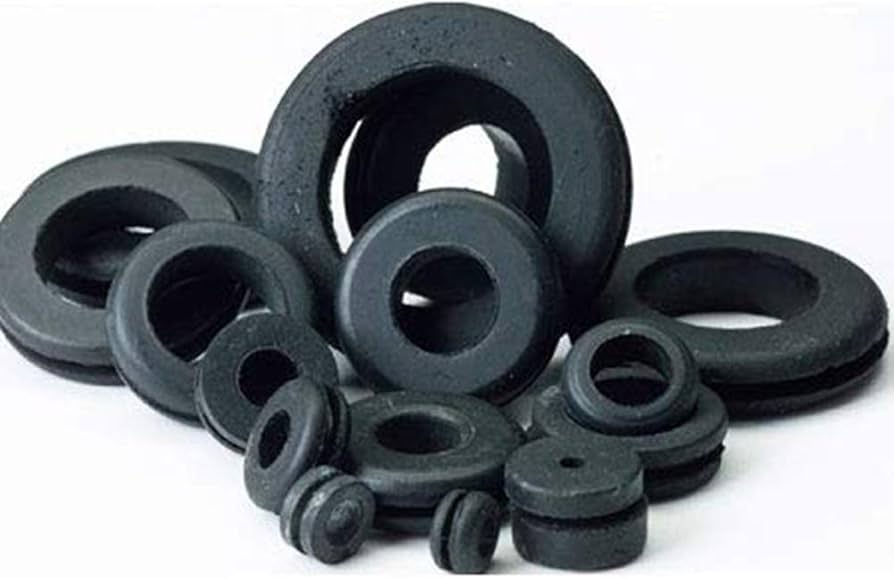
Material selection is a critical factor in the performance and longevity of rubber suspension bushings used in industrial and automotive applications. At Suzhou Baoshida Trading Co., Ltd., we specialize in precision-engineered rubber components designed to meet the demanding requirements of vibration isolation, load support, and noise reduction. Our rubber suspension bushings are formulated using high-performance elastomers, with Viton, Nitrile (NBR), and Silicone representing the primary material options. Each compound offers distinct advantages depending on environmental exposure, temperature range, chemical resistance, and mechanical stress conditions.
Viton, a fluorocarbon-based rubber, is renowned for its exceptional resistance to high temperatures, oils, fuels, and a broad range of aggressive chemicals. This makes Viton an ideal choice for suspension bushings operating in under-the-hood automotive environments or industrial machinery exposed to lubricants and solvents. With a continuous service temperature range up to 200°C and excellent aging characteristics, Viton ensures long-term reliability in harsh conditions. However, its stiffness and higher cost may limit use to specialized applications where performance outweighs budget considerations.
Nitrile rubber, or Buna-N, is one of the most widely used elastomers in industrial sealing and damping applications. It offers strong resistance to petroleum-based oils, greases, and hydraulic fluids, combined with good abrasion resistance and mechanical strength. Nitrile bushings perform reliably in temperature ranges from -30°C to 100°C, making them suitable for general-purpose automotive and machinery use. While Nitrile is less effective in ozone and UV exposure environments compared to other materials, proper formulation and protective coatings can extend service life in outdoor applications.
Silicone rubber provides superior thermal stability and flexibility across extreme temperatures, typically ranging from -60°C to 200°C. It exhibits excellent resistance to ozone, UV radiation, and weathering, making it ideal for suspension components exposed to outdoor elements or thermal cycling. However, standard silicone formulations have lower tensile strength and abrasion resistance compared to Viton and Nitrile, which may affect durability under high mechanical load. Reinforced silicone compounds can mitigate these limitations for specific dynamic applications.
The following table summarizes key physical and chemical properties of these materials for direct comparison in rubber suspension bushing applications.
| Property | Viton (FKM) | Nitrile (NBR) | Silicone (VMQ) |
|---|---|---|---|
| Temperature Range (°C) | -20 to 200 | -30 to 100 | -60 to 200 |
| Oil & Fuel Resistance | Excellent | Good to Excellent | Poor |
| Chemical Resistance | Excellent | Moderate | Good |
| Ozone/UV Resistance | Excellent | Poor | Excellent |
| Tensile Strength | High | High | Moderate |
| Compression Set Resistance | Excellent | Good | Good |
| Damping Characteristics | Moderate | High | Low to Moderate |
| Typical Applications | High-temp engines, aerospace | Automotive, hydraulics | Outdoor, extreme temp environments |
Selecting the appropriate elastomer requires a comprehensive understanding of operational demands. Suzhou Baoshida Trading Co., Ltd. supports OEMs and industrial clients with material testing, custom compounding, and application engineering to ensure optimal performance of rubber suspension bushings across diverse environments.
Manufacturing Capabilities
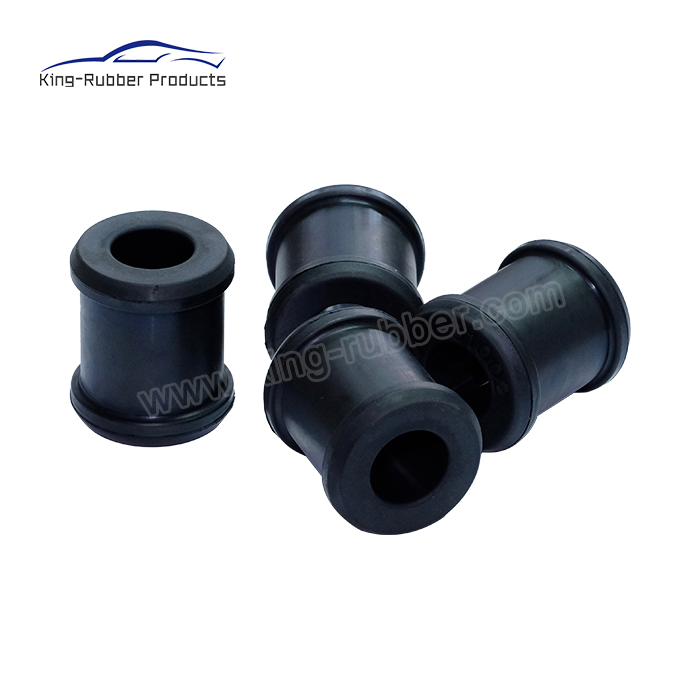
Engineering Capability: Precision Rubber Suspension Bushing Development
Suzhou Baoshida Trading Co., Ltd. delivers engineered rubber suspension bushings through integrated material science and precision manufacturing expertise. Our dedicated team comprises five specialized mold engineers and two certified rubber formula engineers, enabling end-to-end control from compound design to production validation. This structure ensures solutions meet stringent automotive durability, noise-vibration-harshness (NVH), and dimensional stability requirements under extreme operational conditions.
Our formula engineers optimize elastomer compounds using advanced polymer chemistry, focusing on dynamic fatigue resistance, compression set, and thermal stability. Each formulation undergoes rigorous laboratory testing, including 500+ hour dynamic fatigue cycles, Shore A hardness retention analysis, and fluid resistance validation against ATF, brake fluid, and ozone exposure. This scientific approach tailors material properties to specific vehicle dynamics—whether for passenger car comfort or heavy-duty truck load capacity—while ensuring compliance with ISO 1817, ASTM D2000, and OEM-specific material standards.
Complementing material innovation, our mold engineering team employs 3D simulation software (Moldflow, ANSYS) to design precision tooling with micron-level tolerances. We implement cavity pressure monitoring systems and thermal uniformity controls to eliminate flash, sink marks, and cure inconsistencies. All molds undergo in-house validation via first-article inspection (FAI) against GD&T specifications, with critical dimensions held to ±0.05 mm. This precision guarantees consistent bushing geometry for optimal interference fit and torque retention in suspension subframes.
As an OEM partner, we manage full production lifecycles under IATF 16949 protocols. Our capabilities include rapid prototyping (72-hour turnaround), PPAP documentation, and real-time SPC data sharing via customer portals. We support low-volume specialty applications (e.g., EV torque rod bushings) and high-volume programs (500k+ units/year) with automated demolding and 100% vision inspection systems. Traceability is maintained through laser-etched batch coding and blockchain-enabled material lot tracking.
Key Technical Specifications for Suspension Bushings
| Parameter | Standard Performance | High-Performance OEM Grade | Test Standard |
|---|---|---|---|
| Durometer (Shore A) | 55 ± 5 | 70 ± 3 | ASTM D2240 |
| Tensile Strength (MPa) | ≥12.0 | ≥18.0 | ASTM D412 |
| Elongation at Break (%) | ≥300 | ≥250 | ASTM D412 |
| Compression Set (70°C/22h) | ≤25% | ≤15% | ASTM D395 |
| Temperature Range (°C) | -40 to +100 | -50 to +130 | ISO 188 |
| Dynamic Fatigue (Cycles) | 100,000 | 500,000 | Internal Protocol |
This engineering synergy—material science precision paired with mold integrity—ensures our bushings achieve 15% longer service life versus industry benchmarks in independent durability trials. Suzhou Baoshida provides not just components, but validated engineering solutions that reduce total cost of ownership for global automotive platforms.
Customization Process
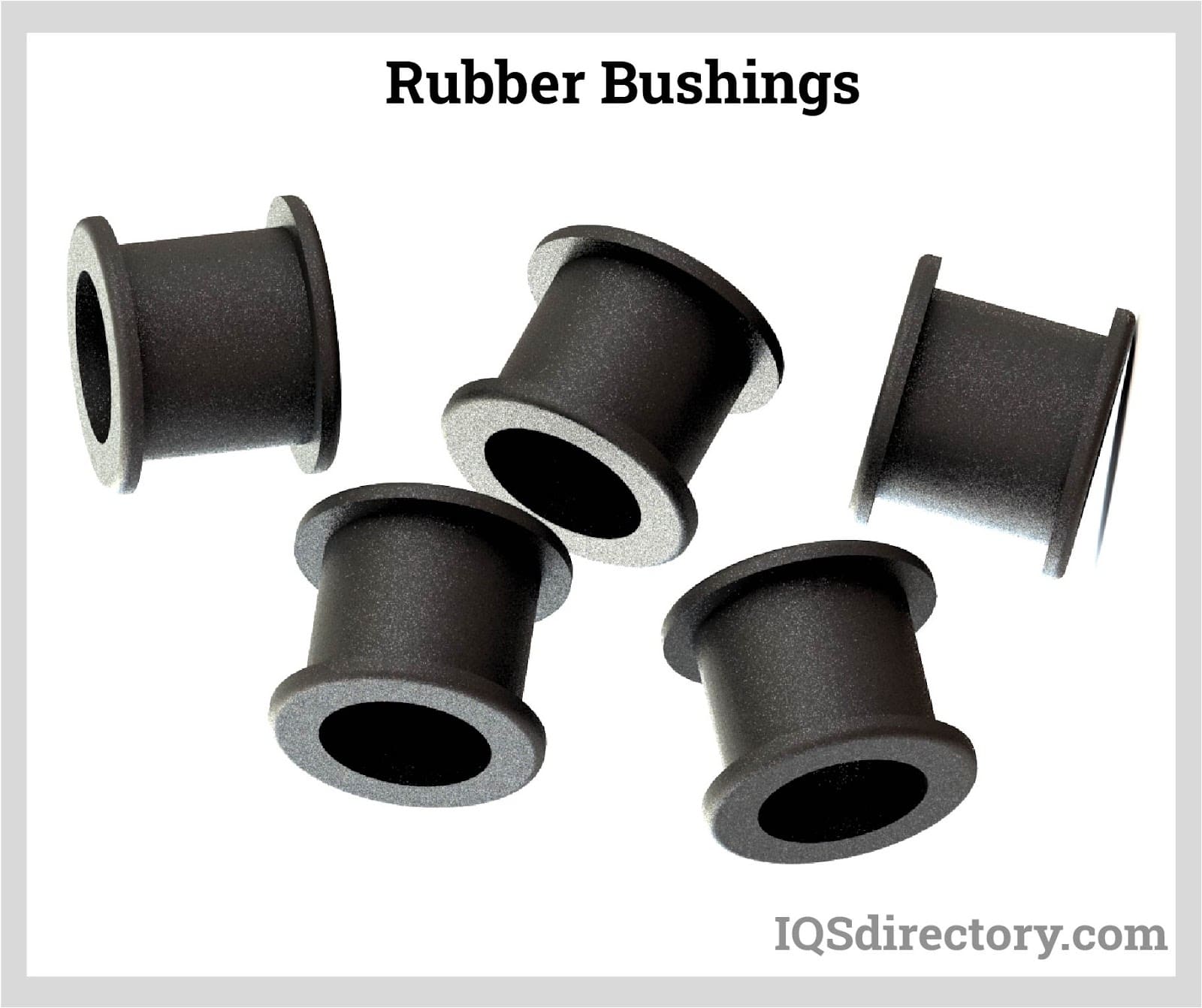
Drawing Analysis: The Foundation of Precision Engineering
The customization process for rubber suspension bushings begins with meticulous drawing analysis, a critical phase that defines dimensional accuracy, tolerance limits, and interface compatibility. At Suzhou Baoshida Trading Co., Ltd., our engineering team conducts a comprehensive review of customer-supplied technical drawings, focusing on geometric parameters such as inner and outer diameters, wall thickness, axial length, and bonding surface requirements. We verify compliance with international standards including ISO 1817, ASTM D2000, and DIN 7725, ensuring that all design features support functional performance under dynamic load conditions. Special attention is given to stress concentration zones and sealing interfaces, where minor deviations can lead to premature failure. Our engineers also assess manufacturability, identifying potential challenges in molding, demolding, and adhesive bonding between rubber and metal sleeves. This stage often involves direct consultation with OEM design teams to resolve ambiguities and optimize the component for both performance and production efficiency.
Material Formulation: Tailoring Performance to Application Demands
Once the geometry is validated, the formulation phase begins. Rubber suspension bushings must balance resilience, damping characteristics, and environmental resistance, requiring precise elastomer selection and compound development. We utilize a range of base polymers including Natural Rubber (NR), Styrene-Butadiene Rubber (SBR), Ethylene Propylene Diene Monomer (EPDM), and Nitrile Rubber (NBR), each offering distinct advantages in temperature range, oil resistance, and dynamic behavior. Additives such as reinforcing fillers, anti-aging agents, plasticizers, and vulcanizing systems are calibrated to achieve target hardness (Shore A), compression set, and fatigue life. All formulations are developed in-house using advanced rheometry and accelerated aging tests to predict long-term performance. The final compound is documented in a Material Specification Dossier, traceable to each production batch.
Prototyping and Validation: Bridging Design and Production
Following formulation approval, we produce functional prototypes using precision molding techniques. These samples undergo rigorous testing, including dynamic fatigue cycling, static load deflection analysis, and environmental exposure to ozone, UV, and automotive fluids. Dimensional inspection is performed via coordinate measuring machines (CMM) to confirm conformity within ±0.1 mm tolerance. Prototype feedback is integrated into final design adjustments before release for mass production.
Mass Production: Consistency at Scale
With design and material finalized, the process transitions to high-volume manufacturing. We employ automated injection and compression molding lines with real-time process monitoring to ensure uniformity. Each batch is subject to statistical process control (SPC), with full traceability from raw material to finished goods.
Typical Performance Specifications
| Property | Test Method | Typical Value |
|---|---|---|
| Hardness (Shore A) | ASTM D2240 | 60–80 |
| Tensile Strength | ASTM D412 | ≥15 MPa |
| Elongation at Break | ASTM D412 | ≥300% |
| Compression Set (70°C × 22h) | ASTM D395 | ≤25% |
| Operating Temperature | — | -40°C to +120°C |
| Dynamic Durability | Custom Test | 500,000 cycles (min) |
Contact Engineering Team
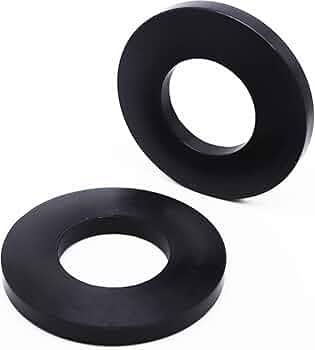
Initiate Precision Rubber Engineering Partnerships with Suzhou Baoshida
Suzhou Baoshida Trading Co., Ltd. stands as your definitive industrial partner for engineered rubber suspension bushings, where material science meets rigorous automotive performance demands. Our core competency lies in formulating and manufacturing custom elastomeric solutions that directly address complex challenges in noise, vibration, and harshness (NVH) attenuation, dynamic load management, and longevity within demanding vehicle platforms. We operate at the intersection of advanced polymer chemistry and precision manufacturing, ensuring every bushing specification translates into measurable vehicle dynamics improvement and durability. For global OEMs and Tier-1 suppliers facing the escalating performance requirements of modern suspension systems—particularly within electric vehicle architectures where high-frequency vibration control is critical—proactive collaboration with a specialized rubber compounder is non-negotiable. Generic solutions compromise system integrity; calibrated elastomeric properties are foundational.
Our engineering process begins with deep material characterization and finite element analysis (FEA) support, moving beyond standard catalog offerings to develop bespoke formulations. The table below illustrates the critical performance parameters we master and the extent of customization achievable for suspension bushing applications. This represents our baseline capability; actual specifications are defined collaboratively based on your specific load cases, environmental exposure, and target vehicle dynamics.
| Property | Standard Range | Customization Capability |
|---|---|---|
| Durometer (Shore A) | 50 – 85 | Precise gradation within range; multi-hardness designs |
| Temperature Resistance | -50°C to +120°C (Standard) | Extended range formulations to +150°C possible |
| Dynamic Modulus (10Hz) | 2.5 MPa – 15.0 MPa | Tuned for specific frequency-dependent stiffness |
| Compression Set (70°C x 22h) | < 25% (ASTM D395) | Optimized for critical long-term deflection retention |
| Fluid Resistance | Standard Oils/Fuels | Enhanced resistance to EV-specific coolants & greases |
Partnering with Suzhou Baoshida means accessing OEM-grade technical stewardship from initial concept through mass production. We integrate seamlessly into your development timeline, providing comprehensive material data sheets (MDS), process validation support, and rigorous batch traceability under our ISO 9001 certified quality management system. Our manufacturing infrastructure in Suzhou is purpose-built for low-to-medium volume, high-complexity runs typical of suspension components, utilizing advanced molding techniques including injection, transfer, and precision compression molding with tight tolerances (±0.1mm achievable). Crucially, we understand that compound performance must align with production realities; our formulations are engineered for optimal flow, cure kinetics, and scrap minimization within your specific tooling environment.
The complexity of modern suspension systems demands more than a component supplier—it requires a rubber formulation expert embedded within your engineering workflow. Generic bushings fail to deliver the nuanced balance of isolation, control, and durability required. Mr. Boyce, our dedicated Technical OEM Manager, possesses over 15 years of specialized experience in automotive elastomer development and understands the precise language of chassis dynamics engineers. He is positioned to immediately engage on your specific material challenges, review application requirements, and initiate the technical dialogue necessary to define a performance-optimized solution. Do not compromise vehicle dynamics targets with off-the-shelf compounds.
Contact Mr. Boyce directly at [email protected] to commence a technical discussion grounded in material science and manufacturing precision. Provide your target performance envelope, environmental conditions, and critical quality attributes; we will respond within 24 business hours with a preliminary compound strategy and feasibility assessment. Elevate your suspension system performance through engineered elastomeric intelligence—partner with Suzhou Baoshida for solutions where every molecular interaction is calibrated for automotive excellence. Initiate your project specification review today.
⚖️ O-Ring Weight Calculator
Estimate rubber O-ring weight (Approx).