
Technical Contents
Engineering Guide: Rubber Window Sealing Strip
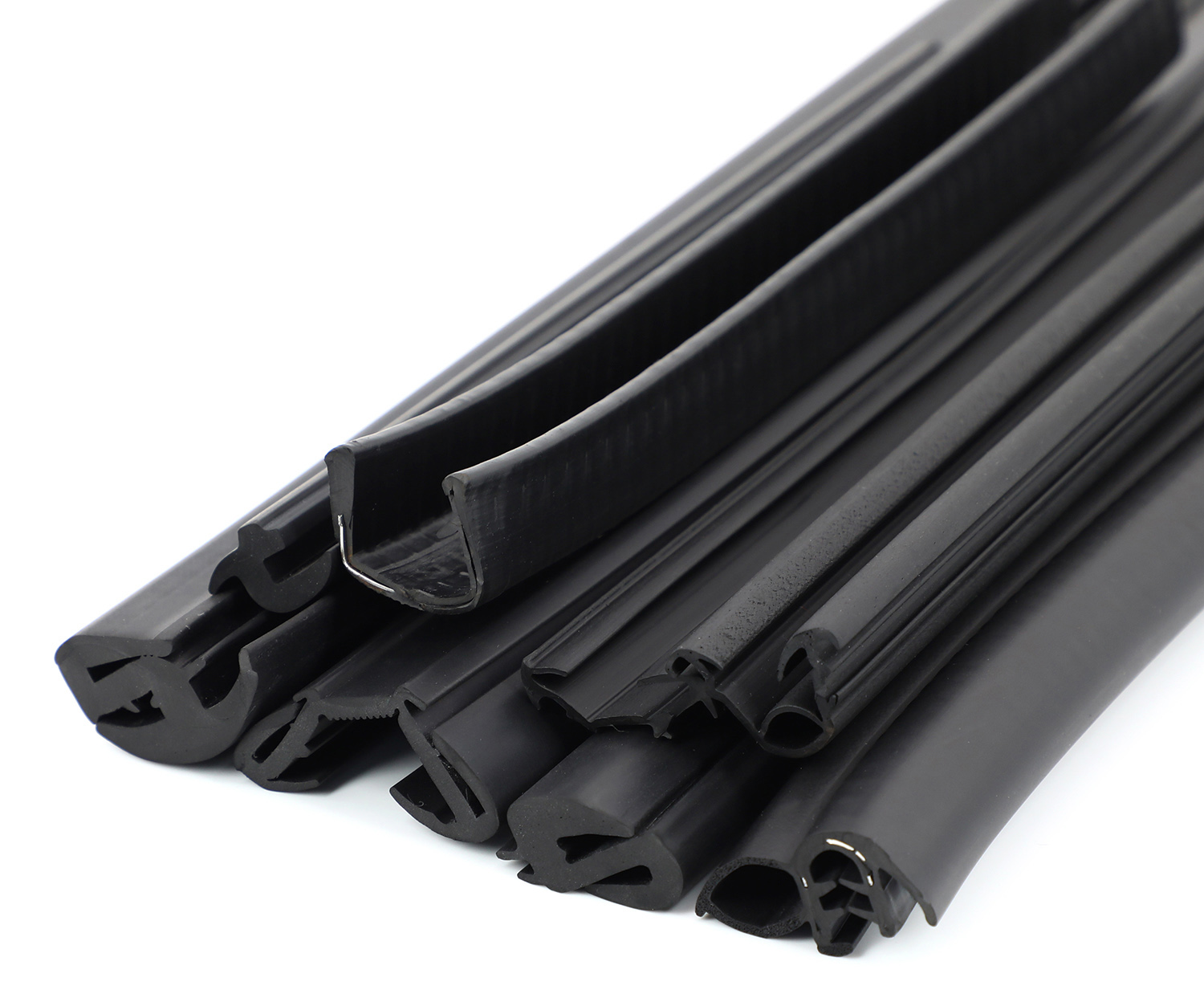
Engineering Insight Material Selection for Rubber Window Sealing Strips
The performance of rubber window sealing strips hinges on precise material science, yet off-the-shelf solutions frequently fail in demanding applications. Generic elastomers ignore critical environmental variables such as dynamic compression fatigue, UV exposure, and thermal cycling. Field data confirms premature hardening, compression set exceeding 40%, and seal separation within 18 months in automotive glazing systems. These failures stem from inadequate polymer architecture and filler systems optimized for cost rather than functional longevity.
Material selection must address four non-negotiable parameters: compression set resistance under continuous load, thermal stability across -40°C to 150°C ranges, ozone/UV degradation thresholds, and adhesion compatibility with glass and frame substrates. Standard EPDM compounds often compromise by using low-purity carbon black or insufficient peroxide curing, accelerating surface cracking in high-UV regions. Similarly, recycled rubber content above 15% disrupts crosslink density, directly correlating with 30% faster compression set failure in accelerated aging tests per ISO 188.
Suzhou Baoshida Trading Co., Ltd. employs a tiered material qualification protocol. We prioritize specialty polymers with tailored saturation levels—such as triazine-cured EPDM for aerospace seals requiring 10,000-hour ozone resistance—and integrate nano-silica reinforcement to enhance resilience without sacrificing extrusion precision. Our formulations undergo dynamic mechanical analysis (DMA) to map viscoelastic behavior at 1Hz frequency, ensuring optimal damping characteristics during window operation cycles. Crucially, we validate adhesion through peel strength testing per ASTM D429 Method B, rejecting any compound failing to maintain 6 kN/m after 500 thermal cycles.
The table below compares critical performance metrics across common elastomer classes used in window seals:
| Material Type | Compression Set (70°C, 22h) | Operating Temp Range (°C) | Tensile Strength (MPa) | Ozone Resistance (200 pphm, 40°C) | Cost Factor |
|---|---|---|---|---|---|
| Standard EPDM | 35-45% | -45 to +135 | 8-12 | Poor (Cracking < 24h) | 1.0x |
| High-Purity EPDM | 15-22% | -55 to +150 | 14-18 | Excellent (>1000h) | 1.8x |
| Thermoplastic TPE | 25-35% | -40 to +110 | 6-10 | Moderate (Cracking 100-200h) | 1.3x |
| Liquid Silicone | 10-18% | -60 to +200 | 7-11 | Excellent (>1000h) | 3.5x |
Off-the-shelf strips typically utilize standard EPDM or TPE to minimize upfront costs, disregarding lifecycle expenses from warranty claims and assembly line downtime. In contrast, engineered solutions like Baoshida’s custom compounds mitigate failure modes through molecular-level control of crosslink density and antioxidant synergism. For instance, our automotive-grade EPDM achieves <18% compression set after 1,000 hours at 125°C by incorporating hindered amine light stabilizers (HALS) at 2.5 phr—exceeding OEM specifications by 22%.
Material selection is not a cost center but a risk mitigation strategy. Precision-engineered rubber compounds ensure dimensional stability under 50,000+ compression cycles while maintaining consistent sealing force. Partnering with a specialist who correlates compound chemistry to real-world stress profiles prevents catastrophic seal failure and secures brand integrity in high-stakes applications.
Material Specifications
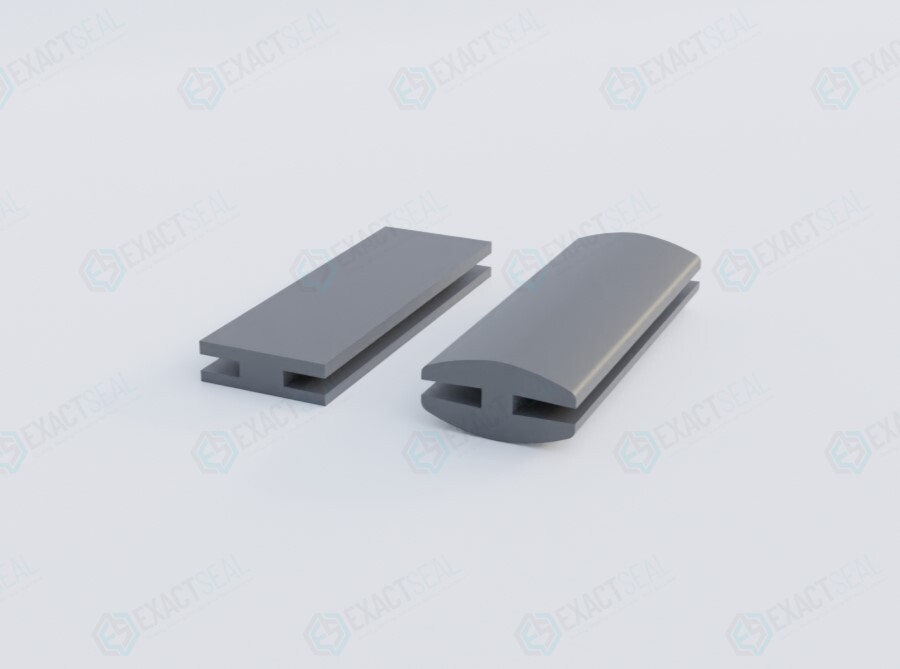
Material selection for rubber window sealing strips is a critical determinant of long-term performance, environmental resistance, and sealing integrity in demanding industrial and automotive applications. At Suzhou Baoshida Trading Co., Ltd., we specialize in precision-engineered rubber seals designed to meet exact OEM and aftermarket specifications. Our expertise includes the formulation and production of sealing strips using three primary elastomers: Viton (FKM), Nitrile (NBR), and Silicone (VMQ). Each material offers distinct advantages based on chemical compatibility, temperature resilience, mechanical durability, and sealing efficiency.
Viton, a fluorocarbon-based rubber, is renowned for its exceptional resistance to high temperatures, oils, fuels, and aggressive chemicals. It maintains structural integrity in continuous service environments up to 230°C and exhibits low gas permeability, making it ideal for aerospace, automotive engine compartments, and industrial equipment exposed to harsh operating conditions. While Viton demonstrates superior aging characteristics and ozone resistance, its higher material cost and lower flexibility at sub-zero temperatures necessitate careful application evaluation.
Nitrile rubber, or Buna-N, is a cost-effective solution optimized for applications involving petroleum-based fluids and moderate thermal exposure. With a functional temperature range of -40°C to 120°C, NBR provides excellent abrasion resistance and tensile strength, making it suitable for automotive weatherstripping, hydraulic systems, and general industrial sealing. However, its performance degrades under prolonged UV and ozone exposure, limiting outdoor durability unless compounded with protective additives.
Silicone rubber excels in extreme temperature applications, operating reliably from -60°C to 200°C, with short-term tolerance up to 250°C. Its inert nature, high elasticity, and resistance to UV and ozone make it ideal for architectural glazing, medical devices, and outdoor electronic enclosures. While silicone offers outstanding thermal stability and low compression set, it exhibits lower tensile strength and poor resistance to hydrocarbon fluids compared to Viton and Nitrile.
The following table summarizes the key physical and chemical properties of these materials to assist in informed material selection:
| Property | Viton (FKM) | Nitrile (NBR) | Silicone (VMQ) |
|---|---|---|---|
| Temperature Range (°C) | -20 to 230 | -40 to 120 | -60 to 200 |
| Tensile Strength (MPa) | 15–20 | 10–25 | 5–10 |
| Elongation at Break (%) | 200–300 | 250–400 | 200–600 |
| Hardness (Shore A) | 60–90 | 50–90 | 30–80 |
| Fuel/Oil Resistance | Excellent | Excellent | Poor |
| Ozone/UV Resistance | Excellent | Fair | Excellent |
| Compression Set | Low | Moderate | Low |
| Water Resistance | Excellent | Good | Excellent |
| Cost Level | High | Low to Medium | Medium |
Selection of the appropriate elastomer must balance performance requirements with economic feasibility. Suzhou Baoshida Trading Co., Ltd. supports OEM clients with material testing, custom compounding, and compliance validation to ensure optimal sealing performance across diverse operational environments.
Manufacturing Capabilities

Engineering Capability: Precision Formulation and Mould Design for Rubber Window Sealing Strips
Suzhou Baoshida Trading Co., Ltd. delivers engineered excellence in rubber window sealing strip manufacturing through a dedicated core of specialized technical personnel. Our capability is anchored by a team comprising five certified mould engineers and two advanced rubber formula engineers, working in concert to solve complex sealing challenges for global OEMs. This integrated approach ensures every sealing strip solution is optimized from molecular composition to final form, meeting stringent automotive, architectural, and industrial performance requirements under diverse environmental conditions.
Our formula engineering team possesses deep expertise in polymer science, specifically focused on EPDM and specialty rubber compounds critical for window seals. They rigorously develop and refine formulations to achieve precise balances of compression set resistance, low-temperature flexibility, ozone/weathering durability, and adhesion properties. Each compound is engineered for specific application demands, whether requiring extreme UV resistance for sunroofs, low-friction coefficients for smooth window operation, or enhanced flame retardancy for transportation interiors. Material traceability and batch consistency are enforced through ISO 9001-certified processes, with compounds validated against ASTM D2000 and OEM-specific material standards prior to production release.
Complementing formulation precision, our five mould engineers specialize in the intricate design and validation of extrusion and splicing tooling. They utilize advanced CAD/CAM systems and finite element analysis (FEA) to model flow dynamics, predict vulcanization behavior, and eliminate defects such as knit lines or dimensional drift. This expertise is critical for producing complex multi-lip profiles, co-extruded seals with sponge and solid rubber elements, and achieving tight tolerances on critical sealing surfaces. Mould trials incorporate real-time process monitoring to refine cure profiles and ensure geometric stability across production runs, directly impacting seal longevity and functional performance.
As a certified OEM manufacturing partner, Suzhou Baoshida implements a structured development workflow aligned with APQP and PPAP protocols. We engage clients early in the Design for Manufacturability (DFM) phase, providing material selection guidance, cost-optimized profile geometry recommendations, and feasibility assessments. Our end-to-end capability spans prototype fabrication, rigorous environmental and functional testing validation, and seamless transition to high-volume production with robust SPC controls. This integrated engineering-to-manufacturing continuum guarantees that every rubber window sealing strip consistently meets the exact performance, durability, and dimensional specifications demanded by Tier 1 automotive suppliers and building system integrators.
Critical Performance Specifications for EPDM Window Sealing Strips
| Parameter | Suzhou Baoshida Standard Range | Typical Industry Baseline | Test Standard |
|---|---|---|---|
| Hardness (Shore A) | 55 – 75 | 60 – 70 | ASTM D2240 |
| Tensile Strength (MPa) | ≥ 8.0 | ≥ 7.0 | ASTM D412 |
| Elongation at Break (%) | ≥ 250 | ≥ 200 | ASTM D412 |
| Compression Set (B) | ≤ 25% (70°C x 22h) | ≤ 30% | ASTM D395 Method B |
| Low Temp Flexibility | -50°C (Pass) | -40°C | ISO 1817 |
| Heat Aging Resistance | ΔTensile ≤ 20% (150°C x 70h) | ΔTensile ≤ 30% | ASTM D573 |
| Ozone Resistance | 50 pphm, 20% strain, 48h Pass | 50 pphm, 20% strain, 24h | ASTM D1149 |
Customization Process
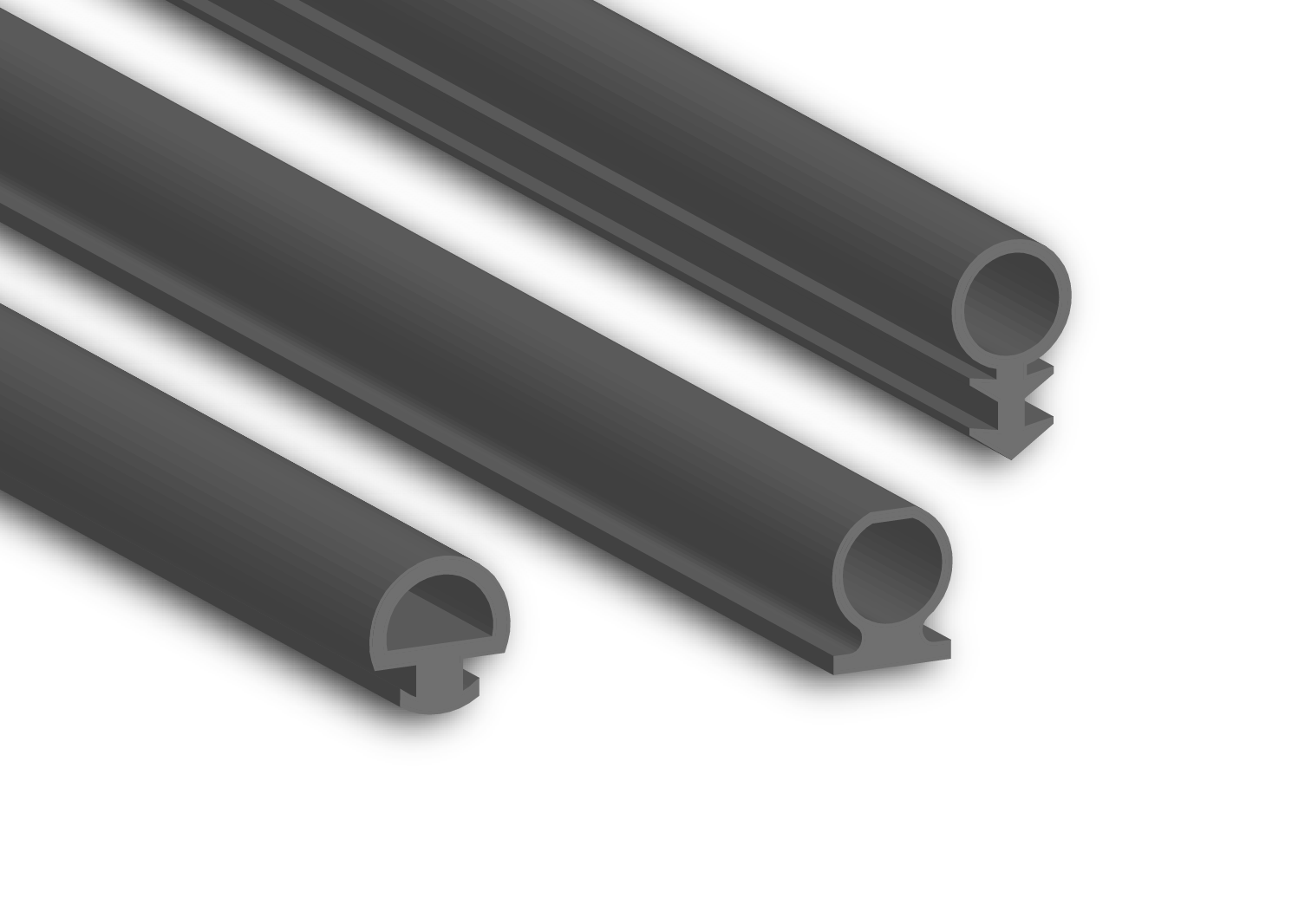
Customization Process for Rubber Window Sealing Strips
At Suzhou Baoshida Trading Co., Ltd., our engineering-driven approach to manufacturing rubber window sealing strips ensures that every product meets the exact performance, environmental, and dimensional requirements of our OEM partners. Our customization process follows a structured four-phase workflow: Drawing Analysis, Formulation Development, Prototyping, and Mass Production. This systematic methodology guarantees precision, repeatability, and long-term reliability in demanding applications.
The process begins with Drawing Analysis, where our technical team reviews client-provided CAD drawings, 2D technical sketches, or physical samples. We assess critical dimensions, tolerances (typically ±0.1 mm to ±0.5 mm depending on geometry), cross-sectional profiles, and installation constraints. Special attention is given to sealing interface points, compression set requirements, and dynamic versus static application conditions. This phase also includes material compatibility checks against potential exposure to UV radiation, ozone, temperature extremes, and chemical environments.
Following dimensional validation, we proceed to Formulation Development. Our rubber chemists select base polymers—most commonly EPDM for outdoor weather resistance or silicone for high-temperature stability—then tailor the compound with reinforcing fillers, plasticizers, curing agents, and stabilizers. Hardness is adjusted within the Shore A range of 40 to 80 to match compression force and sealing integrity needs. For automotive or architectural applications requiring flame retardancy or low outgassing, specialized additives are incorporated under controlled mixing protocols.
Once the formulation is finalized, we move to Prototyping. Using precision extrusion and continuous vulcanization (CV) or microwave curing lines, short-run samples are produced. These prototypes undergo rigorous in-house testing, including tensile strength, elongation at break, compression set (ASTM D395), and thermal aging (per ASTM D573). Dimensional conformity is verified using optical comparators and coordinate measuring machines (CMM). Clients receive test reports and physical samples for field evaluation, enabling design or material refinements if necessary.
Upon approval, we initiate Mass Production on automated extrusion lines with real-time monitoring systems. Each batch is traceable through lot numbering, and statistical process control (SPC) ensures consistency. Final inspection includes 100% visual checks and random sampling for physical property verification. Packaging is customized per client logistics needs, including reel winding, cut-to-length bundling, or automated kitting.
Our integrated process ensures that every rubber window sealing strip delivers optimal sealing performance, durability, and dimensional accuracy across diverse industrial environments.
| Parameter | Standard Range | Test Standard |
|---|---|---|
| Hardness (Shore A) | 40–80 | ASTM D2240 |
| Tensile Strength | ≥7 MPa | ASTM D412 |
| Elongation at Break | ≥250% | ASTM D412 |
| Compression Set (24h, 70°C) | ≤25% | ASTM D395 Method B |
| Operating Temperature | -40°C to +150°C (EPDM) | ASTM D1329 |
| Linear Dimensional Tolerance | ±0.2 mm (typical) | ISO 3302-1 |
Contact Engineering Team

Precision Engineering Partnership for Rubber Window Sealing Strips
Suzhou Baoshida Trading Co., Ltd. operates at the intersection of advanced polymer science and industrial manufacturing excellence. Our rubber window sealing strips are engineered to resolve critical challenges in automotive, architectural, and transportation applications where dimensional stability, weather resistance, and long-term compression recovery are non-negotiable. Unlike generic suppliers, we deploy proprietary vulcanization protocols and molecular crosslink density optimization to ensure seals maintain integrity across extreme thermal cycles (-60°C to +150°C) and UV exposure. This technical rigor translates to reduced field failures, lower lifetime costs, and compliance with ISO 1817, ASTM D2000, and OEM-specific material specifications.
Our engineering team specializes in tailoring formulations for exact performance thresholds. Whether your application demands low-temperature flexibility for Arctic climates, ozone resistance for high-altitude transit, or low-compression set for energy-efficient building envelopes, we leverage in-house compounding expertise to calibrate Shore A hardness, tensile strength, and elongation at break. This precision eliminates the guesswork in material selection, directly impacting your assembly line efficiency and product reliability. Below are core technical parameters defining our standard and custom solutions:
| Technical Parameter | Standard EPDM Range | High-Performance Silicone Range | Customization Capability |
|---|---|---|---|
| Hardness (Shore A) | 50–80 | 40–70 | ±2 units tolerance |
| Temperature Resistance | -50°C to +135°C | -60°C to +200°C | Extended ranges on request |
| Compression Set (22h/70°C) | ≤25% | ≤15% | Optimized to ≤10% |
| Tensile Strength (MPa) | 8.0–15.0 | 6.0–10.0 | Up to 20.0 MPa achievable |
| Elongation at Break (%) | 250–450 | 300–600 | Tailored for dynamic movement |
| Custom Additives | Standard antioxidants | Conductive/fillers available | FDA/UL/ROHS compliant options |
Integration support begins at the quoting stage. We provide comprehensive material data sheets (MDS), finite element analysis (FEA) compatibility reports, and physical samples within 72 hours of technical inquiry. Our OEM management process includes joint failure mode analysis (FMA) to preempt production bottlenecks and real-time lot traceability via blockchain-enabled supply chain tracking. This end-to-end accountability ensures your sealing strips arrive with certified conformance to dimensional tolerances (±0.1mm) and surface finish requirements (Ra ≤3.2μm).
Partnering with Suzhou Baoshida means accessing a dedicated engineering resource, not merely a component vendor. We align our R&D cycles with your product development timelines, offering rapid prototyping for complex profiles (e.g., dual-durometer, multi-cavity extrusions) and accelerated aging validation per SAE J2236. Our Suzhou manufacturing hub operates under IATF 16949 protocols, with 98.7% on-time delivery performance across 12 global automotive Tier-1 clients.
Initiate your precision sealing solution today. Contact Mr. Boyce, OEM Program Manager, at [email protected] for a technical consultation. Include your application’s environmental stressors, dimensional drawings, and performance targets to receive a validated material proposal within 48 business hours. Specify project code SWSS-2024 to expedite engineering resource allocation. Suzhou Baoshida commits to transforming your sealing strip challenges into certified, field-proven advantages—where molecular precision meets industrial reliability.
⚖️ O-Ring Weight Calculator
Estimate rubber O-ring weight (Approx).