
Technical Contents
Engineering Guide: Semi Circle Doormat Outdoor
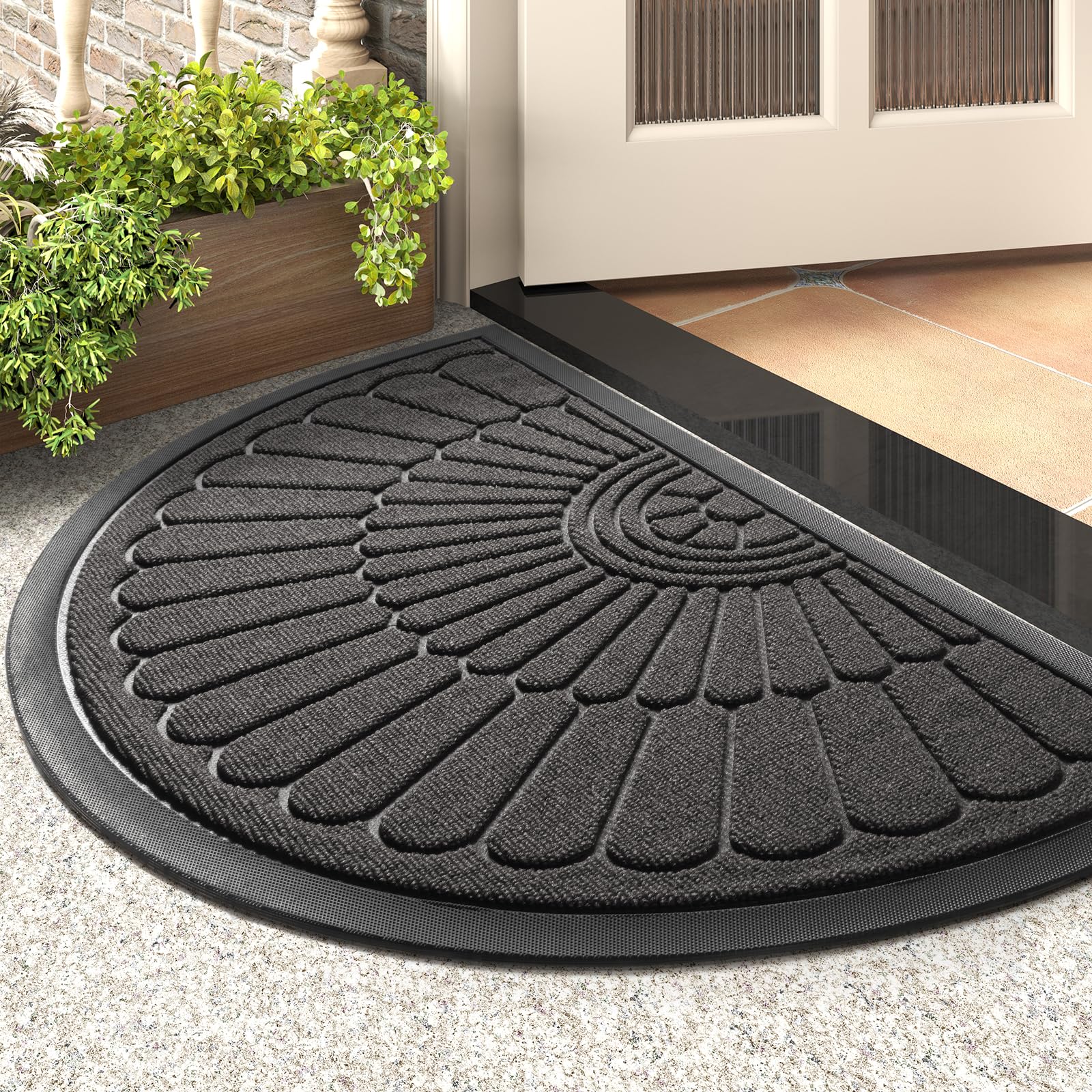
Engineering Insight: Material Selection in Semi Circle Doormat Outdoor Applications
In the domain of industrial rubber solutions, the semi circle doormat outdoor represents a deceptively simple product with complex material science underpinning its performance. While commercial-grade doormats are often marketed as universal solutions, they frequently fail under real-world environmental and mechanical stress. The root cause lies in inadequate material selection—a critical engineering oversight that compromises durability, safety, and lifecycle cost efficiency.
Outdoor doormats are subjected to continuous exposure to ultraviolet (UV) radiation, temperature fluctuations, moisture, and mechanical abrasion from foot traffic. Standard polyvinyl chloride (PVC) or low-density rubber compounds used in off-the-shelf products degrade rapidly under these conditions. UV exposure leads to chain scission in polymer matrices, resulting in embrittlement, cracking, and color fading. Similarly, water absorption in inferior rubber grades causes swelling, loss of tensile strength, and accelerated microbial growth—particularly in shaded or high-humidity environments.
At Suzhou Baoshida Trading Co., Ltd., we engineer semi circle doormat outdoor solutions using high-density styrene-butadiene rubber (SBR) and ethylene propylene diene monomer (EPDM) compounds. These materials offer superior resistance to ozone, UV radiation, and temperature extremes ranging from -40°C to +120°C. The cross-link density in our formulations ensures minimal elongation under load, preserving dimensional stability over extended service cycles. Additionally, our proprietary filler systems—reinforced with silica and carbon black—enhance abrasion resistance, critical for high-traffic entryways in commercial and industrial facilities.
A key differentiator in our design philosophy is the intentional balance between durometer hardness and surface compliance. Off-the-shelf mats often prioritize softness for comfort, sacrificing structural integrity. In contrast, our semi circle doormat outdoor products are calibrated to a Shore A hardness of 65–70, providing optimal debris-scraping efficiency while maintaining slip resistance per ASTM F2913-19 standards. This precision ensures effective soil and moisture retention without compromising user safety.
Moreover, the semi-circular geometry introduces unique stress concentration points at the arc-to-flat transition zone. Standard materials exhibit premature fatigue cracking in this region due to cyclic flexing. Our dynamic mechanical analysis (DMA)-optimized compounds mitigate this by maintaining elastic recovery above 92% after 10,000 deformation cycles.
Below is a comparative specification table highlighting the performance differentials between standard and engineered rubber compounds used in semi circle doormat outdoor applications.
| Property | Standard PVC/Rubber Blend | Baoshida Engineered SBR/EPDM Blend |
|---|---|---|
| Tensile Strength | 8–10 MPa | 18–22 MPa |
| Elongation at Break | 200–250% | 450–500% |
| Shore A Hardness | 50–55 | 65–70 |
| UV Resistance (ASTM G154) | Poor (cracking at 500 hrs) | Excellent (no degradation at 2,000 hrs) |
| Water Absorption (24 hrs) | 1.8% | 0.3% |
| Abrasion Loss (DIN 53516) | 180 mm³ | 65 mm³ |
| Operating Temperature Range | -10°C to +70°C | -40°C to +120°C |
Material selection is not a cost decision—it is a performance imperative. Off-the-shelf solutions fail because they generalize environmental conditions and traffic profiles. In contrast, engineered rubber compounds from Suzhou Baoshida Trading Co., Ltd. are tailored to the mechanical and climatic realities of industrial and commercial entryways, ensuring longevity, safety, and operational efficiency.
Material Specifications
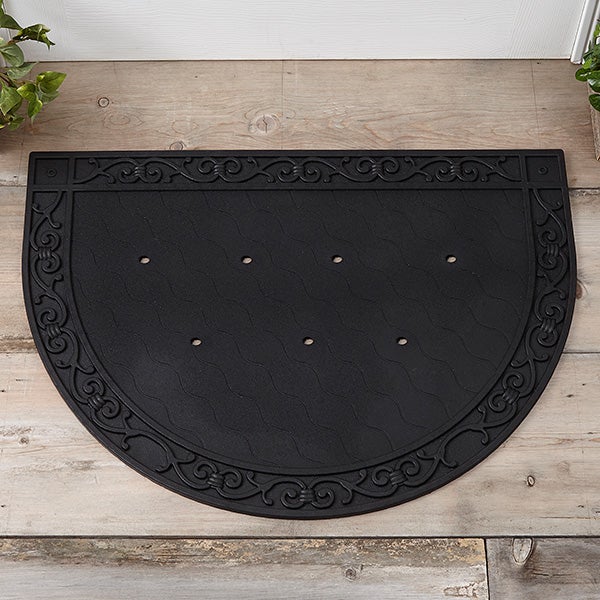
Material Specifications for Outdoor Semi-Circle Doormats
Selecting the optimal elastomer for outdoor semi-circle doormats requires rigorous evaluation of environmental stressors, including UV exposure, temperature extremes, moisture, and mechanical wear. At Suzhou Baoshida Trading Co., Ltd., we engineer compounds specifically for outdoor architectural applications, prioritizing longevity and performance under cyclic loading. Viton (FKM), Nitrile (NBR), and Silicone (VMQ) represent our core formulations, each offering distinct advantages for commercial and industrial entrances. Viton excels in severe chemical and thermal environments, making it ideal for facilities exposed to automotive fluids or coastal salinity. Its saturated fluorocarbon backbone provides unmatched resistance to ozone degradation and temperatures up to 230°C, though initial material costs are higher. Nitrile remains the industry standard for balanced performance, leveraging its acrylonitrile content to resist oils, greases, and moderate weathering. Optimized for Shore A hardness between 70–90, it delivers superior abrasion resistance critical for high-traffic zones while maintaining cost efficiency. Silicone formulations address extreme thermal cycling demands, functioning reliably from -60°C to 200°C. Our reinforced VMQ compounds incorporate specialty fillers to enhance tear strength, though supplemental UV inhibitors are essential for prolonged outdoor service.
Critical material properties directly impact doormat functionality, including tread retention, dimensional stability, and slip resistance under wet conditions. All compounds undergo accelerated aging per ASTM D573 and ISO 4665 to validate outdoor durability. Below is a comparative analysis of key specifications for standard production grades:
| Property | Viton (FKM) | Nitrile (NBR) | Silicone (VMQ) |
|---|---|---|---|
| Temperature Range (°C) | -20 to +230 | -30 to +120 | -60 to +200 |
| Tensile Strength (MPa) | 15–20 | 18–25 | 6–10 |
| Hardness (Shore A) | 65–85 | 70–90 | 40–70 |
| Abrasion Loss (mm³) | 45–60 | 30–45 | 80–120 |
| UV/Ozone Resistance | Excellent | Good | Fair (stabilized) |
| Chemical Resistance | Exceptional | Very Good | Moderate |
| Relative Cost | High | Medium | Medium-High |
Viton’s premium formulation justifies its use in airports, laboratories, or chemical handling facilities where incidental fluid exposure is routine. Nitrile’s abrasion resistance and rapid water dispersion make it the pragmatic choice for retail, hospitality, and office building entrances with daily pedestrian volumes exceeding 5,000 passes. Silicone’s flexibility at sub-zero temperatures suits cold-storage facilities or northern climates, though its lower abrasion resistance necessitates thicker profiles for equivalent service life. Suzhou Baoshida tailors filler systems and crosslink densities within each polymer family to meet client-specific ISO 18883 abrasion targets and ISO 10545 slip coefficients. All materials comply with REACH and RoHS directives, with optional heavy-metal-free curing for sensitive environments. For extended outdoor deployment, we recommend Viton or stabilized NBR compounds where budget permits, ensuring >10-year service life under ISO 4892-3 xenon-arc weathering validation.
Manufacturing Capabilities
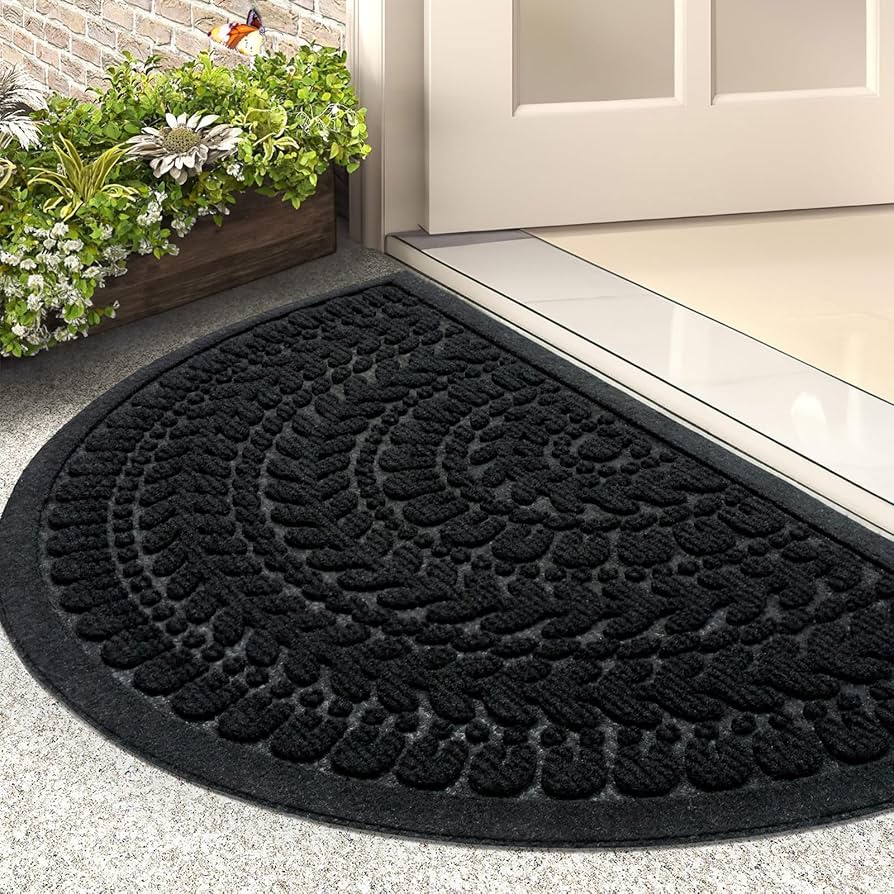
Suzhou Baoshida Trading Co., Ltd. operates at the forefront of industrial rubber solutions, delivering engineered performance for demanding outdoor applications. Our Engineering Capability division is anchored by a team of highly specialized professionals, including five dedicated Mould Engineers and two advanced Formula Engineers. This technical backbone enables us to design, develop, and manufacture semi circle doormat outdoor products that meet rigorous functional, durability, and aesthetic standards required by global OEM partners.
Our Mould Engineers bring extensive expertise in precision tooling design and cavity optimization, ensuring consistent part replication and tight dimensional tolerances. Utilizing CAD/CAM and 3D simulation software, they develop robust mould systems that support high-volume production cycles while minimizing wear and maintenance downtime. Each semi circle doormat mould is engineered to accommodate complex surface textures, anti-slip patterns, and structural ribs that enhance rigidity and drainage performance in outdoor environments.
Complementing this precision tooling capability are our two in-house Formula Engineers, who specialize in polymer chemistry and compound formulation for outdoor-grade rubber materials. They develop custom rubber blends using EPDM, SBR, and recycled rubber compounds, tailored to deliver specific performance attributes such as UV resistance, ozone stability, low-temperature flexibility, and abrasion resistance. These formulations are rigorously tested under simulated weathering conditions to ensure long-term resilience against rain, temperature fluctuations, and foot traffic.
Our integrated approach to OEM manufacturing allows for seamless co-development with clients. From initial concept sketches to final production validation, we manage every phase of the product lifecycle. This includes prototyping, material selection, DFM analysis, and first-article inspection. Our facility supports both compression and injection moulding processes, enabling scalability from pilot batches to mass production with minimal lead time variance.
We maintain strict quality control protocols aligned with ISO standards, including hardness testing, tensile strength evaluation, and density measurement. All formulations and tooling designs are documented and archived for full traceability, ensuring consistency across production runs and reorders.
The following table outlines key technical specifications achievable for semi circle doormat outdoor products under our engineering supervision:
| Parameter | Standard Range | Custom Capability |
|---|---|---|
| Material Type | EPDM, SBR, Recycled Rubber | Blends with anti-microbial agents |
| Hardness (Shore A) | 50–80 | Up to 90 with reinforcement |
| Operating Temperature | -40°C to +120°C | Extended range upon request |
| Tensile Strength | ≥8 MPa | ≥12 MPa with high-strength blend |
| Elongation at Break | ≥250% | Up to 400% with flexible grades |
| UV & Weather Resistance | 1,500+ hrs QUV testing | 3,000+ hrs with stabilizer pack |
| Mould Tolerance | ±0.3 mm | ±0.15 mm for precision cavity |
| Production Cycle Time | 60–180 seconds per piece | Optimized for high throughput |
This combination of advanced material science and precision engineering positions Suzhou Baoshida as a trusted OEM partner for industrial rubber applications. We deliver not just components, but engineered solutions designed for real-world performance and long-term reliability.
Customization Process
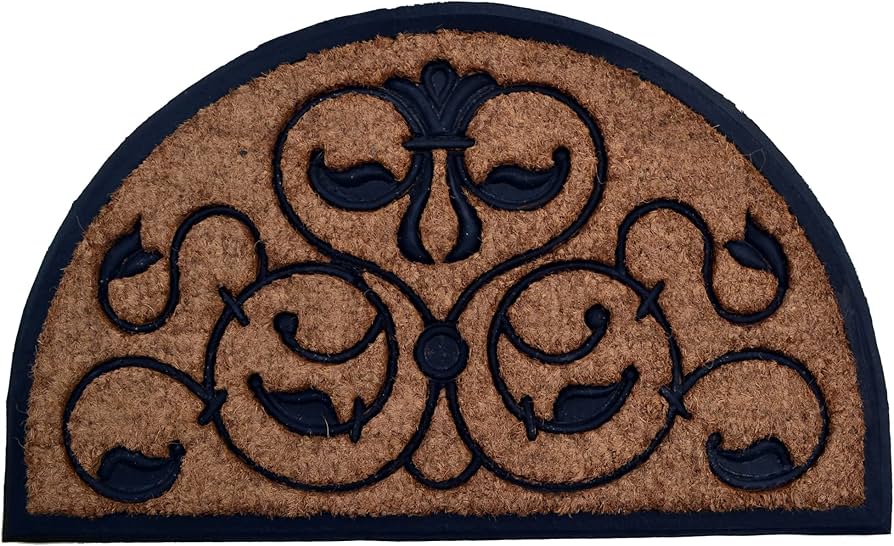
Customization Process for Semi-Circle Outdoor Doormats
Suzhou Baoshida Trading Co., Ltd. implements a rigorous, science-driven customization workflow for industrial semi-circle outdoor doormats. This process ensures dimensional accuracy, material resilience, and compliance with demanding environmental conditions. The sequence begins with comprehensive Drawing Analysis. Client-provided CAD files undergo meticulous review against ISO 2768-mK geometric tolerance standards and manufacturability constraints. Key parameters assessed include radius consistency, edge chamfer specifications, groove depth/profile for debris trapping, and critical mounting feature locations. Any deviations impacting structural integrity or mold flow dynamics are flagged for collaborative resolution prior to material selection.
Subsequent Formulation leverages our proprietary rubber compounding expertise. Based on the validated drawing and client environmental requirements (e.g., UV exposure, temperature range, chemical resistance), our engineers select and balance polymer matrices. Primary compounds typically utilize SBR/NR blends for optimal abrasion resistance and cost efficiency, with EPDM variants specified for extreme UV/ozone resistance. Precise additive packages are engineered: silica/carbon black ratios for Shore A 65-75 hardness, specialized antioxidants for 10,000+ hours UV stability, and vulcanization accelerators ensuring consistent cross-link density. Each formulation is computationally modeled for cure kinetics before lab-scale mixing.
Prototyping validates both design and material science. Precision CNC-machined aluminum molds produce 3-5 sample units. These undergo accelerated aging per ASTM G154 (UV), ASTM D2240 (hardness), and ISO 48-4 (tensile strength) testing. Tread depth retention after 500 cycles on abrasive media (ASTM D5963) and slip resistance on wet ceramic tile (ASTM F2913) are critical pass/fail metrics. Client feedback on aesthetics, weight, and handling informs final compound adjustments. Only upon documented performance verification does the project advance.
Mass Production integrates stringent inline quality control. Rubber batches undergo Mooney viscometer (ASTM D1646) and curemeter (ASTM D2084) checks pre-molding. During injection molding, cavity pressure sensors and IR thermography monitor each cycle. Post-molding, 100% visual inspection occurs for flash or voids, with statistical sampling for dimensional conformance (Cp/Cpk >1.33) and physical properties. Final lots receive third-party certification reports detailing all critical parameters against the approved prototype.
Key Material Performance Specifications
| Property | Test Standard | Baoshida Industrial Grade | Target Value |
|---|---|---|---|
| Shore A Hardness | ASTM D2240 | BD-ODM-70 | 70 ± 5 |
| Tensile Strength | ISO 37 | BD-ODM-70 | ≥ 15 MPa |
| Elongation at Break | ISO 37 | BD-ODM-70 | ≥ 350% |
| Abrasion Loss ( vol ) | ASTM D5963 | BD-ODM-70 | ≤ 120 mm³ |
| UV Resistance (2000h) | ASTM G154 | BD-ODM-70 | ΔHardness ≤ 8 |
| Wet Slip Coefficient | ASTM F2913 | BD-ODM-70 | ≥ 0.6 |
This closed-loop engineering process guarantees that every semi-circle doormat meets the precise functional and durability demands of commercial outdoor applications, minimizing field failures and lifecycle costs for OEM partners.
Contact Engineering Team
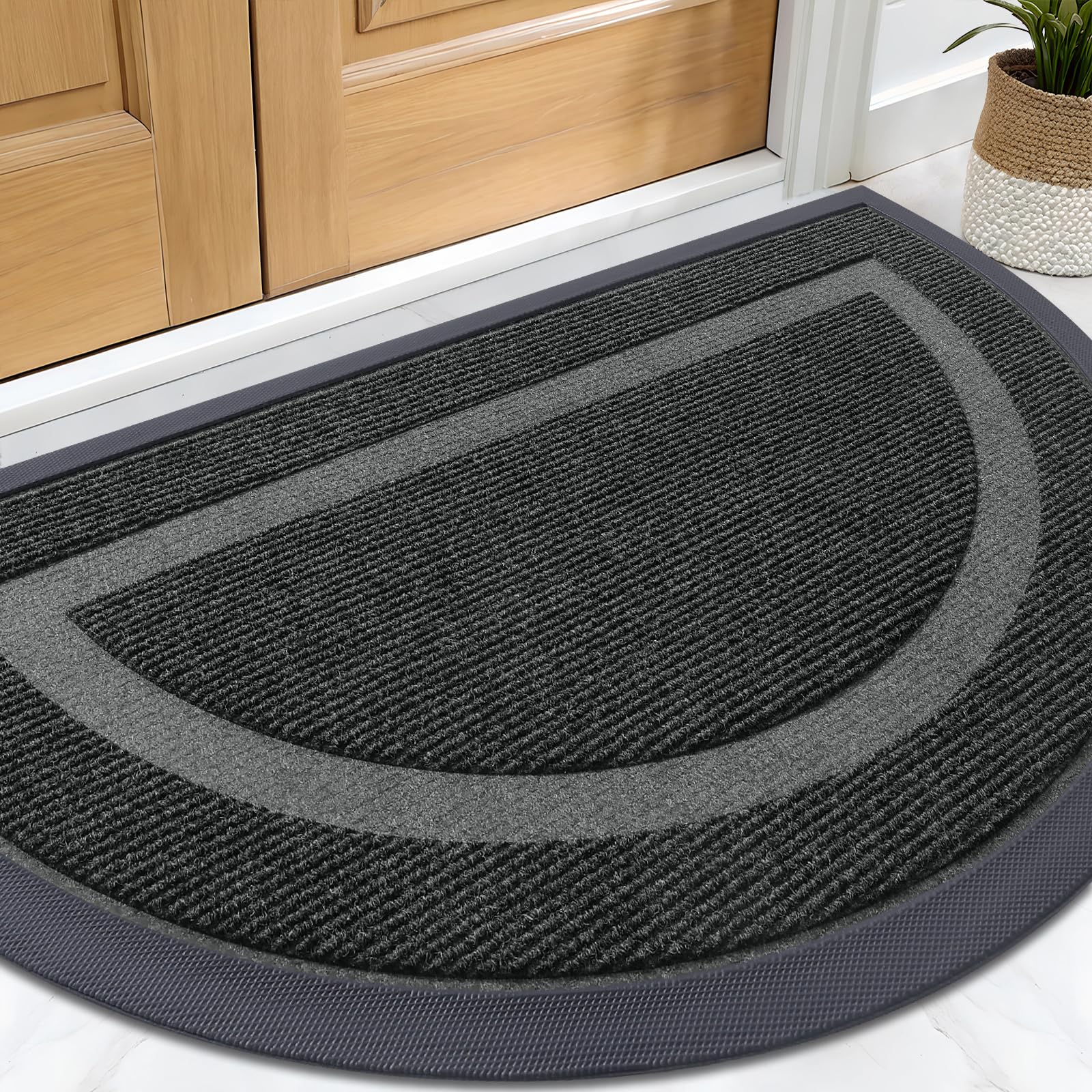
Contact Suzhou Baoshida for Premium Semi-Circle Doormat Outdoor Solutions
Suzhou Baoshida Trading Co., Ltd. stands at the forefront of industrial rubber manufacturing, delivering engineered solutions that meet the rigorous demands of commercial and municipal applications. Our semi-circle doormat outdoor series exemplifies precision in material formulation, structural integrity, and environmental resilience. Designed for high-traffic entryways in airports, shopping complexes, office buildings, and industrial facilities, these doormats combine functional geometry with advanced rubber compounding to ensure long-term performance under extreme weather and mechanical stress.
Each semi-circle doormat is manufactured using a proprietary blend of styrene-butadiene rubber (SBR) and ethylene propylene diene monomer (EPDM), optimized for UV resistance, ozone stability, and anti-slip performance. The curved profile enables seamless integration with architectural thresholds, minimizing trip hazards while maximizing dirt and moisture capture. Surface textures are laser-calibrated to achieve optimal particulate retention without compromising pedestrian comfort. Reinforced edges prevent curling and delamination, a common failure point in inferior molded rubber products.
We invite OEM partners, construction suppliers, and facility management firms to engage directly with our technical team to customize formulations, dimensions, and branding options. Whether you require FDA-compliant compounds for food processing zones or oil-resistant variants for industrial gatehouses, Suzhou Baoshida provides end-to-end formulation engineering and scalable production.
Technical Specifications – Semi-Circle Doormat Outdoor Series
| Parameter | Specification |
|---|---|
| Material Composition | SBR/EPDM blend (customizable) |
| Hardness (Shore A) | 65 ± 5 |
| Tensile Strength | ≥12 MPa |
| Elongation at Break | ≥250% |
| Operating Temperature Range | -40°C to +80°C |
| UV Resistance (ASTM G154) | Pass (5000 hrs) |
| Slip Resistance (EN 13036-4) | R10 (dry), R11 (wet) |
| Standard Diameters | 900 mm, 1200 mm, 1500 mm |
| Thickness Options | 12 mm, 18 mm, 25 mm |
| Color Availability | Black, Gray, Custom (Pantone matching) |
| Surface Finish | Diamond tread, Brushed, Grooved |
Partnering with Suzhou Baoshida means access to ISO 9001-certified production, in-house quality control laboratories, and a responsive technical sales team fluent in English, Mandarin, and technical rubber science. Our logistics network supports containerized shipments to global destinations, with lead times optimized for project-critical timelines.
For technical inquiries, sample requests, or formulation consultations, contact Mr. Boyce, OEM Account Manager, directly at [email protected]. Include your project specifications, volume requirements, and any performance criteria to receive a tailored material data sheet and commercial quotation within 24 hours. Let Suzhou Baoshida be your engineered rubber partner—where industrial durability meets architectural intent.
⚖️ O-Ring Weight Calculator
Estimate rubber O-ring weight (Approx).