
Technical Contents
Engineering Guide: Silicone Bellows
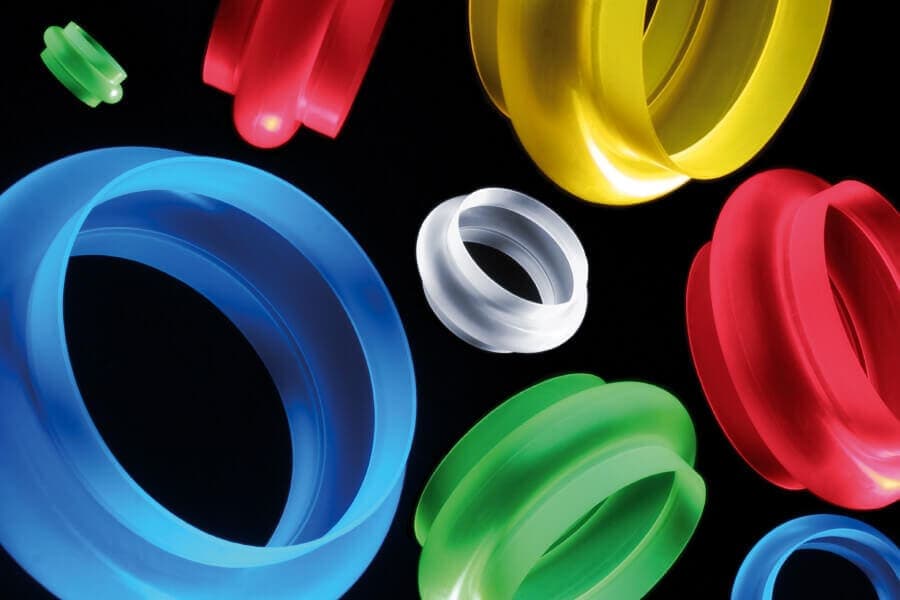
Engineering Insight: Silicone Bellows Material Selection Criticality
Generic silicone bellows represent a significant risk in demanding industrial applications. While off-the-shelf solutions appear cost-effective initially, their material composition frequently lacks the precise engineering required for sustained performance under real-world stresses. Failure occurs not from sudden rupture but through progressive degradation mechanisms directly tied to inadequate polymer formulation and processing. Understanding the material science behind these failures is paramount for system reliability.
Standard commercial silicones often utilize lower-purity vinyl-methyl (VMQ) polymers with generic fillers and peroxide cure systems optimized for minimal cost, not longevity. This compromises critical properties. Under continuous thermal cycling, especially at elevated temperatures common in automotive turbo systems or industrial ovens, these materials experience accelerated chain scission. The result is embrittlement, leading to micro-cracking during flexing cycles. Conversely, in cryogenic environments like semiconductor manufacturing, insufficient low-temperature flexibility causes hardening below -40°C, rendering the bellows incapable of movement without fracture. Chemical exposure presents another critical vulnerability; generic formulations lack resistance to specific industrial fluids, amines, or ozone, causing swelling, surface crazing, or catastrophic loss of mechanical integrity over time. The dynamic fatigue resistance – essential for bellows undergoing millions of flex cycles – is frequently inadequate due to suboptimal polymer molecular weight distribution and filler dispersion, leading to premature fatigue failure.
Material selection must address the specific operational triad: temperature extremes, chemical environment, and dynamic requirements. High-purity, high-molecular-weight VMQ or fluorosilicone (FVMQ) polymers with engineered silica reinforcement and optimized platinum or peroxide cure systems are essential for critical applications. Precise control over durometer, tensile strength, elongation, and crucially, compression set resistance, determines long-term elastic recovery and sealing capability. Off-the-shelf bellows typically sacrifice these parameters for manufacturability and price, creating a false economy where component replacement and system downtime costs vastly exceed the initial savings.
The following comparison highlights critical material property differences between generic and engineered silicone bellows solutions:
| Property | Generic Off-the-Shelf Silicone Bellows | Engineered Industrial Silicone Bellows (Baoshida Specification) |
|---|---|---|
| Temperature Range | -40°C to +200°C | -60°C to +230°C (continuous) / +260°C (intermittent) |
| Tensile Strength | 6.0 – 7.5 MPa | 8.5 – 10.0 MPa (ASTM D412) |
| Elongation at Break | 400% – 500% | 650% – 800% |
| Compression Set (22h @ 150°C) | 25% – 35% | ≤ 8% (ASTM D395 Method B) |
| Dynamic Fatigue Life | < 500,000 cycles (to 50% load loss) | > 2,000,000 cycles (application-specific testing) |
| Fluid Resistance | Limited (e.g., fails with fuels, amines) | Customizable (e.g., FVMQ for fuels, specialty VMQ for amines) |
Suzhou Baoshida Trading Co., Ltd. engineers bellows materials specifically against application data sheets, not generic catalogs. We formulate compounds where compression set remains below 10% after prolonged high-temperature exposure, ensuring consistent sealing force, and optimize polymer architecture for maximum flex life. This precision engineering eliminates the hidden costs of premature failure, providing true total cost of ownership reduction for OEMs and end-users in demanding industrial sectors. Material selection is not a commodity decision; it is the foundational element of bellows reliability.
Material Specifications
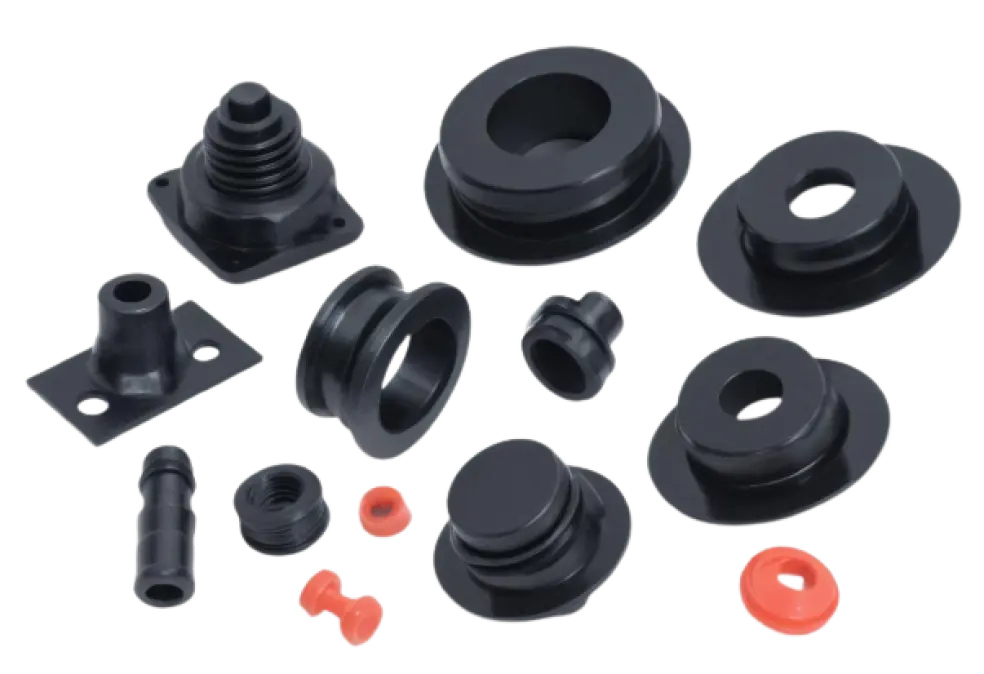
Silicone bellows are critical components in industrial applications requiring flexible, durable, and chemically resistant sealing solutions. At Suzhou Baoshida Trading Co., Ltd., we specialize in high-performance rubber formulations engineered for extreme environments. Our silicone bellows are manufactured using precision molding techniques and advanced polymer science to ensure consistent performance across dynamic mechanical systems. The selection of base elastomer significantly influences operational capability, especially in terms of temperature resilience, chemical compatibility, and mechanical fatigue resistance. We offer silicone bellows fabricated from three primary elastomeric materials: Fluorocarbon (Viton), Nitrile (NBR), and Silicone (VMQ). Each material exhibits distinct performance characteristics tailored to specific industrial demands.
Viton, a registered trademark of Chemours, is a fluorocarbon-based elastomer known for its exceptional resistance to high temperatures, oils, fuels, and a broad range of aggressive chemicals. This makes it ideal for aerospace, automotive, and petrochemical applications where exposure to hydrocarbons and elevated thermal loads is common. Viton bellows maintain integrity from -20°C to +200°C, with short-term excursions up to 250°C. However, its flexibility at low temperatures is limited compared to other elastomers.
Nitrile rubber, or Buna-N, is a cost-effective solution for applications involving petroleum-based fluids, hydraulic oils, and aliphatic hydrocarbons. It offers excellent abrasion resistance and tensile strength, making it suitable for industrial machinery and mobile equipment. Nitrile bellows perform reliably within a temperature range of -30°C to +100°C, with some formulations extending to +120°C. While it provides good mechanical durability, its performance degrades when exposed to ozone, UV radiation, and polar solvents.
Silicone rubber (VMQ) delivers outstanding thermal stability across extreme ranges, typically from -60°C to +200°C, with certain grades capable of withstanding brief exposures up to 250°C. It exhibits excellent resistance to ozone, UV light, and oxidation, making it ideal for outdoor, medical, and food-grade applications. Silicone bellows also offer high flexibility at low temperatures and are inherently electrically insulating. However, they have lower tensile strength and abrasion resistance compared to Viton and Nitrile, and are less suitable for dynamic applications involving high mechanical stress.
The following table summarizes the comparative material specifications for silicone bellows produced by Suzhou Baoshida Trading Co., Ltd.:
| Property | Viton (FKM) | Nitrile (NBR) | Silicone (VMQ) |
|---|---|---|---|
| Temperature Range (°C) | -20 to +200 (+250 short-term) | -30 to +100 (+120 short-term) | -60 to +200 (+250 short-term) |
| Tensile Strength (MPa) | 15–20 | 10–25 | 6–10 |
| Elongation at Break (%) | 200–300 | 250–400 | 200–600 |
| Hardness (Shore A) | 65–90 | 50–90 | 30–80 |
| Resistance to Oils/Fuels | Excellent | Excellent | Poor to Fair |
| Resistance to Ozone/UV | Excellent | Fair | Excellent |
| Flexibility at Low Temp | Moderate | Good | Excellent |
| Electrical Insulation | Good | Fair | Excellent |
Material selection must align with operational parameters including media exposure, thermal cycling, mechanical loading, and regulatory compliance. Our engineering team supports OEMs in material qualification and custom formulation to meet exacting performance standards.
Manufacturing Capabilities
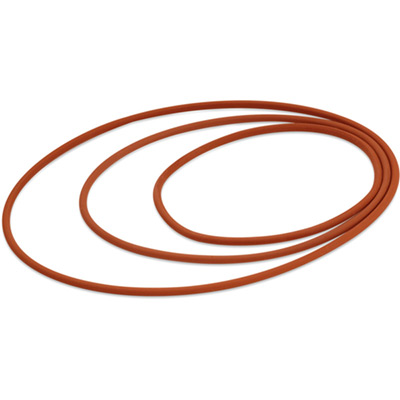
Engineering Capability: Precision Silicone Bellows Manufacturing
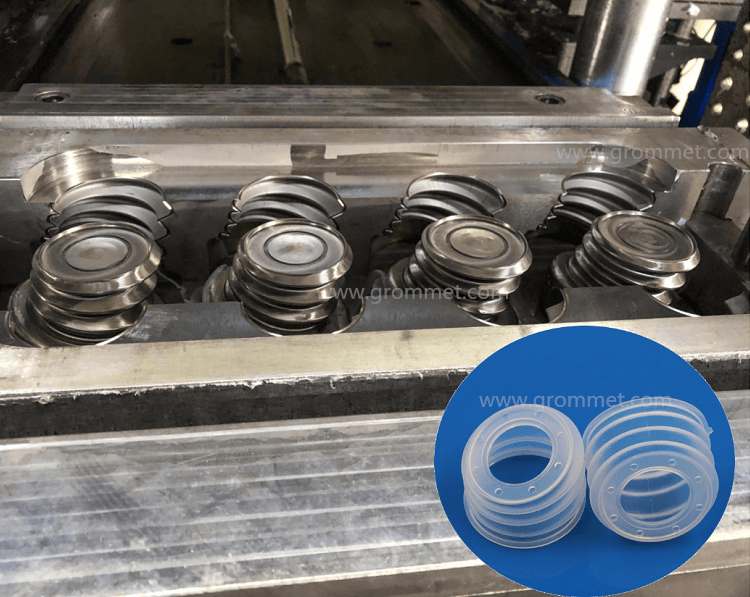
Suzhou Baoshida Trading Co., Ltd. delivers engineered silicone bellows solutions through deep technical expertise in polymer science and precision tooling. Our core strength resides in an integrated engineering team dedicated solely to complex elastomeric components. This team comprises five specialized mould engineers possessing advanced proficiency in 3D CAD/CAM design, finite element analysis (FEA) for stress simulation, and the intricate tolerancing required for seamless bellows convolution formation. Complementing this, two dedicated Rubber Formula Engineers optimize material performance at the molecular level. They formulate custom silicone compounds meeting exacting client specifications for durometer, thermal stability, chemical resistance, and dynamic fatigue life, ensuring the polymer matrix precisely aligns with the application’s operational demands. This dual-engineering approach guarantees that material properties and geometric design are developed in concert, eliminating performance compromises common in less integrated processes.
Our OEM manufacturing capability is built upon this robust engineering foundation. We manage the entire production lifecycle for global industrial clients, from initial concept validation and material qualification through to high-volume, consistent output. Rigorous process control protocols, including real-time cure monitoring and statistical process control (SPC) for critical dimensions, are standard practice. Every production batch undergoes comprehensive validation against agreed-upon technical data sheets, with full traceability maintained from raw material lot to finished component. This systematic approach minimizes risk and ensures long-term reliability in demanding environments such as automotive turbocharger systems, semiconductor manufacturing equipment, and aerospace actuation mechanisms where failure is not an option.
Material performance is non-negotiable in critical sealing applications. Our formulated silicone compounds achieve exceptional properties, as demonstrated in the following key specifications for our standard high-performance grade:
| Specification Parameter | Value Range | Test Standard |
|---|---|---|
| Hardness (Shore A) | 40 – 70 | ASTM D2240 |
| Tensile Strength | ≥ 8.0 MPa | ASTM D412 |
| Elongation at Break | ≥ 400% | ASTM D412 |
| Operating Temperature Range | -60°C to +230°C (Continuous) | ASTM D2240 |
| Compression Set (22h, 175°C) | ≤ 25% | ASTM D395 Method B |
The synergy between our mould design precision and tailored silicone chemistry directly translates to bellows with superior flex life, minimal hysteresis, and consistent sealing integrity under cyclic movement and extreme conditions. Suzhou Baoshida provides not just components, but engineered solutions where material science and geometric accuracy converge to solve complex industrial challenges. Partner with us for silicone bellows where engineering excellence is the standard.
Customization Process
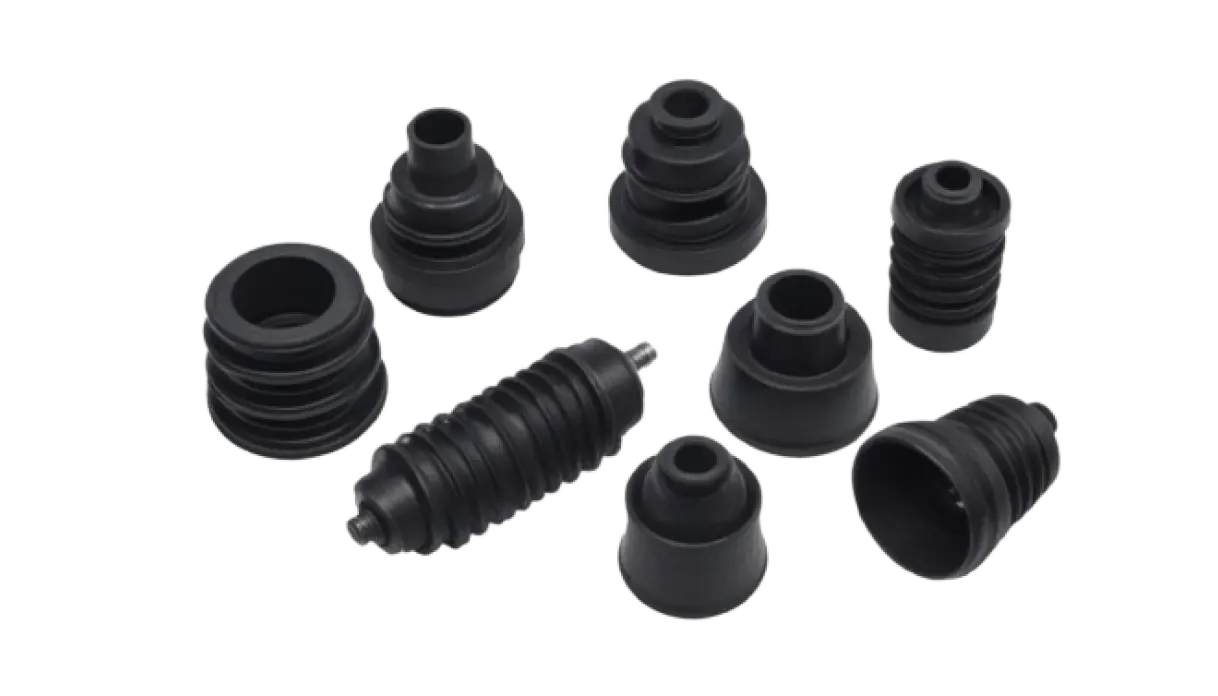
Silicone Bellows Customization Process: From Design to Mass Production
At Suzhou Baoshida Trading Co., Ltd., our silicone bellows customization process is engineered for precision, durability, and seamless integration into industrial applications. Each stage—from drawing analysis to mass production—is executed with strict adherence to material science principles and OEM requirements. This ensures optimal performance under extreme temperatures, dynamic compression, and chemical exposure.
The process begins with Drawing Analysis, where our engineering team evaluates customer-provided technical drawings or 3D models. Key parameters such as inner diameter, outer diameter, convolution count, stroke length, and flange specifications are verified. We assess geometric feasibility, identify potential stress concentration zones, and recommend design modifications to enhance fatigue resistance and service life. Tolerances are cross-referenced against ISO 3302 and ISO 2768 standards to ensure manufacturability.
Following design validation, we proceed to Formulation Development. Our rubber chemists tailor a silicone compound based on operational demands. Standard high-consistency vinyl-methyl silicone (VMQ) serves as the base, modified with additives for enhanced tear strength, compression set resistance, or fluid compatibility. For applications exposed to fuels or oils, we incorporate fluorosilicone (FVMQ) blends. All formulations are tested for thermal stability from –60°C to +200°C, with optional extension to +250°C for short durations. Hardness is adjustable between 40 and 70 Shore A, and flame resistance can be achieved to meet UL 94 V-0 upon request.
Once the compound is finalized, Prototyping commences using precision compression or transfer molding. Prototypes are produced in small batches and subjected to dimensional inspection, burst pressure testing, and dynamic cycling under simulated service conditions. We perform at least 10,000 compression-extension cycles to validate durability. Feedback from functional testing is integrated into final design or material adjustments before release for production.
The final phase, Mass Production, leverages automated molding lines with in-process quality monitoring. Each batch undergoes rigorous quality control, including hardness testing, visual inspection, and抽样 (sampling) physical tests per ASTM D412 and D624. We maintain traceability through lot numbering and provide full material certifications (COA, RoHS, REACH) with every shipment.
Our integrated approach ensures that every silicone bellow meets exact application requirements while maintaining consistency across production runs.
| Parameter | Standard Range | Customizable Options |
|---|---|---|
| Material | VMQ (Vinyl-Methyl Silicone) | FVMQ, PVMQ, conductive fillers |
| Hardness | 40–70 Shore A | Up to 80 Shore A on request |
| Temperature Range | –60°C to +200°C | +250°C (intermittent) |
| Inner Diameter | 10–300 mm | Larger sizes on special tooling |
| Stroke Length | Up to 50% of compressed height | Application-specific tuning |
| Certifications | RoHS, REACH, ISO 9001 | UL, FDA, EC1935/2004 upon request |
Contact Engineering Team
Contact Suzhou Baoshida for Precision Silicone Bellows Solutions
Silicone bellows represent a critical engineering component where material science, dimensional accuracy, and environmental resilience converge. At Suzhou Baoshida Trading Co., Ltd., we specialize in the development and manufacturing of high-performance silicone bellows tailored to demanding industrial applications, from semiconductor handling to aerospace fluid systems. Our technical team possesses deep expertise in polymer formulation, ensuring every bellow meets exacting OEM specifications for flexibility, temperature stability, and chemical resistance. We understand that failure in these components can cascade into system downtime or safety hazards—making precision non-negotiable.
Our manufacturing process integrates advanced compounding techniques with rigorous quality control protocols. Each silicone compound is engineered in-house, leveraging platinum-cured formulations for superior thermal stability and low compression set. Bellows geometries are validated through finite element analysis (FEA) to optimize stroke life and pressure handling. Below are key technical specifications achievable through our OEM partnership model:
| Parameter | Standard Range | Custom Capability |
|---|---|---|
| Material Type | VMQ (High-Purity Silicone) | FVMQ, Custom Blends |
| Temperature Range | -60°C to +230°C (continuous) | -75°C to +260°C (intermittent) |
| Durometer (Shore A) | 40–70 | 30–80 (±2 points tolerance) |
| Reinforcement | Embedded Polyester/Fiberglass | Aramid, Stainless Steel Mesh |
| Pressure Rating | Up to 15 bar (static) | 25+ bar (dynamic) |
| Customization Level | CAD-to-Part, Tight Tolerances (±0.1mm) | Multi-layer, Conductive Fillers |
Why partner with Suzhou Baoshida? We eliminate the guesswork in silicone component sourcing. Our OEM management approach begins with collaborative design review, ensuring manufacturability without compromising performance. We maintain ISO 9001-certified production lines with in-house tooling capabilities, enabling rapid prototyping and scalable volume production. Unlike generic suppliers, we provide full material traceability, batch-specific certificates of conformance, and accelerated lifecycle testing data—critical for regulated industries. Our clients report 30% reduced lead times and zero critical non-conformances in multi-year supply agreements, directly attributable to our process discipline.
For engineering teams facing challenges with bellow fatigue, outgassing, or dimensional drift, our technical team delivers actionable solutions. We do not sell catalog parts; we engineer mission-critical components that integrate seamlessly into your assembly. Mr. Boyce, our dedicated OEM Manager, possesses 12 years of experience resolving complex sealing and expansion joint requirements across automotive, medical device, and industrial automation sectors. He will connect you directly with our formulation engineers to address material compatibility, regulatory hurdles, or cost-optimization targets—no sales intermediaries.
Initiate your project with a technical consultation. Contact Mr. Boyce immediately at [email protected] with your application parameters, CAD files, or performance requirements. Specify “Silicone Bellows OEM Inquiry” in the subject line to expedite engineering resource allocation. We respond to all technical inquiries within 4 business hours with actionable feedback—not generic brochures. Suzhou Baoshida ensures your silicone bellows perform reliably under extreme conditions, protecting system integrity and your brand reputation. Partner with us to transform material limitations into engineering advantages.
⚖️ O-Ring Weight Calculator
Estimate rubber O-ring weight (Approx).