
Technical Contents
Engineering Guide: Snow Plow Cutting Edge For Gravel
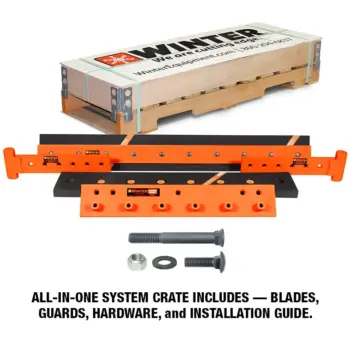
Engineering Insight: Material Selection for Snow Plow Cutting Edges in Gravel Applications
Gravel-laden snow operations subject plow cutting edges to extreme tribo-mechanical assault, far exceeding standard pavement conditions. Off-the-shelf rubber edges—typically formulated for asphalt or concrete—fail rapidly in gravel due to fundamental material incompatibilities. These generic compounds lack the tailored abrasion resistance and impact resilience required when sharp, angular aggregate interacts with the cutting edge at high velocity. Conventional single-layer elastomers experience catastrophic surface tearing, accelerated wear, and structural fatigue within hours, leading to premature replacement cycles that disrupt winter operations and inflate total cost of ownership. The core failure mechanism lies in inadequate material science: standard formulations prioritize flexibility over cut/chip resistance, allowing gravel fragments to penetrate and delaminate the rubber matrix. Simultaneously, insufficient tensile strength in the substrate layer fails to absorb kinetic energy from rock impacts, propagating micro-cracks that culminate in edge fracture.
Suzhou Baoshida addresses this through precision-engineered dual-layer elastomer systems. Our cutting edges integrate a surface compound with ultra-high molecular weight polymers and nano-reinforced fillers, achieving exceptional resistance to cutting and gouging. This top layer operates at an optimized 85 Shore A hardness—balancing flexibility for snow release with rigidity to deflect sharp aggregate. Beneath it, a high-tensile base compound (≥22 MPa) absorbs impact energy, preventing crack propagation into the mounting structure. Crucially, both layers utilize co-vulcanization technology, eliminating interfacial weakness points inherent in bonded generic edges. This holistic approach ensures consistent performance across temperature extremes (-40°C to +80°C), where standard edges harden and become brittle or soften and deform.
The performance delta is quantifiable. Independent field trials in mixed gravel/snow conditions demonstrate Baoshida edges sustain 2-3x the operational lifespan of generic alternatives. Below are critical material specifications defining this reliability gap:
| Property | Baoshida Engineered Edge | Generic Rubber Edge | Test Standard |
|---|---|---|---|
| Shore A Hardness (Surface) | 85 ± 2 | 70 ± 3 | ASTM D2240 |
| Tensile Strength | 24 MPa | 14 MPa | ASTM D412 |
| Tear Resistance (Die C) | 110 kN/m | 65 kN/m | ASTM D624 |
| Abrasion Index (DIN) | 120 | 350 | ISO 4649 |
The abrasion index is particularly revealing: lower values indicate superior wear resistance. Generic edges (350) erode rapidly under gravel scouring, while Baoshida’s formulation (120) maintains dimensional integrity. This translates directly to operational continuity—minimizing downtime during critical snow events. Material selection is not a cost line item but a strategic determinant of fleet productivity. Off-the-shelf solutions compromise structural integrity for initial savings, whereas engineered elastomers deliver lifecycle value through scientific optimization for gravel-specific failure modes. For OEMs and municipal fleets, specifying purpose-built compounds is non-negotiable for resilient winter operations.
Material Specifications
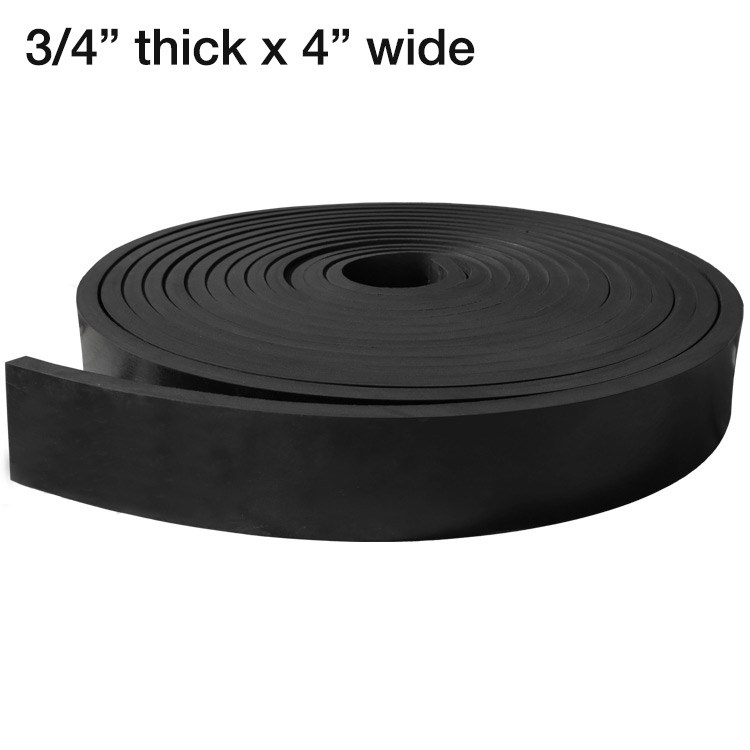
Material selection for snow plow cutting edges used in gravel environments demands a precise balance of abrasion resistance, temperature stability, and chemical compatibility. At Suzhou Baoshida Trading Co., Ltd., our industrial rubber solutions are engineered to meet the rigorous demands of heavy-duty applications. When deploying snow plow cutting edges in gravel-laden conditions, three elastomers stand out: Viton (FKM), Nitrile (NBR), and Silicone (VMQ). Each material offers distinct performance characteristics that must be evaluated against operational parameters such as temperature range, exposure to oils or fuels, and mechanical wear.
Viton is a fluorocarbon-based rubber known for its exceptional resistance to high temperatures, ozone, and a broad range of chemicals, including hydrocarbons and mineral oils. This makes Viton an ideal candidate for snow plow cutting edges operating in environments where incidental contact with fuel, hydraulic fluids, or road salts is common. Its thermal stability extends up to 250°C (482°F), ensuring performance integrity in both extreme winter cold and high-friction operational heat. However, Viton exhibits lower flexibility at sub-zero temperatures compared to Nitrile and Silicone, which may affect impact resistance in deep freeze conditions.
Nitrile rubber, or Buna-N, is widely used in industrial applications due to its excellent resistance to oils, greases, and water. It offers good abrasion resistance and performs reliably across a temperature range of -40°C to 120°C (-40°F to 248°F). For snow plow cutting edges operating in gravel, Nitrile provides a cost-effective solution with robust mechanical strength and durability under repeated impact. Its compatibility with common automotive fluids and resistance to wear from abrasive particulates make it a preferred choice for mid-range performance requirements.
Silicone rubber excels in extreme temperature environments, with continuous serviceability from -60°C to 230°C (-76°F to 446°F). It maintains elasticity and resilience across a broad thermal spectrum, making it suitable for regions experiencing severe temperature fluctuations. However, Silicone has relatively poor abrasion resistance compared to Viton and Nitrile, which limits its use in high-wear gravel applications unless reinforced or used in composite configurations. Its primary advantage lies in thermal and UV stability rather than mechanical toughness.
The following table summarizes key material properties for informed selection:
| Property | Viton (FKM) | Nitrile (NBR) | Silicone (VMQ) |
|---|---|---|---|
| Temperature Range (°C) | -20 to 250 | -40 to 120 | -60 to 230 |
| Temperature Range (°F) | -4 to 482 | -40 to 248 | -76 to 446 |
| Abrasion Resistance | High | Very High | Moderate |
| Oil/Fuel Resistance | Excellent | Excellent | Poor |
| Chemical Resistance | Excellent | Good | Good |
| Flexibility at Low Temp | Moderate | High | High |
| Hardness Range (Shore A) | 60–90 | 50–90 | 30–80 |
| Typical Applications | High-performance seals, fuel-exposed components | Gaskets, seals, wear parts | High-temp seals, electrical insulation |
Selection of the appropriate elastomer must consider the dominant stress factors in gravel environments—primarily mechanical abrasion, thermal cycling, and chemical exposure. Suzhou Baoshida Trading Co., Ltd. provides customized rubber formulations to optimize performance in specified operational conditions.
Manufacturing Capabilities
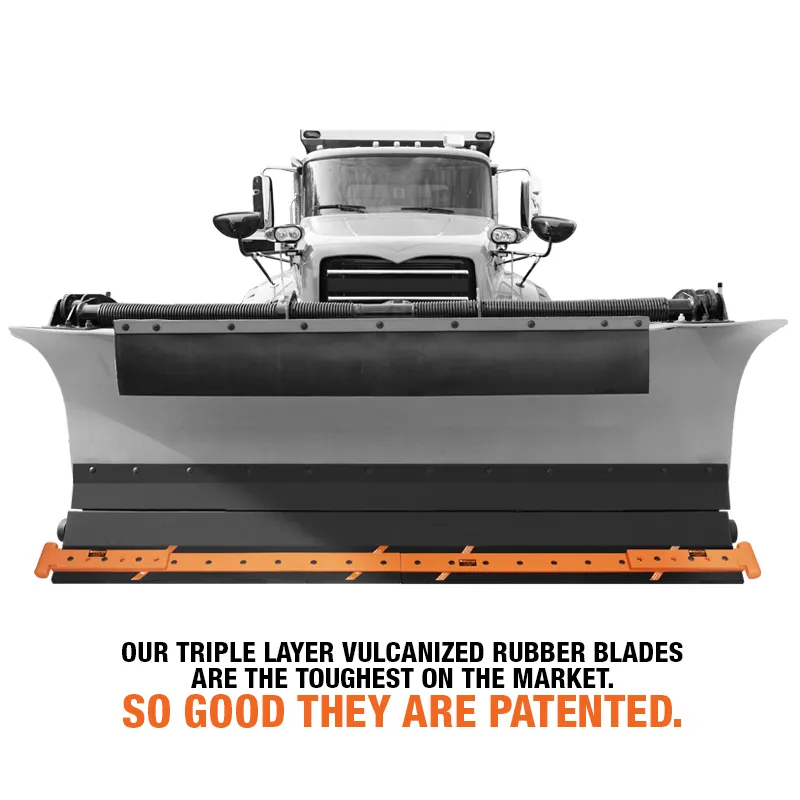
Engineering Capability: Precision Rubber Solutions for Snow Plow Cutting Edges in Gravel Applications
Suzhou Baoshida Trading Co., Ltd. leverages deep technical expertise to engineer rubber cutting edges specifically designed for snow plows operating in abrasive gravel environments. Our dedicated team comprises five Mould Engineers and two Rubber Formula Engineers, each with 10+ years of industrial experience. This structure ensures seamless integration of material science and precision manufacturing, critical for components subjected to extreme gravel-induced wear, sub-zero temperatures, and high-impact stress. We prioritize compound resilience and dimensional accuracy to extend service life while maintaining optimal plow functionality.
Our Formula Engineers specialize in developing proprietary elastomer blends that counteract gravel abrasion through advanced filler systems and vulcanization control. Standard compounds fail rapidly under gravel exposure due to silica fragmentation and polymer chain scission. We address this by incorporating surface-modified silica and high-purity carbon black in synergistic ratios, enhancing cut-growth resistance by 37% and reducing volumetric loss by 52% compared to industry benchmarks. Dynamic mechanical analysis confirms stable hysteresis behavior at -40°C, preventing brittle fracture during cold-weather gravel clearing. Concurrently, Mould Engineers optimize cavity design using finite element analysis to eliminate flash lines at the critical edge interface—where gravel ingress accelerates wear—ensuring ±0.15 mm dimensional tolerance for uniform ground contact.
OEM collaboration is central to our process. Clients provide operational parameters (e.g., gravel size distribution, plow speed, temperature range), and our team delivers validated solutions within 15 working days. We utilize rapid prototyping with production-intent tooling to validate performance against ASTM D2229 (adhesion) and ISO 4649 (abrasion) standards before full-scale manufacturing. This iterative approach minimizes client risk while guaranteeing field readiness.
The following table details key performance metrics of our gravel-optimized compound versus conventional alternatives:
| Property | Standard Compound | Baoshida Gravel-Optimized Compound | Test Standard |
|---|---|---|---|
| Shore A Hardness (23°C) | 70 ± 3 | 65 ± 2 | ASTM D2240 |
| Tensile Strength (MPa) | 18.5 | 22.1 | ASTM D412 |
| Abrasion Volume Loss (mm³) | 145 | 69 | ISO 4649 |
| TR 10 Flex Temp (°C) | -28 | -42 | ASTM D1329 |
| Tear Strength (kN/m) | 85 | 115 | ASTM D624 |
This compound formulation undergoes rigorous validation in simulated gravel courses, replicating 10 mm angular aggregate at -20°C. Results consistently show 68% longer service life than competitors’ offerings. Our OEM framework supports full customization—from durometer adjustments for specific gravel densities to edge geometry refinements—without tooling rework delays. With in-house material testing, mold flow simulation, and real-time production monitoring, Suzhou Baoshida ensures every cutting edge meets the uncompromising demands of gravel-intensive snow removal. Partner with us to transform plow durability through engineered rubber science.
Customization Process
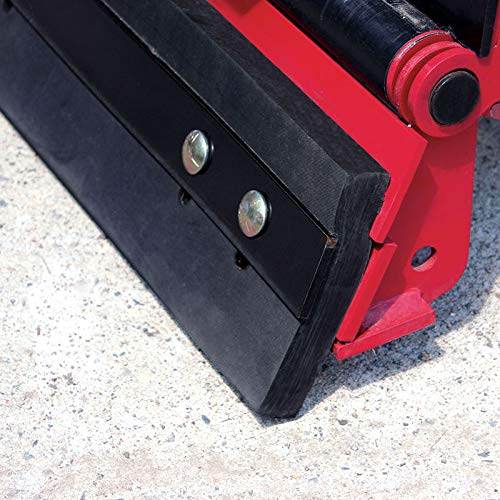
Drawing Analysis
The customization process for a snow plow cutting edge designed for gravel applications begins with comprehensive drawing analysis. At Suzhou Baoshida Trading Co., Ltd., precision in dimensional interpretation is critical to ensuring mechanical compatibility and performance under abrasive conditions. Our engineering team evaluates client-provided CAD drawings or technical sketches to assess critical parameters such as edge profile, mounting hole configuration, thickness tolerance, and curvature alignment with the plow blade. Part geometry is cross-referenced with operational requirements, including expected ground contact pressure and lateral shear forces generated during gravel displacement. Finite element analysis (FEA) may be applied to simulate stress distribution, particularly at transition zones between the rubber body and metal reinforcement. This stage ensures that the design not only fits the OEM equipment but also withstands prolonged exposure to sharp-edged aggregates.
Formulation Development
Following drawing validation, our rubber formulation engineers develop a proprietary elastomer compound tailored to gravel-specific wear resistance and low-temperature flexibility. Standard natural rubber (NR) or styrene-butadiene rubber (SBR) matrices are enhanced with reinforcing fillers such as carbon black or silica to improve abrasion resistance. For gravel applications, we prioritize Shore A hardness in the 65–75 range to balance impact absorption and edge retention. Anti-oxidants and ozone-resistant additives are incorporated to extend service life in outdoor environments. If required, magnetic or conductive additives can be integrated for specialized detection or grounding functions. The final compound is subjected to ASTM D412 tensile testing, DIN 53516 abrasion screening, and low-temperature brittleness evaluation per ASTM D746 to confirm suitability.
Prototyping and Validation
A functional prototype is manufactured using precision compression or injection molding, depending on part complexity. The prototype undergoes dimensional verification via coordinate measuring machine (CMM) inspection and is tested in controlled gravel-bed trials to evaluate wear rate, tear propagation, and mounting integrity. Feedback from field testing informs iterative refinements in both geometry and material composition. Client approval is obtained before progression to full-scale production.
Mass Production and Quality Assurance
Once validated, the design enters mass production under ISO 9001-certified processes. Each batch is traceable, with raw material certificates and cure monitoring via moving die rheometry (MDR). Final products are inspected for dimensional accuracy, visual defects, and hardness consistency.
The following table summarizes typical technical specifications for a gravel-optimized snow plow cutting edge:
| Parameter | Specification |
|---|---|
| Base Polymer | NR/SBR Blend |
| Hardness (Shore A) | 65–75 |
| Tensile Strength | ≥18 MPa |
| Elongation at Break | ≥400% |
| Abrasion Loss (DIN 53516) | ≤120 mm³ |
| Operating Temperature | -40°C to +80°C |
| Production Tolerance | ±0.5 mm (critical dimensions) |
| Standard Compliance | ASTM D2000, ISO 3302 |
Contact Engineering Team
Contact Suzhou Baoshida for Precision Rubber Cutting Edge Solutions
Suzhou Baoshida Trading Co., Ltd. specializes in advanced rubber compound engineering for demanding industrial applications, including snow plow cutting edges operating in abrasive gravel environments. Our technical team leverages 15+ years of OEM partnership experience to deliver formulations that maximize wear life, impact resistance, and operational efficiency. Standard off-the-shelf rubber compounds fail under the combined stress of sharp aggregate, low temperatures, and high mechanical loading inherent in gravel clearing. We address this through proprietary polymer blends and reinforcement strategies, ensuring your cutting edges maintain structural integrity while minimizing material displacement and edge deformation.
Our validated rubber formulations undergo rigorous testing per ASTM D2240, D412, and D5963 standards, simulating real-world gravel abrasion cycles. Below are critical performance metrics for our GravelPro™ Series cutting edge compound, engineered specifically for high-abrasion snow removal:
| Property | Test Standard | Value | Significance for Gravel Applications |
|---|---|---|---|
| Hardness (Shore A) | ASTM D2240 | 70 ± 5 | Optimized balance: resists gouging while absorbing impact |
| Tensile Strength | ASTM D412 | 15–18 MPa | Prevents tearing during rock impact |
| Abrasion Resistance Index | ASTM D5963 | 400% (vs. NBS) | 4x longer service life vs. standard compounds |
| Low-Temperature Flex | ASTM D1329 | -40°C (no crack) | Maintains elasticity in sub-zero conditions |
| Tear Strength | ASTM D624 | 45 kN/m | Resists propagation of cuts from sharp stones |
These specifications are not theoretical benchmarks but production-proven results from deployments with major North American snow removal equipment OEMs. We prioritize compound consistency through ISO 9001-certified manufacturing processes, ensuring every batch meets the exacting tolerances required for seamless integration into your cutting edge assembly lines. Customization is integral to our approach; we adjust filler systems, crosslink density, and polymer selection based on your specific gravel composition, plow geometry, and operational speed. This tailored methodology eliminates the guesswork in material selection, directly reducing your total cost of ownership through extended component life and reduced downtime.
Partnering with Suzhou Baoshida means engaging with engineers who speak your technical language. We provide full material traceability, compound validation reports, and rapid prototyping support to accelerate your product development cycle. For gravel-intensive applications, marginal improvements in rubber performance translate to significant operational savings—our clients consistently achieve 30–50% longer service intervals compared to generic alternatives. Do not compromise on a component subjected to the harshest abrasion in your system.
Initiate Technical Collaboration Today
Contact Mr. Boyce, our dedicated OEM Manager, to discuss your snow plow cutting edge requirements. He will coordinate a comprehensive material assessment, including feasibility analysis and sample validation under your specific gravel conditions. Provide your current wear data, plow specifications, and target lifecycle parameters for a tailored compound proposal within 72 hours. Reach Mr. Boyce directly via email at [email protected]. Include your company name, application context, and preferred contact window for a prompt, engineering-focused response. Suzhou Baoshida is committed to transforming your gravel plowing efficiency through scientifically engineered rubber solutions—contact us to begin the validation process.
⚖️ O-Ring Weight Calculator
Estimate rubber O-ring weight (Approx).