
Technical Contents
Engineering Guide: Square Section O-Ring
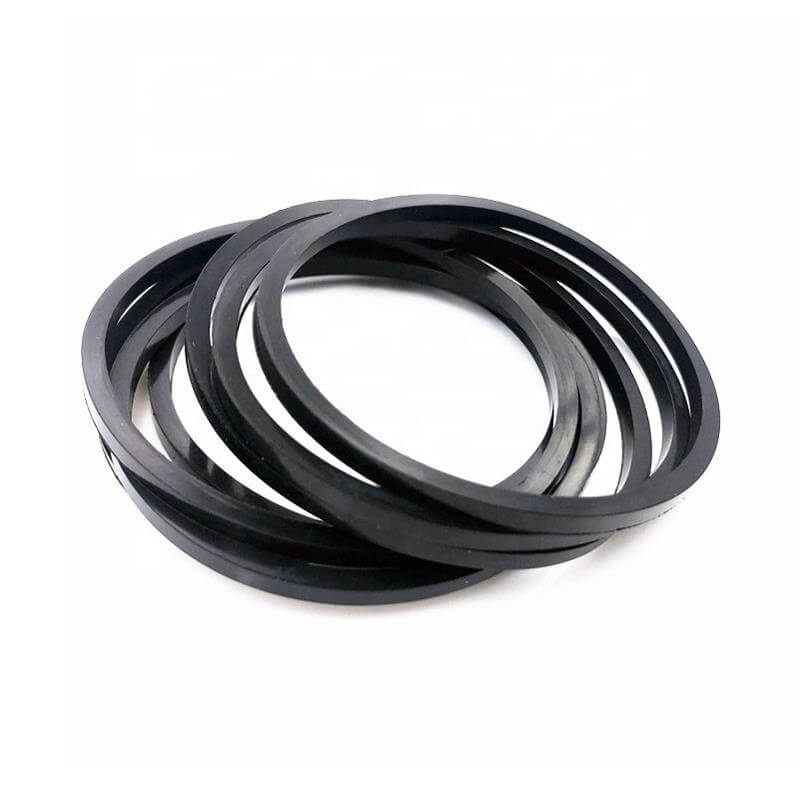
Engineering Insight: Material Selection in Square Section O-Rings
The square section O-ring, while geometrically simpler than its round counterpart, demands a higher degree of engineering precision in material selection. Unlike standard round O-rings that rely on radial compression and elastomeric recovery for sealing, square section variants depend on uniform cross-sectional deformation across flat sealing surfaces. This fundamental difference amplifies the consequences of improper material choice, making off-the-shelf solutions prone to premature failure in demanding industrial environments.
Material compatibility is not merely a function of chemical resistance; it encompasses thermal stability, compression set resistance, extrusion resistance, and dynamic friction characteristics. Generic elastomers such as standard NBR (nitrile butadiene rubber) or low-grade silicone may appear cost-effective initially but often lack the consistency in durometer and polymer structure required for reliable performance in high-load or fluctuating temperature applications. For instance, in hydraulic systems operating above 100°C, conventional NBR begins to degrade, leading to hardening, cracking, and loss of sealing force. Similarly, in pneumatic actuators with frequent cycling, materials with poor resilience exhibit accelerated stress relaxation, resulting in leakage paths within weeks of operation.
A critical failure mode observed with non-engineered square section O-rings is extrusion under pressure. Due to their larger contact area and reduced ability to redistribute stress dynamically, these seals are more susceptible to nibbling and chunking in clearance gaps—especially when installed in metal-to-metal joints with imperfect surface finishes. Materials with low tensile strength or poor tear resistance, such as basic EPDM or regrind-based compounds, cannot withstand these mechanical stresses. In contrast, high-performance formulations like hydrogenated nitrile (HNBR), fluorocarbon (FKM), or perfluoroelastomers (FFKM) offer superior mechanical integrity and resistance to both thermal and chemical attack.
Another often-overlooked factor is batch-to-batch consistency. Off-the-shelf O-rings sourced from non-specialized suppliers frequently exhibit variation in cure state, filler dispersion, and durometer. Such inconsistencies disrupt sealing uniformity, particularly in static flange applications where even micrometer-level differences in cross-section can lead to uneven load distribution and localized leakage.
At Suzhou Baoshida Trading Co., Ltd., we prioritize application-specific material engineering. Each square section O-ring is formulated to match the operational profile—be it aggressive media exposure, wide temperature swings, or sustained pressure conditions.
Below is a comparison of common elastomers used in precision square section O-rings:
| Material | Temperature Range (°C) | Durometer Range (Shore A) | Key Strengths | Common Limitations |
|---|---|---|---|---|
| NBR | -30 to +100 | 60–90 | Oil and fuel resistance, cost-effective | Poor ozone and heat resistance above 100°C |
| HNBR | -40 to +150 | 60–90 | Enhanced heat and ozone resistance, high tensile strength | Higher cost than NBR |
| FKM | -20 to +200 | 60–90 | Excellent chemical and thermal resistance | Limited low-temperature flexibility, high cost |
| EPDM | -50 to +150 | 50–80 | Superior weather and steam resistance | Poor oil and fuel compatibility |
| Silicone | -60 to +200 | 40–80 | Extreme temperature range, biocompatible | Low tensile strength, poor abrasion resistance |
Selecting the correct elastomer is not a generic substitution exercise—it is a precision engineering decision that defines service life, reliability, and total cost of ownership.
Material Specifications
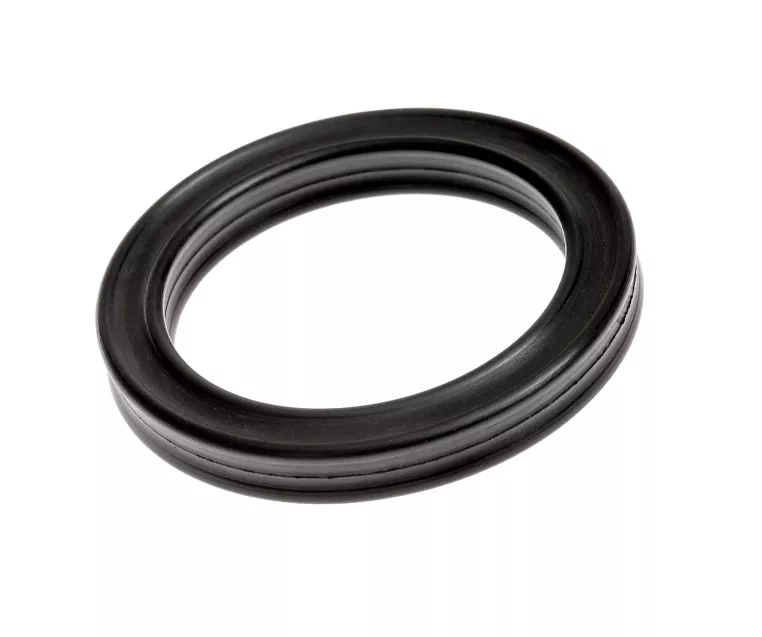
Material Specifications for Square Section O-Rings
Square section O-rings deliver superior sealing performance in static and low-dynamic applications due to their uniform cross-sectional geometry, which minimizes rolling and extrusion under pressure. Material selection is critical for maintaining sealing integrity across operational variables including temperature extremes, chemical exposure, and mechanical stress. Suzhou Baoshida Trading Co., Ltd. rigorously formulates compounds to meet ISO 3601 and SAE AS568 standards, ensuring dimensional stability and longevity. Below we detail key elastomer options for precision square section O-rings, emphasizing performance boundaries and application alignment.
Viton (FKM) remains the premier choice for aggressive chemical and high-temperature environments. Our proprietary FKM blends withstand continuous exposure to -20°C to +230°C, with short-term peaks at 300°C. Exceptional resistance to fuels, oils, acids, and chlorinated solvents makes it indispensable in aerospace, semiconductor, and chemical processing systems. Typical tensile strength exceeds 15 MPa, with 200% minimum elongation. While costlier than alternatives, its durability in critical seals justifies the investment where failure is unacceptable.
Nitrile (NBR) offers an optimal cost-performance equilibrium for general industrial use. Standard formulations operate reliably from -30°C to +100°C, extended variants reach +135°C. Outstanding resistance to petroleum-based fluids, hydraulic oils, and aliphatic hydrocarbons positions NBR as the default for automotive, hydraulics, and machinery seals. Our high-acrylonitrile compounds achieve 30–35 MPa tensile strength and 250–350% elongation, balancing resilience with affordability. Limitations include poor ozone resistance and degradation in polar solvents like ketones.
Silicone (VMQ) excels in extreme temperature flexibility and biocompatibility. Operating range spans -60°C to +200°C, with specialized grades functional to -100°C. Superior resistance to oxidation, UV, and steam, coupled with FDA/USP Class VI compliance, drives adoption in medical devices, food processing, and high-temperature electronics. Tensile strength typically ranges 6–8 MPa with elongation >400%. Note inherent weaknesses in tear strength and hydrocarbon resistance necessitate careful application vetting.
The following table summarizes core material properties for square section O-ring specification:
| Property | Viton (FKM) | Nitrile (NBR) | Silicone (VMQ) |
|---|---|---|---|
| Temperature Range (°C) | -20 to +230 | -30 to +100 | -60 to +200 |
| Tensile Strength (MPa) | ≥15 | 30–35 | 6–8 |
| Elongation at Break (%) | ≥200 | 250–350 | >400 |
| Hardness Range (Shore A) | 60–90 | 50–90 | 30–80 |
| Key Resistances | Fuels, acids, oils | Petroleum oils | Ozone, steam, UV |
| Key Limitations | Ketones, amines | Ozone, polar solvents | Poor tear strength, hydrocarbons |
Note: Values represent typical compound ranges; exact specifications vary by grade and custom formulation. All materials undergo stringent batch testing per ASTM D2000 for quality assurance.
Suzhou Baoshida Trading Co., Ltd. leverages decades of OEM collaboration to optimize material selection against your operational profile. Our engineering team collaborates to refine compound additives—such as peroxide curing for NBR or filler enhancements for FKM—to address specific chemical exposures or compression set requirements. Square section geometry amplifies material advantages through consistent contact force distribution, directly enhancing seal life in flanged joints and piston assemblies. Partner with us to translate material science into field-proven sealing reliability.
Manufacturing Capabilities
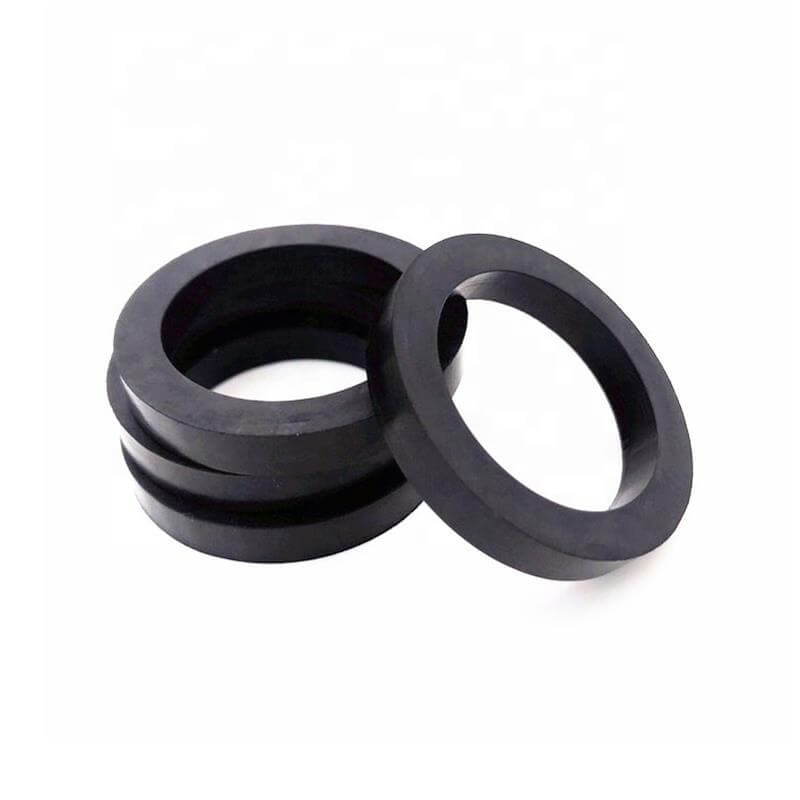
Engineering Capability
At Suzhou Baoshida Trading Co., Ltd., our engineering capability is anchored in deep technical expertise and a rigorous approach to rubber formulation and mold design. We specialize in precision rubber seals, with a focused product line including square section O-rings engineered for high-performance sealing in dynamic and static applications. Our technical team comprises five dedicated mold engineers and two advanced rubber formula engineers, ensuring that every product is developed with material science and mechanical design in perfect alignment.
Our mold engineers bring over a decade of cumulative experience in precision tooling for rubber components. They utilize advanced CAD/CAM software to design and validate mold geometries that ensure dimensional accuracy, consistent parting lines, and optimal material flow during compression, transfer, and injection molding processes. This capability allows us to produce square section O-rings with tight tolerances, critical for applications requiring zero leakage under pressure, elevated temperatures, or aggressive media exposure.
Complementing our mold design strength is our in-house rubber formulation team. Our two formula engineers specialize in compounding elastomers tailored to specific performance demands. Whether the application requires resistance to high-temperature oils, ozone degradation, or chemical exposure, we develop custom rubber compounds using NBR, EPDM, FKM, silicone, and other specialty polymers. This vertical integration of material science and manufacturing enables us to deliver square section O-rings that not only fit precisely but also perform reliably across diverse industrial environments.
Our OEM capabilities are built on a foundation of collaborative engineering. We work directly with clients to understand their sealing challenges, operating conditions, and lifecycle expectations. From prototype development to full-scale production, we provide technical documentation including material certificates, dimensional inspection reports, and mold flow analysis. This end-to-end control ensures consistency, traceability, and compliance with international quality standards.
We support low-volume custom orders as well as high-volume production runs, with rapid tooling turnaround and scalable manufacturing capacity. Our facility is equipped with precision molding presses, environmental aging chambers, and physical testing equipment to validate compression set, tensile strength, hardness, and fluid resistance—ensuring every batch meets exacting specifications.
Typical Technical Specifications for Square Section O-Rings
| Parameter | Value/Range | Test Standard |
|---|---|---|
| Cross-Section Tolerance | ±0.05 mm to ±0.15 mm | ISO 3601 / AS568 |
| Hardness Range | 50–90 Shore A | ASTM D2240 |
| Operating Temperature | -30°C to +230°C (depending on material) | — |
| Materials Available | NBR, EPDM, FKM, Silicone, CR, ACM | ASTM D1418 |
| Standard Sizes | Inner Diameter: 10–500 mm | Customizable |
| Compression Set (70 hrs, 70°C) | ≤20% (FKM), ≤25% (NBR) | ASTM D395 |
| Fluid Resistance | Oil, water, brake fluid, acids, fuels | ASTM D471 |
Our engineering team is committed to innovation, quality, and technical partnership—ensuring Suzhou Baoshida delivers not just components, but engineered sealing solutions.
Customization Process
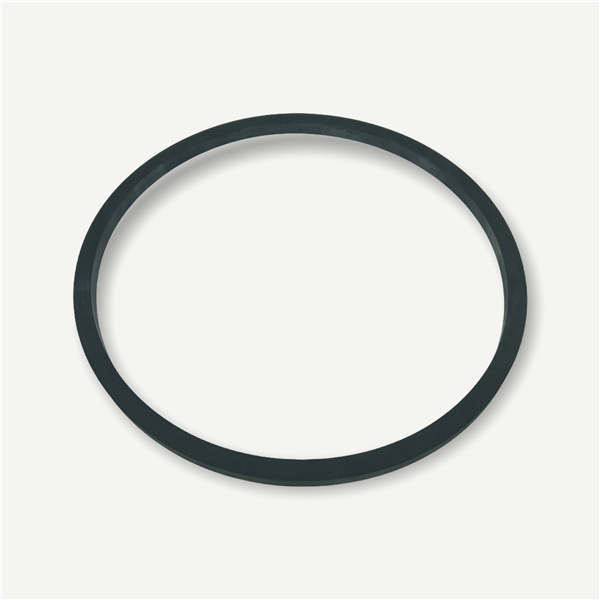
Customization Process for Precision Square Section O-Rings
Suzhou Baoshida Trading Co., Ltd. executes a rigorously controlled customization workflow for square section o-rings, ensuring dimensional accuracy and material performance meet exacting industrial sealing requirements. This process begins with comprehensive Drawing Analysis, where engineering teams scrutinize client-provided technical specifications against ISO 3601 and AS568 standards. Critical parameters including cross-section tolerance, corner radii, and groove compatibility undergo GD&T validation to preempt assembly failures. Any deviations from manufacturable tolerances are flagged for collaborative redesign, preventing costly iterations downstream. This phase establishes the geometric foundation for subsequent material science decisions.
Material Formulation follows, leveraging our proprietary compound database and accelerated aging simulations. Engineers select base polymers—such as FKM for chemical resistance or EPDM for steam applications—then optimize additive packages for compression set, tensile strength, and low-temperature flexibility. Each formulation undergoes predictive modeling for specific media exposure (e.g., hydraulic fluids, acids) and thermal cycling. Critical performance thresholds are defined prior to prototyping, ensuring the compound aligns with the client’s operational envelope.
Prototyping employs precision CNC-machined molds with micron-level cavity control, producing 5–10 samples per iteration. Samples undergo metrology verification via CMM and optical comparators, with cross-section profiles measured at 90° intervals to confirm square geometry integrity. Simultaneously, material batches are tested per ASTM D2000 for hardness, tensile properties, and fluid resistance. Clients receive full test reports with traceable lot numbers; iterative adjustments occur until all specifications are consistently achieved.
Upon client sign-off, Mass Production commences under ISO 9001-certified protocols. Each production lot utilizes the same validated mold and compound masterbatch, with real-time SPC monitoring of vulcanization temperature and press time. In-process checks include 100% visual inspection and statistical dimensional sampling per ANSI Z1.4. Final validation requires third-party certification for aerospace or automotive applications, with full traceability from raw material COAs to finished part serialization. This closed-loop system guarantees batch-to-batch repeatability while minimizing scrap rates below 0.5%.
Key dimensional and material specifications for square section o-rings are standardized as follows:
| Parameter | Standard Tolerance | Test Method |
|---|---|---|
| Cross-Section Width | ±0.05 mm | ISO 3302-1 |
| Corner Radius | ≤0.10 mm | Optical Profilometry |
| Hardness (Shore A) | ±3 points | ASTM D2240 |
| Compression Set (70h/100°C) | ≤20% | ASTM D395 |
| Linear Shrinkage | ≤0.3% | ISO 2781 |
This end-to-end customization protocol—anchored in material science rigor and process discipline—ensures Suzhou Baoshida delivers square section o-rings that achieve zero-leak performance in critical sealing applications, from semiconductor manufacturing to offshore hydraulics. Clients receive not only precision components but validated process documentation for seamless integration into their quality management systems.
Contact Engineering Team
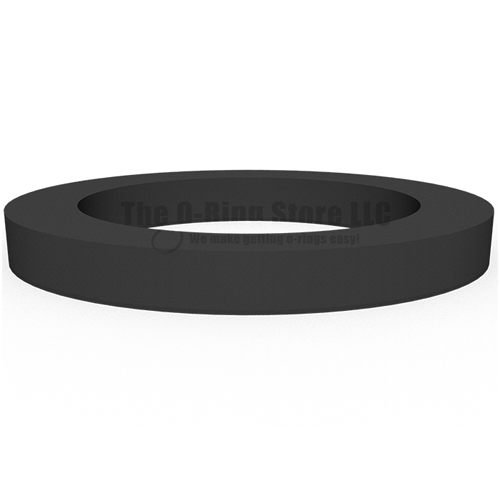
For precision-engineered square section O-rings designed to meet the rigorous demands of industrial sealing applications, Suzhou Baoshida Trading Co., Ltd. stands as a trusted partner in advanced rubber component manufacturing. Our expertise in material science, compounding, and dimensional accuracy ensures that every square section O-ring we supply delivers consistent performance under compression, elevated temperatures, and dynamic mechanical stress. As a specialized OEM manager and rubber formula engineer, we understand that sealing efficiency is not just about geometry—it’s about material compatibility, long-term resilience, and exacting tolerances.
Square section O-rings offer distinct advantages over traditional round O-rings in static sealing applications, particularly where minimal groove movement and high compression set resistance are critical. Their uniform cross-section provides larger sealing surface contact, reducing the risk of extrusion in high-pressure environments and enhancing sealing longevity. At Suzhou Baoshida, we manufacture square section O-rings using premium elastomers including NBR, EPDM, FKM (Viton®), silicone, and custom formulations tailored to specific chemical, thermal, and mechanical requirements. Each product is produced under strict ISO-compliant processes, ensuring repeatability, dimensional stability, and full traceability.
We recognize that industrial clients require more than off-the-shelf components—they demand technical collaboration. Whether you are designing a new hydraulic system, upgrading a pneumatic assembly, or seeking alternatives to mitigate seal failure, our engineering team provides full material selection support, finite element analysis (FEA) recommendations, and prototype validation services. Our production capabilities include precision molding, CNC cutting, and automated inspection systems to guarantee every batch meets your exact specifications.
Below are typical specifications for our standard square section O-rings. Custom sizes, durometers, and colors are available upon request.
| Parameter | Standard Range |
|---|---|
| Cross-Section Width | 1.0 mm – 10.0 mm |
| Inner Diameter | 10 mm – 500 mm (custom up to 1000 mm) |
| Materials | NBR, EPDM, FKM, Silicone, CR, ACM |
| Hardness (Shore A) | 50 ±5 to 90 ±5 |
| Temperature Range | -40°C to +230°C (material-dependent) |
| Tolerance (ISO 3601) | ±0.1 mm to ±0.3 mm |
| Certifications | RoHS, REACH, FDA (upon request) |
To initiate a technical consultation or request a quotation for square section O-rings, contact Mr. Boyce, Rubber Formula Engineer and OEM Manager, directly at [email protected]. We respond to all inquiries within 12 business hours and offer sample production within 7–10 working days for qualified projects. Provide your application details, environmental conditions, and dimensional requirements to receive a fully engineered solution matched to your operational needs.
At Suzhou Baoshida, we don’t just supply seals—we engineer sealing performance. Partner with us to reduce downtime, enhance reliability, and achieve precision at scale.
⚖️ O-Ring Weight Calculator
Estimate rubber O-ring weight (Approx).