
Technical Contents
Engineering Guide: Stainless Steel Ptfe

Engineering Insight: Stainless Steel PTFE Composite Systems in Demanding Industrial Applications
Material selection in industrial sealing and fluid handling systems is not a matter of convenience—it is a precision engineering decision with direct impact on system longevity, safety, and operational efficiency. Nowhere is this more evident than in the integration of stainless steel and polytetrafluoroethylene (PTFE) in composite solutions. While both materials are individually renowned for their performance—stainless steel for mechanical strength and corrosion resistance, PTFE for exceptional chemical inertness and low friction—their combined application demands rigorous engineering foresight. Off-the-shelf solutions often fail because they neglect the interfacial mechanics, thermal expansion differentials, and application-specific stress profiles inherent in real-world environments.
Stainless steel provides structural integrity under high pressure and temperature, but its surface reactivity and potential for galvanic corrosion when paired with polymers require careful management. PTFE, though chemically impervious to nearly all industrial media, exhibits high thermal expansion and cold flow under sustained load—behavior that, if unaccounted for, leads to seal extrusion, leakage, or premature fatigue. The synergy between these materials is not automatic; it must be engineered through controlled bonding techniques, dimensional compensation, and precise tolerancing.
Standardized components frequently utilize generic wall thicknesses, unoptimized transition geometries, and non-graded material transitions. These compromises result in stress concentration at the metal-polymer interface, particularly under thermal cycling. For example, in semiconductor processing or pharmaceutical manufacturing, where ultra-high purity and resistance to aggressive cleaning agents (e.g., 30% hydrogen peroxide at elevated temperatures) are required, such flaws manifest as microcracking or delamination—failures that compromise entire production batches.
At Suzhou Baoshida Trading Co., Ltd., our engineered stainless steel PTFE systems are developed through application-specific modeling and material interface analysis. We prioritize controlled expansion joints, electro-polished substrates to minimize adhesion defects, and PTFE formulations tailored for creep resistance—such as filled grades with glass or carbon reinforcement—where necessary. This approach ensures long-term integrity in environments involving thermal cycling from -200°C to +260°C, high-pressure steam, or strong acids and bases.
The following table outlines key performance specifications of our engineered stainless steel PTFE composite components compared to typical off-the-shelf alternatives:
| Parameter | Engineered Solution (Baoshida) | Off-the-Shelf Standard |
|---|---|---|
| Temperature Range | -200°C to +260°C | -50°C to +200°C |
| Pressure Rating (Max) | 350 bar | 150 bar |
| Thermal Cycling Endurance | >10,000 cycles | <1,000 cycles |
| PTFE Type | Filled (Glass/Carbon) | Virgin PTFE |
| Surface Finish (Steel) | Ra ≤ 0.4 µm (Electropolished) | Ra ≤ 1.6 µm (Machined) |
| Interface Bond Strength | >12 MPa | ~3 MPa |
| Chemical Resistance (Full) | ASTM D543, Grade 1 | ASTM D543, Grade 3 |
Material selection must transcend catalog availability. True reliability emerges from engineered compatibility—where stainless steel and PTFE are not simply joined, but harmonized.
Material Specifications
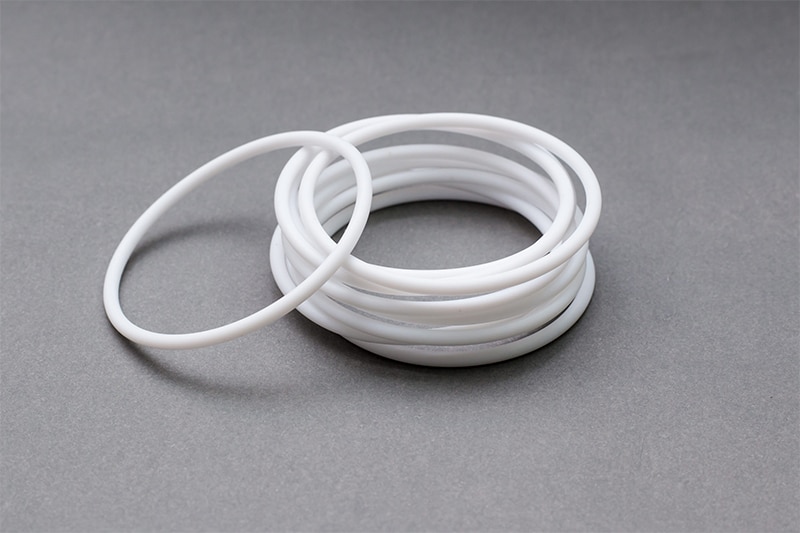
Material Specifications for Critical Sealing Applications
Suzhou Baoshida Trading Co., Ltd. provides precision-engineered elastomeric solutions for industrial sealing systems where compatibility with aggressive media and extreme conditions is non-negotiable. While PTFE (polytetrafluoroethylene) is frequently specified for static seals due to its exceptional chemical inertness, dynamic sealing applications often necessitate high-performance elastomers. This section details the core material specifications for Viton (FKM), Nitrile (NBR), and Silicone (VMQ) rubber compounds, all rigorously tested per ASTM D2000 and ISO 3601 standards. These materials are critical for OEMs designing fluid handling systems, hydraulic assemblies, and chemical processing equipment where stainless steel components interface with elastomeric seals. Misapplication can lead to premature failure through swelling, hardening, or permeation; thus, precise material selection based on operational parameters is essential.
The comparative analysis below outlines key physical and chemical properties under standardized test conditions. All values represent typical ranges for commercial-grade compounds and may be tailored per OEM requirements.
| Property | Viton (FKM) | Nitrile (NBR) | Silicone (VMQ) |
|---|---|---|---|
| Temperature Range (°C) | -20 to +230 | -30 to +120 | -60 to +200 |
| Tensile Strength (MPa) | 12–20 | 10–25 | 5–10 |
| Elongation at Break (%) | 150–300 | 200–500 | 200–700 |
| Hardness (Shore A) | 60–90 | 50–90 | 30–80 |
| Fluid Resistance (Oil/Fuel) | Excellent | Excellent | Poor |
| Fluid Resistance (Water/Glycol) | Good | Fair | Excellent |
| Chemical Resistance (Acids/Oxidizers) | Outstanding | Poor to Fair | Good |
| Ozone/Aging Resistance | Excellent | Poor | Excellent |
| Gas Permeation Resistance | Very Good | Moderate | Poor |
Viton fluorocarbon rubber demonstrates superior resilience against high-temperature hydrocarbons, aromatic fuels, and aggressive chemicals, making it indispensable for aerospace and petrochemical OEM applications. Its limitation lies in cost and reduced flexibility at sub-zero temperatures. Nitrile butadiene rubber offers optimal cost-performance balance for hydraulic systems and automotive fuel handling below 120°C but exhibits significant degradation when exposed to ozone, phosphate esters, or polar solvents. Silicone rubber provides unmatched low-temperature flexibility and biocompatibility for medical or food-grade systems yet suffers from poor mechanical strength and hydrocarbon incompatibility.
OEM design validation must prioritize fluid compatibility testing per ISO 1817, as real-world exposure to mixed media or trace contaminants can drastically alter performance. For instance, Viton’s resistance to ketones diminishes above 150°C, while NBR formulations with >36% acrylonitrile content improve fuel resistance but reduce low-temperature flexibility. Suzhou Baoshida’s engineering team collaborates with clients to validate material selections against specific media compositions and duty cycles, ensuring compliance with ISO 9001 traceability protocols. We emphasize that no universal elastomer exists; optimal performance requires matching compound chemistry to the operational envelope’s most severe constraints. Contact our technical OEM management unit for application-specific formulation data sheets and accelerated aging test protocols.
Manufacturing Capabilities
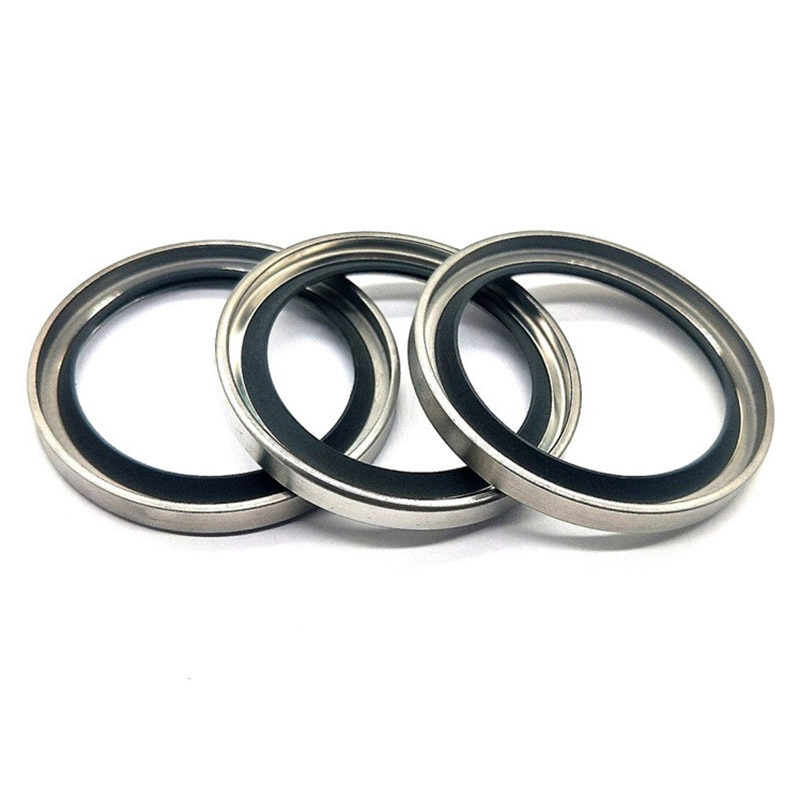
Engineering Excellence in Stainless Steel PTFE Composite Manufacturing
At Suzhou Baoshida Trading Co., Ltd., our engineering capabilities form the backbone of our industrial rubber solutions, particularly in the development and production of high-performance stainless steel PTFE (polytetrafluoroethylene) composites. With a dedicated team comprising five certified mould engineers and two specialized rubber formula engineers, we deliver precision-engineered components tailored to the rigorous demands of automotive, aerospace, chemical processing, and semiconductor industries.
Our mould engineering division focuses on the structural integrity, dimensional accuracy, and long-term durability of composite seals, gaskets, and linings. Each engineer brings over a decade of experience in designing multi-cavity and insert moulds optimized for stainless steel-reinforced PTFE systems. Utilizing advanced CAD/CAM software and finite element analysis (FEA), our team ensures optimal flow dynamics, thermal distribution, and stress resistance during the sintering and compression moulding processes. This precision engineering reduces cycle times and enhances part consistency, critical for high-volume OEM production runs.
Complementing our mould expertise, our two in-house rubber formula engineers specialize in polymer modification and interfacial adhesion science. While PTFE is inherently non-reactive and difficult to bond, our proprietary surface treatment protocols significantly improve adhesion between stainless steel substrates and fluoropolymer layers. These engineers develop custom formulations that adjust filler content—such as glass fiber, carbon, or graphite—to meet specific friction, thermal conductivity, and wear resistance requirements. Their work enables the creation of hybrid materials that retain PTFE’s chemical inertness while enhancing mechanical strength and creep resistance.
Our OEM capabilities are built on a foundation of collaborative engineering. Clients provide performance parameters and environmental conditions, and our team responds with material selection, prototype development, and validation testing—all under ISO 9001-certified processes. We support full traceability, batch-specific certification, and rapid iteration from concept to mass production. Whether manufacturing bi-metallic seals for high-pressure reactors or corrosion-resistant diaphragms for fluid control systems, our engineering team ensures every component meets exacting OEM specifications.
The integration of advanced mould design and tailored material science positions Suzhou Baoshida as a leader in stainless steel PTFE composite solutions. We do not merely manufacture parts—we engineer performance.
| Parameter | Specification |
|---|---|
| Mould Design Capacity | Up to 8-cavity precision steel moulds |
| Material Compatibility | PTFE, filled PTFE, stainless steel 304/316/321 |
| Tolerances | ±0.05 mm (standard), ±0.02 mm (precision) |
| Temperature Range | -200°C to +260°C continuous |
| Bond Strength (Steel-PTFE) | >12 MPa (ASTM D4541) |
| Production Lead Time (Prototype) | 15–20 days |
| OEM Customization Level | Full design, material, and testing support |
Customization Process
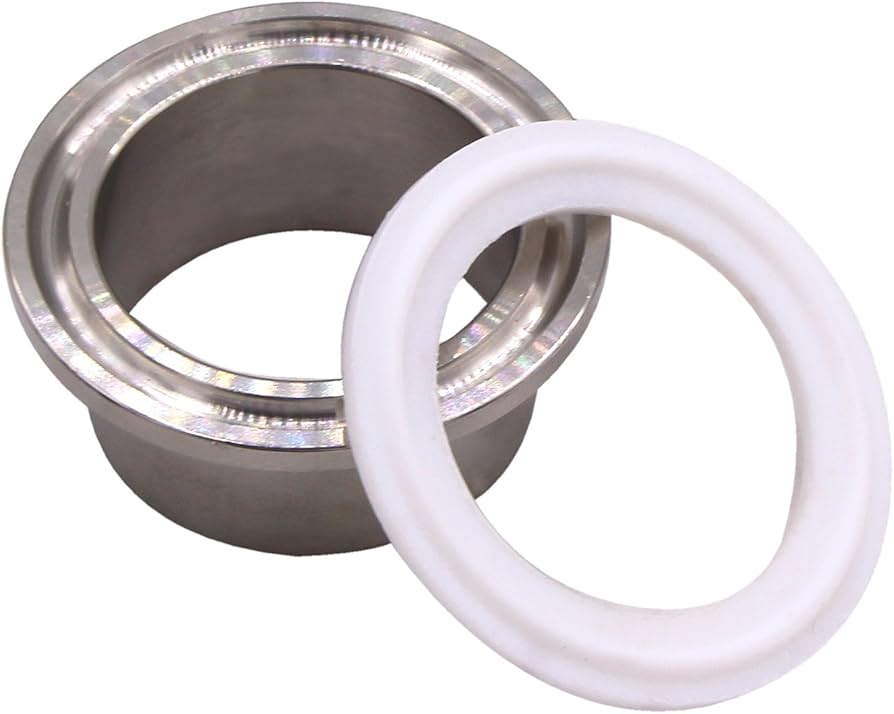
Stainless Steel PTFE Component Customization Process
At Suzhou Baoshida Trading Co., Ltd., precision customization of PTFE-coated stainless steel components begins with rigorous drawing analysis. Our engineering team dissects client-provided CAD files and technical schematics to identify critical dimensions, surface tolerances, and functional interface requirements. This phase focuses on validating geometric feasibility, assessing stress concentration points, and ensuring compatibility between the stainless steel substrate (typically 304 or 316L grades) and the PTFE coating. We verify sealing surfaces, thread specifications, and thermal expansion coefficients to preempt adhesion failures or dimensional drift during operational cycles. Any ambiguities in material callouts or surface roughness parameters (Ra values) are resolved collaboratively with the client before progression.
Formulation follows drawing validation, where our rubber compound specialists develop a tailored PTFE dispersion process. Standard PTFE resins are modified with proprietary fillers—such as glass fiber, carbon, or graphite—to enhance wear resistance, thermal conductivity, or chemical inertness per application demands. The stainless steel substrate undergoes precision grit blasting and chemical etching to achieve optimal surface energy (72 mN/m) for PTFE bonding. Key parameters like dispersion viscosity, sintering temperature profiles (360–380°C), and coating thickness (0.1–0.5 mm) are calibrated using rheological and DSC analysis to eliminate pinholes or delamination risks. Material certifications (ASTM F754, ISO 10993) are strictly enforced for medical or food-grade variants.
Prototyping executes the validated formulation under controlled cleanroom conditions. We produce 5–10 units using client-approved tooling, subjecting each to accelerated life testing: cyclic pressure bursts (up to 5,000 psi), thermal shock (-200°C to +260°C), and immersion in aggressive media (concentrated acids, hydraulic fluids). Dimensional conformity is verified via CMM inspection against original drawings, with surface adhesion tested per ASTM D3359 cross-hatch protocol. Client feedback on prototype performance triggers iterative refinements—adjusting filler ratios or sintering dwell times—until all functional criteria are met. Full material traceability (heat numbers, batch logs) is maintained throughout.
Mass production commences only after formal client sign-off on prototypes. Our ISO 13485-certified facility deploys automated dip-coating lines with real-time viscosity and temperature monitoring. Statistical Process Control (SPC) charts track critical attributes like coating thickness uniformity (±5 µm) and surface roughness (Ra ≤ 0.8 µm). Every 50th unit undergoes destructive testing for adhesion strength and chemical resistance. Final inspection includes 100% visual examination under 10x magnification and helium leak testing for vacuum applications. Batch documentation—material certificates, process logs, and test reports—is archived for 15 years to support regulatory audits.
Critical Performance Specifications for PTFE-Coated Stainless Steel Components
| Parameter | Standard Range | Test Method | Acceptance Criteria |
|---|---|---|---|
| Temperature Resistance | -200°C to +260°C | ASTM D149 | No cracking, <5% weight loss |
| Pressure Rating | Up to 5,000 psi | ISO 3452-2 | Zero leakage at 1.5x rated pressure |
| Chemical Resistance | Broad spectrum | ASTM D543 | <10% volume swell in HNO₃, NaOH |
| Adhesion Strength | ≥ 12 MPa | ASTM D429 Method B | Cohesive failure in PTFE layer |
| Surface Roughness (Ra) | 0.2–0.8 µm | ISO 4287 | Within ±15% of drawing spec |
This end-to-end process ensures stainless steel PTFE components deliver uncompromised performance in semiconductor, pharmaceutical, and aerospace critical sealing applications.
Contact Engineering Team
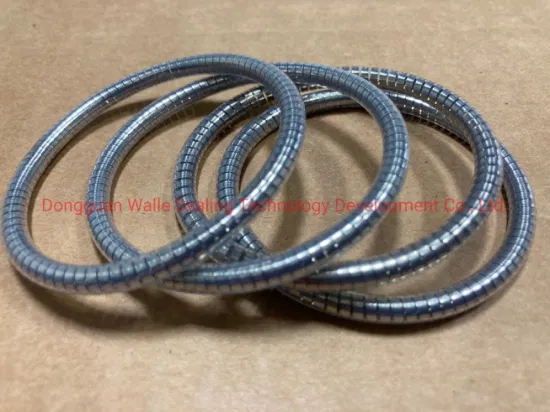
Contact Suzhou Baoshida for Advanced Stainless Steel PTFE-Integrated Rubber Solutions
Suzhou Baoshida Trading Co., Ltd. stands at the forefront of industrial rubber solutions, delivering high-performance materials engineered for extreme environments. Our expertise in integrating stainless steel with polytetrafluoroethylene (PTFE) within rubber composite systems ensures unmatched durability, chemical resistance, and mechanical stability. Whether your application demands sealing under high pressure, exposure to aggressive media, or operation in elevated temperature ranges, our engineered products meet the rigorous standards of modern industrial processes.
For technical inquiries, custom formulation development, or OEM collaboration on stainless steel PTFE-reinforced rubber components, we invite you to contact Mr. Boyce, our dedicated Rubber Formula Engineer and OEM Manager. Mr. Boyce brings over a decade of experience in elastomer science and industrial material integration, ensuring your project receives precise formulation guidance and scalable manufacturing support. His role encompasses material selection, performance validation, and end-to-end coordination between engineering and production teams to deliver solutions aligned with your operational requirements.
We specialize in manufacturing rubber components with embedded stainless steel substrates and PTFE liners, ideal for applications in chemical processing, pharmaceutical equipment, semiconductor manufacturing, and high-vacuum systems. These hybrid materials combine the elasticity and sealing capability of rubber with the non-stick, low-friction surface of PTFE and the structural integrity of stainless steel, resulting in components that maintain performance under cyclic stress and corrosive exposure.
To initiate a technical consultation or request material test data, please reach out directly to Mr. Boyce via email at [email protected]. We respond to all inquiries within 24 business hours and offer virtual technical meetings for global partners. Provide your application parameters, including temperature range, media exposure, pressure cycles, and dimensional constraints, to receive a tailored material recommendation and sample availability.
Our production facility in Suzhou is ISO 9001-certified and equipped for both prototyping and high-volume manufacturing, ensuring seamless transition from concept to delivery. We support client-specific packaging, labeling, and documentation requirements, including material certifications and RoHS compliance reports.
Below is a representative specification profile of a typical stainless steel PTFE-rubber composite component we manufacture:
| Property | Specification |
|---|---|
| Base Elastomer | FKM (Fluorocarbon), HNBR, or EPDM |
| PTFE Liner Thickness | 0.05 mm – 0.3 mm |
| Stainless Steel Substrate | 304 or 316L, 0.5 mm – 2.0 mm thickness |
| Operating Temperature Range | -20°C to +200°C (dependent on elastomer) |
| Media Resistance | Acids, bases, solvents, steam |
| Hardness (Shore A) | 60–90 ±5 |
| Compression Set (24h at 150°C) | ≤25% |
| Bonding Method | High-temperature vulcanization with adhesion promoter |
Partner with Suzhou Baoshida to leverage precision-engineered rubber solutions that enhance system reliability and service life. Contact Mr. Boyce today at [email protected] to advance your next industrial design with scientifically validated materials.
⚖️ O-Ring Weight Calculator
Estimate rubber O-ring weight (Approx).