
Technical Contents
Engineering Guide: Thermally Conductive Pad
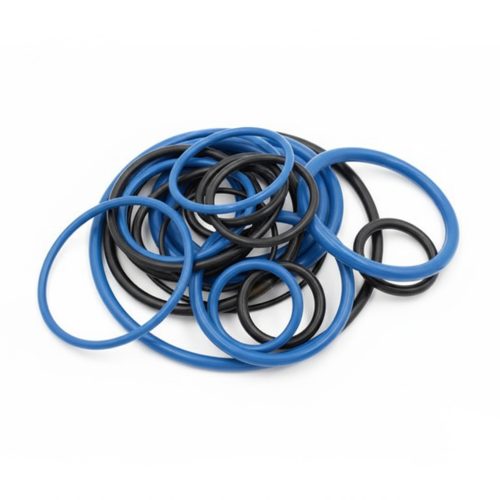
Engineering Insight: The Critical Role of Material Selection in Thermally Conductive Pads
In high-performance thermal management systems, the thermally conductive pad serves as a critical interface material, bridging heat-generating components and heat dissipation units. While off-the-shelf solutions are widely available and often marketed as universal, their failure in demanding industrial environments underscores a fundamental truth: material selection is not a generic exercise but a precision engineering decision. At Suzhou Baoshida Trading Co., Ltd., we emphasize that successful thermal interface performance hinges on aligning pad composition with specific operational parameters, including thermal load, mechanical stress, environmental exposure, and long-term reliability requirements.
Standard thermally conductive pads are typically formulated with silicone matrices loaded with ceramic or metal oxide fillers such as aluminum oxide, boron nitride, or zinc oxide. While these offer baseline thermal conductivity (typically 1.0–3.0 W/mK), they often lack the tailored mechanical compliance, compression set resistance, or dielectric strength required in industrial applications. For instance, silicone-based pads may degrade under prolonged UV or ozone exposure, while excessive pump-out under thermal cycling can lead to delamination and thermal resistance drift. These failure modes are exacerbated in dynamic environments such as power electronics, LED arrays, or electric vehicle battery systems, where dimensional stability and consistent thermal impedance are non-negotiable.
The limitations of off-the-shelf pads become apparent when system-level demands exceed generic specifications. A pad that performs adequately in a low-power consumer device may fail catastrophically in an industrial motor drive due to inadequate thermal conductivity or insufficient electrical insulation. Furthermore, dimensional tolerances, compression force requirements, and outgassing characteristics are rarely optimized in mass-market products. This mismatch leads to increased thermal resistance, premature aging, and ultimately, system failure.
At Baoshida, we approach thermally conductive pad design as a systems engineering challenge. Our formulations integrate advanced elastomeric bases—such as liquid silicone rubber (LSR) or fluoro-silicone—with engineered filler morphologies to achieve optimal thermal percolation networks. By controlling filler loading, particle size distribution, and dispersion homogeneity, we tailor thermal conductivity, modulus, and electrical insulation to meet exact OEM specifications. This precision ensures consistent performance under real-world thermal cycling, vibration, and humidity conditions.
The following table illustrates key performance parameters across common material platforms, highlighting the trade-offs inherent in material selection.
| Material Base | Thermal Conductivity (W/mK) | Compression Modulus (MPa) | Dielectric Strength (kV/mm) | Operating Temp Range (°C) | Key Limitations |
|---|---|---|---|---|---|
| Standard Silicone | 1.5 – 3.0 | 0.3 – 0.8 | 15 – 20 | -50 to 200 | Pump-out, UV degradation |
| High-Filler Silicone | 4.0 – 6.0 | 0.9 – 1.5 | 12 – 16 | -50 to 200 | Higher stiffness, reduced conformability |
| Fluoro-Silicone | 3.0 – 5.0 | 0.7 – 1.2 | 18 – 22 | -60 to 230 | High cost, processing complexity |
| LSR with BN Fillers | 5.0 – 8.0 | 1.0 – 2.0 | 20 – 25 | -60 to 250 | Brittleness at high filler loading |
Material selection is not a compromise—it is the foundation of reliable thermal management. Off-the-shelf pads may offer short-term cost savings, but they risk long-term system integrity. At Baoshida, we engineer every thermally conductive pad as a mission-critical component, ensuring performance under the most demanding industrial conditions.
Material Specifications
Material Specifications for Thermally Conductive Elastomeric Pads
The selection of base elastomer is fundamental to the performance envelope of thermally conductive pads in demanding thermal interface applications. At Suzhou Baoshida Trading Co., Ltd., our engineered compounds leverage specific polymer chemistries to achieve targeted thermal conductivity, environmental resilience, and mechanical integrity. Viton fluoroelastomer provides exceptional resistance to high temperatures, aggressive chemicals, and ozone, making it indispensable for aerospace, automotive powertrain, and semiconductor processing where exposure to fuels, oils, and extreme heat exceeds 200°C is common. Its inherent thermal conductivity is moderate but significantly enhanced through proprietary ceramic or metal oxide filler systems, achieving reliable performance in critical heat dissipation scenarios requiring long-term stability under harsh conditions. Nitrile rubber (NBR) offers an optimal balance of cost-effectiveness and resistance to petroleum-based fluids and hydraulic oils. While its upper continuous service temperature is generally limited to approximately 120°C, specialized high-acrylonitrile formulations extend this marginally. NBR-based conductive pads are prevalent in industrial hydraulic systems, power transmission equipment, and general machinery where oil resistance is paramount and extreme heat is not the primary challenge; conductivity is elevated through carbon-based or alumina fillers within this cost-sensitive matrix. Silicone rubber remains the dominant choice for applications demanding extreme flexibility, wide operational temperature ranges from -55°C to 200°C+, and excellent electrical insulation properties alongside thermal conduction. Its low compression set ensures consistent thermal contact force over time, critical for maintaining interface reliability in dynamic or cyclical thermal loads. Silicone readily accepts high loadings of thermally conductive fillers like boron nitride or aluminum nitride, enabling formulations that reach 3.0 W/mK and above while retaining elastomeric behavior, ideal for electronics cooling, LED thermal management, and battery systems requiring electrical isolation.
Material performance characteristics are quantified below for direct comparison. These values represent typical achievable ranges for commercially viable thermally conductive pad formulations and are subject to specific compound design and filler technology. Consistent batch-to-batch performance is ensured through rigorous in-house testing per ASTM D7896 for thermal impedance and relevant material standards.
| Material Property | Viton (FKM) | Nitrile (NBR) | Silicone (VMQ) |
|---|---|---|---|
| Thermal Conductivity (W/mK) | 0.2 – 1.5 | 0.5 – 2.0 | 0.8 – 3.5+ |
| Continuous Temp Range (°C) | -20 to +230 | -30 to +120 | -55 to +200+ |
| Key Chemical Resistance | Excellent: Fuels, Oils, Acids, Bases | Excellent: Oils, Fuels; Poor: Ozone, Polar Solvents | Good: Water, Ozone; Poor: Concentrated Acids/Bases, Non-polar Solvents |
| Compression Set (ASTM D395) | Very Low (<20%) | Moderate (25-40%) | Very Low (<15%) |
| Electrical Insulation | Excellent | Good | Excellent |
| Primary Application Focus | Extreme Environments: Aerospace Seals, Semiconductor Processing, High-Temp Power Electronics | Cost-Sensitive Oil/Hydraulic Systems: Industrial Machinery, Automotive Fluid Systems | Wide Temp/Flexibility Needs: Consumer Electronics, LED Lighting, EV Battery Packs, Medical Devices |
Optimal thermal interface performance hinges on matching the elastomer’s inherent properties and the precision of our filler dispersion technology to the specific operational demands. Suzhou Baoshida Trading Co., Ltd. utilizes advanced compounding techniques to maximize thermal pathway efficiency within each polymer system while ensuring mechanical durability and environmental compatibility for long-term field reliability. Material selection must consider the interplay between thermal requirement, mechanical stress, chemical exposure, and lifecycle cost.
Manufacturing Capabilities
Engineering Capability
At Suzhou Baoshida Trading Co., Ltd., our engineering capability forms the backbone of our industrial rubber solutions, particularly in the development and production of high-performance thermally conductive pads. With a dedicated team comprising five experienced mould engineers and two specialized rubber formula engineers, we maintain full in-house control over material formulation, tooling design, and process optimization. This integrated engineering approach ensures precision, consistency, and rapid turnaround from concept to mass production.
Our formula engineers focus on tailoring silicone and non-silicone rubber compounds to meet specific thermal conductivity, electrical insulation, compression set, and durability requirements. By adjusting filler types—such as aluminum oxide, boron nitride, or ceramic composites—and optimizing cross-linking density, we achieve thermal conductivity values ranging from 1.0 to 8.0 W/mK while preserving mechanical integrity and long-term stability. These formulations are rigorously tested under simulated operational conditions to ensure performance across extreme temperatures (-50°C to 200°C) and extended service life.
Complementing material development, our five mould engineers specialize in precision tooling for compression, transfer, and injection moulding processes. They utilize advanced CAD/CAM software and finite element analysis (FEA) to design moulds that ensure uniform material flow, minimal flash, and tight dimensional tolerances (±0.1 mm). This capability is critical for producing thermally conductive pads with consistent thickness and surface conformity, directly impacting thermal interface efficiency in end applications such as power electronics, LED lighting, and electric vehicle battery systems.
We offer comprehensive OEM services, enabling clients to co-develop custom thermal pad solutions aligned with their exact mechanical, thermal, and spatial constraints. Our engineering team collaborates directly with client R&D departments to review application requirements, perform material selection, prototype design, and validation testing. With in-house capabilities spanning hardness adjustment (30–80 Shore A), die-cutting,背胶 (adhesive lamination), and automated packaging, we deliver ready-to-integrate thermal interface products that meet global quality standards.
This synergy between material science and precision engineering allows Suzhou Baoshida to provide differentiated, high-value solutions in competitive markets. Whether scaling a proven design or developing a novel formulation, our technical team ensures reliability, repeatability, and compliance with industry-specific certifications.
Typical Technical Specifications of Custom Thermally Conductive Pads
| Property | Standard Range | Test Method |
|---|---|---|
| Thermal Conductivity | 1.0 – 8.0 W/mK | ASTM D5470 |
| Hardness (Shore A) | 30 – 80 | ASTM D2240 |
| Operating Temperature | -50°C to +200°C | Internal |
| Dielectric Strength | ≥10 kV/mm | ASTM D149 |
| Compression Set (22h, 150°C) | ≤25% | ASTM D395 |
| Electrical Resistivity | >1×10¹² Ω·cm | ASTM D257 |
| Thickness Tolerance | ±0.1 mm | ISO 2768 |
All parameters are adjustable based on OEM requirements and application environment.
Customization Process
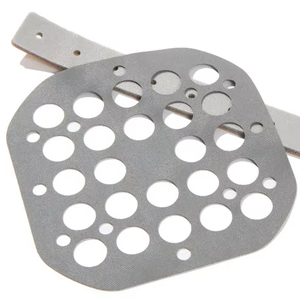
Thermally Conductive Pad Customization: Precision Engineering Workflow
At Suzhou Baoshida Trading Co., Ltd., our ISO 9001-certified customization process for thermally conductive rubber pads ensures optimal thermal management solutions tailored to exact OEM specifications. This rigorous four-phase methodology guarantees performance, reliability, and seamless integration into demanding electronic and automotive assemblies. The process begins with comprehensive Drawing Analysis. Our engineering team meticulously reviews client-provided technical drawings and 3D models, focusing on critical interface geometries, dimensional tolerances, and application-specific constraints such as compression force requirements and operating temperature ranges. We identify potential manufacturability challenges early, including complex contours, thin sections, or multi-material interfaces, and collaborate directly with the client to refine designs for optimal thermal transfer efficiency and assembly compatibility. This phase establishes the foundational parameters for material selection and process design.
Subsequently, Formulation Development leverages our proprietary compound library and advanced material science expertise. Based on the thermal conductivity target (typically 0.5–15 W/mK), electrical insulation needs, hardness requirements (Shore OO 10–90), and environmental resistance specifications (e.g., UL 94 V-0 flame rating, 150°C continuous operation), our chemists design a bespoke elastomer matrix. Silicone or specialized rubber bases are compounded with precisely calibrated ceramic or metal oxide fillers, optimizing particle size distribution and surface treatment to maximize thermal pathways while maintaining requisite flexibility and adhesion properties. Each formulation undergoes stringent computational modeling to predict thermal resistance and mechanical behavior under load.
Following formulation approval, Prototyping commences using precision compression or injection molding tooling. We produce functional samples with 100% dimensional verification against CAD data and conduct accelerated thermal cycling, compression set, and thermal impedance testing per ASTM D5470. Client feedback is integrated iteratively; any performance deviations trigger root cause analysis and compound refinement. Only after achieving target metrics in third-party validated reports do we proceed to Mass Production. Our Suzhou facility employs automated mixing lines with real-time rheology monitoring, CNC-controlled molding presses with closed-loop temperature control, and 100% inline dimensional verification. Final pads undergo batch traceability, thermal conductivity spot-checking, and full certification documentation per IATF 16949 standards, ensuring consistent delivery of mission-critical thermal interface materials.
Critical Performance Parameters for Custom Thermally Conductive Pads
| Parameter | Standard Range | Precision Tolerance | Test Standard |
|---|---|---|---|
| Thermal Conductivity | 0.5 – 15.0 W/mK | ±0.15 W/mK | ASTM D5470 |
| Hardness (Shore OO) | 10 – 90 | ±5 points | ASTM D2240 |
| Thickness | 0.2 – 5.0 mm | ±0.05 mm | ISO 37 |
| Compression Modulus | 50 – 500 kPa @ 25% strain | ±10% | ASTM D575 |
| Dielectric Strength | 5 – 30 kV/mm | ±0.5 kV/mm | ASTM D149 |
| Operating Temperature | -55°C to +200°C | Full range validated | UL 746B |
Contact Engineering Team
For industrial manufacturers seeking high-performance thermally conductive pads, Suzhou Baoshida Trading Co., Ltd. stands as a trusted leader in advanced rubber solutions. Our engineered thermal interface materials are designed to meet the rigorous demands of power electronics, LED lighting, automotive systems, and industrial automation, where efficient heat dissipation and long-term reliability are non-negotiable. With a focus on material science and precision manufacturing, we deliver custom-formulated silicone and non-silicone based pads that balance thermal efficiency, electrical insulation, and mechanical compliance.
Our thermally conductive pads are manufactured under strict quality controls, ensuring consistent thickness, uniform thermal conductivity, and excellent compressibility. Whether your application requires compliance with RoHS standards, UL 94 V-0 flammability ratings, or long-term stability under thermal cycling, our R&D team works closely with clients to tailor material properties to exact operational requirements. From prototype support to high-volume production, we provide scalable solutions backed by comprehensive technical documentation and batch traceability.
To ensure seamless integration into your production lines, we offer multiple formats including die-cut shapes, roll goods, and pre-applied adhesive configurations. Our pads are optimized for automated assembly processes, reducing handling time and minimizing defects. With in-house testing capabilities, including thermal impedance analysis and compression force evaluation, we validate performance under real-world conditions before delivery.
For technical inquiries, material sampling, or custom formulation support, we invite you to contact Mr. Boyce, OEM Manager at Suzhou Baoshida Trading Co., Ltd. With over 15 years of experience in industrial elastomers and thermal management systems, Mr. Boyce specializes in translating engineering requirements into optimized rubber solutions. He leads our OEM collaboration initiatives and is available to discuss your project’s thermal, mechanical, and environmental challenges.
Reach out via email at [email protected] to initiate a technical consultation. Please include details such as required thermal conductivity range, operating temperature, compressive modulus, thickness tolerance, and any regulatory certifications needed. Our team responds to all inquiries within 24 business hours and can provide sample kits, technical data sheets, and application-specific recommendations promptly.
Below are typical specifications for our standard thermally conductive pad series. Custom formulations can extend beyond these ranges based on client needs.
| Property | Test Method | Typical Value Range |
|---|---|---|
| Thermal Conductivity | ASTM D5470 | 1.0 – 8.0 W/m·K |
| Hardness (Shore 00) | ASTM D2240 | 20 – 80 |
| Thickness Tolerance | ISO 3302 | ±0.05 mm to ±0.1 mm |
| Operating Temperature Range | — | -50°C to +200°C |
| Dielectric Strength | ASTM D149 | >5 kV/mm |
| Volume Resistivity | ASTM D257 | >1×10^15 Ω·cm |
| Compression Deflection | ASTM F36 | 15 – 150 psi @ 25% strain |
| Flame Rating | UL 94 | V-0 |
Partner with Suzhou Baoshida to secure a reliable, technically supported source for thermally conductive rubber solutions. Contact Mr. Boyce today at [email protected] to advance your thermal management performance.
⚖️ O-Ring Weight Calculator
Estimate rubber O-ring weight (Approx).