
Technical Contents
Engineering Guide: Threaded Tee Pvc
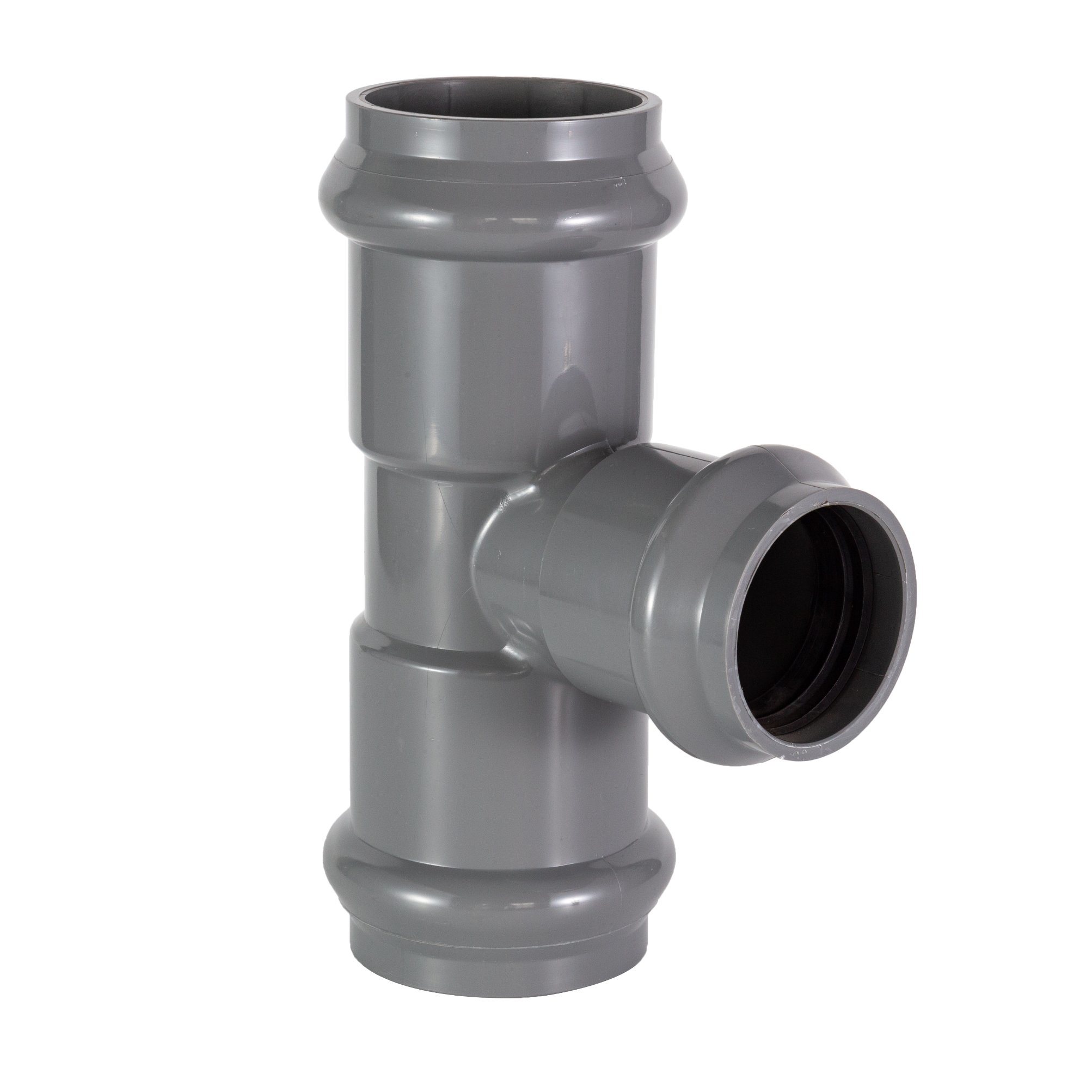
Engineering Insight: The Critical Role of Material Selection in Threaded Tee PVC Components
In industrial fluid handling systems, the threaded tee PVC fitting serves as a pivotal junction for directional flow control. While often perceived as a commodity component, its performance is profoundly influenced by material composition and manufacturing precision. Off-the-shelf threaded tee PVC solutions, typically mass-produced for general-purpose applications, frequently fail under demanding operational conditions due to inadequate material formulation and inconsistent dimensional tolerances.
Polyvinyl chloride (PVC) is inherently sensitive to thermal, chemical, and mechanical stressors. Standard-grade PVC fittings utilize recycled or regrind materials to reduce cost, compromising structural integrity. These materials exhibit lower molecular weight chains and inconsistent plasticizer distribution, leading to premature embrittlement, stress cracking, and thread deformation under cyclic loading. In contrast, engineered-grade PVC—utilized in precision industrial applications—employs virgin resin with controlled polymerization (typically suspension or mass process) and optimized stabilizer packages. This ensures superior resistance to hydrolysis, UV degradation, and thermal expansion, critical in environments with fluctuating pressure and temperature.
A key failure mode in generic threaded tees is thread galling or stripping during assembly. This results from poor mold design and substandard injection parameters, which produce internal stresses and non-uniform wall thickness. Precision-engineered fittings, such as those supplied by Suzhou Baoshida Trading Co., Ltd., are manufactured using computer-aided mold flow analysis and high-tolerance steel tooling. This guarantees concentricity, accurate thread pitch (per ANSI/ASME B1.20.1 standards), and uniform wall thickness—parameters essential for leak-free connections and long-term service reliability.
Furthermore, chemical compatibility is often underestimated. Standard PVC fittings may degrade when exposed to aromatic hydrocarbons, ketones, or chlorinated solvents. Industrial-grade formulations incorporate chlorinated polyvinyl chloride (CPVC) or modified PVC alloys to extend chemical resistance. For example, in semiconductor manufacturing or chemical processing plants, even trace leaching from low-grade PVC can contaminate process fluids or initiate galvanic corrosion in mixed-material systems.
Suzhou Baoshida Trading Co., Ltd. emphasizes application-specific material selection, ensuring each threaded tee PVC component aligns with the fluid medium, operating pressure, and environmental exposure. Our engineering team conducts rigorous ASTM D1784 and ISO 15493 compliance testing, validating performance across tensile strength, deflection temperature, and hydrostatic burst thresholds.
The following table outlines key material and performance specifications differentiating industrial-grade from standard PVC threaded tees.
| Parameter | Industrial-Grade PVC Tee | Standard-Grade PVC Tee |
|---|---|---|
| Resin Type | Virgin Suspension PVC | Recycled/Regrind PVC |
| Tensile Strength (MPa) | ≥52 | 40–45 |
| Heat Distortion Temp (°C) | ≥75 | 60–65 |
| Thread Accuracy | ±0.05 mm | ±0.2 mm |
| Hydrostatic Burst Pressure (psi) | 600 @ 23°C | 400 @ 23°C |
| Chemical Resistance | Enhanced (CPVC-modified) | Limited |
| Compliance Standards | ASTM D1784, ISO 15493 | Basic ISO 3506 |
Material selection is not a cost-saving decision—it is a system integrity imperative. In critical industrial applications, the threaded tee PVC must perform as a reliable, long-term component. Off-the-shelf solutions may offer short-term savings but incur significant downtime, leakage, and safety risks. Precision engineering and material science are non-negotiable.
Material Specifications
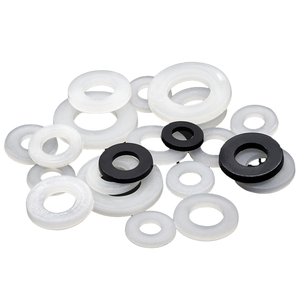
Material Specifications for Threaded Tee Sealing Elements in PVC Piping Systems
Threaded tee connectors in PVC piping systems rely critically on elastomeric sealing elements to maintain leak-free integrity under pressure and chemical exposure. While the tee body is rigid PVC, the performance and longevity of the assembly depend on selecting the correct rubber compound for O-rings, gaskets, or integrated seals. At Suzhou Baoshida Trading Co., Ltd., we engineer formulations specifically for compatibility with PVC infrastructure, prioritizing resistance to common industrial media, temperature stability, and mechanical resilience. Misalignment between seal material and operational conditions remains a primary cause of system failure, necessitating precise material selection based on fluid type, pressure, and environmental factors.
Viton (FKM) fluorocarbon rubber excels in aggressive chemical environments typical of semiconductor, chemical processing, and high-purity applications. Its molecular structure provides exceptional resistance to acids, bases, fuels, and chlorinated solvents, with continuous service temperatures ranging from -20°C to +200°C. Viton seals maintain integrity under high pressure (up to 5,000 psi static) and resist compression set deformation, making them ideal for systems handling IPA, sulfuric acid, or hydraulic fluids. However, cost sensitivity and limited flexibility at sub-zero temperatures may warrant alternatives for less demanding applications.
Nitrile (NBR) butadiene rubber offers optimal value for general-purpose industrial and pneumatic systems. With strong resistance to oils, greases, aliphatic hydrocarbons, and water-based fluids, NBR seals perform reliably between -30°C and +100°C at pressures up to 3,000 psi. Its affordability and ease of molding suit high-volume OEM production, though exposure to ozone, ketones (e.g., acetone), or strong acids will accelerate degradation. We recommend NBR for compressed air lines, hydraulic machinery, and irrigation systems where cost efficiency and moderate chemical exposure intersect.
Silicone (VMQ) is specified for extreme temperature stability and biocompatibility, operating from -60°C to +230°C with minimal property drift. While vulnerable to tearing under high pressure (max 1,500 psi) and limited resistance to concentrated acids, silicone’s inertness makes it indispensable for food, beverage, and pharmaceutical threaded tees. It withstands steam sterilization and resists oxidation, though petroleum-based fluids will cause swelling. Avoid silicone in applications involving hydraulic oils or solvents.
The following comparative table details critical specifications for threaded tee seal selection:
| Material | Temperature Range (°C) | Key Chemical Resistances | Max Pressure (psi) | Optimal Applications |
|---|---|---|---|---|
| Viton (FKM) | -20 to +200 | Acids, bases, fuels, chlorinated solvents, hydraulic fluids | 5,000 | Chemical processing, semiconductor, high-purity fluid transfer |
| Nitrile (NBR) | -30 to +100 | Oils, greases, aliphatic hydrocarbons, water, alcohols | 3,000 | Pneumatics, general industrial hydraulics, irrigation |
| Silicone (VMQ) | -60 to +230 | Water, steam, ozone, weak acids/bases, food-grade media | 1,500 | Food processing, pharmaceuticals, medical devices, extreme temp air lines |
Suzhou Baoshida validates all formulations against ASTM D2000 standards for rubber properties and ISO 1179 for threaded connection integrity. We emphasize rigorous compatibility testing with end-user media prior to deployment, as PVC systems often interface with diverse chemical streams where elastomer failure compromises the entire assembly. Consult our engineering team for application-specific compound customization and accelerated life-cycle testing protocols.
Manufacturing Capabilities
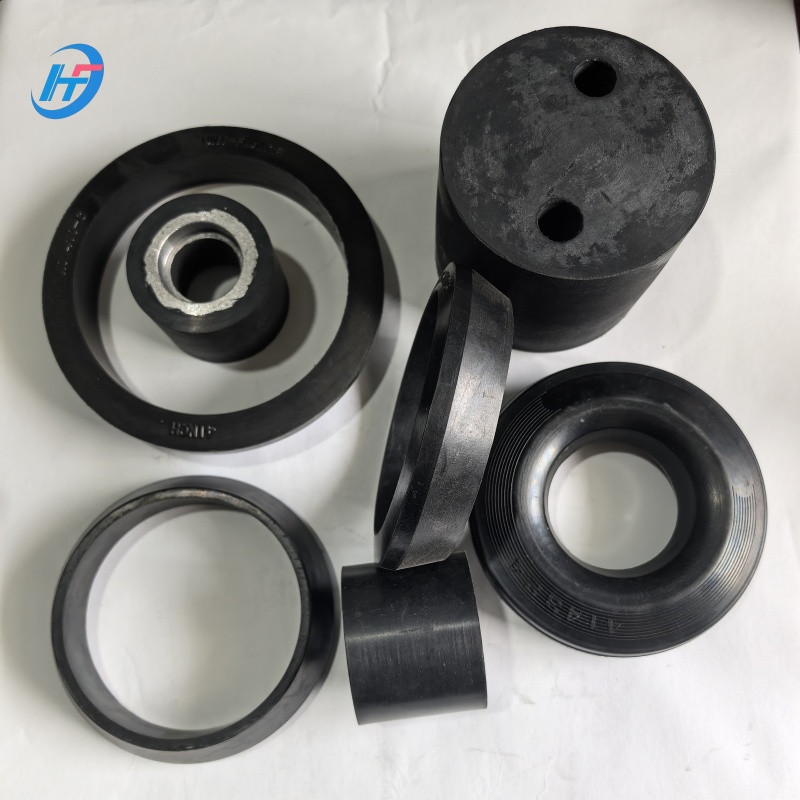
Suzhou Baoshida Trading Co., Ltd. operates at the forefront of industrial rubber solutions, integrating advanced material science with precision engineering to deliver high-performance components for demanding applications. Within our core competencies, the development and manufacturing of threaded tee PVC fittings exemplify our commitment to technical excellence, reliability, and customization. Our engineering capability is anchored by a dedicated team of five mould engineers and two specialized rubber formula engineers, enabling end-to-end control from concept to production.
The integration of mould and formula engineering ensures that every threaded tee PVC component is optimized for performance, durability, and compatibility with system requirements. Our mould engineers utilize advanced CAD/CAM software and precision CNC machining to design and fabricate high-tolerance moulds that support consistent part geometry, dimensional accuracy, and repeatable production cycles. These capabilities are essential for maintaining thread integrity, pressure resistance, and sealing performance in PVC fittings used across fluid handling, irrigation, and industrial piping systems.
Complementing this is our in-house rubber formulation expertise. While PVC remains a primary material for threaded tees, many industrial applications require elastomeric seals, gaskets, or overmoulded elements to ensure leak-free connections under variable thermal and mechanical loads. Our two dedicated formula engineers develop custom rubber compounds—such as EPDM, NBR, and silicone—tailored to resist specific media including water, oils, chemicals, and UV exposure. These formulations are rigorously tested for compression set, tensile strength, and thermal stability to ensure long-term reliability when integrated with PVC components.
As an OEM manufacturing partner, Suzhou Baoshida offers full customization across size, thread standard, material grade, and performance specifications. We support international standards including ISO 14236, ASTM D1785, and ASME B1.20.1, ensuring global compatibility and certification readiness. Our production lines are equipped for injection moulding, thread gauging, and automated inspection, enabling scalable output without compromising quality.
The following table outlines key technical specifications for our standard threaded tee PVC product line, reflecting baseline capabilities that can be modified per OEM requirements.
| Parameter | Specification |
|---|---|
| Material | PVC (Cellulose-free, UV-stabilized) |
| Operating Temperature | 0°C to 60°C |
| Maximum Operating Pressure | 15 bar (217 psi) at 20°C |
| Thread Standard | NPT, BSPT, or metric (customizable) |
| Size Range | 1/8″ to 4″ (DN6 to DN100) |
| Colour | Grey, white, or custom |
| Compliance | RoHS, REACH, ISO 9001 certified production |
| Testing Standards | Hydrostatic burst test, thread fit check |
Our engineering synergy between mould design and material formulation positions Suzhou Baoshida as a strategic partner for OEMs requiring technically robust, application-specific threaded tee PVC solutions. With scalable manufacturing and deep technical expertise, we deliver precision-engineered components that meet the highest industrial standards.
Customization Process
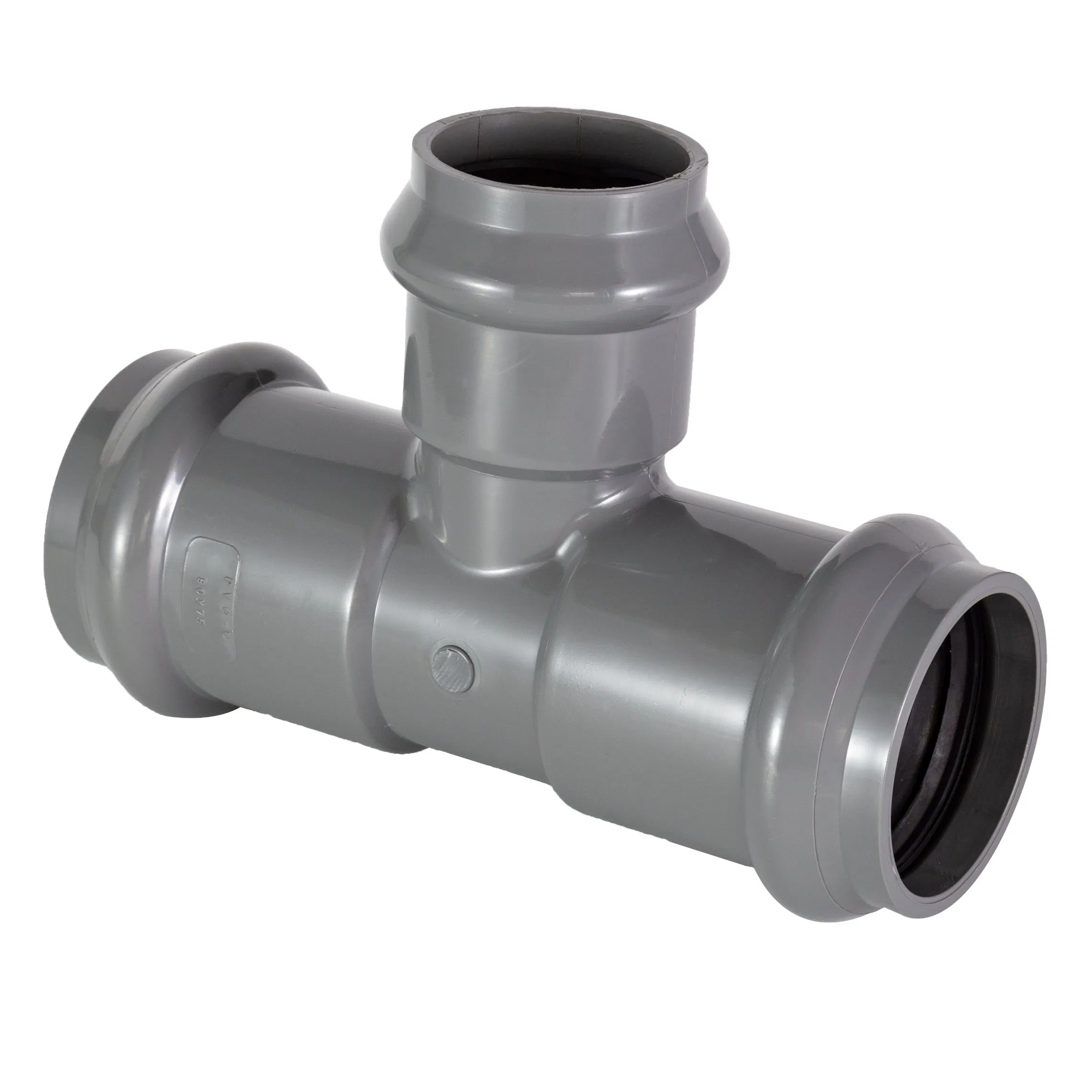
Threaded Tee PVC Customization Process: Precision Engineering for Industrial Fluid Systems
At Suzhou Baoshida Trading Co., Ltd., our threaded tee PVC customization process integrates material science with rigorous manufacturing protocols to deliver components meeting exacting industrial fluid system demands. This structured approach ensures dimensional accuracy, chemical resistance, and long-term reliability under operational stress.
The process initiates with Drawing Analysis, where engineering teams dissect client-provided CAD models or specifications. Critical parameters—including thread pitch (NPT/BSP), socket depth, wall thickness tolerances (±0.1 mm), and pressure class ratings—are validated against ISO 727 and ASTM D2466 standards. Material compatibility with conveyed media (e.g., acids, solvents, or potable water) is cross-referenced with our polymer database to preempt degradation risks. Any geometric anomalies or stress concentration zones are flagged for collaborative redesign, ensuring manufacturability without compromising functional integrity.
Subsequent Formulation leverages our proprietary PVC compound library. Base resin selection (e.g., suspension-grade homopolymer for rigidity) is optimized with impact modifiers, thermal stabilizers (Ca/Zn for food-grade compliance), and UV inhibitors. For high-temperature applications exceeding 60°C, chlorinated PVC (CPVC) variants are engineered to elevate Vicat softening points. Each formulation undergoes predictive simulation via Moldflow® to assess melt viscosity, shrinkage behavior, and weld line formation, guaranteeing seamless flow through complex threaded geometries during injection molding.
Prototyping employs multi-cavity steel molds with precision-ground thread cores. First articles undergo three-tier validation:
1. Dimensional conformance via CMM (Coordinate Measuring Machine) against GD&T callouts.
2. Hydrostatic pressure testing per ASTM D1598 at 2x rated pressure for 1 hour.
3. Chemical immersion trials in client-specified media for 720 hours.
Iterative adjustments to injection speed, cooling cycles, or gate locations resolve defects like sink marks or thread stripping before tooling finalization.
Mass Production activates only after client sign-off on prototype reports. In-line process controls include real-time cavity pressure monitoring and automated vision inspection for thread integrity. Every batch is certified to ISO 12162 material designation codes, with traceability via laser-etched lot numbers. NSF/ANSI 61 or WRAS certifications are appended where required for water infrastructure projects. Statistical process control (SPC) data from 100% of production units is archived for audit readiness, ensuring zero deviation from approved specifications.
Key threaded tee PVC performance metrics are maintained across all production tiers:
| Parameter | Standard Value | Test Method |
|---|---|---|
| Tensile Strength | ≥50 MPa | ASTM D638 |
| Vicat Softening Point | ≥85°C (PVC) | ASTM D1525 |
| Hydrostatic Sustained Pressure | 1000 psi @ 23°C | ASTM D1599 |
| Chloride Resistance | Pass (20% solution) | ISO 175 |
| Dimensional Tolerance | ±0.05 mm (threads) | ISO 2768-mK |
This closed-loop methodology minimizes time-to-market while eliminating field failure risks. Suzhou Baoshida’s commitment to data-driven customization ensures threaded tees perform reliably in chemical processing, HVAC, and municipal water networks worldwide.
Contact Engineering Team
For industrial manufacturers seeking high-performance fluid handling solutions, Suzhou Baoshida Trading Co., Ltd. stands at the forefront of engineered polymer and rubber systems integration. While our core expertise lies in industrial rubber solutions, we provide comprehensive support for complementary components such as threaded tee PVC fittings—critical elements in chemical processing, water treatment, HVAC, and pneumatic applications. These fittings ensure reliable, leak-free branching in rigid PVC piping networks, where dimensional accuracy, pressure integrity, and chemical resistance are non-negotiable.
Threaded tee PVC fittings from trusted manufacturing partners distributed by Suzhou Baoshida are engineered to meet ASTM D1785 and ISO 1452 standards, ensuring compatibility with schedule 40 and schedule 80 PVC pipes. Each fitting undergoes stringent quality control for thread precision, wall thickness uniformity, and fusion integrity. Our supply chain guarantees traceability, material certification, and batch consistency—essential for regulated industries requiring documentation for compliance audits.
We understand that system performance depends not only on individual components but on holistic material compatibility and long-term durability under operational stress. Our engineering team evaluates application parameters including continuous operating pressure, thermal cycling, fluid composition, and installation environment to recommend the optimal configuration. Whether integrating PVC tees into rubber-lined piping systems or hybrid setups involving elastomeric seals and expansion joints, our technical consultants ensure seamless interoperability.
The following table outlines typical specifications for standard threaded tee PVC fittings available through our distribution network:
| Parameter | Specification |
|---|---|
| Material | PVC-U (Unplasticized Polyvinyl Chloride) |
| Standards | ASTM D1785, ISO 1452 |
| Pressure Rating | 200 psi (Schedule 40), 400 psi (Schedule 80) |
| Temperature Range | 0°C to 60°C (32°F to 140°F) |
| Thread Type | NPT (National Pipe Taper) |
| Sizes Available | 1/2″ to 4″ NPS |
| Color | White (standard) |
| Chemical Resistance | Excellent against acids, bases, salts, alcohols |
| Fire Behavior | Self-extinguishing, low flame spread |
Suzhou Baoshida Trading Co., Ltd. operates as a technical liaison between global OEMs and end-users, combining supply chain efficiency with engineering insight. We do not merely distribute components—we deliver validated solutions backed by material science expertise.
For project-specific inquiries, technical data sheets, or custom configuration support, contact Mr. Boyce, OEM Account Manager, directly at [email protected]. Mr. Boyce specializes in industrial fluid system integration and is available to review application requirements, provide compatibility assessments, and coordinate sample submissions or bulk procurement logistics. Our team responds to all technical inquiries within 12 business hours and supports multilingual communication for international clients.
Partner with Suzhou Baoshida to ensure your fluid handling systems meet the highest standards of reliability and performance. Reach out today to initiate a technical consultation.
⚖️ O-Ring Weight Calculator
Estimate rubber O-ring weight (Approx).