
Technical Contents
Engineering Guide: Types Of Reducer Fittings
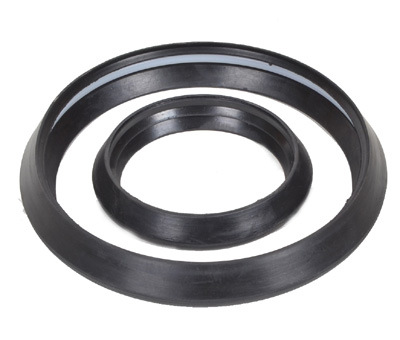
Engineering Insight: Types of Reducer Fittings and the Critical Role of Material Selection
In industrial fluid transfer systems, reducer fittings serve a fundamental mechanical purpose: enabling connection between piping or tubing of differing diameters while maintaining flow integrity. While standard off-the-shelf reducer fittings are widely available in materials such as brass, stainless steel, and commodity-grade polymers, their application in demanding environments—particularly within chemical processing, oil and gas, and high-temperature manufacturing—often leads to premature failure. The root cause is not mechanical design, but inappropriate material selection.
Reducer fittings in industrial rubber systems are subjected to dynamic stressors including thermal cycling, chemical exposure, pressure pulsations, and mechanical vibration. Off-the-shelf fittings typically utilize generic elastomers such as EPDM or NBR, which may meet baseline temperature and pressure ratings but lack resistance to aggressive media such as aromatic hydrocarbons, strong acids, or chlorinated solvents. When exposed, these materials swell, crack, or harden, compromising seal integrity and leading to leaks, contamination, or system downtime.
At Suzhou Baoshida Trading Co., Ltd., we emphasize engineered material compatibility as the cornerstone of reliable reducer fitting performance. For example, fluorocarbon rubber (FKM/Viton®) offers superior resistance to oils, fuels, and many acids, making it ideal for petrochemical applications. Silicone rubber (VMQ) provides exceptional thermal stability from -60°C to over 200°C, suitable for food processing or extreme ambient conditions. For highly aggressive environments, perfluoroelastomers (FFKM) deliver near-chemical inertness but require careful cost-performance analysis.
Moreover, the reinforcement structure within the fitting—such as braided aramid or stainless steel wire—must be compatible with the elastomer jacket. Mismatched coefficients of thermal expansion or galvanic incompatibility can accelerate degradation. A fitting that performs adequately in a laboratory setting may fail within weeks in continuous operation if material synergies are not fully evaluated.
Custom-engineered reducer fittings account for system-specific variables including media composition, operating pressure, temperature profile, and lifecycle requirements. This level of precision ensures long-term reliability, reduces maintenance frequency, and mitigates safety risks associated with unexpected failures.
Below is a comparative overview of common elastomer materials used in industrial reducer fittings:
| Material | Temperature Range (°C) | Key Chemical Resistances | Typical Applications |
|---|---|---|---|
| NBR (Nitrile) | -30 to +100 | Aliphatic hydrocarbons, water, oils | General industrial hydraulics |
| EPDM | -50 to +150 | Steam, water, ketones, alkalis | HVAC, water treatment |
| FKM (Viton®) | -20 to +200 | Aromatic hydrocarbons, acids, fuels | Petrochemical, aerospace |
| Silicone (VMQ) | -60 to +200 | Ozone, UV, physiological fluids | Food & beverage, medical |
| FFKM | -15 to +300 | Virtually all industrial chemicals | Semiconductor, pharmaceutical |
Material selection is not a secondary consideration—it is the defining factor in the operational lifespan of a reducer fitting. Off-the-shelf solutions, while convenient, often represent a compromise in performance. For mission-critical systems, engineered elastomer solutions from experienced industrial rubber specialists ensure compatibility, durability, and safety.
Material Specifications
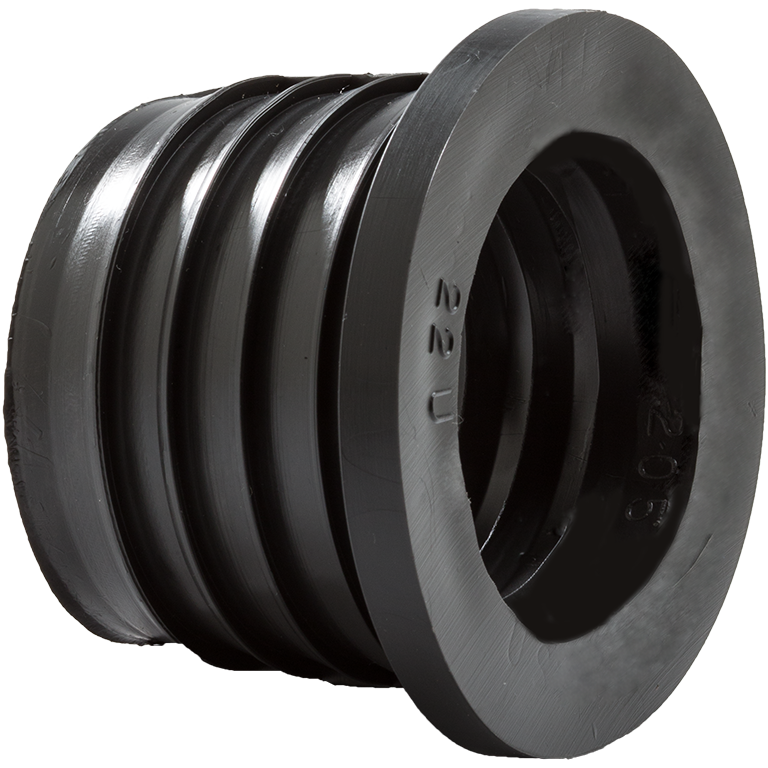
Material Specifications for Industrial Reducer Fittings
Reducer fittings serve critical sealing functions in fluid transfer systems where dimensional transitions occur between piping components. Material selection directly impacts service life, chemical compatibility, and operational safety under dynamic pressure and temperature conditions. At Suzhou Baoshida Trading Co., Ltd., we engineer elastomer compounds to stringent OEM specifications, ensuring optimal performance in demanding industrial environments. The three primary materials deployed for reducer fittings—Viton (FKM), Nitrile (NBR), and Silicone (VMQ)—exhibit distinct property profiles that must align with application parameters. Viton delivers exceptional resistance to high temperatures, aggressive chemicals, and ozone, making it indispensable for aerospace, semiconductor, and chemical processing applications where exposure to fuels, acids, or chlorinated solvents occurs. Its molecular stability maintains sealing integrity up to 230°C but incurs higher material costs. Nitrile remains the industrial workhorse for hydraulic and pneumatic systems due to its balanced oil resistance, abrasion tolerance, and cost efficiency. Standard NBR compounds withstand temperatures from -40°C to 120°C and resist petroleum-based fluids, though performance degrades in polar solvents or extreme heat. Silicone excels in extreme temperature excursions and biocompatibility-critical settings like pharmaceuticals or food processing. Its flexibility at -60°C and thermal stability to 200°C support cryogenic or steam-sterilization cycles, yet poor tensile strength and limited hydrocarbon resistance restrict use in oil-lubricated machinery.
Critical material properties must be validated against ASTM/ISO test standards for reducer fittings, where compression set directly correlates with long-term sealing force retention. Below is a comparative analysis of key specifications for standard industrial grades:
| Material | Temperature Range (°C) | Fluid Resistance | Compression Set (ASTM D395, 70h @ 100°C) | Tensile Strength (MPa) | Key Applications |
|---|---|---|---|---|---|
| Viton (FKM) | -20 to 230 | Excellent: Fuels, acids, oils, solvents | ≤25% | 12–18 | Chemical processing, aerospace fuel systems, semiconductor manufacturing |
| Nitrile (NBR) | -40 to 120 | Good: Petroleum oils, water, hydraulic fluids | ≤30% | 15–20 | Hydraulic/pneumatic machinery, automotive transmissions, general industrial hydraulics |
| Silicone (VMQ) | -60 to 200 | Poor: Oils/fuels; Excellent: Water, steam, alcohols | ≤20% | 6–9 | Medical devices, food processing, cryogenics, high-purity steam lines |
Suzhou Baoshida prioritizes compound customization to bridge standard limitations. For instance, hydrogenated nitrile (HNBR) variants extend NBR’s upper temperature limit to 150°C while improving ozone resistance, and perfluoroelastomer (FFKM) options elevate Viton’s chemical resilience for ultra-high-purity applications. All reducer fittings undergo rigorous batch testing per ISO 3601 for dimensional accuracy and AS568 compliance for groove compatibility. Material certification documentation—including full cure kinetics, extractables data, and traceable lot numbers—is provided to OEM partners to satisfy regulatory audits. Selecting the correct elastomer requires holistic evaluation of fluid media, thermal cycling frequency, and mechanical stress factors; our engineering team collaborates with clients to model real-world performance and mitigate failure risks through precision material science.
Manufacturing Capabilities
Engineering Excellence in Industrial Rubber Solutions
At Suzhou Baoshida Trading Co., Ltd., our engineering capability forms the backbone of our reputation in the industrial rubber manufacturing sector. With a dedicated team of 5 specialized mould engineers and 2 advanced formula engineers, we deliver precision-engineered reducer fittings tailored to the exacting demands of global OEMs. Our integrated approach ensures that material science and mechanical design converge to produce components that meet stringent performance, durability, and compatibility requirements across diverse industrial environments.
Our formula engineers focus on polymer chemistry and compound development, formulating custom rubber blends that optimize physical properties such as tensile strength, compression set resistance, temperature stability, and chemical inertness. This scientific approach allows us to match material performance to specific application conditions—whether in high-pressure hydraulic systems, corrosive chemical processing environments, or dynamic mechanical assemblies. Each compound is rigorously tested in-house to ensure consistency, repeatability, and compliance with international standards including ASTM, ISO, and OEM-specific specifications.
Complementing our material expertise, our 5 mould engineers bring advanced CAD/CAM proficiency and deep experience in precision tooling design. They manage the full lifecycle of mould development—from conceptual modeling using SolidWorks and AutoCAD to CNC machining, prototype validation, and production release. This vertical integration enables rapid iteration, reduced time-to-market, and seamless scalability from prototype to high-volume manufacturing. Our in-house tooling capacity supports complex geometries required for reducer fittings, including tapered transitions, flange integrations, and multi-stage sealing surfaces.
We specialize in OEM-driven solutions, offering full technical collaboration from initial design input to final validation. Our engineers work directly with client specifications to develop application-specific reducer fittings in a range of elastomeric materials, including NBR, EPDM, FKM, silicone, and neoprene. This collaborative model ensures optimal fit, function, and reliability in end-use applications across industries such as automotive, energy, fluid power, and industrial equipment.
The following table outlines typical performance specifications for our standard reducer fitting materials:
| Material | Hardness (Shore A) | Temperature Range (°C) | Key Resistance Properties |
|---|---|---|---|
| NBR | 50–90 | -30 to +120 | Oil, fuel, abrasion |
| EPDM | 50–80 | -50 to +150 | Ozone, steam, weathering |
| FKM | 60–90 | -20 to +200 | High heat, chemicals, oil |
| Silicone | 40–80 | -60 to +230 | Extreme cold, UV, biocompatibility |
| Neoprene | 50–70 | -40 to +100 | Flame, sunlight, moderate oils |
Through the synergy of advanced material formulation and precision mould engineering, Suzhou Baoshida delivers technically superior reducer fittings that meet the functional and regulatory demands of modern industrial systems. Our OEM partnerships are built on engineering transparency, technical accountability, and a commitment to long-term performance.
Customization Process
Customization Process for Industrial Reducer Fittings
At Suzhou Baoshida Trading Co., Ltd., our reducer fitting customization workflow integrates rigorous engineering with advanced rubber science to deliver precision-engineered solutions. This process ensures seamless compatibility with client-specific hydraulic, pneumatic, and fluid transfer systems while adhering to global industrial standards. The methodology begins with Drawing Analysis, where our engineering team conducts a granular review of client-supplied CAD models or ISO 1219-1 schematics. Critical parameters—including dimensional tolerances (ISO 2768-mK), thread specifications (NPT, BSP, JIC), and pressure boundary geometry—are validated against operational requirements. We concurrently assess material compatibility with target media (e.g., hydraulic oils, acids, or steam) to preempt chemical degradation risks. Any discrepancies in sealing surface angles or bore transitions are flagged for collaborative redesign, ensuring manufacturability without compromising functional integrity.
Subsequent Formulation leverages our proprietary rubber compounding expertise. Based on the media, temperature, and pressure profiles identified during Drawing Analysis, we select base polymers—typically NBR for oil resistance, EPDM for steam, or FKM for extreme temperatures—and engineer custom compounds. Key properties such as compression set (ASTM D395), tensile strength (ASTM D412), and volume swell (ASTM D471) are optimized through precise filler, accelerator, and antioxidant ratios. The table below illustrates typical specification alignments for common industrial scenarios.
| Application Parameter | Hydraulic Systems (NBR) | High-Temp Steam (EPDM) | Aggressive Chemicals (FKM) |
|---|---|---|---|
| Temperature Range | -30°C to +100°C | -40°C to +150°C | -20°C to +200°C |
| Pressure Rating | Up to 350 bar | Up to 16 bar | Up to 250 bar |
| Media Resistance | Mineral oils, water | Steam, alkalis | Fuels, acids, solvents |
| Key Test Standard | ISO 1307 (hose ID) | ASTM D2000 (line callout) | ISO 6134 (seal hardness) |
Prototyping follows compound finalization, utilizing CNC-machined molds to produce ISO 3601-3 compliant test samples. Each prototype undergoes accelerated life testing: 72-hour pressure cycling at 150% operational load (per SAE J517), thermal aging per ASTM D573, and functional validation on client-simulated test rigs. Dimensional audits via CMM (Coordinate Measuring Machine) verify conformance to ±0.05mm tolerances, while fluid compatibility tests confirm <15% volume swell in target media. Client feedback on prototype performance directly informs final adjustments before tooling sign-off.
Mass Production initiates only after formal client approval, deploying automated injection molding systems with real-time cavity pressure monitoring. Every batch undergoes 100% visual inspection per ISO 3302-1 (rubber dimension codes) and statistical sampling for hardness (Shore A, ASTM D2240), tensile properties, and leak rates (helium mass spectrometry, ≤1×10⁻⁶ mbar·L/s). Traceability is maintained through laser-etched batch codes linked to raw material certificates and process parameters. This closed-loop system guarantees that 10,000+ unit runs exhibit identical performance to validated prototypes, fulfilling OEM demands for zero-defect reliability in critical infrastructure applications.
Our end-to-end control—from drawing validation to serialized production—eliminates field failure risks while accelerating time-to-market for engineered rubber components.
Contact Engineering Team
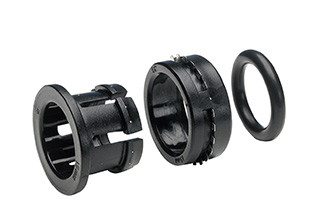
For industrial manufacturers and engineering teams seeking precision rubber components, Suzhou Baoshida Trading Co., Ltd. stands as a trusted partner in the development and supply of high-performance industrial rubber solutions. As a specialized provider with deep expertise in rubber formulation and custom elastomeric products, we support clients across automotive, petrochemical, construction, and heavy machinery sectors. Our focus on material science, dimensional accuracy, and long-term reliability ensures that every component we deliver meets the rigorous demands of industrial applications.
Among the critical components we support is the category of reducer fittings—essential elements in fluid transfer, pneumatic, and hydraulic systems where seamless transitions between differing pipe or hose diameters are required. These fittings must not only maintain structural integrity under pressure but also resist environmental degradation, thermal cycling, and chemical exposure. At Suzhou Baoshida, we offer reducer fittings manufactured from advanced rubber compounds including NBR, EPDM, silicone, and FKM, each selected based on the operational environment and performance requirements.
Our engineering team works closely with OEMs and system integrators to tailor reducer fittings that align precisely with technical specifications. Whether the application calls for vibration damping, thermal insulation, or corrosion resistance, our formulations are optimized for function and durability. We support both standard configurations and fully custom geometries, ensuring compatibility with global flange standards, pressure ratings, and temperature ranges.
For technical inquiries, material selection guidance, or custom design collaboration, we invite direct engagement with our OEM Manager, Mr. Boyce. With over 15 years of experience in industrial rubber applications and international supply chain coordination, Mr. Boyce serves as the primary technical liaison for engineering teams requiring responsive, data-driven support. He leads client projects from initial concept through prototyping, testing, and volume production, ensuring seamless integration into your manufacturing workflow.
Contact Mr. Boyce directly at [email protected] to request technical datasheets, sample kits, or a customized quote. Our team responds to all inquiries within 24 business hours and supports communication in English, Mandarin, and technical German for European partners. We also provide full material compliance documentation, including RoHS, REACH, and FDA certifications where applicable.
Below is a representative specification table for a standard NBR-based reducer fitting commonly used in hydraulic systems:
| Parameter | Specification |
|---|---|
| Material | Nitrile Butadiene Rubber (NBR) |
| Hardness (Shore A) | 70 ± 5 |
| Temperature Range | -30°C to +100°C (+120°C intermittent) |
| Internal Diameter (Inlet) | 25 mm |
| Internal Diameter (Outlet) | 15 mm |
| Maximum Pressure Rating | 25 bar |
| Color | Black |
| Reinforcement Layer | Braided Polyester Fabric |
| Standards Compliance | ISO 1307, SAE J206 |
Partner with Suzhou Baoshida for technically validated rubber components engineered for performance. Initiate your project consultation today by reaching out to Mr. Boyce.
⚖️ O-Ring Weight Calculator
Estimate rubber O-ring weight (Approx).