
Technical Contents
Engineering Guide: Universal Polymer & Rubber Ltd
Engineering Insight: Material Selection as the Foundation of Industrial Rubber Performance
Industrial rubber components operate under extreme and variable conditions where material failure carries significant operational and financial consequences. Universal Polymer & Rubber Ltd. observes that off-the-shelf rubber compounds frequently fail to meet the rigorous demands of specialized applications, leading to premature seal degradation, system leaks, unplanned downtime, and costly replacements. This recurring issue stems not from inherent material flaws, but from the fundamental mismatch between generic formulations and the precise, often unique, requirements of industrial environments. Standard catalog materials are engineered for broad market appeal and cost efficiency, prioritizing average performance across moderate conditions rather than excelling under specific, severe stresses. They represent a compromise, sacrificing critical properties like thermal stability, chemical resistance, or dynamic fatigue life to achieve acceptable baseline metrics for general use. Consequently, when subjected to the combined effects of elevated temperatures, aggressive media exposure, cyclic compression, or ozone environments common in hydraulic systems, chemical processing, or heavy machinery, these generic compounds rapidly degrade beyond acceptable limits.
The critical flaw lies in the absence of application-specific engineering. True performance requires a deep analysis of the operational profile: continuous and peak temperatures, fluid compatibility (including trace contaminants), dynamic load profiles, required service life, and regulatory constraints. Off-the-shelf solutions lack the tailored polymer backbone, optimized cure system, and precisely balanced additive package necessary to withstand these specific synergistic stresses. For instance, a standard NBR compound may resist hydraulic oil at 80°C but catastrophically harden and crack when exposed to biodiesel blends at 120°C due to inadequate antioxidant and plasticizer selection. Similarly, a generic EPDM seal might meet basic ozone resistance but exhibit excessive compression set in high-temperature water applications because its peroxide cure system wasn’t optimized for the exact thermal duty cycle. Material selection is not merely choosing a rubber type; it is a precise chemical engineering process defining the compound’s molecular architecture for the mission.
Custom-engineered rubber formulations directly address these failure modes by aligning material science with application physics. The table below illustrates the performance gap between a generic compound and a solution engineered for high-temperature fluid exposure:
| Property | Generic EPDM (ASTM D2000 Classification) | Custom High-Temp Fluid EPDM (UPR Formulation) |
|---|---|---|
| Tensile Strength (MPa) | ≥ 7.5 (A10) | ≥ 14.0 (A20) |
| Elongation at Break (%) | ≥ 150 (B10) | ≥ 250 (B20) |
| Compression Set, 70h @ 150°C (%) | ≤ 45 (E40) | ≤ 18 (E20) |
| Fluid Resistance (IRM 903, 70h @ 150°C), Volume Swell (%) | ≤ 40 (F20) | ≤ 15 (F10) |
This data demonstrates how targeted formulation—adjusting polymer grades, crosslink density, and specialty additives—yields substantial improvements in critical life-determining properties. The custom compound achieves superior resilience under thermal and chemical duress, directly translating to extended service life and reduced total cost of ownership. Universal Polymer & Rubber Ltd. leverages decades of compounding expertise and application knowledge to move beyond generic specifications. We collaborate with OEMs to define the exact operational envelope and engineer rubber solutions where molecular precision prevents field failure, ensuring reliability is built into the material itself from inception. The initial investment in engineered material selection is consistently justified by eliminating the far greater costs of system failure and downtime.
Material Specifications
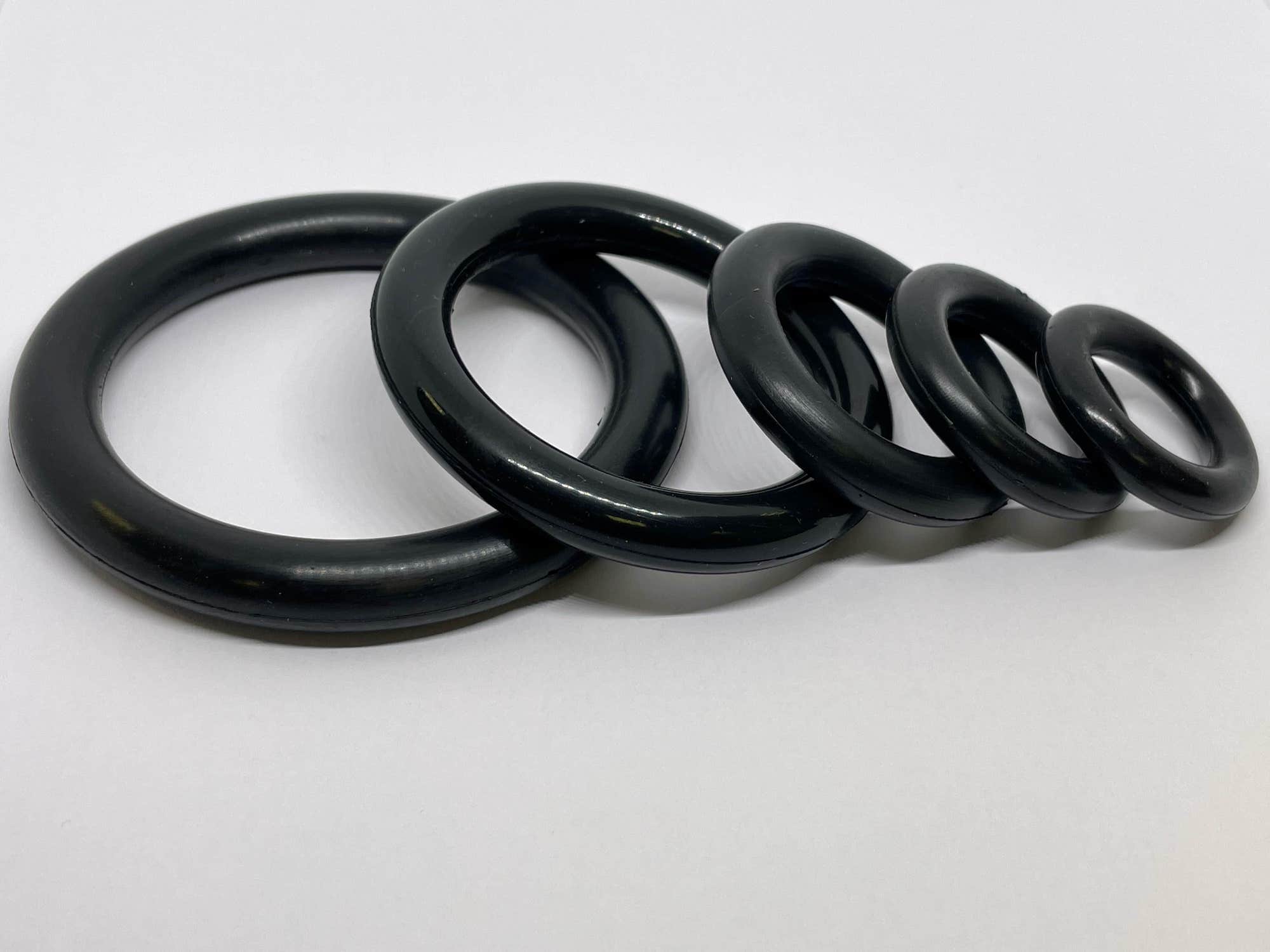
Suzhou Baoshida Trading Co., Ltd. provides high-performance industrial rubber solutions tailored to meet the demanding requirements of modern manufacturing, automotive, aerospace, and chemical processing industries. Our material selection process emphasizes durability, chemical resistance, temperature stability, and mechanical integrity. Among the most widely specified elastomers in industrial applications are Viton, Nitrile (NBR), and Silicone (VMQ). Each material offers a unique set of properties that make it suitable for specific operational environments. Understanding their comparative performance is critical to ensuring optimal component life and system reliability.
Viton, a fluorocarbon-based rubber (FKM), is renowned for its exceptional resistance to high temperatures, oils, fuels, and a broad range of aggressive chemicals. It performs reliably in continuous service temperatures up to 230°C (446°F), with short-term excursions even higher. This makes Viton the preferred choice for sealing applications in aerospace engines, chemical processing equipment, and high-performance automotive systems where exposure to hydrocarbons and extreme heat is common. Its low gas permeability and excellent aging characteristics further enhance long-term performance, although it is generally more expensive than other elastomers.
Nitrile rubber, or acrylonitrile butadiene rubber (NBR), is one of the most widely used elastomers due to its excellent resistance to petroleum-based oils and fuels, coupled with good abrasion resistance and mechanical strength. It operates effectively within a temperature range of -30°C to 120°C (-22°F to 248°F), making it ideal for hydraulic systems, fuel hoses, gaskets, and O-rings in industrial and automotive contexts. While NBR offers cost-effective performance in oil-rich environments, its resistance to ozone, weathering, and extreme high temperatures is limited compared to Viton and Silicone.
Silicone rubber (VMQ) excels in applications requiring extreme temperature flexibility, with a service range from -60°C to 200°C (-76°F to 392°F). It maintains elasticity and physical properties across this broad spectrum, making it ideal for thermal insulation, medical devices, food-grade applications, and outdoor electrical insulation. Silicone also offers excellent resistance to UV radiation and ozone but has relatively low tensile strength and poor resistance to petroleum-based fluids. Therefore, it is best suited for static sealing and non-abrasive environments where thermal stability and biocompatibility are paramount.
The following table summarizes key performance characteristics of these materials to assist in material selection for industrial applications.
| Property | Viton (FKM) | Nitrile (NBR) | Silicone (VMQ) |
|---|---|---|---|
| Temperature Range (°C) | -20 to 230 | -30 to 120 | -60 to 200 |
| Temperature Range (°F) | -4 to 446 | -22 to 248 | -76 to 392 |
| Resistance to Oils & Fuels | Excellent | Excellent | Poor |
| Resistance to Ozone/UV | Excellent | Fair | Excellent |
| Chemical Resistance | Excellent | Good | Fair |
| Mechanical Strength | Good | Very Good | Fair |
| Electrical Insulation | Good | Fair | Excellent |
| Compression Set Resistance | Excellent | Good | Good |
| Typical Applications | Aerospace seals, chemical gaskets | Fuel hoses, O-rings, hydraulic seals | Medical devices, food-grade seals, thermal insulation |
Material selection directly impacts the efficiency, safety, and longevity of industrial systems. Suzhou Baoshida Trading Co., Ltd. supports OEMs and manufacturers with precision-engineered rubber components using these high-performance materials, ensuring compliance with international quality standards and application-specific performance criteria.
Manufacturing Capabilities
Engineering Capability: Precision-Driven Rubber Solutions for Industrial Applications
Suzhou Baoshida Trading Co., Ltd. leverages deep technical expertise to deliver mission-critical rubber components for global industrial clients. Our core engineering strength resides in a dedicated team of five specialized Mould Engineers and two advanced Formula Engineers, operating under stringent ISO 9001 protocols. This integrated structure ensures seamless translation of client specifications into high-performance, production-ready elastomer solutions. Unlike commodity suppliers, we prioritize molecular-level customization and dimensional precision, directly addressing complex operational challenges in sectors including automotive hydraulics, semiconductor manufacturing, and heavy machinery.
Our Formula Engineering division excels in developing bespoke polymer compounds that meet exacting chemical, thermal, and mechanical demands. Through advanced rheology analysis and accelerated aging protocols, we optimize formulations for specific failure modes—such as ozone cracking in outdoor seals or compression set in dynamic gaskets. Key capabilities include fluorocarbon (FKM) modifications for ultra-pure semiconductor tooling, hydrogenated nitrile (HNBR) variants for high-temperature automotive shaft seals, and custom silicone blends meeting USP Class VI biocompatibility standards. Each formulation undergoes rigorous validation against ASTM D2000 and ISO 37 standards before client approval.
Complementing this, our Mould Engineering team implements precision tooling strategies for complex geometries and tight-tolerance applications. Utilizing Moldflow simulation and CNC-machined hardened steel molds (HRC 48-52), we achieve ±0.05mm dimensional accuracy critical for aerospace fluid systems and medical device interfaces. The team specializes in multi-cavity optimization for high-volume OEM programs, reducing cycle times by 18-22% while maintaining part-to-part consistency. Critical to this process is our closed-loop process control system, which monitors cavity pressure, temperature gradients, and cure state in real time to prevent defects like flash or incomplete vulcanization.
As a certified OEM partner, we manage end-to-end production from compound development through final inspection. Our facility supports low-volume prototyping (10-100 units) to high-volume manufacturing (500,000+ units annually) with full material traceability via blockchain-enabled batch records. Clients receive comprehensive technical documentation including material certificates, PPAP Level 3 submissions, and 3D mold flow reports.
The following table illustrates our standard compound performance ranges versus custom-engineered solutions:
| Property | Standard Compound Range | Custom-Engineered Solution Range | Test Standard |
|---|---|---|---|
| Hardness (Shore A) | 40-90 | 30-95 | ASTM D2240 |
| Tensile Strength (MPa) | 8-20 | 5-35 | ASTM D412 |
| Temperature Range (°C) | -40 to +150 | -65 to +315 | ISO 188 |
| Compression Set (70h/70°C) | ≤25% | ≤12% | ASTM D395 |
| Fluid Resistance (IRMOG) | Grade B | Grade A | ISO 1817 |
This engineering synergy—combining molecular science with precision manufacturing—enables us to solve previously intractable sealing and damping challenges. By embedding formula and mould expertise within a single workflow, we eliminate cross-functional bottlenecks, reduce time-to-market by 30%, and ensure every component meets the uncompromising reliability standards demanded by industrial OEMs. Clients gain not just a supplier, but a technical extension of their R&D team, with full transparency into material behavior and process physics.
Customization Process
Drawing Analysis: The Foundation of Precision Customization
The customization process for industrial rubber components begins with rigorous drawing analysis, a critical phase that establishes the technical framework for all subsequent development stages. At Suzhou Baoshida Trading Co., Ltd., our engineering team conducts a comprehensive review of customer-supplied technical drawings, focusing on dimensional accuracy, tolerance specifications, surface finish requirements, and application environment indicators. This phase includes validation of geometric features such as sealing surfaces, wall thickness, and mating interfaces, ensuring compliance with international standards including ISO 3302 and ISO 2768. We also assess manufacturability, identifying potential molding challenges such as air entrapment, flash formation, or ejection difficulties. Any discrepancies or optimization opportunities are communicated through formal engineering feedback, enabling collaborative refinement before progression.
Rubber Formulation: Tailoring Material Performance
Following drawing validation, the formulation stage leverages Suzhou Baoshida’s expertise in polymer science to engineer a compound that meets exact functional demands. Material selection is driven by operational parameters such as temperature range, chemical exposure, mechanical stress, and regulatory compliance (e.g., FDA, ROHS, or UL). We utilize a base polymer matrix—such as NBR, EPDM, Silicone, FKM, or Neoprene—and modify it with reinforcing fillers, plasticizers, vulcanizing agents, and stabilizers to achieve target physical properties. Hardness (Shore A), tensile strength, elongation at break, compression set, and fluid resistance are all precisely calibrated. Each formulation is documented under a controlled batch specification sheet, ensuring reproducibility and traceability across production cycles.
Prototyping and Validation: Bridging Design and Production
Once the compound is finalized, low-volume prototyping is executed using precision compression, transfer, or injection molding techniques, depending on part complexity and volume expectations. Prototypes are subjected to dimensional inspection via CMM (Coordinate Measuring Machine) and performance testing in simulated operating conditions. This includes dynamic sealing trials, thermal cycling, and chemical immersion tests. Test results are compiled into a validation report, verifying conformance to both drawing requirements and functional expectations. Customer feedback is integrated at this stage, allowing for iterative refinement before tooling finalization.
Mass Production: Scalable Quality Assurance
Upon prototype approval, we transition to full-scale manufacturing using optimized mold tooling and automated rubber processing lines. Production runs are monitored under ISO 9001-certified quality protocols, with in-process checks on weight, cure time, and visual defects. Final inspection includes batch sampling per ANSI/ASQ Z1.4 standards. All components are traceable by lot number, with full material certifications provided.
The following table summarizes key performance parameters achievable through our customization pipeline:
| Property | Test Standard | Typical Range | Notes |
|---|---|---|---|
| Hardness (Shore A) | ASTM D2240 | 30–90 | Adjustable in 5-point increments |
| Tensile Strength | ASTM D412 | 8–25 MPa | Depends on polymer and filler |
| Elongation at Break | ASTM D412 | 150–600% | Influenced by crosslink density |
| Compression Set (70h, 70°C) | ASTM D395 | <25% | Critical for sealing applications |
| Operating Temperature | — | -50°C to +250°C | Varies by compound type |
This structured approach ensures that every custom rubber solution delivered by Suzhou Baoshida meets the highest benchmarks of performance, reliability, and industrial compatibility.
Contact Engineering Team
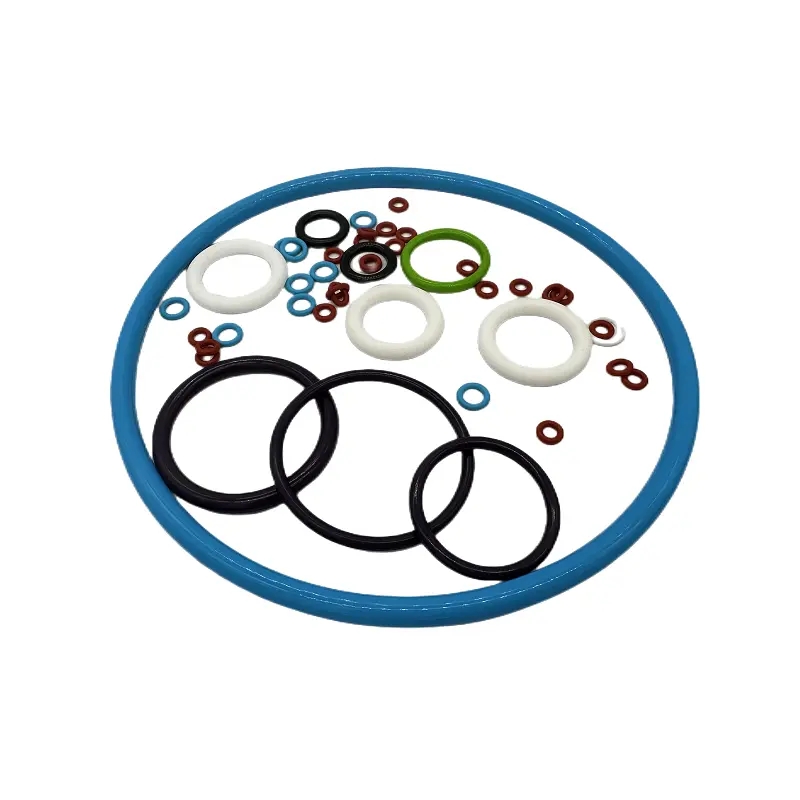
Initiate Technical Collaboration for Precision Rubber Solutions
Suzhou Baoshida Trading Co., Ltd. operates at the intersection of polymer science and industrial manufacturing excellence, delivering OEM-grade rubber compounds engineered for extreme operational environments. Our facility in Suzhou integrates advanced compounding technology with rigorous quality control protocols, ensuring every product batch adheres to ISO 9001 standards and exceeds ASTM D2000 specifications. For global manufacturers requiring mission-critical elastomer components—from hydraulic seals in aerospace systems to abrasion-resistant conveyor belts in mining operations—our team provides end-to-end technical partnership. We specialize in custom formulation development, leveraging 15+ years of OEM collaboration to solve complex material challenges involving chemical resistance, thermal stability, and dynamic mechanical performance.
Our engineering workflow begins with a detailed technical consultation to map your application requirements against material behavior under real-world stressors. This includes finite element analysis (FEA) support for component geometry validation, accelerated aging tests per ASTM D573, and compound optimization for compression set resistance. Clients receive comprehensive documentation packages: full material traceability records, 3D printing-ready CAD files for prototyping, and batch-specific certificates of conformance. Crucially, we implement a closed-loop feedback system where in-field performance data directly informs iterative formulation refinements—reducing time-to-market by up to 40% compared to industry benchmarks.
The table below summarizes core technical capabilities for our most deployed industrial rubber compounds:
| Property | Test Standard | Value Range | Application Relevance |
|---|---|---|---|
| Tensile Strength | ASTM D412 | 15–35 MPa | High-load mechanical integrity |
| Temperature Range | ISO 188 | -55°C to +250°C | Extreme climate operability |
| Compression Set (70h/100°C) | ASTM D395 | ≤18% | Long-term sealing reliability |
| Abrasion Loss (DIN 53516) | ISO 4649 | ≤80 mm³ | Wear resistance in abrasive media |
| Fluid Resistance (IRM 903) | ASTM D471 | ΔVolume ≤15% | Hydraulic/petrochemical stability |
Partnering with Suzhou Baoshida means embedding material science expertise directly into your supply chain. We manage full production scalability—from 50kg R&D batches to 500MT monthly volumes—without compromising on repeatability. Our Suzhou-based technical team conducts on-site failure analysis for critical field issues, utilizing FTIR spectroscopy and DMA to diagnose root causes within 72 hours of sample receipt. This proactive engineering approach has reduced client downtime incidents by 62% across 37 major OEM partnerships since 2020.
To initiate technical validation for your next project, contact Mr. Boyce, our dedicated OEM Solutions Manager. He will coordinate compound screening against your specific fluid exposure profiles, mechanical stress parameters, and regulatory requirements (including REACH/ROHS compliance). Provide your material datasheet or application schematic to [email protected] for a targeted feasibility assessment within 48 business hours. Include reference code SBD-IND-2024 to expedite priority engineering review. For time-sensitive prototyping needs, our rapid-response lab offers 5-day turnaround on custom durometer formulations (50A–90A Shore A). Do not settle for generic elastomer solutions—engineer reliability with Suzhou Baoshida’s precision rubber science.
⚖️ O-Ring Weight Calculator
Estimate rubber O-ring weight (Approx).