
Technical Contents
Engineering Guide: V Strip Weather Stripping
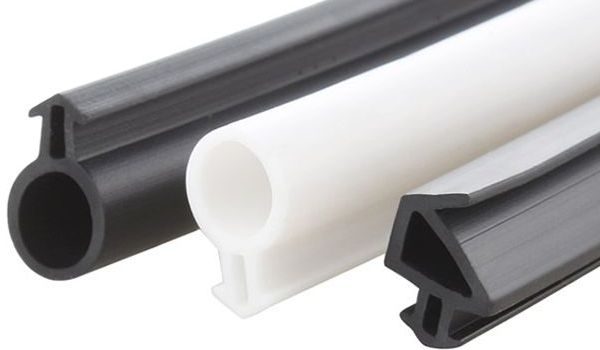
Engineering Insight: The Critical Role of Material Selection in V Strip Weather Stripping
In industrial sealing applications, V strip weather stripping serves as a critical barrier against environmental ingress, vibration damping, and noise reduction across automotive, construction, and transportation sectors. While off-the-shelf variants are often marketed as universal solutions, their performance frequently degrades under real-world operational stress. The root cause lies in improper material selection—a factor that directly influences compression set resistance, temperature tolerance, and long-term durability.
Standard V strips are commonly manufactured from generic thermoplastic elastomers (TPE) or low-grade EPDM rubber. These materials may meet basic dimensional requirements but fail to address application-specific variables such as UV exposure, ozone concentration, or cyclic mechanical loading. For instance, in exterior automotive glazing systems, prolonged exposure to solar radiation accelerates surface cracking in non-stabilized compounds. Similarly, in cold-chain logistics enclosures, low-temperature flexibility becomes paramount—yet many stock profiles embrittle below -20°C, leading to seal failure.
At Suzhou Baoshida Trading Co., Ltd., we emphasize engineered material formulation as the cornerstone of reliable V strip performance. Our proprietary EPDM compounds incorporate high saturation levels and tailored antioxidant packages to resist thermal aging up to 150°C for extended durations. For applications demanding fuel or oil resistance, we deploy hydrogenated nitrile (HNBR) or fluorocarbon (FKM) extrusions, ensuring integrity in aggressive chemical environments.
Custom compounding also allows optimization of hardness (Shore A), tensile strength, and elongation at break—parameters that must align with the mating surface geometry and compression deflection requirements. A mismatch in durometer can result in either insufficient sealing force or excessive stress on adjacent components, accelerating fatigue.
The following table outlines key material properties for common V strip elastomers used in industrial applications:
| Material | Temperature Range (°C) | Hardness (Shore A) | Tensile Strength (MPa) | Key Resistance Properties |
|---|---|---|---|---|
| Standard EPDM | -40 to +120 | 55–70 | 8–12 | UV, ozone, weathering |
| High-Performance EPDM | -50 to +150 | 60–75 | 10–14 | Enhanced thermal aging, compression set |
| TPE | -30 to +110 | 50–65 | 6–10 | Limited UV, low-cost alternative |
| HNBR | -40 to +175 | 65–80 | 15–20 | Oil, fuel, high-temperature |
| FKM | -20 to +230 | 70–85 | 12–18 | Extreme heat, chemicals, solvents |
Off-the-shelf profiles rarely provide traceable material certifications or lot-specific testing data, increasing the risk of field failure and non-compliance with OEM specifications. In contrast, our engineered solutions are validated through ASTM D2000 classification testing and customized for dynamic or static sealing roles.
Material selection is not a commodity decision—it is a precision engineering requirement. By moving beyond generic profiles and embracing application-driven formulation, manufacturers ensure long-term reliability, reduce lifecycle costs, and maintain compliance in demanding environments.
Material Specifications
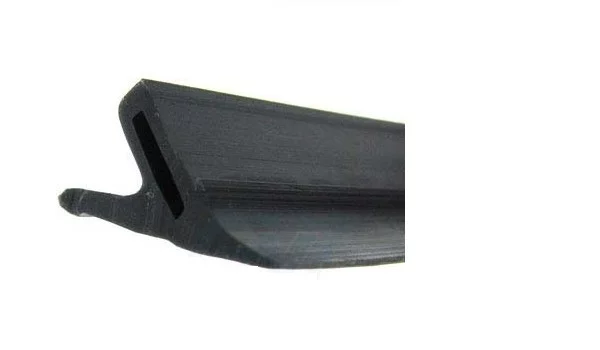
Material Specifications for V-Strip Weather Stripping
Precise material selection is critical for V-strip weather stripping performance in demanding industrial and automotive applications. At Suzhou Baoshida Trading Co., Ltd., we engineer formulations to meet exacting OEM durability, sealing integrity, and environmental resistance standards. Our core materials—Viton fluoroelastomer, Nitrile rubber (NBR), and Silicone—exhibit distinct molecular properties that dictate suitability for specific operational conditions. Each compound undergoes rigorous ASTM D2000 and ISO 37 validation to ensure dimensional stability, compression set resistance, and longevity under dynamic stress.
Viton fluoroelastomer delivers unparalleled resistance to extreme temperatures, aggressive chemicals, and hydrocarbon derivatives. Its fluorocarbon backbone provides exceptional stability in aerospace fuel systems, engine compartments, and chemical processing equipment where exposure to jet fuels, lubricants, and acids occurs. Viton maintains sealing force between -20°C and 230°C, though its higher cost necessitates strategic application where NBR or Silicone would degrade prematurely.
Nitrile rubber (NBR) remains the industry standard for cost-sensitive applications requiring robust oil and fuel resistance. Optimized acrylonitrile content (34% typical) balances flexibility with resistance to aliphatic hydrocarbons, hydraulic fluids, and greases. NBR excels in automotive door/window seals and industrial machinery operating between -40°C and 120°C. However, ozone and weathering resistance are limited without protective additives, and performance degrades above 125°C.
Silicone rubber dominates applications requiring ultra-wide temperature resilience and physiological inertness. With a service range from -60°C to 200°C, it withstands thermal cycling in aerospace, medical devices, and food processing where FDA/USP Class VI compliance is mandatory. Silicone resists UV, ozone, and water ingress effectively but exhibits poor resistance to concentrated acids, solvents, and petroleum-based fluids. Its lower tensile strength necessitates careful profile design for high-compression scenarios.
The following comparative analysis details critical performance parameters for informed material selection:
| Material | Temperature Range (°C) | Key Chemical Resistance | Hardness Range (Shore A) | Compression Set (ASTM D395, 22h/150°C) | Primary Industrial Applications |
|---|---|---|---|---|---|
| Viton | -20 to 230 | Jet fuels, acids, oils, solvents | 60–90 | ≤20% | Aerospace seals, chemical valves |
| Nitrile (NBR) | -40 to 120 | Aliphatic hydrocarbons, hydraulic fluids | 50–90 | ≤35% | Automotive gaskets, hydraulic cylinders |
| Silicone | -60 to 200 | Ozone, UV, water, steam | 30–80 | ≤25% | Medical devices, food processing, LEDs |
Suzhou Baoshida Trading Co., Ltd. leverages decades of rubber compounding expertise to tailor these base materials with proprietary additives. Our V-strips achieve ≤15% compression set at 100°C for NBR and ≤18% for Silicone through optimized peroxide curing systems. Shore A hardness is precisely controlled within ±3 points to ensure consistent insertion force and recovery across production batches. For mission-critical applications, we implement traceable lot numbering and 100% dimensional inspection per AS9100/ISO/TS 16949 protocols. Partner with us to specify the exact formulation matching your thermal, chemical, and mechanical requirements.
Manufacturing Capabilities
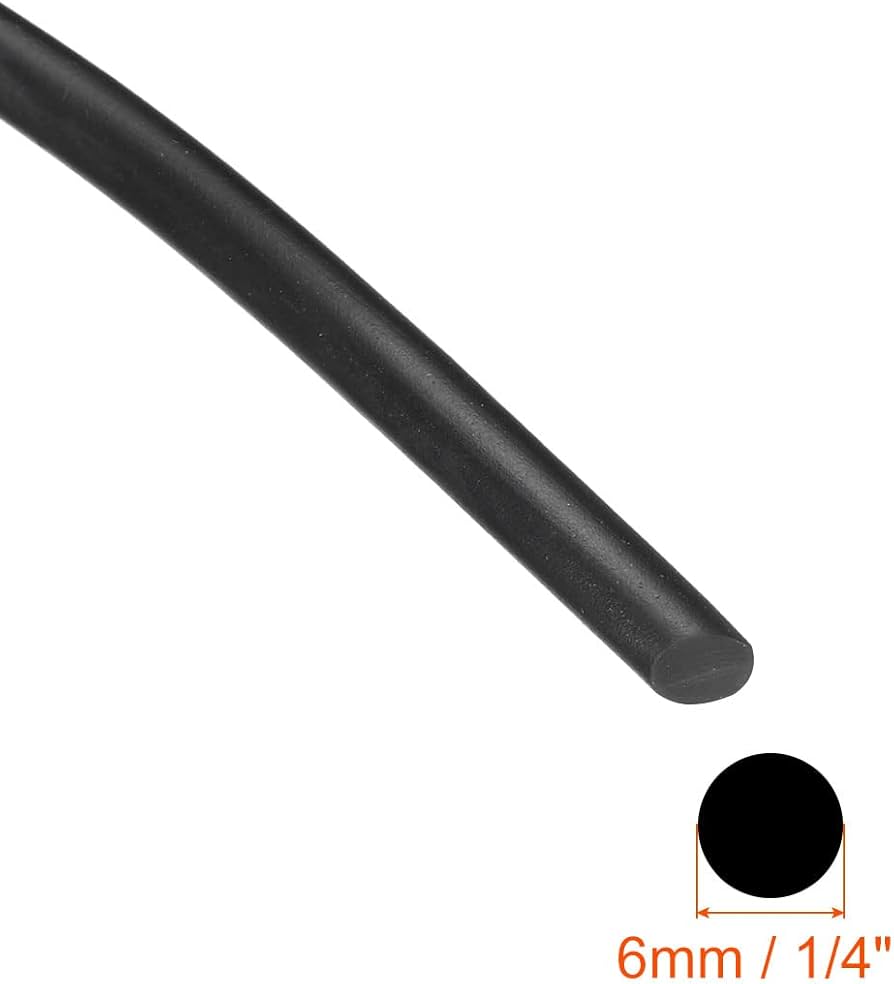
Engineering Capability: Precision-Driven Development in Rubber Sealing Solutions
At Suzhou Baoshida Trading Co., Ltd., our engineering capability forms the backbone of our industrial rubber solutions, particularly in the specialized domain of V strip weather stripping. With a dedicated team of five experienced mould engineers and two certified rubber formulation engineers, we maintain full in-house control over the product development lifecycle—from concept and material design to tooling and final validation. This integrated approach ensures technical precision, accelerated time-to-market, and superior product consistency tailored to OEM requirements.
Our mould engineers bring over 60 combined years of experience in precision tool design for extruded and moulded rubber profiles. Utilizing advanced CAD/CAM software including SolidWorks and AutoCAD, they develop high-tolerance steel and aluminum tooling optimized for long production runs and exact dimensional compliance. Each V strip profile is engineered to meet stringent sealing performance criteria, including compression set resistance, environmental durability, and consistent cross-sectional geometry. Finite element analysis (FEA) is routinely applied to simulate compression behavior and stress distribution under operational conditions, ensuring optimal sealing force and longevity.
Complementing our tooling expertise, our two rubber formulation engineers specialize in custom elastomer development for demanding industrial and automotive environments. They formulate EPDM, silicone, and CR compounds specifically tuned for V strip applications, balancing hardness, tensile strength, low-temperature flexibility, and resistance to UV, ozone, and weathering. Each formulation undergoes rigorous laboratory testing for aging, compression set (per ASTM D395), and thermal cycling to guarantee performance under extreme conditions. This scientific approach enables us to meet or exceed OEM material specifications, including those from major automotive and construction equipment manufacturers.
Our OEM service model is built on technical collaboration. We work directly with client engineering teams to reverse-engineer legacy profiles, optimize designs for manufacturability, and develop proprietary compounds that address unique environmental challenges. From initial prototype to full-scale production, we maintain full traceability, process validation (PPAP Level 3-ready), and dimensional inspection using coordinate measuring machines (CMM) and laser profiling systems.
The following table outlines key engineering and material specifications typically achieved in our V strip weather stripping production:
| Parameter | Standard Range / Capability | Test Standard |
|---|---|---|
| Material Types | EPDM, Silicone, CR, SBR | ASTM D2000 |
| Hardness (Shore A) | 40–90 ±5 | ASTM D2240 |
| Tensile Strength | ≥7.5 MPa (EPDM) | ASTM D412 |
| Elongation at Break | ≥250% | ASTM D412 |
| Compression Set (24h @ 70°C) | ≤25% | ASTM D395 |
| Operating Temperature Range | -40°C to +150°C (material-dependent) | ISO 1817 |
| Tolerance (Cross Section) | ±0.1 mm to ±0.3 mm | ISO 3302 |
| Tooling Lead Time | 15–25 days (standard profiles) | In-house CAD/CAM |
This combination of advanced engineering resources, material science proficiency, and OEM-focused development makes Suzhou Baoshida a trusted partner in high-performance rubber sealing solutions.
Customization Process
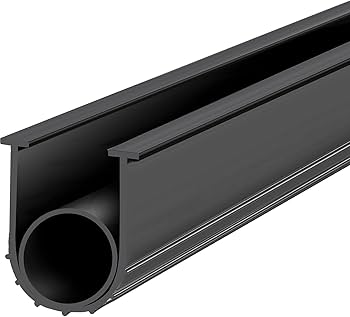
V-Strip Weather Stripping Customization Process: Precision Engineering from Design to Production
At Suzhou Baoshida Trading Co., Ltd., our V-strip weather stripping customization process integrates material science with industrial manufacturing rigor to deliver sealing solutions meeting exact OEM specifications. This structured workflow ensures dimensional accuracy, environmental resilience, and long-term performance across automotive, construction, and industrial applications.
Drawing Analysis initiates the process with rigorous technical review. Our engineering team validates GD&T (Geometric Dimensioning and Tolerancing) compliance, cross-sectional tolerances (±0.1mm), and interface geometry against client CAD files. Finite element analysis (FEA) simulates compression behavior under dynamic loads, identifying potential stress points. Critical parameters include lip geometry, base width, and groove compatibility. Non-conformities trigger collaborative redesign with the client to optimize manufacturability without compromising functional intent.
Formulation Development follows, leveraging our 15+ years of rubber compounding expertise. Material selection prioritizes polymer chemistry aligned with operational demands: EPDM for ozone/UV resistance (automotive exteriors), silicone for extreme temperatures (-60°C to +230°C), or thermoplastic elastomers (TPE) for recyclability. Key properties are engineered via proprietary additive systems:
Shore A hardness (60–85) tuned for sealing force versus ease of installation
Compression set resistance (<25% per ASTM D395) for sustained elasticity
Customized filler systems to balance cost, density, and abrasion resistance
Prototyping utilizes precision extrusion dies and curing ovens to produce ISO 188-vulcanized samples. Each prototype undergoes accelerated life testing: 10,000 compression cycles per SAE J1410, thermal aging at 100°C for 72 hours, and fluid immersion (brake fluid, coolant). Dimensional validation via CMM (Coordinate Measuring Machine) confirms ≤0.05mm deviation from print. Client feedback on fit/function triggers iterative refinements within 10 business days.
Mass Production commences only after formal sign-off on PPAP (Production Part Approval Process) Level 3 documentation. Our IATF 16949-certified facility employs real-time SPC (Statistical Process Control) monitoring of extrusion parameters (die temperature ±2°C, line speed ±0.5m/min). Every 500m batch undergoes destructive testing per ASTM D2000, with certificates of conformance provided. Logistics utilize moisture-barrier packaging to prevent pre-installation degradation.
Critical Specification Parameters for V-Strip Customization
| Parameter | Standard Range | Client-Specific Example | Test Standard |
|---|---|---|---|
| Shore A Hardness | 60–85 | 72 ± 3 | ASTM D2240 |
| Temperature Range | -40°C to +150°C | -60°C to +200°C | ISO 188 |
| Compression Set (22h/70°C) | ≤30% | ≤18% | ASTM D395 |
| Tensile Strength | ≥8 MPa | ≥12 MPa | ASTM D412 |
| Extrusion Tolerance | ±0.15 mm | ±0.08 mm | ISO 2768-mK |
This end-to-end methodology eliminates guesswork in sealing performance. By anchoring each phase in quantifiable metrics and cross-functional validation, Suzhou Baoshida guarantees V-strips that achieve 100,000+ cycle durability while meeting OEM cost and lead-time targets. Partner with us to transform your sealing requirements into engineered reality.
Contact Engineering Team
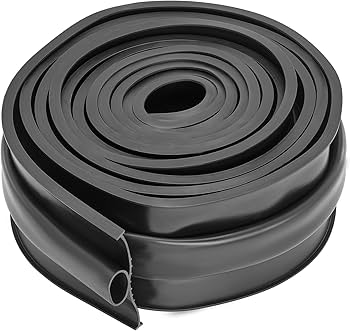
For industrial manufacturers seeking precision-engineered rubber components, Suzhou Baoshida Trading Co., Ltd. stands as a trusted partner in the development and supply of high-performance sealing solutions. Specializing in industrial rubber products, we deliver tailored formulations and exacting manufacturing standards to meet the rigorous demands of automotive, construction, rail, and heavy equipment sectors. Our expertise in V strip weather stripping—also known as V-profile seals—positions us as a strategic supplier for clients requiring durable, compression-resistant, and environmentally resilient sealing profiles.
V strip weather stripping is a critical component in applications where dynamic sealing, dust exclusion, moisture resistance, and noise reduction are paramount. At Suzhou Baoshida, our engineering team leverages advanced rubber compounding techniques to produce V strips with optimal durometer, elongation, and compression set resistance. Whether operating in extreme temperature ranges, high-vibration environments, or corrosive conditions, our V profile seals maintain structural integrity and sealing efficiency over extended service life.
We offer customization across multiple dimensions, materials, and performance parameters. Our standard V strip profiles are available in EPDM, NBR, silicone, and CR (neoprene), each selected for specific chemical resistance, UV stability, and thermal performance. Extrusion lengths can be supplied in continuous coils or cut-to-length segments, with surface finishes ranging from smooth to textured for enhanced friction control. All profiles are manufactured under ISO 9001-certified processes, ensuring consistency, traceability, and compliance with international quality benchmarks.
The following table outlines key specifications for our standard V strip weather stripping series:
| Parameter | Value/Range |
|---|---|
| Material Options | EPDM, NBR, Silicone, CR |
| Hardness (Shore A) | 50–80 ±5 |
| Temperature Range | -40°C to +150°C (varies by material) |
| Standard Cross-Section | V-profile (customizable apex angle) |
| Standard Leg Length | 5 mm to 25 mm |
| Tolerance (Dimensional) | ±0.2 mm (per ISO 3302) |
| Compression Deflection | 15–35 N/cm (adjustable) |
| Color Options | Black, Gray, Red, Custom (Pantone) |
| Production Method | Continuous extrusion, vulcanized |
| Packaging | Coils or cut lengths, moisture-proof |
Partnering with Suzhou Baoshida means gaining access to technical expertise, responsive manufacturing, and global logistics support. Our in-house R&D facility allows rapid prototyping and material testing, ensuring that each V strip solution is optimized for your application. From initial concept to volume production, we work closely with OEMs to align performance with operational requirements.
To discuss your V strip weather stripping needs or request a sample, contact Mr. Boyce directly at [email protected]. We respond to all technical inquiries within 24 hours and provide detailed material data sheets, CAD drawings, and application support upon request. Suzhou Baoshida is committed to engineering excellence and long-term collaboration—let us help you achieve superior sealing performance.
⚖️ O-Ring Weight Calculator
Estimate rubber O-ring weight (Approx).