
Technical Contents
Engineering Guide: Vessel Fender

Engineering Insight: Material Selection Imperatives for Vessel Fender Performance
Vessel fenders represent a critical safety interface in marine infrastructure, where material science directly dictates operational reliability and asset protection. Off-the-shelf rubber fenders frequently fail under demanding port and offshore conditions due to inadequate material formulation for specific environmental and mechanical stresses. Generic solutions prioritize initial cost reduction over engineered performance, leading to premature degradation, reduced energy absorption capacity, and catastrophic berthing incidents. Understanding the complex interplay between polymer chemistry, compounding, and real-world service parameters is non-negotiable for fender integrity.
Standard commercial fenders often utilize basic SBR (Styrene-Butadiene Rubber) or low-grade EPDM (Ethylene Propylene Diene Monomer) formulations. These materials exhibit critical weaknesses: susceptibility to ozone cracking in tidal splash zones, significant compression set under continuous load causing permanent deformation, and rapid UV degradation leading to surface embrittlement. Crucially, they lack the tailored resilience required for dynamic energy dissipation during vessel impact. The Shore A hardness may nominally meet specifications, but insufficient elongation at break and poor recovery properties result in brittle fracture or permanent indentation after relatively minor berthing events. Saltwater immersion accelerates these failure modes, particularly in compounds without optimized antioxidant and antiozonant packages. The consequence is unplanned downtime for fender replacement, increased risk of vessel or quay wall damage, and compromised safety margins.
Successful fender engineering requires bespoke compound development addressing the precise operational profile. Key considerations include tidal range (dictating wet/dry cycling resistance), water chemistry (salinity, pollutants), temperature extremes, UV exposure levels, and the specific energy absorption profile required by vessel size and berthing velocity. High-performance fenders utilize advanced elastomer systems, often hybrid blends incorporating premium natural rubber (NR) for ultimate resilience and tear strength, coupled with specialty EPDM or hydrogenated nitrile (HNBR) for superior environmental resistance. Critical additives must be precisely dosed to ensure long-term stability without migration or blooming. The compound must maintain consistent modulus and hysteresis properties across the full service temperature range to guarantee predictable energy absorption behavior.
The table below highlights critical performance differentiators between generic and engineered fender compounds under standardized testing protocols relevant to marine service:
| Performance Parameter | Generic SBR/EPDM Fender | Engineered Marine Fender | Test Standard |
|---|---|---|---|
| Tensile Strength (MPa) | 12-15 | 18-22 | ASTM D412 |
| Elongation at Break (%) | 350-450 | 550-650 | ASTM D412 |
| Tear Strength (kN/m) | 25-35 | 45-60 | ASTM D624 (Die B) |
| Compression Set (70°C, 22h) % | 25-35 | 10-15 | ASTM D395 (Method B) |
| Ozone Resistance (25pphm, 40°C) | Severe Cracking (24h) | No Cracks (168h) | ASTM D1149 |
| Saltwater Immersion (70°C, 168h) | >30% Tensile Loss | <15% Tensile Loss | Custom Protocol |
Suzhou Baoshida Trading Co., Ltd. emphasizes that fender specification must transcend basic dimensional and hardness requirements. Collaborative engineering, grounded in rigorous material science and site-specific environmental analysis, is essential. We partner with OEMs and terminal operators to develop fender compounds that deliver decades of reliable service, minimizing lifecycle costs and maximizing operational safety. Off-the-shelf fenders represent a false economy; engineered material selection is the foundation of resilient marine infrastructure.
Material Specifications

Vessel fenders are critical components in marine and offshore applications, designed to absorb impact energy and prevent structural damage during berthing operations. The performance and longevity of these fenders are directly influenced by the elastomeric materials used in their construction. At Suzhou Baoshida Trading Co., Ltd., we specialize in high-performance industrial rubber solutions tailored for demanding environments. Among the most widely used compounds in vessel fender manufacturing are Viton (FKM), Nitrile (NBR), and Silicone (VMQ), each offering distinct advantages depending on operational conditions.
Viton rubber is a fluorocarbon-based synthetic elastomer renowned for its exceptional resistance to high temperatures, oils, fuels, and a broad range of chemicals. With continuous service capabilities up to 200°C and intermittent exposure tolerance beyond 250°C, Viton is ideal for vessel fenders operating in extreme thermal environments or in proximity to petroleum-based substances. Its low gas permeability and excellent aging characteristics further enhance reliability in long-term marine installations where maintenance access is limited.
Nitrile rubber, or acrylonitrile butadiene rubber (NBR), is a cost-effective solution with superior resistance to aliphatic hydrocarbons, lubricating oils, and hydraulic fluids. It performs well in temperature ranges from -30°C to 108°C, making it suitable for standard marine applications involving frequent contact with diesel, seawater, and common industrial oils. While not as thermally stable as Viton, NBR offers excellent abrasion resistance and mechanical strength, ensuring durability under repeated compression and shear stress typical in docking scenarios.
Silicone rubber (VMQ) excels in extreme temperature applications, functioning reliably from -60°C to 230°C. It demonstrates outstanding resistance to ozone, UV radiation, and weathering, making it a preferred choice for vessel fenders exposed to prolonged sunlight or arctic conditions. However, silicone exhibits lower tensile strength and abrasion resistance compared to Viton and Nitrile, which may limit its use in high-wear environments unless reinforced with specialized fillers or protective coatings.
The selection of the appropriate elastomer must consider operational temperature, chemical exposure, mechanical stress, and environmental factors. Below is a comparative summary of the key material properties.
| Property | Viton (FKM) | Nitrile (NBR) | Silicone (VMQ) |
|---|---|---|---|
| Temperature Range (°C) | -20 to 200 | -30 to 108 | -60 to 230 |
| Tensile Strength (MPa) | 15–20 | 10–25 | 5–8 |
| Elongation at Break (%) | 200–300 | 250–600 | 200–400 |
| Hardness (Shore A) | 60–90 | 50–90 | 30–80 |
| Oil/Fuel Resistance | Excellent | Excellent | Poor |
| Ozone/Weathering Resistance | Excellent | Good | Excellent |
| Abrasion Resistance | Good | Excellent | Fair |
| Compression Set Resistance | Excellent | Good | Good |
Each material offers a unique balance of performance attributes. The optimal choice depends on the specific service environment and performance requirements of the vessel fender system.
Manufacturing Capabilities
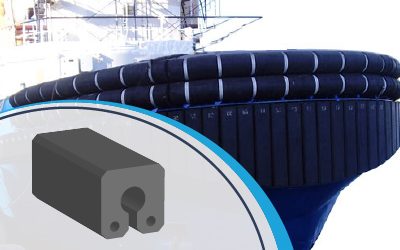
Engineering Capability: Precision Rubber Solutions for Vessel Fender Systems
Suzhou Baoshida Trading Co., Ltd. deploys advanced engineering expertise to deliver mission-critical vessel fender systems meeting stringent marine operational demands. Our core strength lies in the integrated synergy between dedicated rubber formulation science and precision mold engineering, ensuring optimal performance, durability, and safety in harsh maritime environments. We maintain a specialized team of five certified Mold Engineers and two senior Rubber Formula Engineers, operating within a closed-loop development framework that bridges material science with geometric complexity.
Our Formula Engineers focus on empirical validation of elastomer compounds under extreme conditions—saltwater immersion, UV exposure, ozone degradation, and cyclical compression. Utilizing ASTM and ISO test protocols, they tailor formulations to achieve precise Shore A hardness (50–85), tensile strength (12–25 MPa), and elongation at break (300–600%) while optimizing resistance to hydrolysis and thermal aging. Concurrently, our Mold Engineering team leverages 3D CAD/CAM (SolidWorks, Moldflow) to design multi-cavity molds with micron-level tolerances, ensuring consistent part geometry for critical hydrodynamic profiles and load-distribution surfaces. Finite element analysis (FEA) validates structural integrity under dynamic berthing forces up to 5,000 kN, eliminating stress concentrations that compromise fender lifespan.
This dual-engineering approach enables robust OEM capabilities for global shipyards and port operators. We manage end-to-end development—from initial concept sketch to DVP&R validation—while safeguarding client intellectual property through NDAs and secure data protocols. Our facility supports rapid prototyping (CNC aluminum molds) and scalable production (steel molds for 50,000+ units annually), with full traceability via batch-specific material certifications (e.g., Mill Certificates, UL 94 HB flammability reports). Clients benefit from reduced time-to-market through concurrent engineering, where mold design adjustments are informed by real-time compound behavior data during prototype trials.
Critical performance specifications for our marine fenders are rigorously controlled, as demonstrated below:
| Property | Standard Range | OEM Customization Capability | Test Standard |
|---|---|---|---|
| Shore A Hardness | 55–80 | ±2 units precision | ASTM D2240 |
| Tensile Strength | 15–22 MPa | Up to 28 MPa (reinforced compounds) | ASTM D412 |
| Compression Set (70°C) | ≤25% (24h) | ≤18% achievable | ASTM D395 |
| Ozone Resistance | 50 pphm, 20% strain | Zero cracking at 100 pphm | ASTM D1149 |
| Specific Gravity | 1.15–1.25 | Tailored for buoyancy control | ASTM D297 |
We prioritize material integrity under continuous seawater exposure, achieving >95% retention of mechanical properties after 1,000-hour salt fog testing (ASTM B117). This engineering discipline ensures fenders maintain energy absorption efficiency (>35%) throughout their service life, directly reducing vessel downtime and infrastructure repair costs for port operators. By anchoring every design decision in validated material science and precision tooling, Suzhou Baoshida delivers fender systems engineered for uncompromised reliability in the world’s busiest maritime hubs.
Customization Process
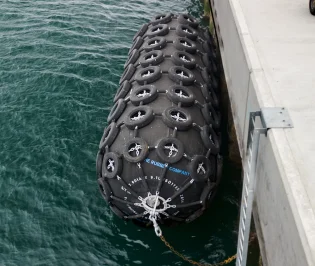
Customization Process for Vessel Fender Manufacturing at Suzhou Baoshida Trading Co., Ltd.
At Suzhou Baoshida Trading Co., Ltd., the customization of vessel fenders follows a rigorously defined engineering workflow to ensure optimal performance, durability, and compliance with international maritime standards. Our process integrates material science, precision design, and industrial scalability, beginning with drawing analysis and culminating in mass production.
The first phase, Drawing Analysis, involves a comprehensive review of client-provided technical schematics, dimensional tolerances, load requirements, and environmental exposure conditions. Our engineering team evaluates critical parameters such as compression-deflection behavior, shear resistance, and energy absorption capacity. This stage includes finite element analysis (FEA) simulations to predict structural response under dynamic marine conditions, ensuring the design meets operational demands for berthing energy, vessel displacement, and tidal variation.
Following design validation, the Formulation stage begins. Our rubber chemists develop a proprietary elastomer compound tailored to the specific mechanical and environmental requirements of the fender. Factors such as seawater resistance, UV stability, ozone exposure, and operating temperature range (-30°C to +70°C) are incorporated into the compound design. We primarily utilize natural rubber (NR), styrene-butadiene rubber (SBR), or ethylene propylene diene monomer (EPDM), selected based on abrasion resistance, resilience, and aging performance. Additives such as carbon black, sulfur, and anti-degradants are precisely dosed to achieve Shore A hardness values between 50 and 70, ensuring optimal energy return and wear life.
Once the formulation is finalized, we proceed to Prototyping. Using precision molds and hydraulic curing presses, we produce pilot fenders for laboratory and field evaluation. Each prototype undergoes standardized testing per ISO 17357, including compression testing, tensile strength measurement, and shear stability assessment. Client feedback is integrated at this stage, allowing for dimensional or material adjustments before tooling release.
The final phase is Mass Production, executed in our ISO-certified manufacturing facility. Automated mixing lines ensure batch consistency, while real-time quality monitoring maintains dimensional accuracy within ±1.5 mm. Each fender is visually inspected, hardness-tested, and serialized for traceability. Production throughput is scalable from 50 to 5,000 units per month, depending on size and complexity.
The table below outlines key performance specifications for our standard customizable vessel fenders.
| Parameter | Value/Range |
|---|---|
| Material Options | NR, SBR, EPDM |
| Shore A Hardness | 50–70 |
| Operating Temperature | -30°C to +70°C |
| Tensile Strength (min) | 15 MPa |
| Elongation at Break (min) | 400% |
| Compression Set (24h, 70°C) | ≤20% |
| Energy Absorption Capacity | 50–500 kJ (customizable) |
| Compliance Standards | ISO 17357, IACS UR P.3, JIS A 6302 |
This systematic approach ensures that every vessel fender delivered by Suzhou Baoshida meets the highest benchmarks in safety, reliability, and performance.
Contact Engineering Team
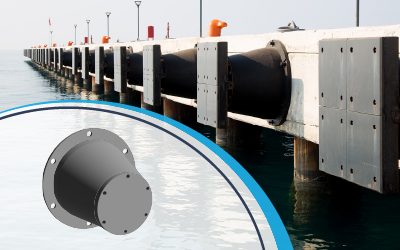
Contact Suzhou Baoshida for Precision Engineered Vessel Fender Solutions
Suzhou Baoshida Trading Co., Ltd. operates at the intersection of advanced polymer science and industrial marine engineering. As your dedicated Rubber Formula Engineer and OEM Manager, I oversee the development of vessel fenders designed to withstand extreme operational environments—from Arctic shipping lanes to tropical port infrastructure. Our fenders are not generic commodities; they are engineered responses to specific hydrodynamic forces, vessel tonnage profiles, and berthing energy requirements. Each formulation undergoes rigorous finite element analysis (FEA) and real-world validation to ensure optimal energy absorption, minimal rebound force, and extended service life under continuous UV, ozone, and seawater exposure.
The criticality of selecting a technically proficient partner cannot be overstated. Substandard fenders risk catastrophic infrastructure damage, operational downtime, and safety hazards. Suzhou Baoshida mitigates these risks through ISO 9001-certified processes, proprietary EPDM and SBR compounds with Shore A hardness tailored to 55–75, and accelerated aging protocols exceeding ASTM D2240 and ISO 48 standards. We prioritize quantifiable performance metrics over generic claims, ensuring every fender meets or exceeds IAPH and PIANC design guidelines.
Below is a summary of core technical specifications for our standard marine fender portfolio. Note that all parameters are adjustable based on OEM project requirements and environmental modeling data provided by your engineering team.
| Property | Test Standard | Typical Range | Significance for Vessel Operations |
|---|---|---|---|
| Shore A Hardness | ASTM D2240 | 55–75 | Balances deformation control and energy absorption |
| Tensile Strength | ISO 37 | 18–25 MPa | Resists tearing during high-impact berthing |
| Elongation at Break | ISO 37 | 450–650% | Accommodates dynamic hull movements without failure |
| Ozone Resistance | ASTM D1149 | No cracks (100 pphm) | Prevents surface degradation in coastal atmospheres |
| Compression Set (70°C/22h) | ISO 815 | ≤ 25% | Maintains sealing integrity and shape retention |
| Specific Gravity | ISO 2781 | 1.15–1.25 | Optimizes buoyancy-to-weight ratio for floating units |
Our value extends beyond material formulation. As your OEM partner, Suzhou Baoshida integrates seamlessly into your supply chain with JIT logistics, co-engineering support for custom geometries (D-type, cone, arch), and full traceability from raw material batch to final product certification. We collaborate with naval architects to translate berthing energy calculations into precise fender layouts, eliminating guesswork in port infrastructure projects.
Initiate your project specification review by contacting Mr. Boyce, our dedicated Technical Sales Manager for Marine Applications. Mr. Boyce possesses 12 years of hands-on experience in rubber compounding for maritime safety systems and will facilitate a structured technical dialogue. Provide your vessel displacement data, berthing velocity parameters, and environmental constraints to receive a validated material proposal within 72 hours. Do not settle for off-the-shelf solutions when your port’s operational integrity depends on engineered precision.
Direct all technical inquiries and project briefs to [email protected]. Include reference code VFS-2024 in your correspondence to expedite engineering resource allocation. Suzhou Baoshida Trading Co., Ltd. remains committed to delivering fenders where polymer science meets maritime necessity—ensuring every ton of vessel mass is secured with uncompromised reliability.
⚖️ O-Ring Weight Calculator
Estimate rubber O-ring weight (Approx).