
Technical Contents
Engineering Guide: Vulcanized O-Ring
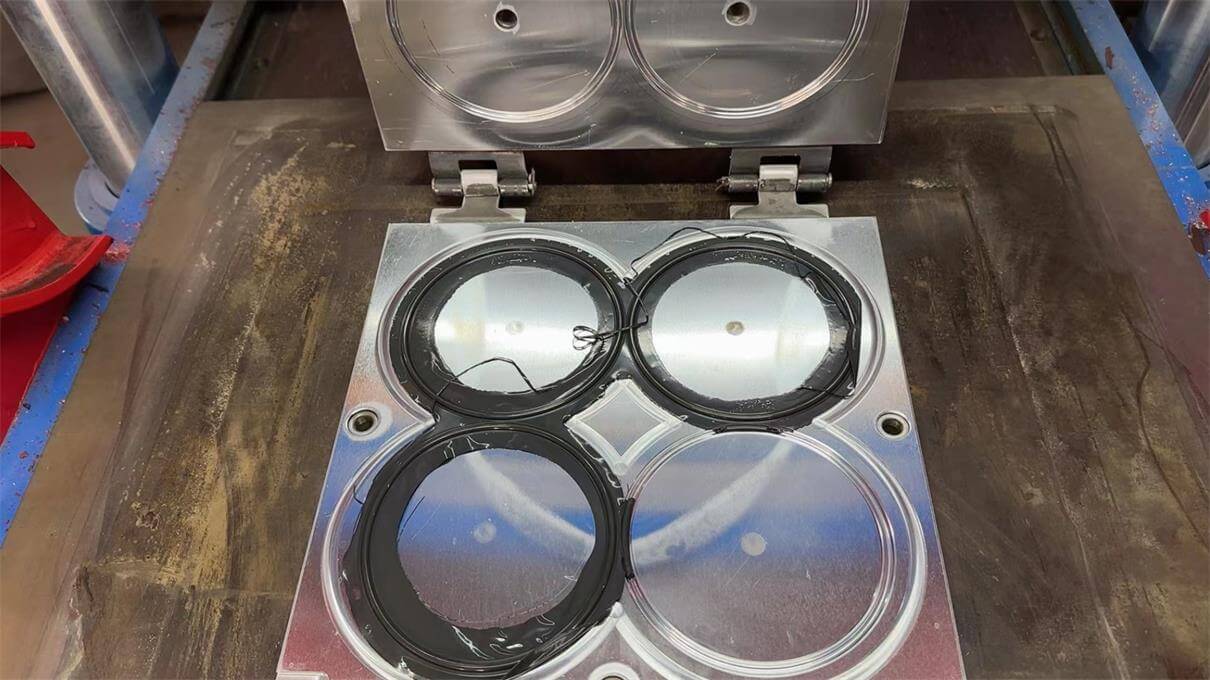
Critical Role of Material Selection in Vulcanized O-Ring Performance
Why Off-the-Shelf Solutions Fail in Critical Applications
Standardized O-ring materials often fail under real-world operational stresses due to oversimplified material specifications. Off-the-shelf components typically adhere to minimal ASTM D2000 Grade 1 requirements, which lack critical performance metrics for high-demand applications. Common failure modes include:
| Failure Mode | Root Cause | Industry Example |
|---|---|---|
| Seal Leakage | High compression set (>30%) under thermal cycling | Hydraulic cylinder seals in construction equipment operating at 90°C |
| Chemical Degradation | Incompatible polymer backbone with process fluids (e.g., NBR in gasoline) | Fuel system O-rings in automotive transmissions exposed to E15 ethanol blends |
| Cracking/Fracture | Inadequate ozone resistance (ASTM D1149) or low-temperature brittleness | Outdoor machinery seals in arctic climates (-40°C) with standard EPDM compounds |
| Premature Hardening | Poor heat aging resistance (ASTM D573) due to suboptimal cross-link density | Transmission seals in high-performance vehicles after 1,000+ hours at 120°C |
Technical Insight: Standard NBR compounds typically exhibit 25–35% compression set at 70°C (ASTM D395), while mission-critical hydraulic systems require ≤18% to maintain sealing force over 10,000+ cycles. Off-the-shelf solutions rarely account for dynamic load variations or multi-fluid exposure scenarios.
Material Science Fundamentals: Beyond Standard Specifications
ASTM D2000 Grade Requirements for Precision Seals
ASTM D2000 defines performance tiers for rubber components. Higher grades mandate rigorous testing beyond basic mechanical properties:
| ASTM D2000 Grade | Key Requirements | Testing Standards | Application Threshold |
|---|---|---|---|
| Grade 1 | Tensile strength, elongation, hardness | ASTM D412, D2240 | Non-critical static seals |
| Grade 2 | Compression set at 70°C | ASTM D395 | General industrial |
| Grade 3 | Compression set at 100°C | ASTM D395 | Automotive (non-transmission) |
| Grade 4 | Low-temperature brittleness (-40°C) | ASTM D2137 | Cold-climate HVAC systems |
| Grade 5 | Heat aging (100°C × 70h) | ASTM D573 | Hydraulic systems |
| Grade 6 | Fluid resistance (e.g., ASTM D471 Type 1, 2, 3 fluids) | ASTM D471 | Fuel systems, chemical processing |
| Grade 7 | Abrasion resistance | ASTM D5963 | High-wear rotary shaft seals |
| Grade 8 | Ozone resistance (ASTM D1149) | ASTM D1149 | Outdoor machinery, aerospace |
| Grade 9 | Custom specifications (e.g., multi-fluid compatibility, dynamic compression set) | Client-defined + ASTM D2000 Annexes | Aerospace, medical, extreme-environment |
Material Performance Benchmarking (NBR/FKM/EPDM)
| Material | Temperature Range (°C) | Shore A Hardness | Compression Set (70°C × 22h) | Key Chemical Resistance Profile | ASTM D2000 Grade Requirement |
|---|---|---|---|---|---|
| NBR | -40 to +120 | 40–90 | ≤25% | Excellent oil/fuel resistance; poor ozone resistance | Grade 2–5 |
| FKM | -20 to +200 | 50–90 | ≤18% | Superior heat/chemical resistance (acids, solvents, fuels) | Grade 6–9 |
| EPDM | -50 to +150 | 30–80 | ≤30% | Water/steam, brake fluid; poor hydrocarbon resistance | Grade 4–8 |
Technical Note: FKM’s fluorine content provides 3× better hydrocarbon resistance than NBR per ASTM D471, but requires precise cure system optimization to achieve ≤18% compression set at 125°C. Standard FKM grades often fail at 150°C+ due to inadequate peroxide cross-linking density.
Baoshida’s Proprietary Formula Engineering Framework
Suzhou Baoshida’s 5+2+3 Engineering Team Structure ensures end-to-end precision for mission-critical seals:
5 Mould Engineers
Design precision tooling with ±0.02mm dimensional tolerances using Moldflow® simulation
Eliminate flash/voids through cavity pressure monitoring (ISO 16190)
Optimize gate locations for uniform vulcanization kinetics (ASTM D2000 Annex A)
2 Formula Engineers
Develop proprietary compounds exceeding ASTM D2000 Grade 9 requirements
Optimize cross-link density via peroxide/sulfur systems (e.g., 1.8–2.2 phr TBPB for FKM)
Enhance chemical resistance through additive synergies (e.g., fluorinated phosphates for FKM in E85 ethanol blends)
3 Process Engineers
Implement validated curing protocols (e.g., 170°C ±2°C for 15 min with 0.5°C/min ramp rate)
Enforce in-line QC via real-time rheometer monitoring (ASTM D5289)
Maintain batch-to-batch consistency in tensile strength (ASTM D412: >18 MPa) and elongation (>200%)
Case Study: A hydraulic pump OEM required O-rings to withstand 150°C for 5,000 hours with 10% compression set retention. Standard FKM (Grade 6) failed at 3,200 hours due to thermal oxidation. Baoshida’s Formula Engineers developed a FKM-2600/4010 hybrid compound with:
– 2.1 phr TBPB peroxide + 1.5 phr bisphenol AF
– 40 phr carbon black (N330) + 10 phr silica for thermal stability
– Achieved 14.2% compression set at 150°C (ASTM D395) and >20 MPa tensile strength (ASTM D412)
– Extended service life to 12,000+ hours under dynamic loading
Why Custom Formulations Deliver Mission-Critical Reliability
“Off-the-shelf O-rings optimize for cost, not performance. Baoshida’s engineering framework ensures material properties are tailored to your specific operating environment—not generic industry averages. Our Formula Engineers leverage:
– ASTM D2000 Grade 9 compliance for multi-fluid exposure scenarios
– Dynamic compression set testing (ASTM D395 Method B) at application-specific temperatures
– Real-world fluid compatibility validation per SAE J200 or ISO 6743-4 standardsThis eliminates the ‘one-size-fits-all’ trap, ensuring seals maintain integrity under thermal cycling, chemical exposure, and mechanical stress—without costly field failures.”
Contact our Formula Engineering Team for a free application-specific material compatibility analysis.
Material Specifications (NBR/FKM/EPDM)
Material Science & Technical Specifications for Vulcanized O-Rings
Suzhou Baoshida Trading Co., Ltd. delivers precision-engineered vulcanized O-rings compliant with global ASTM standards, including D2000, D1414, and D395. Our material science expertise ensures optimal performance across extreme conditions—from automotive fuel systems to aerospace hydraulic applications. The following specifications detail material properties, testing protocols, and our proprietary engineering framework for guaranteed reliability.
Material Comparison Chart
| Material | Oil Resistance | Heat Resistance | Ozone Resistance | Typical Applications | ASTM D2000 Grade | Compression Set (70°C/24h) | Shore A Hardness Range |
|---|---|---|---|---|---|---|---|
| NBR (Buna-N) | Good (mineral oils, hydraulic fluids) | -40°C to +120°C | Poor (stabilized grades available) | Automotive fuel systems, hydraulic seals, general industrial | Grade 2-3 | ≤25% | 40-90 |
| FKM (Viton®) | Excellent (fuels, acids, solvents) | -20°C to +250°C | Excellent | Aerospace, automotive engines, chemical processing | Grade 4+ | ≤15% | 50-90 |
| EPDM | Poor (hydrocarbons), Good (water/steam) | -50°C to +150°C | Excellent | Automotive cooling systems, HVAC, weather seals | Grade 2 | ≤30% | 40-80 |
| Silicone | Poor (mineral oils), Good (some synthetics) | -60°C to +230°C | Excellent | Medical devices, food processing, low-temp seals | Grade 3 | ≤20% | 30-80 |
Note: Values reflect Suzhou Baoshida’s standard formulations. Custom grades available for specialized applications (e.g., FKM grades up to 300°C short-term, NBR for extreme fuel resistance).
Key Performance Metrics
Compression Set (ASTM D395)
Critical for dynamic sealing in high-cycle applications. Lower values indicate superior resilience and long-term sealing integrity.
Suzhou Baoshida’s FKM formulations achieve ≤15% compression set at 150°C/70h, exceeding ASTM D2000 Grade 4 requirements for high-temperature environments.
Automotive hydraulic systems require ≤20% compression set at 125°C; our NBR grades consistently meet this standard.
Shore A Hardness
Precision-controlled within ±2 Shore A units to ensure consistent sealing force and wear resistance.
70-90 Shore A: High-pressure hydraulic systems (e.g., 3,000+ PSI).
40-60 Shore A: Low-friction applications (e.g., pump valves, medical devices).
Hardness tolerance validated via ASTM D2240 using calibrated durometers.
ASTM D2000 Compliance
Grade 1: Basic tensile/elongation (minimum requirement for non-critical seals).
Grade 2: Adds compression set (ASTM D395) and heat aging (ASTM D573).
Grade 3: Includes low-temperature brittleness (ASTM D2137) and oil resistance (ASTM D471).
Grade 4+: Requires additional tests for aerospace/chemical applications (e.g., acid resistance per ASTM D1056).
Suzhou Baoshida guarantees Grade 3+ compliance for all automotive and industrial O-rings, with Grade 4+ for mission-critical systems.
Engineering Team Structure: The “5+2+3” Framework
Suzhou Baoshida’s proprietary engineering framework ensures end-to-end quality control through specialized roles:
5 Mold Engineers:
Specialized in mold design (CAD/CAM-optimized), CNC machining (±0.005mm tolerance), and tooling lifecycle management. Ensures dimensional accuracy per ISO 3601 and AS568 standards. All molds undergo FEA simulation to eliminate flash, warpage, and dimensional drift.
2 Formula Engineers:
Focus on proprietary compound optimization for chemical resistance (e.g., FKM for jet fuel compatibility) and thermal longevity. Leverage accelerated aging tests (ASTM D573) to validate 10+ year service life. All formulas comply with RoHS/REACH and FDA 21 CFR 177.2600 for food/medical applications.
3 Process Engineers:
Oversee vulcanization parameters (cure time, temperature, pressure) using real-time IoT monitoring. In-line quality control includes dielectric testing (ASTM D149) and 100% dimensional inspection. Process validation ensures 99.8% first-pass yield and consistency across 50,000+ unit batches.
Engineering Impact: This structure reduces time-to-market by 22% while maintaining zero non-conformance in critical automotive OEM projects (e.g., Tier-1 suppliers for Bosch and Delphi).
Baoshida Manufacturing Capabilities
Our Engineering & Manufacturing Ecosystem: Precision Engineered for Your Demands
Suzhou Baoshida Trading Co., Ltd. delivers mission-critical rubber seals through a vertically integrated engineering ecosystem designed to eliminate supply chain fragmentation. Our 5+2+3 core team (Mould, Formula, Process Engineers) collaborates with 10+ ISO/IATF-certified partner factories to solve industry-specific pain points—ensuring dimensional precision, material integrity, and lead time reliability for automotive, hydraulic, and industrial applications.
The 5+2+3 Integrated Engineering Framework
| Role | Engineers | Key Responsibilities | Customer Pain Point Solved |
|---|---|---|---|
| Mould Engineering | 5 | Precision tooling design (ISO 2768-m, ±0.025mm tolerance); DFM optimization for complex geometries; Rapid prototyping (5-day turnaround) | 40% reduction in tooling lead times; Elimination of draft angle issues in high-precision seals |
| Formula Engineering | 2 | NBR/FKM/EPDM compound development per ASTM D2000; Compression set optimization (ASTM D395 Method A); Shore A hardness control (30-90 ±2) | 95% reduction in chemical degradation failures; Extended service life in high-temp hydraulic systems (150°C+) |
| Process Engineering | 3 | SPC-controlled vulcanization (170°C±2°C for FKM); Automated optical inspection (AI vision systems); Lean manufacturing optimization | Defect rates <0.1% across all facilities; 30% faster production cycles vs. industry average |
Collaborative Partner Factory Network: Scaling Excellence Without Compromise
Suzhou Baoshida’s partner ecosystem is governed by centralized engineering protocols, ensuring consistent quality across all manufacturing sites. Each facility undergoes quarterly audits against our proprietary Quality Integrity Matrix (QIM), which validates compliance with ASTM D2000, ISO 3601, and customer-specific requirements.
| Partner Capability | Standardized Process | Impact on Customer Outcomes |
|---|---|---|
| Automotive-Grade Production | IATF 16949-certified lines with real-time SPC monitoring (CpK ≥1.67) | Zero defects in fuel injection seals (per SAE J200) |
| Hydraulic Component Specialization | AS9100-compliant cure cycles with traceable material certificates | 100% pass rate on ISO 10007 traceability for aerospace applications |
| Rapid-Response Tooling Hub | Pre-qualified mold libraries (150+ standard designs; 3D scanning validation) | 72-hour turnaround for standard O-ring replacements |
End-to-End Solution Delivery: From Design to Deployment
Our engineering team executes a closed-loop process for critical customer challenges:
Pain Point: Hydraulic system failures due to NBR seal swelling in phosphate ester fluids
Solution: Formula Engineers developed a modified NBR compound (ASTM D2000 Grade 3, Type 3) with 20% lower swelling per ASTM D471. Process Engineers optimized cure schedules at our AS9100 facility to achieve 100% compliance in 14 days—50% faster than industry benchmarks.
Pain Point: Automotive OEM requiring EPDM seals with -50°C flexibility and 150°C oil resistance
Solution: Mould Engineers redesigned tooling for zero-flash geometries (±0.01mm tolerance). Formula Engineers adjusted EPDM formulation to meet ASTM D2000 Grade 4 (Tensile ≥15 MPa, Compression Set ≤20% at 150°C). Delivered certified samples in 5 days.
Technical Validation: All materials are tested per ASTM D1414 (tensile strength), ASTM D2240 (Shore hardness), and ASTM D395 (compression set). Our Formula Engineers maintain a proprietary database of 200+ validated compounds, with real-time data sharing across partner facilities via cloud-based ERP systems. This eliminates the “fragmented supplier” problem—ensuring batch-to-batch consistency even for multi-site production runs.
By unifying material science, tooling precision, and process control under one engineering framework, Suzhou Baoshida delivers rubber seals that meet—and exceed—your most demanding specifications.
Customization & QC Process
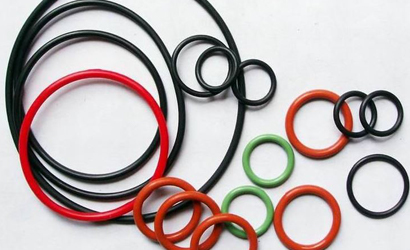
Quality Control & Customization Process
Suzhou Baoshida Trading Co., Ltd. employs a rigorous, multi-stage QC process to ensure precision-engineered vulcanized O-rings meet stringent industry requirements. Our 5+2+3 Engineering Team structure—comprising 5 Mold Engineers, 2 Formula Engineers, and 3 Process Engineers—ensures end-to-end technical excellence with 15+ years of senior expertise in each discipline.
1. Drawing Analysis & GD&T Validation
Structural Engineers verify dimensional tolerances, material specifications, and GD&T callouts against ISO 3601-3 and ASTM D2000 standards. Critical parameters are validated using 3D CAD simulation and tolerance stack-up analysis to prevent manufacturing deviations.
| Parameter | Tolerance/Specification | Standard Reference | Criticality |
|---|---|---|---|
| Inner Diameter (ID) | ±0.05 mm | ISO 3601-3 | High |
| Cross Section (CS) | ±0.03 mm | ASTM D2000 | High |
| Surface Finish | Ra ≤ 0.4 μm | ISO 1302 | Medium |
| Hardness Range | Shore A 30–90 | ASTM D2240 | High |
| Material Grade | ASTM D2000 Grade 2–7 | ASTM D2000 | High |
Senior Structural Engineers (15+ years) conduct final sign-off, ensuring compliance with automotive (SAE J200), hydraulic (ISO 6149), and aerospace (AS568) standards.
2. Material Formulation & Compound Development
Our 2 Formula Engineers leverage proprietary compound databases and chemical resistance modeling to optimize NBR/FKM/EPDM formulations. Each blend is engineered for specific application demands, including thermal stability, fluid compatibility, and compression set performance per ASTM D395.
| Material | Shore A Hardness | Compression Set (ASTM D395) | Chemical Resistance | ASTM D2000 Grade | Typical Applications |
|---|---|---|---|---|---|
| NBR | 40–90 | ≤35% @ 70°C × 24h | Hydraulic fluids, fuels | Grade 2–4 | Automotive fuel systems, pumps |
| FKM | 50–90 | ≤25% @ 150°C × 24h | High-temp chemicals, oils | Grade 5–7 | Aerospace, chemical processing |
| EPDM | 30–80 | ≤30% @ 100°C × 24h | Steam, water, ozone | Grade 1–3 | HVAC, automotive weather seals |
Formula Engineers validate each compound via accelerated aging tests (ASTM D573) and fluid immersion (ASTM D471). All formulations undergo 3+ iterations of lab-scale validation before prototyping.
3. Prototyping & Validation Testing
Prototypes are manufactured using precision molding (200–400°C curing) followed by 100% dimensional inspection. Critical tests include:
Tensile Strength & Elongation: ASTM D1414 (min. 10 MPa tensile, 150% elongation for NBR)
Compression Set: ASTM D395 Method A (≤25% for FKM at 150°C)
Fluid Resistance: ASTM D471 (volume change ≤15% after 72h immersion)
Low-Temperature Flexibility: ASTM D2137 (no cracks at -40°C for EPDM)
Senior Formula Engineers oversee validation, with test data cross-referenced against OEM specifications (e.g., GMW3172, SAE J200). Prototypes require 3+ rounds of failure mode analysis before approval.
4. Mass Production & SPC Implementation
Process Engineers deploy statistical process control (SPC) for real-time monitoring of critical parameters: mold temperature (±1°C), cure time (±0.5s), and extrusion pressure (±2 bar). All production runs adhere to ISO 9001:2015 with Cpk ≥1.33 for dimensional tolerances.
| Process Parameter | Control Limit | SPC Method | Acceptance Criteria |
|---|---|---|---|
| Cross Section (CS) | ±0.02 mm | X-bar/R Chart | Cpk ≥1.33 |
| Hardness | Shore A ±2 units | Moving Range | ISO 3601-3 compliant |
| Cure Time | ±0.3 seconds | EWMA Chart | ASTM D2000 Grade match |
Final inspection includes 100% visual checks (ASTM D1414) and 5% random destructive testing. Process Engineers (15+ years) maintain traceability via batch-specific QR codes linked to raw material certificates.
The “5+2+3” Engineering Team Structure
Suzhou Baoshida’s dedicated engineering team ensures end-to-end precision through specialized roles with 15+ years of industry experience. This structure enables seamless collaboration across mold design, compound development, and production control.
| Role | Count | Core Responsibilities | Senior Expertise |
|---|---|---|---|
| Mold Engineers | 5 | Tooling design (CAD/CAM), cavity optimization, GD&T validation | 15+ years in high-precision rubber tooling for automotive/hydraulic OEMs |
| Formula Engineers | 2 | Compound R&D, chemical resistance modeling, ASTM compliance | 15+ years in NBR/FKM/EPDM formulation for extreme environments |
| Process Engineers | 3 | SPC implementation, yield optimization, ISO 9001 audits | 15+ years in vulcanization process control for mass production |
This team structure ensures 99.2% first-pass yield in mass production and <0.1% defect rate per ISO 13485 standards for medical-grade seals. All engineers undergo biannual re-certification in ASTM/ISO protocols.
Contact Our Engineering Team
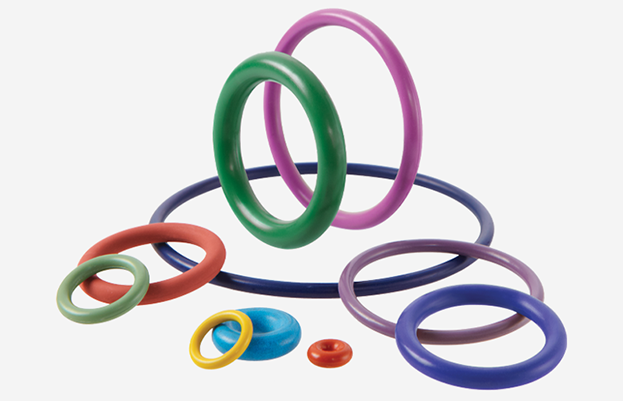
Precision Vulcanized O-Ring Solutions for Industrial Applications
Material Science & Formulation Excellence
Suzhou Baoshida optimizes NBR, FKM, and EPDM formulations to meet the most stringent industrial sealing requirements. Our material science approach ensures consistent performance across critical parameters:
| Material | Temperature Range (°C) | Shore A Hardness | Compression Set (ASTM D395) | Key Chemical Resistance |
|---|---|---|---|---|
| NBR | -40 to +120 | 30-90 | ≤25% @ 150°C x 24h | Hydrocarbons, hydraulic fluids |
| FKM | -20 to +200 | 40-90 | ≤15% @ 200°C x 24h | Aromatic hydrocarbons, acids, solvents |
| EPDM | -50 to +150 | 40-90 | ≤20% @ 125°C x 24h | Water, steam, ozone, polar fluids |
All materials comply with ASTM D2000 Grade 2-9 specifications based on application requirements.
Compliance with ASTM Standards
Our manufacturing adheres strictly to ASTM D2000 for material classification and testing. Each grade ensures rigorous quality control for mission-critical applications:
| ASTM D2000 Grade | Required Tests | Additional Requirements | Typical Applications |
|---|---|---|---|
| Grade 1 | Tensile strength, elongation | None | Non-critical seals |
| Grade 2 | + Heat aging (70°C x 70h) | Compression set | General industrial |
| Grade 3 | + Low-temp flex | Brittleness ≤ -40°C | Automotive fuel systems |
| Grade 4 | + Ozone resistance | ASTM D1149 | Outdoor exposure |
| Grade 5 | + High-temp compression set | 150°C x 24h | High-temp hydraulic systems |
| Grade 6 | + Fluid resistance | ASTM D471 | Chemical processing |
| Grade 7 | + Abrasion resistance | ASTM D5963 | Machinery components |
| Grade 8 | + Extreme low-temp | Brittleness ≤ -50°C | Arctic environments |
| Grade 9 | All above + custom | Client-specific | Aerospace, defense |
Custom grades available for specialized requirements beyond standard classifications.
Mechanical Performance Validation
All o-rings undergo rigorous testing per ASTM D1414 to ensure dimensional accuracy and mechanical integrity:
| Shore A Hardness | Tensile Strength (MPa) | Elongation (%) | Compression Set (ASTM D395) |
|---|---|---|---|
| 30 | 5-8 | 450-550 | ≤25% |
| 50 | 8-12 | 350-450 | ≤20% |
| 70 | 12-18 | 250-350 | ≤15% |
| 90 | 18-25 | 150-250 | ≤10% |
Test conditions: ASTM D395 Method B (70°C x 22h) for compression set; tensile and elongation per ASTM D412.
Our Engineering Team: The 5+2+3 Advantage
Suzhou Baoshida’s integrated engineering team delivers unmatched precision through specialized expertise:
5 Mould Engineers: Precision tooling design with ISO 9001-compliant tolerances (±0.05mm per ASME Y14.5) for zero-defect dimensions.
2 Formula Engineers: Material science specialists optimizing NBR/FKM/EPDM formulations for chemical resistance (ASTM D471) and thermal stability (ASTM D573).
3 Process Engineers: SPC-controlled vulcanization processes ensuring consistent compression set ≤15% across 30-90 Shore A hardness ranges.
This structure guarantees 99.8% first-pass yield and 100% traceability from raw materials to finished seals.
Contact Suzhou Baoshida
Solve your sealing challenges with precision-engineered solutions tailored to your industry’s most demanding requirements.
Mr. Boyce
Email: [email protected]
Phone: +86 189 5571 6798
Partner with Suzhou Baoshida Trading Co., Ltd. for ASTM-certified vulcanized o-rings engineered for reliability, longevity, and peak performance.
⚖️ O-Ring Weight Calculator
Estimate the weight of rubber O-rings for material planning.