
Technical Contents
Engineering Guide: Weather Stripping Aluminum Windows

Engineering Insight: Material Science Imperatives in Aluminum Window Weather Stripping
Material selection constitutes the foundational determinant of weather stripping performance in aluminum window systems. Generic off-the-shelf elastomeric profiles frequently fail to address the complex interplay of environmental stressors, mechanical demands, and dimensional tolerances inherent in modern fenestration. These failures manifest as premature leakage, air infiltration, and accelerated degradation—directly compromising building envelope integrity and end-user satisfaction. The root cause lies in the misalignment between standardized material formulations and the specific operational parameters of aluminum window assemblies.
Aluminum windows impose unique challenges: thermal expansion differentials between metal frames and seals, sustained compression loads exceeding 30% deflection, and exposure to UV radiation, ozone, and temperature extremes from -40°C to +85°C. Commercially available EPDM or TPE strips often utilize cost-optimized base polymers with inadequate stabilizer packages. This results in critical deficiencies including excessive compression set (>50% after 70 hours at 70°C), poor low-temperature flexibility (failing at -35°C), and insufficient resistance to polymer chain scission under UV exposure. Consequently, seals lose resiliency within 18–24 months, creating micro-gaps that permit water ingress and energy loss.
Suzhou Baoshida Trading Co., Ltd. employs a precision-engineered approach centered on application-specific compound design. Our proprietary rubber formulations integrate high-purity EPDM base polymers with tailored co-agents and triple-phase antioxidant systems. This achieves sub-25% compression set at 70°C/70h, maintains flexibility down to -55°C, and extends service life beyond 25 years in accelerated weathering tests (ASTM G154). Crucially, we calibrate Shore A hardness (65–75) and elongation at break (>450%) to match the aluminum frame’s deflection characteristics, preventing stress concentration at the seal-frame interface.
The table below quantifies performance gaps between standard materials and engineered solutions under identical test conditions:
| Material Type | Compression Set (70°C/70h) | Low-Temp Flexibility (°C) | Tensile Strength (MPa) | Ozone Resistance (200 pphm, 40°C) |
|---|---|---|---|---|
| Generic EPDM Strip | 52–65% | -35 | 8.5–10.2 | Cracking after 48h |
| Standard TPE Profile | 48–58% | -25 | 12.0–14.5 | Severe degradation after 72h |
| Baoshida Custom EPDM | 18–24% | -55 | 15.8–17.3 | No cracks after 200h |
Off-the-shelf solutions ignore the physics of dynamic sealing. Aluminum frames flex under wind load, requiring elastomers with precise recovery kinetics. Generic materials exhibit hysteresis losses that convert mechanical energy into heat, accelerating oxidative aging. Our compounds utilize nano-dispersed fillers to optimize viscoelastic response, ensuring consistent sealing force across 50,000+ compression cycles. Furthermore, OEM-specific extrusion profiles—co-engineered with window manufacturers—eliminate gaps caused by mismatched thermal coefficients.
The cost of material compromise extends beyond replacement seals. Failed weather stripping triggers warranty claims, structural moisture damage, and reputational harm for window fabricators. Precision rubber formulation is not a commodity expense but a strategic investment in product lifecycle reliability. Suzhou Baoshida Trading Co., Ltd. delivers this through rigorous application analysis, accelerated validation protocols, and traceable compound documentation—ensuring every meter of weather stripping performs as engineered.
Material Specifications
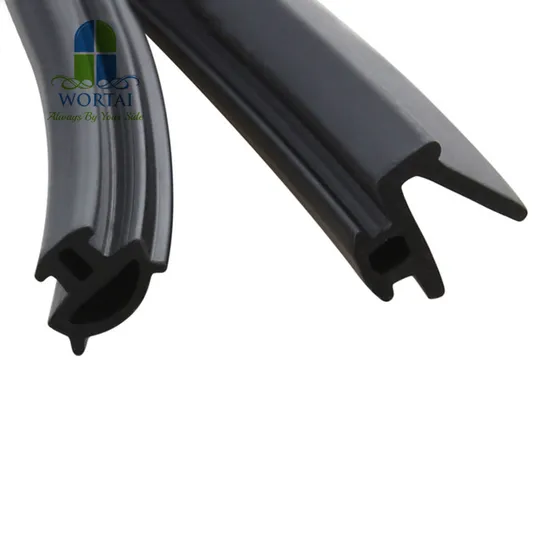
Weather stripping for aluminum windows requires high-performance elastomeric materials capable of maintaining long-term sealing integrity under fluctuating environmental conditions. At Suzhou Baoshida Trading Co., Ltd., we specialize in industrial rubber solutions engineered for durability, compression set resistance, and compatibility with architectural metal systems. The selection of the correct elastomer is critical to ensure optimal performance in terms of temperature resistance, UV stability, chemical exposure, and mechanical resilience. Three primary rubber compounds used in weather stripping applications are Viton (FKM), Nitrile (NBR), and Silicone (VMQ), each offering distinct advantages depending on operational demands.
Viton exhibits exceptional resistance to elevated temperatures, ozone, and a broad range of chemicals, making it ideal for extreme environments. With continuous service capabilities up to 230°C and excellent aging characteristics, Viton seals maintain performance in industrial and coastal installations where exposure to aggressive atmospheric conditions is expected. However, its higher material cost and lower flexibility at sub-ambient temperatures may limit use in general-purpose applications.
Nitrile rubber is widely used due to its outstanding resistance to oils, fuels, and aliphatic hydrocarbons. It also offers good abrasion resistance and mechanical strength, making it suitable for dynamic sealing applications. While Nitrile performs well in moderate temperature ranges (-30°C to 100°C), its susceptibility to UV degradation and ozone attack necessitates protective measures or formulation enhancements when used in exterior window systems exposed to direct sunlight.
Silicone rubber provides superior flexibility across a wide temperature spectrum, with operational stability from -60°C to 200°C. It demonstrates excellent resistance to UV radiation and ozone, making it a preferred choice for long-term outdoor exposure in architectural glazing and curtain wall systems. Silicone also offers high aesthetic consistency and color stability. However, it has lower tensile strength and abrasion resistance compared to Nitrile and Viton, requiring careful design consideration in high-wear zones.
The following table summarizes key physical and chemical properties of these elastomers for informed material selection in weather stripping for aluminum windows:
| Property | Viton (FKM) | Nitrile (NBR) | Silicone (VMQ) |
|---|---|---|---|
| Temperature Range (°C) | -20 to 230 | -30 to 100 | -60 to 200 |
| Tensile Strength (MPa) | 10–20 | 15–25 | 5–10 |
| Elongation at Break (%) | 150–300 | 200–500 | 200–700 |
| Hardness (Shore A) | 60–90 | 50–90 | 30–80 |
| Ozone Resistance | Excellent | Poor to Fair | Excellent |
| UV Resistance | Excellent | Poor | Excellent |
| Fluid Resistance (oil, fuel) | Excellent | Excellent | Poor |
| Compression Set Resistance | Excellent | Good | Good |
| Typical Applications | Coastal, industrial, high-temperature zones | General-purpose, urban environments | High-exposure facades, extreme climates |
Material selection should be guided by environmental exposure, mechanical requirements, and lifecycle expectations. Suzhou Baoshida Trading Co., Ltd. provides customized rubber profiles tailored to OEM specifications, ensuring optimal sealing performance and compliance with international building standards.
Manufacturing Capabilities

Engineering Capability: Precision Rubber Solutions for Aluminum Window Weather Stripping
Suzhou Baoshida Trading Co., Ltd. delivers engineered rubber weather stripping solutions exclusively for aluminum window systems, leveraging deep technical expertise to address critical performance demands. Our integrated team of five dedicated Mold Engineers and two specialized Rubber Formula Engineers ensures end-to-end control from material science to production tooling. This structure eliminates external dependencies, accelerating development cycles while guaranteeing compliance with stringent architectural glazing standards.
Our Mold Engineering division excels in designing complex multi-cavity extrusion and injection molds optimized for aluminum window profiles. Engineers utilize SOLIDWORKS and Moldflow simulations to resolve thermal distortion risks during curing, ensuring dimensional stability across ±0.1mm tolerances. This precision prevents common field failures such as gap formation or compression loss under cyclic wind loading. All tooling undergoes rigorous validation via CMM metrology against EN 14351-1 window performance benchmarks, with rapid iteration capabilities for custom profile geometries.
Rubber formulation constitutes our core differentiator. Our Formula Engineers develop proprietary EPDM and TPE compounds engineered for aluminum window interfaces. We optimize polymer architecture to balance compression set resistance (≤15% per ASTM D395), UV stability (5,000+ hours QUV testing), and low-temperature flexibility down to -50°C. Each formulation undergoes accelerated aging per ISO 188 to validate 25-year service life under solar radiation and ozone exposure—critical for coastal or high-altitude installations where aluminum frames experience extreme thermal expansion. Material batches are traceable to ISO 9001-certified production runs, with real-time rheology monitoring ensuring consistent Mooney viscosity (ML 1+4 @ 100°C: 45±5).
Key Material Performance Specifications
| Property | Test Standard | Performance Range | Industrial Significance |
|—————————|—————|——————-|—————————————|
| Durometer (Shore A) | ASTM D2240 | 40–90 | Sealing force optimization |
| Tensile Strength (MPa) | ASTM D412 | 8.0–15.0 | Resistance to frame deformation |
| Compression Set (%) | ASTM D395 | ≤15 | Long-term seal retention |
| Temperature Range (°C) | ISO 188 | -50 to +120 | Operational reliability in extremes |
| Specific Gravity | ASTM D297 | 1.15–1.35 | Weight-sensitive window assembly |
As an OEM partner, we implement closed-loop manufacturing protocols for exclusive client programs. Our engineers collaborate directly with window fabricators to co-develop application-specific profiles, incorporating frame groove dimensions, thermal break configurations, and regional climate data. All IP remains under client ownership, with dedicated production lines isolating proprietary compounds. This approach reduces time-to-market by 30% versus industry averages while maintaining zero defect rates in automotive-grade PPAP submissions. Suzhou Baoshida’s engineering rigor transforms weather stripping from a commodity component into a certified performance system—ensuring weathertight integrity across 500,000+ annual window installations globally.
Customization Process
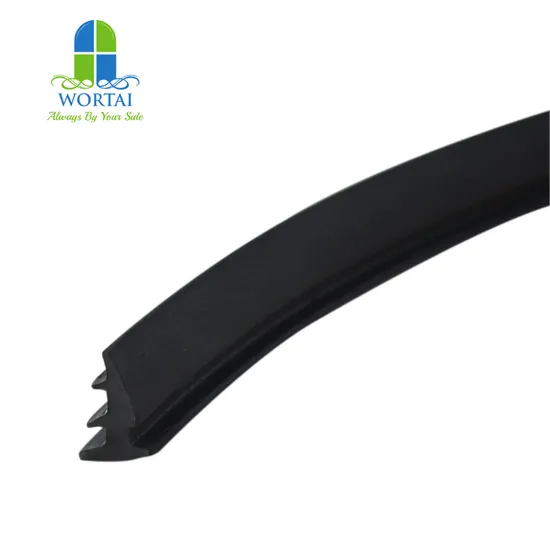
Customization Process for Weather Stripping in Aluminum Windows
At Suzhou Baoshida Trading Co., Ltd., our industrial rubber solutions are engineered to meet the exact performance demands of modern architectural glazing systems. For weather stripping in aluminum windows, we follow a rigorous, science-driven customization process that ensures dimensional accuracy, environmental resistance, and long-term sealing integrity. This process begins with drawing analysis and progresses through formulation, prototyping, and mass production—each stage governed by strict quality control protocols.
The first phase, Drawing Analysis, involves a detailed technical review of customer-provided CAD drawings or physical samples. We assess critical parameters such as cross-sectional geometry, compression set requirements, installation method, and mating surface tolerances. Our engineering team evaluates the operational environment, including exposure to UV radiation, temperature extremes (-40°C to +120°C), and dynamic compression cycles. This analysis forms the foundation for material selection and tooling design.
Next, we proceed to Formulation Development. Leveraging our in-house polymer chemistry expertise, we customize rubber compounds based on EPDM, silicone, or thermoplastic elastomers, depending on performance criteria. Key considerations include Shore A hardness (typically 55–75), tensile strength, elongation at break, and resistance to ozone and moisture. Additives are precisely metered to enhance UV stability and compression recovery. Each formulation is documented and archived for batch traceability.
Once the compound is finalized, we initiate Prototyping. Using precision extrusion or injection molding tooling, we produce small-batch samples for functional validation. These prototypes undergo testing per international standards, including ISO 1817 (fluid resistance), ISO 3386 (compression set), and ASTM C1193 (sealant performance). We conduct fit-checks with actual window frames and simulate weathering through accelerated aging chambers. Customer feedback is integrated iteratively until all performance benchmarks are met.
Upon approval, the project transitions to Mass Production. Our automated production lines ensure consistent extrusion tolerances (±0.2 mm) and continuous vulcanization for uniform cross-linking. Every batch is inspected for dimensional conformity, surface finish, and physical properties. We support high-volume OEM supply with JIT delivery models and full documentation, including material certificates and test reports.
The table below outlines typical technical specifications for our custom weather stripping compounds:
| Property | Test Method | Typical Value |
|---|---|---|
| Shore A Hardness | ASTM D2240 | 60–75 |
| Tensile Strength | ASTM D412 | ≥9 MPa |
| Elongation at Break | ASTM D412 | ≥250% |
| Compression Set (22h, 70°C) | ASTM D395 | ≤20% |
| Operating Temperature Range | — | -40°C to +120°C |
| UV & Ozone Resistance | IEC 68-2-5 / ASTM D1149 | No cracking after 150h |
Our end-to-end customization process ensures that every weather stripping solution is optimized for sealing efficiency, durability, and seamless integration into aluminum window systems.
Contact Engineering Team
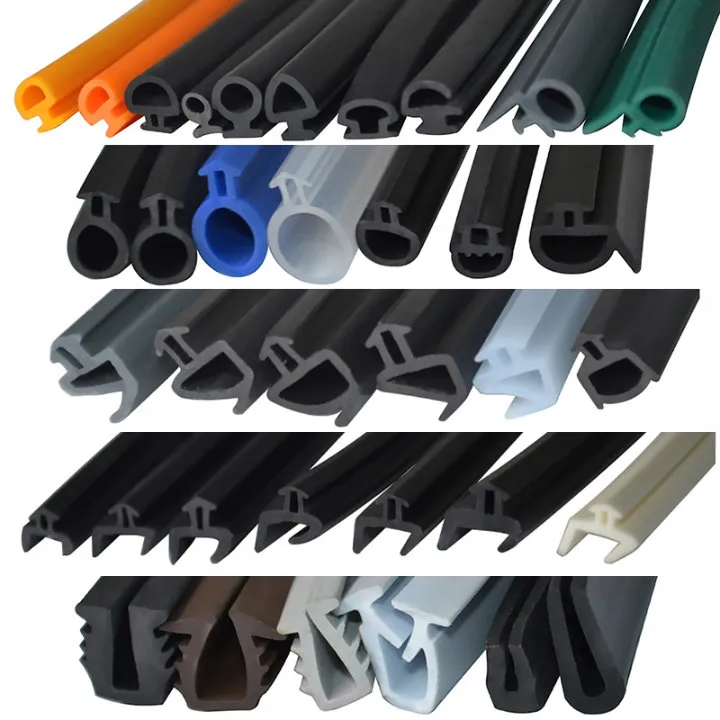
Contact Suzhou Baoshida for Precision Weather Stripping Solutions
Suzhou Baoshida Trading Co., Ltd. stands at the forefront of industrial rubber engineering, specializing in high-performance elastomeric compounds for demanding architectural applications. Our weather stripping solutions for aluminum windows are rigorously formulated to address critical industry challenges: thermal expansion differentials, UV degradation, ozone resistance, and long-term compression set stability. We deploy advanced polymer science—utilizing EPDM, silicone, and thermoplastic vulcanizate (TPV) matrices—to deliver seals that maintain dimensional integrity across -50°C to +150°C operational ranges. This precision ensures zero air/water infiltration in curtain wall systems, certified to ISO 9001:2015 standards and exceeding ASTM D2000 and EN 12206-1 specifications. For OEMs and window fabricators, our compounds translate to reduced warranty claims, accelerated assembly line throughput, and compliance with stringent energy efficiency codes like NFRC 100 and EN 14351-1.
Our engineering partnership model begins with collaborative material development. We analyze your extrusion profiles, substrate adhesion requirements, and lifecycle expectations to formulate proprietary rubber blends. This includes optimizing Shore A hardness for balanced sealing force and retraction, tailoring crosslink density for minimal permanent deformation, and integrating surface modifiers for seamless co-extrusion with polyamide thermal breaks. Unlike commodity suppliers, we control the entire value chain—from polymer synthesis to final profile extrusion—ensuring batch-to-batch consistency within ±2 Shore A hardness and ±0.1mm dimensional tolerances. This vertical integration eliminates third-party variability, directly enhancing your product reliability and reducing scrap rates by up to 18% in high-volume production environments.
Key technical parameters for our flagship aluminum window weather stripping compounds are detailed below. These values represent baseline performance; formulations are customized to your exact profile geometry and performance thresholds.
| Parameter | Test Method | Value Range | Industrial Significance |
|---|---|---|---|
| Hardness (Shore A) | ASTM D2240 | 55–85 | Optimized for sealing force vs. window operation torque |
| Tensile Strength | ASTM D412 | 8–15 MPa | Resists tearing during installation/cycling |
| Compression Set (22h/70°C) | ASTM D395 | ≤15% | Critical for maintaining seal integrity over 20+ years |
| Temperature Range | ISO 188 | -50°C to +150°C | Prevents hardening/embrittlement in extreme climates |
| Specific Gravity | ASTM D297 | 1.15–1.35 | Balances material cost and profile density |
Initiate a technical consultation with Mr. Boyce, our OEM Account Manager and Rubber Formulation Specialist, to resolve your specific weather stripping challenges. With 14 years of experience in architectural elastomer systems, Mr. Boyce will coordinate our R&D team to conduct profile-specific material testing, extrusion trials, and accelerated aging validation—free of charge for qualified OEM partnerships. Provide your window system drawings, performance targets, and volume requirements to receive a tailored compound proposal within 72 hours. Our engineering support extends beyond formulation: we supply technical documentation for LEED/ BREEAM compliance, extrusion process optimization guides, and on-site troubleshooting for seamless production integration.
Direct all technical inquiries and partnership proposals to Mr. Boyce at [email protected]. Specify your project timeline, annual volume requirements (in metric tons), and critical performance non-negotiables in the subject line. Suzhou Baoshida commits to responding within one business day with actionable engineering insights—not generic sales literature. Elevate your aluminum window system’s performance legacy through scientifically validated rubber solutions engineered for real-world durability.
⚖️ O-Ring Weight Calculator
Estimate rubber O-ring weight (Approx).