
Technical Contents
Engineering Guide: What Are Rubber Grommets
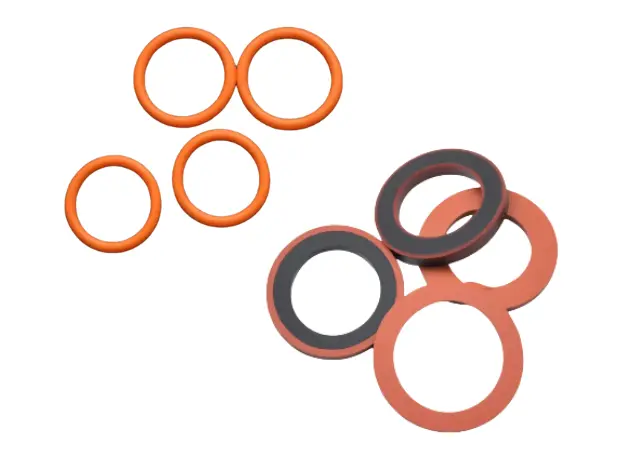
Engineering Insight: What Are Rubber Grommets
Rubber grommets are precision-engineered components designed to protect wires, cables, and tubing as they pass through holes in metal, plastic, or composite panels. Functionally, they serve as protective barriers that prevent abrasion, reduce vibration transmission, and provide environmental sealing against moisture, dust, and chemical ingress. While often perceived as simple, low-cost parts, their performance is highly dependent on material composition and engineering specifications. In industrial applications, selecting the correct rubber compound is not optional—it is a critical determinant of system reliability and longevity.
Standard off-the-shelf grommets are typically manufactured using generic elastomers such as natural rubber or low-grade EPDM. These materials may suffice in benign environments but often fail under industrial conditions involving extreme temperatures, UV exposure, or chemical contact. For example, natural rubber degrades rapidly when exposed to ozone or petroleum-based fluids, while conventional EPDM offers poor resistance to hydrocarbons. Such failures result in compromised insulation, increased maintenance, and potential system downtime—costs that far exceed any initial savings from using generic parts.
At Suzhou Baoshida Trading Co., Ltd., we emphasize engineered material selection based on application-specific demands. Our industrial rubber grommets utilize high-performance elastomers including nitrile (NBR), silicone (VMQ), fluorocarbon (FKM), and specialty EPDM formulations. Each compound is selected for its unique balance of flexibility, resilience, and chemical resistance. For instance, NBR is preferred in automotive and hydraulic systems due to its excellent oil resistance, while FKM grommets are deployed in aerospace and semiconductor manufacturing where thermal stability up to 250°C and resistance to aggressive solvents are required.
The failure of off-the-shelf grommets often stems from a one-size-fits-all approach that ignores operational variables. Temperature fluctuations can cause dimensional instability, leading to loosening or cracking. Exposure to industrial cleaning agents or lubricants can cause swelling or embrittlement. Even mechanical stress from repeated vibration can accelerate fatigue in substandard materials. These issues underscore the necessity of custom formulation and rigorous testing protocols.
We recommend a systematic evaluation of environmental and mechanical parameters before grommet selection. Below is a comparative specification table highlighting common industrial rubber materials used in grommet manufacturing.
| Material | Temperature Range (°C) | Key Resistance Properties | Typical Industrial Applications |
|---|---|---|---|
| Nitrile (NBR) | -40 to +120 | Oil, fuel, abrasion | Automotive, hydraulics, machinery |
| Silicone (VMQ) | -60 to +200 | UV, ozone, extreme cold | Electronics, medical devices, outdoor enclosures |
| Fluorocarbon (FKM) | -20 to +250 | Solvents, acids, high heat | Aerospace, chemical processing, semiconductor |
| EPDM | -50 to +150 | Steam, water, ozone | HVAC, rail, marine environments |
| Natural Rubber (NR) | -50 to +80 | Abrasion, low-temperature flexibility | Light-duty consumer applications |
Material selection is not a secondary consideration—it is foundational to grommet performance. Suzhou Baoshida Trading Co., Ltd. provides custom rubber solutions engineered for durability, sealing efficiency, and compatibility with demanding industrial ecosystems.
Material Specifications
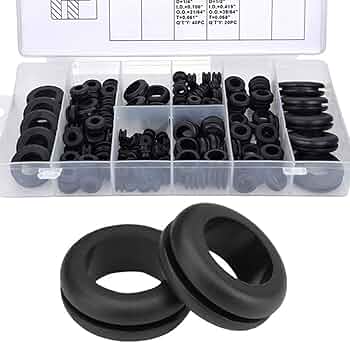
Material Specifications for Industrial Rubber Grommets
Selecting the appropriate elastomer for rubber grommets is critical for ensuring long-term performance, environmental resistance, and functional reliability in demanding industrial applications. Grommets protect cables, wires, and conduits from abrasion, vibration, and environmental ingress while maintaining seal integrity. At Suzhou Baoshida Trading Co., Ltd., we engineer grommets using three primary high-performance materials: Viton (FKM), Nitrile (NBR), and Silicone (VMQ). Each compound offers distinct chemical, thermal, and mechanical properties tailored to specific operational challenges. Material choice directly impacts service life, especially under exposure to oils, fuels, extreme temperatures, or ozone.
Viton (fluoroelastomer) represents the premium solution for severe chemical and thermal environments. Its perfluoroelastomer structure delivers exceptional resistance to aerospace fuels, hydraulic fluids, acids, and aromatic hydrocarbons. Viton grommets maintain integrity from -40°C to +230°C, with short-term peaks up to 300°C. This material is indispensable in automotive fuel systems, chemical processing equipment, and military/aerospace applications where failure is not an option. However, its higher cost necessitates justified use cases.
Nitrile (nitrile butadiene rubber) remains the most widely specified material for general industrial grommets due to its optimal balance of oil resistance, abrasion tolerance, and cost efficiency. As a hydrocarbon-based elastomer, NBR excels in contact with mineral oils, greases, and aliphatic hydrocarbons. Standard grades operate effectively between -30°C and +120°C, with specialized formulations extending low-temperature flexibility to -50°C. Its robust tensile strength and low compression set make it ideal for automotive engine compartments, hydraulic machinery, and factory automation wiring protection.
Silicone (polysiloxane) is selected when extreme temperature stability and physiological inertness are paramount. VMQ grommets function reliably from -60°C to +200°C, resisting thermal degradation better than organic rubbers. While limited in oil/fuel resistance, silicone offers superior ozone/weathering resistance and biocompatibility. Its low toxicity and non-reactive nature suit medical device housings, food processing equipment, and outdoor electronics enclosures requiring UL/CSA certification.
The following table details key comparative specifications for standard commercial grades used in grommet manufacturing. All values represent typical ranges; exact performance depends on specific compound formulation and curing parameters. Suzhou Baoshida maintains strict QC protocols to ensure batch-to-batch consistency against OEM-specified ASTM D2000 or ISO 3601 standards.
| Material | Temperature Range | Chemical Resistance | Tensile Strength (MPa) | Elongation at Break (%) | Hardness Range (Shore A) | Primary Applications |
|---|---|---|---|---|---|---|
| Viton (FKM) | -40°C to +230°C | Excellent: fuels, oils, acids, solvents | 10-18 | 150-300 | 60-90 | Aerospace fuel systems, chemical valves, high-temp seals |
| Nitrile (NBR) | -30°C to +120°C (special: -50°C) | Excellent: oils, greases; Poor: ozone, ketones | 15-25 | 200-500 | 50-90 | Automotive wiring, hydraulic fittings, industrial machinery |
| Silicone (VMQ) | -60°C to +200°C | Good: water, ozone; Poor: oils, fuels | 5-12 | 200-800 | 30-80 | Medical devices, food processing, outdoor electronics, HVAC |
Suzhou Baoshida Trading Co., Ltd. provides comprehensive material datasheets and application engineering support to ensure optimal grommet selection. Our OEM management team collaborates with clients to validate material performance against real-world operational profiles, minimizing field failures and lifecycle costs.
Manufacturing Capabilities
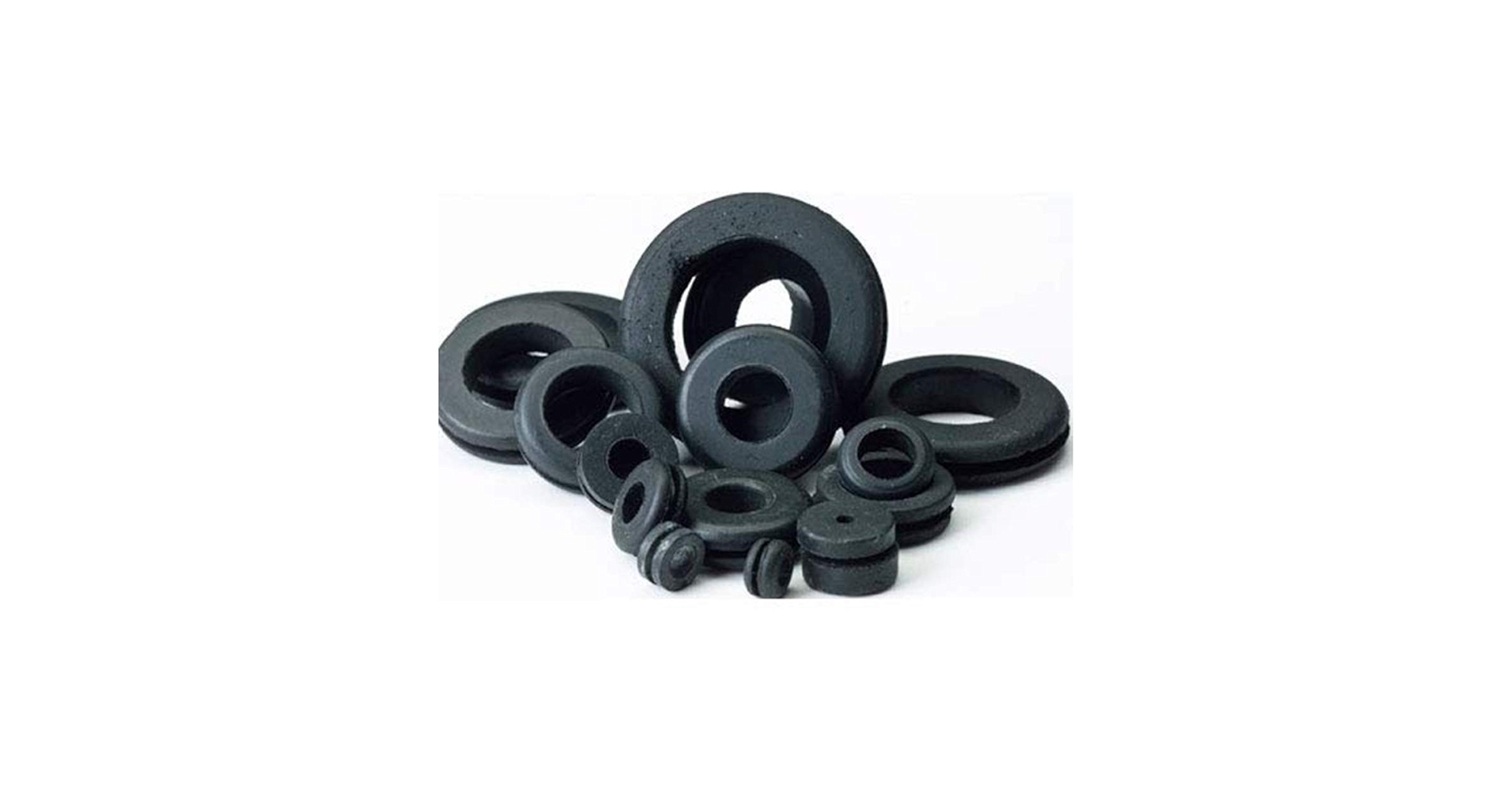
Engineering Excellence in Rubber Grommet Manufacturing
At Suzhou Baoshida Trading Co., Ltd., our engineering capability forms the backbone of our industrial rubber solutions, particularly in the precision design and production of rubber grommets. With a dedicated team comprising five specialized mould engineers and two advanced formula engineers, we integrate material science and precision tooling to deliver grommets that meet exacting OEM specifications. Our approach ensures functional reliability, environmental resistance, and long-term performance in demanding applications across automotive, electronics, industrial machinery, and telecommunications sectors.
Rubber grommets serve as critical protective components, shielding wires, cables, and conduits from abrasion, vibration, and environmental exposure at pass-through points in metal or plastic panels. Their performance is directly influenced by material formulation and dimensional accuracy—two domains where our engineering expertise delivers measurable advantage. Our formula engineers focus on developing custom rubber compounds tailored to specific mechanical, thermal, and chemical requirements. Whether the application demands resistance to UV degradation, oil and fuel exposure, or extreme temperature cycling, our team formulates EPDM, NBR, silicone, and neoprene compounds with optimized durometer, elongation, and compression set characteristics.
Complementing this material precision is our in-house mould engineering capability. Our five mould engineers utilize advanced CAD/CAM systems and finite element analysis (FEA) to design and refine grommet tooling with micron-level tolerances. This enables consistent part geometry, seamless parting line control, and rapid prototyping cycles. We support both multi-cavity and family mould configurations to ensure scalability without compromising quality. Our tooling lifecycle management program further ensures prolonged mould performance and reduced downtime.
As an OEM partner, Suzhou Baoshida provides full design-for-manufacturability (DFM) support, from initial concept sketches to production validation. We specialize in custom grommet solutions where standard off-the-shelf products fall short—offering tailored shapes, multi-material constructions, and insert-moulded variants. Our integrated engineering workflow reduces time-to-market and enhances product reliability through iterative testing and material validation.
The following table outlines typical rubber grommet specifications achievable through our engineering platform:
| Property | Typical Range | Test Standard |
|---|---|---|
| Durometer (Shore A) | 40–90 | ASTM D2240 |
| Tensile Strength | 8–20 MPa | ASTM D412 |
| Elongation at Break | 150–500% | ASTM D412 |
| Operating Temperature | -40°C to +150°C (varies by compound) | ASTM D1329 |
| Compression Set (22h, 70°C) | ≤25% | ASTM D395 |
| Volume Resistivity | >1×10¹² Ω·cm | ASTM D257 |
Through the synergy of material innovation and precision engineering, we deliver rubber grommets that exceed functional expectations. Our OEM-focused model ensures confidentiality, scalability, and technical agility—making Suzhou Baoshida a trusted engineering partner in industrial rubber solutions.
Customization Process
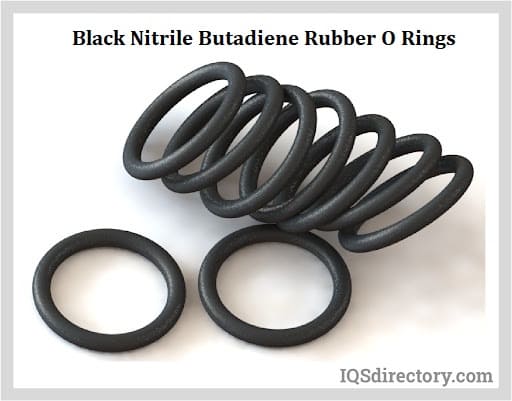
Customization Process for Precision Rubber Grommets
At Suzhou Baoshida Trading Co., Ltd., our grommet customization pipeline ensures dimensional accuracy, material resilience, and functional reliability for demanding industrial applications. We execute a rigorously controlled four-phase workflow to transform client specifications into certified components.
Drawing Analysis
Initial technical review focuses on geometric tolerances, interference fits, and environmental exposure parameters. Our engineering team verifies ISO 2768-mK standards for non-specified dimensions and cross-references client CAD models against DIN 3044 or AS568A grommet profiles. Critical attention is given to groove geometry, edge clearance, and radial compression requirements to prevent extrusion under load. This phase identifies potential sealing weaknesses or assembly conflicts before material allocation.
Formulation Development
Material selection is driven by operational stressors identified in the drawing analysis. Our rubber chemists optimize polymer matrices for specific thermal, chemical, and mechanical demands. For automotive under-hood grommets requiring -40°C to +150°C stability, we formulate hydrogenated nitrile butadiene rubber (HNBR) with controlled crosslink density. Aerospace variants utilize fluorosilicone (FVMQ) with platinum-cure systems for jet fuel resistance. Every compound undergoes predictive modeling for compression set behavior and ozone resistance per ASTM D1149.
Prototyping & Validation
Precision-molded prototypes are produced using client-approved tool steel cavities. We conduct in-house validation against three critical metrics: dimensional conformance via CMM inspection (per ISO 10360-2), dynamic sealing performance under simulated pressure cycles, and material property verification. Hardness, tensile strength, and elongation are tested against ASTM D2240 and D412 standards. Clients receive traceable test reports with lot-specific certificates before approving tooling for production.
Mass Production
Serial manufacturing occurs in ISO 9001-certified facilities with real-time process monitoring. Each batch undergoes 100% visual inspection for flash or voids, with statistical sampling for dimensional validation. Material batches are tracked from raw polymer to finished goods, ensuring full traceability. Final shipment includes PPAP Level 3 documentation with material certifications, process capability indices (Cp/Cpk ≥1.67), and first-article inspection reports.
Key Material Specifications for Industrial Grommets
The following table outlines standard performance parameters achievable through our formulation process. Custom ranges are developed per client environmental profiles.
| Specification | Standard Range | Testing Standard |
|---|---|---|
| Hardness (Shore A) | 40–90 | ASTM D2240 |
| Tensile Strength | 8–25 MPa | ASTM D412 |
| Compression Set (70°C/22h) | ≤25% | ASTM D395 |
| Temperature Range | -60°C to +250°C | ISO 188 |
| Flammability Rating | UL 94 HB / V-0 | UL 94 |
This structured approach eliminates guesswork in grommet performance. By anchoring each phase in measurable engineering criteria, Suzhou Baoshida delivers components that maintain sealing integrity across 10,000+ operational cycles in hydraulic systems, electrical enclosures, and structural penetrations. Our zero-defect prototyping protocol reduces client time-to-market by 30% versus industry averages.
Contact Engineering Team
For industrial manufacturers seeking high-performance rubber grommets tailored to exacting specifications, Suzhou Baoshida Trading Co., Ltd. stands as a trusted partner in precision rubber engineering. As a specialized provider of industrial rubber solutions, we combine advanced material science with rigorous quality control to deliver grommets that meet the functional demands of automotive, electronics, aerospace, and heavy machinery sectors. Our engineering team, led by Mr. Boyce, applies deep expertise in elastomer formulation and application-specific design to ensure every component performs reliably under thermal stress, vibration, and mechanical load.
Rubber grommets are not merely passive inserts; they are engineered seals designed to protect cables, conduits, and panels from abrasion, moisture ingress, and electromagnetic interference. At Suzhou Baoshida, we manufacture grommets using a range of elastomers including NBR, EPDM, silicone, and neoprene—each selected for compatibility with operational environments. Whether your application requires resistance to ozone degradation, extreme temperatures, or chemical exposure, our formulations are optimized for long-term durability and sealing integrity. Our production process integrates precision molding, post-cure stabilization, and 100% dimensional inspection to ensure consistency across batches.
We understand that OEMs and Tier suppliers require more than off-the-shelf components—they demand technical collaboration. Mr. Boyce and our engineering team provide direct support in material selection, prototype validation, and DFMEA review to align grommet performance with your system requirements. From initial concept to full-scale production, we offer scalable manufacturing solutions with lead times optimized for just-in-time delivery models.
The table below outlines key technical specifications for our standard rubber grommet series, illustrating our capacity across materials, temperature ranges, and mechanical properties.
| Property | NBR | EPDM | Silicone | Neoprene |
|---|---|---|---|---|
| Hardness (Shore A) | 50–70 | 55–75 | 40–80 | 50–70 |
| Temperature Range (°C) | -30 to +120 | -50 to +150 | -60 to +200 | -40 to +120 |
| Tensile Strength (MPa) | ≥12 | ≥10 | ≥7 | ≥11 |
| Elongation at Break (%) | ≥250 | ≥200 | ≥200 | ≥250 |
| Compression Set (22h, 70°C) | ≤25% | ≤30% | ≤20% | ≤25% |
| Fluid Resistance | Oil, fuel, water | Water, steam, alkalis | Limited | Ozone, flame retardant |
Custom geometries, durometer grades, and co-molded multi-material designs are available upon request. Our quality management system conforms to ISO 9001 standards, with full traceability and RoHS/REACH compliance documentation provided with every shipment.
To discuss your specific grommet requirements or request material test reports, contact Mr. Boyce directly at [email protected]. We respond to technical inquiries within 4 business hours and offer sample builds within 7–10 working days for qualified projects. Partner with Suzhou Baoshida for engineered rubber solutions that meet the precision demands of modern industrial systems.
⚖️ O-Ring Weight Calculator
Estimate rubber O-ring weight (Approx).