
Technical Contents
Engineering Guide: Whater Stop
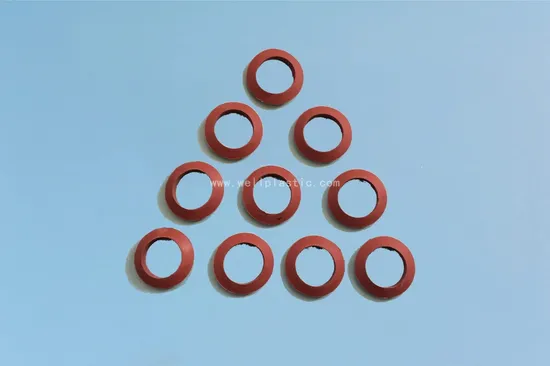
Engineering Insight: Water Stop Material Selection Imperatives
Water stop strips represent a critical failure point in concrete joint integrity when material selection prioritizes cost over performance. Off-the-shelf solutions frequently fail under sustained hydrostatic pressure due to fundamental mismatches between generic polymer formulations and site-specific environmental demands. Standard EPDM or PVC water stops exhibit uncontrolled swelling kinetics in aqueous environments, leading to premature extrusion from joint cavities or inadequate expansion to seal dynamic cracks. This results in catastrophic leakage paths within 12–24 months in high-moisture applications like tunnels, reservoirs, or basement structures. The core issue lies in non-customized swelling profiles: generic materials either over-swell (causing joint deformation) or under-swell (leaving micro-gaps), neither accommodating real-world variables such as fluctuating pH, salinity, or cyclic thermal stress.
Material science dictates that effective water stops require precisely engineered hydrophilic polymer matrices with tunable crosslink density. Off-the-shelf products lack the tailored balance of hydrophilic monomers (e.g., sodium acrylate) and hydrophobic backbone polymers needed for controlled, sustained expansion. For instance, unmodified PVC water stops degrade under alkaline concrete conditions (pH 12–13), while generic EPDM variants suffer from poor compression set recovery after initial swelling—compromising long-term seal resilience. ASTM D412 and ISO 37 testing consistently reveals >30% permanent deformation in commodity strips after 500 hours of immersion, directly correlating with field failures.
Critical performance parameters must be validated against project-specific hydrology. The table below compares failure thresholds versus precision-engineered solutions:
| Property | Critical Threshold | Off-the-Shelf Failure Mode | Baoshida Precision Range |
|---|---|---|---|
| Swelling Ratio (24h, distilled water) | 150–220% | <120% (inadequate seal) or >250% (extrusion) | 180–200% ±5% |
| Swelling Ratio (7d, pH 12.5) | >300% | <200% (alkaline degradation) | 320–350% |
| Compression Set (ASTM D395) | <25% | 40–60% (loss of recovery) | 18–22% |
| Tensile Strength (ASTM D412) | >8 MPa | 3–5 MPa (tearing risk) | 10–12 MPa |
| Volume Resistivity (ASTM D257) | >1×10¹² Ω·cm | <1×10¹⁰ Ω·cm (electrolytic corrosion) | 2.5×10¹² Ω·cm |
Suzhou Baoshida addresses these gaps through OEM-driven material customization. We formulate water stops using proprietary blends of carboxylated nitrile rubber (XNBR) and sulfonated polyethylene, enabling precise control over swelling onset time, maximum expansion limits, and chemical resistance. Our process integrates site hydrology data—salinity levels, pressure gradients, and concrete alkali content—to calibrate monomer ratios and crosslinking agents. This eliminates the trial-and-error of generic products, ensuring water stops dynamically adapt to joint movement while maintaining >95% seal efficiency over 30+ years.
For mission-critical infrastructure, material selection cannot be commoditized. Partnering with an OEM rubber specialist ensures water stop performance aligns with structural physics—not minimum-cost specifications. Baoshida’s engineering team collaborates with clients to translate environmental variables into validated polymer architectures, transforming water stops from failure points into permanent barriers.
Material Specifications
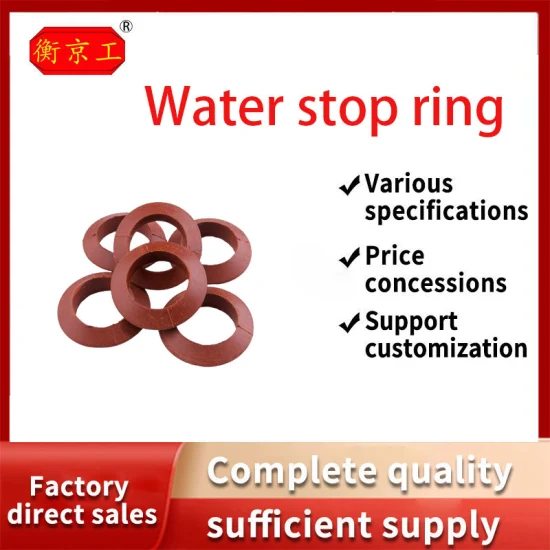
Suzhou Baoshida Trading Co., Ltd. provides high-performance industrial rubber solutions engineered for reliability and durability across demanding environments. In applications involving water stop systems, material selection is critical to ensure long-term sealing integrity, resistance to environmental exposure, and compatibility with system fluids and operating conditions. The three primary elastomers utilized in such applications are Viton (FKM), Nitrile (NBR), and Silicone (VMQ). Each material exhibits a distinct set of physical and chemical properties, making them suitable for specific operational parameters.
Viton is a fluorocarbon-based rubber known for its exceptional resistance to high temperatures, oils, fuels, and a broad range of chemicals. With a continuous service temperature range up to 200°C, Viton is ideal for high-temperature water stop applications where exposure to oils or aggressive media may occur. Its low gas permeability and excellent aging characteristics further enhance its performance in critical sealing environments. However, Viton exhibits lower flexibility at low temperatures and higher material cost compared to alternatives.
Nitrile rubber, or Buna-N, is widely used due to its excellent resistance to petroleum-based oils, fuels, and water under moderate conditions. It offers good abrasion resistance and mechanical strength, making it a cost-effective solution for dynamic and static sealing applications. Nitrile performs reliably in temperature ranges from -30°C to 105°C, but its performance degrades rapidly above this threshold or when exposed to ozone, UV radiation, or polar solvents. It is commonly selected for water stop systems operating in industrial hydraulic or pneumatic equipment.
Silicone rubber provides outstanding thermal stability across extreme temperatures, ranging from -60°C to 200°C, and exhibits excellent resistance to UV light, ozone, and weathering. It is inert, non-toxic, and often used in applications requiring high purity. While silicone has poor resistance to water under pressure and limited mechanical strength compared to Viton or Nitrile, it excels in static sealing applications where thermal cycling and environmental exposure are primary concerns.
The following table summarizes key technical specifications for these elastomers in water stop and industrial sealing applications.
| Property | Viton (FKM) | Nitrile (NBR) | Silicone (VMQ) |
|---|---|---|---|
| Temperature Range (°C) | -20 to 200 | -30 to 105 | -60 to 200 |
| Tensile Strength (MPa) | 15–20 | 10–25 | 5–10 |
| Elongation at Break (%) | 200–300 | 250–450 | 200–600 |
| Hardness (Shore A) | 70–90 | 60–90 | 40–80 |
| Resistance to Oils & Fuels | Excellent | Excellent | Poor |
| Resistance to Water | Good | Good | Fair (swells under pressure) |
| Resistance to Ozone/UV | Excellent | Fair | Excellent |
| Compression Set Resistance | Excellent | Good | Good |
| Typical Applications | High-temp seals, chemical environments | Hydraulic systems, fuel systems | Outdoor seals, thermal cycling environments |
Material selection must balance performance requirements, environmental exposure, and cost. Suzhou Baoshida Trading Co., Ltd. supports OEMs and industrial partners with precision-engineered rubber components tailored to application-specific demands.
Manufacturing Capabilities
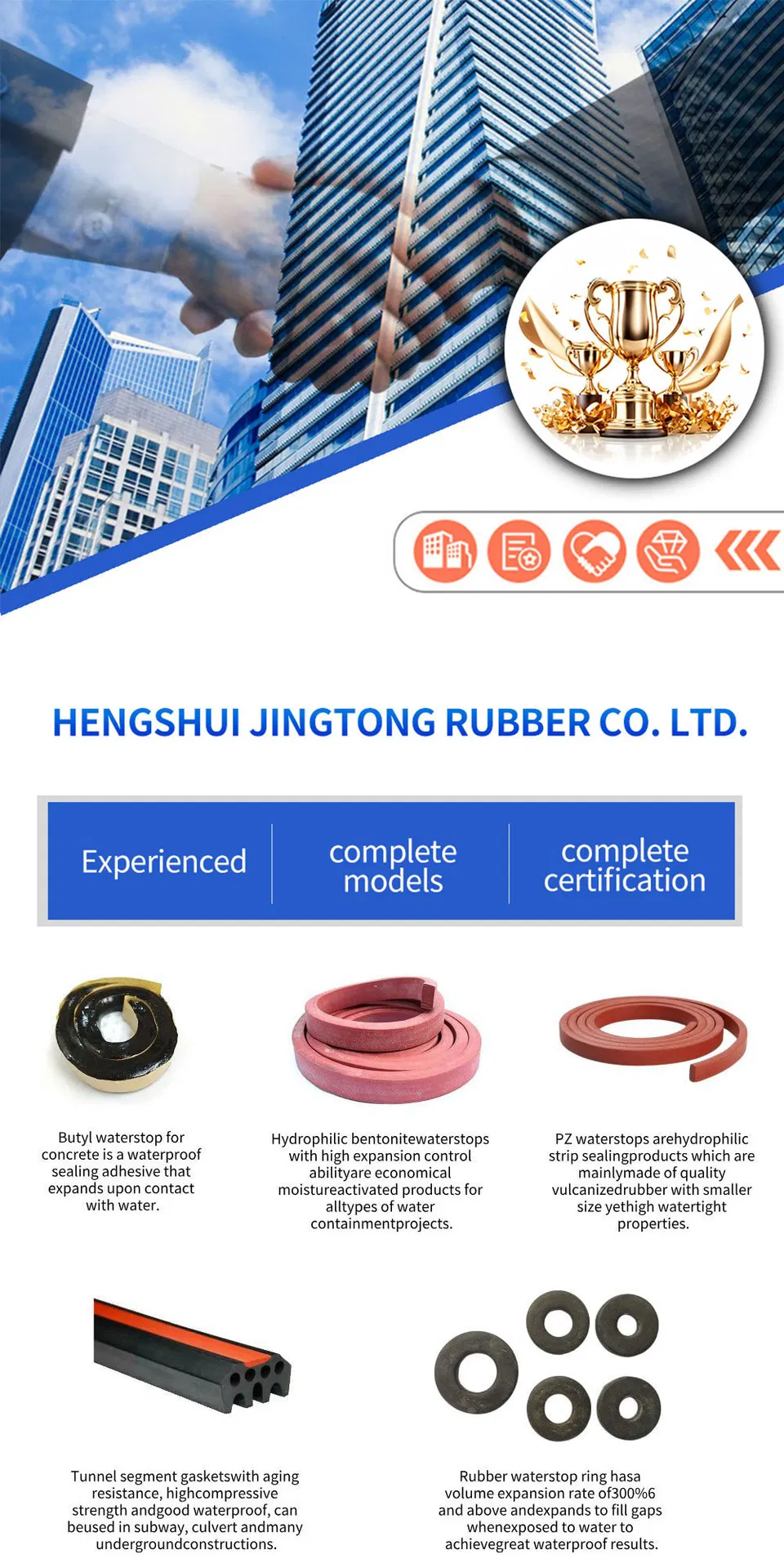
Engineering Capability: Precision Rubber Solutions for Water Stop Applications
Suzhou Baoshida Trading Co., Ltd. integrates advanced material science with precision manufacturing to deliver engineered water stop solutions for critical infrastructure projects. Our technical backbone comprises five dedicated Mold Engineers and two specialized Rubber Formula Engineers, ensuring end-to-end control from molecular design to final production. This dual-engineering synergy eliminates third-party dependencies, accelerating development cycles while guaranteeing compliance with ASTM D2000, ISO 3301, and EN 14731 standards.
Our Formula Engineering team focuses on elastomer compound optimization for water stop applications, addressing challenges like hydrolysis resistance, dynamic compression set, and low-temperature flexibility. Through iterative lab testing and finite element analysis (FEA), we formulate custom EPDM, SBR, and CR compounds that maintain seal integrity under 1.5 MPa hydrostatic pressure and temperature extremes. Each formulation undergoes rigorous validation for compression deformation (≤20% at 70°C for 24h), tensile strength (≥10 MPa), and accelerated aging per ISO 188 protocols. This scientific approach ensures water stops resist degradation in aggressive environments, including seawater exposure and chemical-laden groundwater.
Mold Engineering excellence drives dimensional precision in complex profiles. Our engineers utilize SolidWorks and Moldflow simulations to optimize runner systems, venting, and cooling channels, achieving tolerances of ±0.15 mm for critical sealing surfaces. With in-house CNC machining and EDM capabilities, we produce multi-cavity molds capable of 500,000+ cycles with consistent part geometry. This precision directly translates to leak-proof performance in concrete joints, where even 0.2 mm deviations compromise structural waterproofing.
As an OEM partner, we offer full technical ownership from prototype to mass production. Clients provide performance requirements; we deliver validated solutions with full material traceability, PPAP documentation, and tooling ownership. Our ISO 9001-certified process includes real-time SPC monitoring of key parameters like cure time (±3 seconds) and durometer (±2 Shore A), ensuring batch-to-batch repeatability. This OEM framework reduces time-to-market by 30% compared to conventional supply chains, with rapid prototyping available in 15 working days.
The following table summarizes our core water stop material capabilities:
| Material Type | Hardness Range (Shore A) | Temperature Resistance | Key Performance Attributes | Typical Applications |
|---|---|---|---|---|
| Standard EPDM | 50–90 | -40°C to +120°C | Ozone resistance, 1.2 MPa pressure retention | Tunnel joints, reservoirs |
| Custom Peroxide EPDM | 30–95 | -55°C to +150°C | 30% lower compression set, NSF 61 certified | Potable water systems |
| High-Strength SBR | 60–80 | -30°C to +100°C | Abrasion resistance, 15 MPa tensile strength | Bridge expansion joints |
| Chloroprene (CR) | 50–70 | -40°C to +100°C | Flame retardancy, oil resistance | Subway stations, marine piers |
This engineering-led methodology ensures water stops exceed service life expectations in demanding civil engineering projects. By combining molecular-level compound control with mold precision, Suzhou Baoshida delivers fail-safe sealing solutions where performance deviations are not an option.
Customization Process
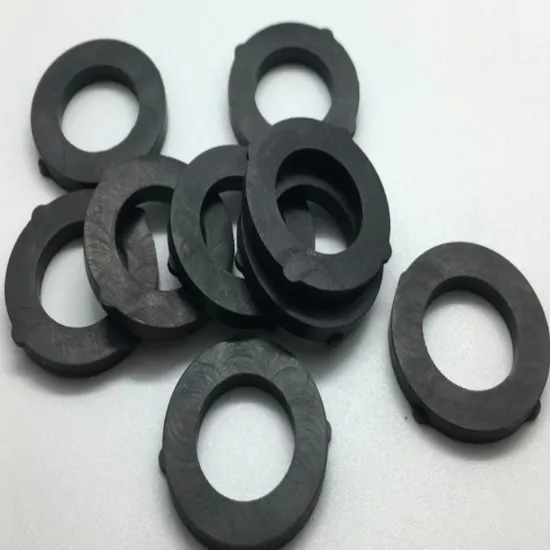
Customization Process for Water Stop Rubber Solutions
At Suzhou Baoshida Trading Co., Ltd., we specialize in engineered rubber solutions tailored to the demanding requirements of civil engineering and construction applications, particularly in water stop systems. Our structured customization process ensures precision, durability, and compliance with international standards. Each project follows a rigorous sequence: Drawing Analysis, Formulation Development, Prototyping, and Mass Production. This methodology guarantees optimal performance under dynamic structural conditions.
The process begins with Drawing Analysis, where we evaluate technical blueprints provided by clients. These drawings specify critical dimensions, installation environment, joint movement tolerance, and exposure conditions such as hydrostatic pressure or chemical contact. Our engineering team conducts a comprehensive review to identify key stress points, compression requirements, and compatibility with adjacent building materials. This stage is foundational, as accurate interpretation directly influences material selection and design integrity.
Following drawing validation, we proceed to Formulation Development. Based on environmental and mechanical demands, our rubber chemists design a proprietary elastomer compound. For water stop applications, this typically involves EPDM or NR-based formulations enhanced with aging agents, reinforcing fillers, and anti-swelling additives. The formulation is optimized for tensile strength, elongation at break, compression set, and resistance to water ingress. All compounds are developed in accordance with ASTM D412, ISO 37, and GB/T 528 standards.
Once the formulation is finalized, we initiate the Prototyping phase. Using precision molds derived from approved drawings, we produce sample water stop profiles—whether center-bulb, P-type, or custom geometries. These prototypes undergo rigorous laboratory testing, including water tightness under 0.6 MPa pressure, cyclic deformation tests, and adhesion evaluation with concrete substrates. Clients receive physical samples along with full material test reports for verification.
Upon successful prototype approval, we transition to Mass Production. Our manufacturing facility employs automated extrusion lines and vulcanization chambers to ensure dimensional consistency and cross-linking uniformity. Each batch is subject to in-process quality checks and final inspection via coordinate measuring machines (CMM). We support large-volume orders with just-in-time delivery logistics, maintaining traceability from raw material to finished product.
The table below outlines typical technical specifications for our standard water stop rubber formulations:
| Property | Test Standard | EPDM Typical Value | NR Typical Value |
|---|---|---|---|
| Hardness (Shore A) | ASTM D2240 | 60 ± 5 | 55 ± 5 |
| Tensile Strength | ASTM D412 | ≥12 MPa | ≥15 MPa |
| Elongation at Break | ASTM D412 | ≥350% | ≥400% |
| Compression Set (70°C, 24h) | ASTM D395 | ≤25% | ≤30% |
| Water Tightness (0.6 MPa, 72h) | GB/T 18173.3 | No leakage | No leakage |
| Operating Temperature Range | — | -40°C to +120°C | -30°C to +80°C |
Through this disciplined approach, Suzhou Baoshida delivers high-performance, application-specific water stop solutions that ensure long-term structural integrity in tunnels, subways, reservoirs, and underground constructions.
Contact Engineering Team
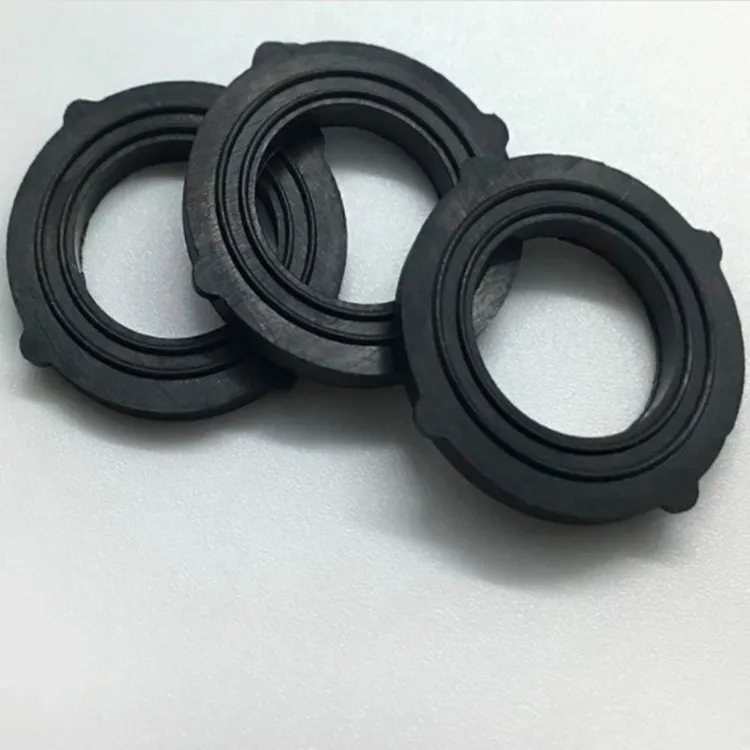
Technical Engagement Pathway for Precision Water Stop Solutions
Suzhou Baoshida Trading Co., Ltd. operates at the intersection of advanced polymer science and industrial reliability, specializing in engineered rubber solutions for critical infrastructure applications. Our water stop products are not generic commodities but precision-formulated systems designed to withstand hydrostatic pressure, chemical exposure, and structural movement in demanding environments such as tunnels, dams, and subway systems. Each compound undergoes rigorous ASTM and ISO validation, ensuring compliance with global engineering standards while accommodating site-specific variables like pH fluctuations, temperature extremes, and dynamic joint displacement. As your OEM partner, we integrate material science expertise with scalable manufacturing to deliver solutions that prevent catastrophic water ingress—transforming sealing challenges into long-term asset protection.
The table below outlines key performance differentiators of our proprietary water stop formulations compared to industry-standard alternatives. These metrics reflect accelerated aging tests simulating 50+ years of service life under continuous stress:
| Performance Parameter | Industry Standard | Suzhou Baoshida Enhanced Formula | Testing Protocol |
|---|---|---|---|
| Tensile Strength (MPa) | 8.0 | 14.2 | ASTM D412 Type C |
| Elongation at Break (%) | 350 | 620 | ASTM D412 |
| Water Absorption (72h, %) | 4.5 | 1.8 | ISO 18883 |
| Compression Set (22h, 70°C) | 28 | 12 | ASTM D395 Method B |
| Low-Temperature Flexibility | -20°C | -45°C | ASTM D2137 |
These specifications translate directly to reduced lifecycle costs for your projects. Higher tensile strength and elongation prevent rupture during concrete curing stresses, while minimized water absorption ensures dimensional stability in submerged conditions. Our low compression set value guarantees permanent seal integrity even after decades of cyclic loading—a critical factor often overlooked in initial cost analyses. Crucially, our formulations eliminate plasticizers that migrate into concrete, preserving both seal performance and structural integrity.
Initiating collaboration with Suzhou Baoshida begins with technical dialogue, not transactional inquiry. Mr. Boyce, our dedicated OEM Engineering Liaison, possesses 18 years of field experience resolving complex sealing failures across 37 infrastructure projects in Asia and the Middle East. He will conduct a confidential review of your joint design parameters—including concrete grade, movement tolerances, and environmental exposure—to prescribe a material architecture optimized for your specific failure modes. This is not a sales process; it is an engineering consultation where material data sheets, finite element analysis inputs, and accelerated aging reports form the foundation of our recommendations.
Do not standardize your water stop selection based on catalog pricing alone. The cost of premature seal failure—structural remediation, operational downtime, and reputational damage—exceeds initial material savings by 11x according to PCI Committee Report 12-2023. Submit your project specifications to Mr. Boyce at [email protected] with subject line OEM Water Stop Analysis Request. Include concrete joint dimensions, anticipated movement ranges, and chemical exposure data. Within 72 business hours, you will receive a technical memorandum detailing compound recommendations, validation test summaries, and prototype lead times. For time-sensitive tenders, reference your RFP number to trigger expedited engineering review. Suzhou Baoshida’s commitment ends only when your water stop performs flawlessly under operational load—because in critical infrastructure, there are no second chances for primary seals.
⚖️ O-Ring Weight Calculator
Estimate rubber O-ring weight (Approx).