
Technical Contents
Engineering Guide: Window Sealing Plastic
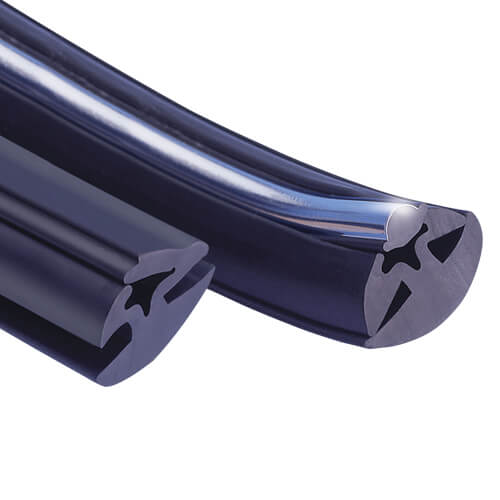
Engineering Insight: Material Selection Imperatives for Window Sealing Plastic
The performance longevity of window sealing systems hinges critically on precise elastomer formulation. Generic “off-the-shelf” rubber compounds frequently fail in demanding architectural and automotive glazing applications due to inadequate consideration of the complex, simultaneous environmental stresses encountered. These stresses include sustained compression, extreme temperature cycling (-40°C to +120°C), prolonged UV/ozone exposure, chemical contact from cleaning agents or atmospheric pollutants, and dynamic wind loading. Standardized compounds prioritize cost and broad compatibility over the specific thermomechanical and chemical resistance profile required for reliable window sealing over a 10-20 year service life. This results in premature field failures manifesting as compression set (permanent loss of sealing force), hardening or cracking from UV degradation, swelling or dissolution from fluid exposure, and ultimately, air/water infiltration compromising building envelope integrity or vehicle cabin comfort.
The root cause of off-the-shelf failure lies in unoptimized polymer backbone chemistry, filler systems, and crosslink density. Basic EPDM formulations, while offering good weather resistance, often lack the tailored saturation level, molecular weight distribution, and co-monomer ratio necessary for exceptional compression set resistance under continuous deflection. Inadequate UV stabilizer packages deplete rapidly under intense solar radiation, leading to surface chalking and micro-cracking. Similarly, insufficient plasticizer resistance or improper cure system selection causes swelling or hardening when exposed to common solvents or plasticizers migrating from adjacent materials like PVC frames. These compromises are inherent in mass-produced compounds designed for lower-stakes applications, not the zero-tolerance environment of critical window seals.
Suzhou Baoshida Trading Co., Ltd. addresses these challenges through application-specific elastomer engineering. Our process begins with rigorous analysis of the end-use environment – including temperature extremes, fluid exposure profiles, compression requirements, and regulatory standards (e.g., ASTM D2000, ISO 3302). We then formulate proprietary EPDM or specialty terpolymer compounds, precisely adjusting the ethylene/propylene/diene ratio, incorporating high-purity reinforcing fillers with optimized surface treatment, selecting synergistic antioxidant and UV absorber packages at critical thresholds, and employing peroxide or multi-stage cure systems to achieve superior crosslink stability. This engineered approach ensures the seal maintains elastic recovery, weather resistance, and dimensional stability far beyond generic alternatives, preventing costly callbacks and warranty claims.
Key performance differentiators between standard and engineered window seal compounds are quantifiable:
| Property | Standard EPDM Compound | Baoshida Engineered EPDM | Performance Impact |
|---|---|---|---|
| Compression Set (ASTM D395, 22h @ 100°C) | 35-45% | 18-25% | Maintains sealing force for >15 years; prevents air/water leaks |
| Glass Transition Temp (Tg) Range | -55°C to -50°C | -62°C to -58°C | Retains flexibility in severe cold; avoids brittle fracture |
| UV Resistance (ASTM G154, 1500h) | Significant cracking | <5% surface change | Eliminates weathering failures; preserves seal integrity |
| Fluid Resistance (5% NaOH, 70°C, 72h) | Swelling >15% | Swelling <5% | Resists cleaning agents; prevents dimensional instability |
Material selection is not a cost line item but a fundamental reliability determinant. Suzhou Baoshida’s engineered rubber compounds deliver the precision performance window sealing demands, transforming potential failure points into enduring system assets. Partner with us to specify beyond the catalog.
Material Specifications
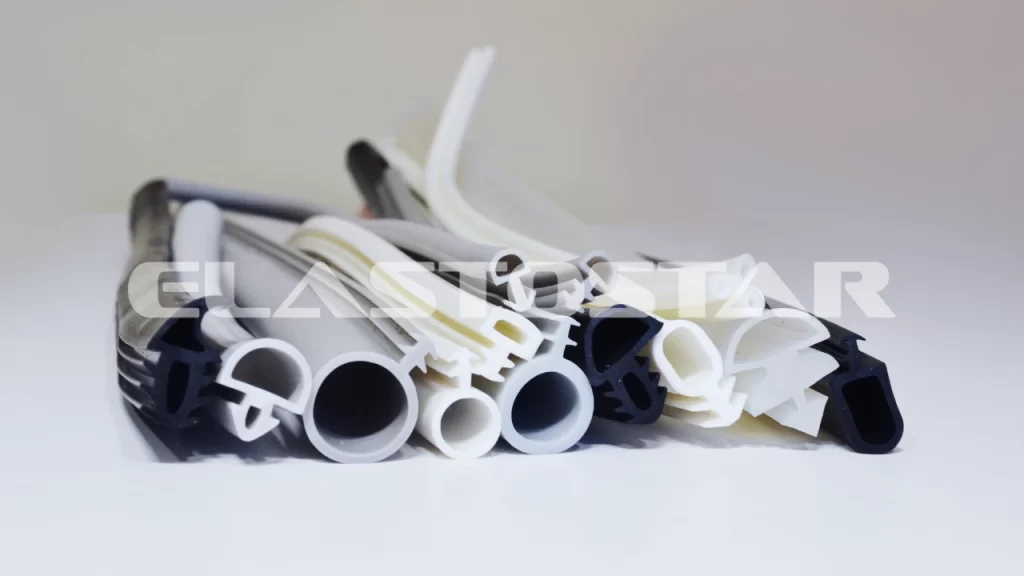
Material Specifications for Precision Window Sealing Plastics
In the manufacturing of high-performance window sealing systems, material selection is critical to ensuring long-term durability, environmental resistance, and dimensional stability. At Suzhou Baoshida Trading Co., Ltd., we specialize in precision rubber seals engineered for demanding industrial and automotive applications. Our core materials—Viton (FKM), Nitrile (NBR), and Silicone (VMQ)—are selected based on their unique chemical structures and performance characteristics under varying operational conditions. Each polymer offers distinct advantages depending on temperature range, fluid exposure, and mechanical stress requirements.
Viton, a fluorocarbon-based elastomer, delivers exceptional resistance to high temperatures, oils, fuels, and aggressive chemicals. It is the preferred choice for seals exposed to engine compartments, industrial solvents, or outdoor environments with extreme UV and ozone exposure. With continuous service capabilities up to 230°C and intermittent resistance to temperatures exceeding 300°C, Viton ensures reliability in the most challenging sealing applications. Its low gas permeability and excellent aging properties further enhance its suitability for critical window sealing roles where failure is not an option.
Nitrile rubber, or acrylonitrile butadiene rubber (NBR), is widely used due to its excellent resistance to petroleum-based fluids, making it ideal for automotive and machinery window seals exposed to oils and greases. It offers good mechanical strength and abrasion resistance at a lower cost compared to fluorinated elastomers. While its upper temperature limit is more moderate—typically 120°C continuous—it performs reliably in standard industrial environments. NBR also exhibits strong tensile properties and compression set resistance when properly formulated, ensuring consistent sealing force over time.
Silicone rubber (VMQ) stands out for its wide operating temperature range and outstanding flexibility at low temperatures. Capable of functioning from -60°C to 200°C, silicone maintains elasticity and sealing integrity in cryogenic or high-heat environments where other elastomers may stiffen or degrade. It also possesses excellent resistance to UV radiation, ozone, and weathering, making it ideal for exterior-facing window seals in transportation and architectural applications. While less resistant to petroleum fluids than NBR or Viton, silicone excels in applications requiring optical clarity, electrical insulation, or biocompatibility.
The following table summarizes key physical and chemical properties of these materials to guide optimal selection for window sealing applications.
| Property | Viton (FKM) | Nitrile (NBR) | Silicone (VMQ) |
|---|---|---|---|
| Temperature Range (°C) | -20 to 230 (up to 300 intermittent) | -30 to 120 | -60 to 200 |
| Tensile Strength (MPa) | 15–20 | 10–25 | 5–10 |
| Elongation at Break (%) | 200–300 | 200–500 | 200–700 |
| Hardness (Shore A) | 60–90 | 50–90 | 30–80 |
| Fluid Resistance (Oil/Fuel) | Excellent | Good to Excellent | Poor |
| Ozone/UV Resistance | Excellent | Fair | Excellent |
| Compression Set Resistance | Very Good | Good | Good |
| Gas Permeability | Low | Moderate | High |
Material selection must balance performance requirements with cost efficiency and regulatory compliance. At Suzhou Baoshida, we support OEMs with customized formulations and rigorous testing to ensure each window seal meets exacting industry standards.
Manufacturing Capabilities
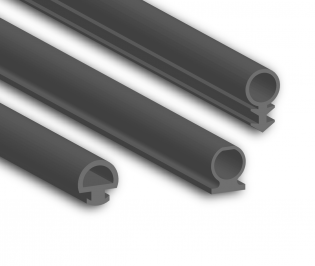
Engineering Capability: Precision Formulation and OEM Execution for Window Sealing Systems
Suzhou Baoshida Trading Co., Ltd. deploys a dedicated engineering cohort comprising five specialized Mould Engineers and two advanced Formula Engineers to address the stringent demands of modern window sealing applications. This integrated team operates at the intersection of polymer science and precision manufacturing, ensuring every seal component meets exacting performance criteria for thermal efficiency, weather resistance, and structural integrity. Our engineers utilize finite element analysis (FEA) for predictive mould flow simulation, minimizing defects such as flash or weld lines in complex profiles. Concurrently, our Formula Engineers optimize elastomer compounds at the molecular level, tailoring crosslink density and filler dispersion to achieve target Shore A hardness, compression set, and UV stability—critical for decades-long service life in architectural glazing systems.
Material innovation is central to our value proposition. Our Formula Engineers specialize in EPDM rubber systems, developing proprietary blends that balance ozone resistance with low-temperature flexibility down to -50°C. Through dynamic mechanical analysis (DMA) and accelerated aging protocols, we validate performance under cyclic compression, humidity, and solar exposure. This scientific approach eliminates trial-and-error, delivering compounds that consistently achieve ≤15% compression set after 22 hours at 70°C per ASTM D395. For clients requiring multi-material solutions, we integrate TPE overmoulding with rigid substrates, ensuring adhesion strength exceeding 8 kN/m without primers.
Our OEM capabilities transform engineering rigor into scalable production. We manage the entire workflow from CAD-based design validation to tooling certification and batch traceability. Clients receive real-time PPAP documentation including material certificates, dimensional CMM reports, and process capability indices (Cp/Cpk ≥1.67). Suzhou Baoshida’s ISO 9001-certified facility employs automated mixing lines with ±0.5% batch consistency and in-line vision systems for 100% profile dimensional verification. This end-to-end control guarantees seamless transition from prototype to high-volume manufacturing, with typical lead times of 30 days for tooling and 15 days for first-article approval.
Key Material Specifications for Window Sealing Applications
| Material Type | Hardness Range (Shore A) | Temperature Range (°C) | Compression Set (ASTM D395) | Primary Application Focus |
|---|---|---|---|---|
| Custom EPDM | 50–80 | -50 to +150 | ≤15% @ 70°C/22h | Main weatherstripping, frame gaskets |
| Thermoplastic Elastomer (TPE) | 45–75 | -40 to +120 | ≤25% @ 70°C/22h | Secondary seals, soft-touch interfaces |
| Silicone | 30–60 | -60 to +200 | ≤20% @ 200°C/22h | High-UV exposure zones, fire-rated assemblies |
Suzhou Baoshida’s engineering framework ensures window seals perform as engineered barriers—not consumable parts. By fusing formula science with precision tooling expertise, we deliver solutions that exceed ASTM E283/E330 air/water infiltration standards while reducing total cost of ownership through extended service cycles. Partner with us to convert architectural sealing challenges into competitive advantages through material intelligence and manufacturing excellence.
Customization Process
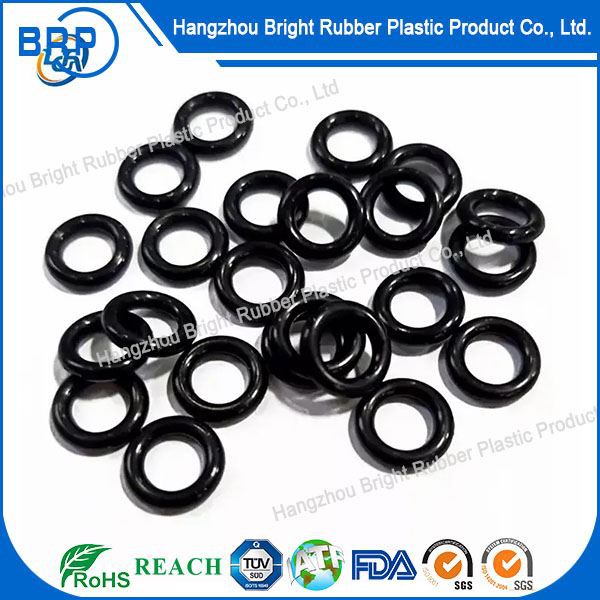
Customization Process for Precision Window Sealing Plastic Components
At Suzhou Baoshida Trading Co., Ltd., our engineering-driven approach ensures that every custom window sealing plastic component meets exact performance, environmental, and dimensional requirements. Our process integrates material science with precision manufacturing, progressing systematically from design validation to full-scale production.
The process begins with Drawing Analysis, where our technical team evaluates customer-provided 2D/3D CAD models and engineering specifications. We assess critical dimensions, tolerance ranges, installation mechanics, and interface conditions. This phase includes a comprehensive review of sealing pressure, compression set requirements, and environmental exposure—such as UV, ozone, temperature extremes, and chemical contact. Our engineers perform GD&T (Geometric Dimensioning and Tolerancing) validation to ensure manufacturability and long-term functional reliability.
Following drawing validation, we initiate Formulation Development, a core competency in our precision rubber seals division. Based on the application environment, we select the optimal base polymer—commonly EPDM for weather resistance, silicone for extreme temperatures, or TPE for multi-material bonding and flexibility. Our Rubber Formula Engineers tailor compound formulations to achieve specific Shore A hardness (typically 40–80), compression set (<25% at 70°C for 24 hours), tensile strength (>7 MPa), and elongation at break (>200%). Additives are precisely dosed to enhance UV stability, flame retardancy (UL94 V-0 optional), and low-temperature flexibility (down to -50°C). Each formulation is documented and archived for batch traceability.
Once the material is finalized, we proceed to Prototyping. Using precision extrusion or injection molding tooling—depending on cross-sectional complexity—we produce functional prototypes within 10–15 working days. Prototypes undergo rigorous in-house testing, including compression deflection analysis, thermal cycling (-40°C to 120°C), and simulated installation cycle testing. We provide test reports and physical samples for customer validation. Design or material adjustments are implemented iteratively until full compliance is achieved.
Upon approval, the project transitions to Mass Production. We deploy automated extrusion lines with laser-based dimensional control and inline curing systems to ensure consistency. Every production batch is subject to statistical process control (SPC), with certificates of conformance (CoC) and material test reports (MTR) provided. Lead times for full production runs range from 25 to 35 days, with options for JIT delivery and VMI (Vendor Managed Inventory) for OEM clients.
Our integrated workflow ensures that every window sealing component delivers long-term durability, dimensional accuracy, and environmental resilience.
| Property | Standard Range | Test Method |
|---|---|---|
| Shore A Hardness | 40–80 | ASTM D2240 |
| Tensile Strength | ≥7 MPa | ASTM D412 |
| Elongation at Break | ≥200% | ASTM D412 |
| Compression Set (70°C, 24h) | ≤25% | ASTM D395 |
| Temperature Range | -50°C to 120°C | ISO 1817 |
| UV Resistance | Pass (3000h QUV) | ASTM G154 |
Contact Engineering Team
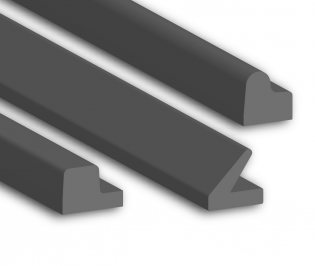
Precision Window Seal Engineering: Partner with Suzhou Baoshida for Mission-Critical Performance
Window sealing systems in automotive, architectural, and industrial applications demand uncompromising material integrity. Standard thermoplastic solutions often fail under cyclic compression, UV degradation, or extreme thermal expansion, leading to premature leakage, energy loss, and costly field failures. At Suzhou Baoshida Trading Co., Ltd., we engineer proprietary rubber formulations specifically for window sealing plastic applications, transforming commodity polymers into high-performance elastomeric seals that maintain dimensional stability across 200,000+ compression cycles. Our compounds exceed ISO 1817 and ASTM D2000 standards for fluid resistance, ozone cracking, and compression set, ensuring decades of service life in harsh environments from -50°C to +150°C.
Our technical advantage lies in molecular-level customization. We modify base polymers like EPDM, TPE, and silicone with nano-reinforced fillers and advanced crosslinking systems to achieve precise Shore A hardness (55–85), tensile strength (12–20 MPa), and elongation at break (250–550%). This eliminates the trade-offs between flexibility and structural resilience that plague generic seals. Every formulation undergoes rigorous validation in our Suzhou R&D lab, including 72-hour salt spray testing per ASTM B117, dynamic weathering per SAE J2527, and adhesion integrity verification against glass, PVC, and aluminum substrates.
Critical Performance Specifications for Window Sealing Applications
| Property | Test Standard | Performance Range | Industrial Significance |
|---|---|---|---|
| Compression Set (70h/70°C) | ASTM D395 | ≤15% | Prevents permanent deformation under constant load |
| Shore A Hardness | ASTM D2240 | 60–80 | Balances sealing force and ease of installation |
| Tensile Strength | ASTM D412 | 14–18 MPa | Resists tearing during window movement |
| Low-Temperature Flex | ISO 1432 | -55°C (no cracking) | Ensures operability in arctic climates |
| UV Resistance (2,000h) | ISO 4892-2 | ΔE < 3.0 | Maintains aesthetics and material integrity |
As your OEM engineering partner, we integrate seamlessly into your supply chain with ISO/TS 16949-certified production, real-time process monitoring, and dedicated technical account management. Our extrusion lines achieve ±0.1mm dimensional tolerances on complex profiles, while our co-extrusion capabilities enable multi-durometer seals with integrated adhesive layers—reducing assembly steps by up to 40%. We provide full material traceability from raw polymer batches to finished goods, including RoHS/REACH compliance documentation and accelerated aging reports for regulatory submissions.
Initiate your next-generation window sealing project with validated engineering rigor. Submit your technical dossier—including cross-section drawings, environmental requirements, and target cost metrics—to Mr. Boyce, our OEM Technical Director. He will coordinate a 72-hour feasibility assessment, including material selection recommendations, prototype scheduling, and DFMEA collaboration. Contact Mr. Boyce directly at [email protected] to align on performance-critical specifications. Include your company name, application sector, and annual volume requirements in the subject line for expedited routing. Suzhou Baoshida delivers not just components, but engineered sealing integrity—guaranteed through material science precision.
⚖️ O-Ring Weight Calculator
Estimate rubber O-ring weight (Approx).