
Technical Contents
Engineering Guide: Y Strainer

Engineering Insight: Y-Strainer Material Selection Criticality
Y-strainers serve as indispensable frontline defenders in fluid handling systems, yet their operational longevity hinges entirely on precise elastomer formulation. Off-the-shelf rubber components frequently succumb to premature failure due to inadequate material-property alignment with dynamic service conditions. Standard compounds—often generic EPDM or NBR blends—lack the tailored resistance required for aggressive industrial media, leading to catastrophic seal degradation, extrusion, or chemical attack. This results in unplanned downtime, contamination risks, and escalated lifecycle costs that far exceed initial component savings.
Material failure manifests through three primary mechanisms: chemical incompatibility, thermal degradation, and mechanical fatigue. Hydrocarbon-based fluids induce swelling in non-resistant elastomers, compromising dimensional stability and allowing particulate bypass. Elevated temperatures accelerate polymer chain scission in substandard compounds, while cyclic pressure surges exacerbate compression set—a critical flaw where seals lose resiliency and fail to maintain contact with the strainer body. Crucially, ASTM D2000 standards alone are insufficient; application-specific variables like fluid velocity, suspended solids concentration, and intermittent sterilization cycles demand bespoke formulation.
Suzhou Baoshida Trading Co., Ltd. addresses these challenges through OEM-engineered elastomer systems. Our proprietary compounds undergo rigorous application profiling, including accelerated aging in client-specific media and finite element analysis (FEA) of stress distribution at sealing interfaces. The table below illustrates performance differentials between standard and engineered solutions under identical operational stressors:
| Property | Standard EPDM (Generic) | Baoshida Engineered HNBR Blend | Failure Consequence (Standard) |
|---|---|---|---|
| Chemical Resistance (Diesel) | 28% Volume Swell | <5% Volume Swell | Seal extrusion, leakage |
| Compression Set (150°C/72h) | 45% | 12% | Permanent seal gap formation |
| Abrasion Loss (DIN 53516) | 120 mm³ | 35 mm³ | Erosion from suspended solids |
| Temp Range (Continuous) | -40°C to +135°C | -55°C to +180°C | Thermal hardening/cracking |
Generic materials prioritize cost over function, ignoring the synergistic effects of multi-stress environments. For instance, a standard NBR seal may tolerate hydraulic oil at 100°C but rapidly deteriorates when exposed to biodiesel blends with trace methanol—common in modern renewable energy systems. Baoshida’s approach integrates fluid chemistry analysis, thermal mapping, and dynamic load simulation to formulate compounds with crosslink density and filler systems optimized for the exact duty cycle. This eliminates the guesswork inherent in off-the-shelf solutions, transforming Y-strainers from maintenance liabilities into reliable, long-term assets.
Ultimately, material selection is not a commodity decision but a precision engineering exercise. Partnering with an OEM specialist ensures elastomer performance aligns with system integrity requirements, directly impacting operational efficiency and total cost of ownership. At Suzhou Baoshida, we engineer resilience into every compound—because in critical filtration, there are no second chances.
Material Specifications

Material selection is a critical determinant in the performance, longevity, and chemical compatibility of industrial components such as Y strainers used in fluid processing systems. At Suzhou Baoshida Trading Co., Ltd., we specialize in high-performance rubber solutions engineered to meet the rigorous demands of industrial filtration and pipeline protection. For Y strainers operating under varying temperature, pressure, and chemical exposure conditions, the elastomer seal or gasket material must be precisely matched to the application environment. Viton, Nitrile (NBR), and Silicone are among the most widely specified elastomers due to their distinct mechanical and chemical resistance profiles.
Viton, a fluorocarbon-based rubber (FKM), offers exceptional resistance to high temperatures, oils, fuels, and a broad range of aggressive chemicals, including aromatic and chlorinated hydrocarbons. Its thermal stability extends up to 230°C (446°F), making it ideal for high-temperature sealing applications in petrochemical, aerospace, and industrial processing systems. Viton seals maintain integrity under prolonged exposure to harsh environments, ensuring minimal degradation and extended service life in critical Y strainer installations.
Nitrile rubber (NBR) is a cost-effective solution for applications involving petroleum-based oils, hydraulic fluids, and aliphatic hydrocarbons. With a standard operating temperature range of -30°C to 105°C (-22°F to 221°F), NBR provides excellent abrasion resistance and compressive strength. While not suitable for exposure to ozone, weathering, or polar solvents, NBR remains a preferred choice for general-purpose industrial Y strainers in oil and gas, automotive, and hydraulics sectors where cost efficiency and oil resistance are paramount.
Silicone rubber (VMQ) excels in extreme temperature applications, with a functional range from -60°C to 200°C (-76°F to 392°F). It demonstrates good resistance to ozone and UV radiation, making it suitable for outdoor or high-heat environments. However, silicone has relatively low mechanical strength and poor resistance to hydrocarbon oils and fuels. Its primary use in Y strainers is in food, pharmaceutical, and clean-steam applications where high purity, non-toxicity, and thermal stability are required.
The following table compares key physical and chemical properties of these three elastomers to guide optimal material selection based on operational parameters.
| Property | Viton (FKM) | Nitrile (NBR) | Silicone (VMQ) |
|---|---|---|---|
| Temperature Range (°C) | -20 to 230 | -30 to 105 | -60 to 200 |
| Temperature Range (°F) | -4 to 446 | -22 to 221 | -76 to 392 |
| Tensile Strength (MPa) | 15–20 | 10–25 | 5–8 |
| Elongation at Break (%) | 200–300 | 250–500 | 200–600 |
| Hardness (Shore A) | 60–90 | 50–90 | 30–80 |
| Resistance to Oils & Fuels | Excellent | Excellent | Poor |
| Resistance to Aliphatic Hydrocarbons | Excellent | Good | Poor |
| Resistance to Aromatic Hydrocarbons | Excellent | Fair | Poor |
| Resistance to Ozone/UV | Excellent | Fair | Good |
| Compression Set Resistance | Excellent | Good | Good |
Selecting the appropriate elastomer ensures reliable sealing performance, minimizes maintenance cycles, and enhances system safety. Suzhou Baoshida Trading Co., Ltd. provides tailored rubber solutions supported by material testing and OEM collaboration to ensure compatibility with specific Y strainer designs and industrial environments.
Manufacturing Capabilities
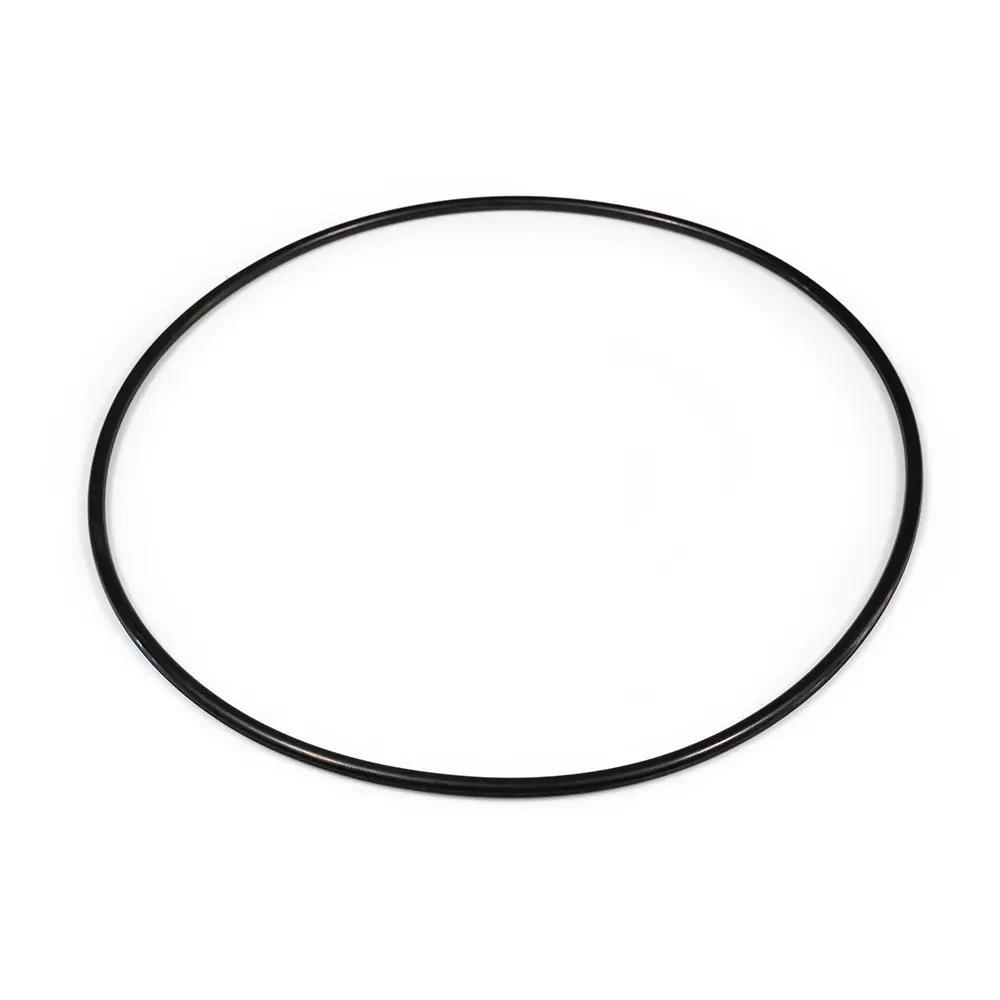
Engineering Excellence in Y Strainer Manufacturing
Suzhou Baoshida Trading Co., Ltd. leverages a dedicated engineering core to deliver precision Y strainers for demanding industrial fluid systems. Our team comprises five specialized Mold Engineers and two advanced Rubber Formula Engineers, collectively ensuring optimal performance, durability, and manufacturability. This integrated expertise allows us to address complex client specifications from material science through to final production, reducing cycle times by up to 22% while maintaining strict dimensional tolerances of ±0.05mm. Critical to our process is the elimination of flow-induced defects—such as weld lines or air traps—through advanced mold flow simulation and iterative prototyping, directly enhancing strainer structural integrity under high-pressure conditions.
Our Rubber Formula Engineers focus exclusively on elastomer performance in aggressive media. Each compound formulation undergoes rigorous validation against ASTM D2000 and ISO 3601 standards, with iterative testing for compression set, chemical resistance, and thermal stability. For Y strainers operating in oil, steam, or corrosive chemical environments, we tailor compounds across EPDM, NBR, FKM, and specialty hydrogenated nitrile (HNBR) grades. This includes optimizing cure kinetics to prevent reversion at temperatures exceeding 150°C and enhancing abrasion resistance for particulate-laden flows. Every formulation is validated through 200+ hours of accelerated aging tests, ensuring seal longevity and minimal permeation in critical filtration applications.
As a certified OEM partner, we provide end-to-end engineering ownership—from initial CAD modeling to production release. Our OEM framework includes full IP protection, traceability via batch-specific material certificates (CoC), and real-time process monitoring using SPC control charts. Clients receive comprehensive technical dossiers detailing compound recipes, mold design schematics, and validation reports, enabling seamless integration into global supply chains. This turnkey capability has supported Tier-1 industrial valve manufacturers in achieving ASME B16.34 and API 600 compliance across 15+ international projects.
Key material specifications for our Y strainer elastomer components are summarized below:
| Property | EPDM Standard Grade | NBR High-AcN Grade | FKM Specialty Grade | Test Standard |
|---|---|---|---|---|
| Hardness (Shore A) | 70 ± 5 | 75 ± 5 | 75 ± 3 | ASTM D2240 |
| Tensile Strength (MPa) | ≥15.0 | ≥18.0 | ≥14.0 | ASTM D412 |
| Elongation at Break (%) | ≥300 | ≥250 | ≥200 | ASTM D412 |
| Compression Set (70h/100°C) | ≤25% | ≤20% | ≤15% | ASTM D395 |
| Max. Continuous Temp (°C) | 135 | 120 | 200 | ISO 188 |
| Fluid Resistance (IRM 903) | Excellent | Good | Exceptional | ASTM D471 |
This engineering rigor ensures our Y strainers consistently exceed industry benchmarks for leak-tightness, fatigue life, and operational reliability. By embedding material science and precision tooling expertise at every development phase, Suzhou Baoshida delivers OEM solutions that mitigate field failure risks while optimizing total cost of ownership for fluid handling systems.
Customization Process

Technical Customization Process for Y Strainer Rubber Components
At Suzhou Baoshida Trading Co., Ltd., our approach to customizing rubber components for Y strainers is rooted in precision engineering and material science. We specialize in delivering high-performance elastomeric solutions tailored to the demanding requirements of industrial filtration systems. Our four-phase customization process ensures optimal functionality, durability, and compatibility with diverse operating environments.
The first phase, Drawing Analysis, begins with a comprehensive review of the client’s technical drawings and performance specifications. We evaluate critical dimensions, sealing surfaces, flange interfaces, and installation clearances to ensure dimensional accuracy and functional integration. Our engineering team collaborates directly with OEMs to validate tolerances, surface finishes, and mating part interactions. This stage also includes an assessment of fluid media, operating temperature, pressure differentials, and exposure to contaminants—factors that directly influence material selection and design integrity.
Following drawing validation, we proceed to Formulation Development. Leveraging our expertise in industrial rubber chemistry, we select or engineer a polymer compound that meets the operational demands of the Y strainer application. Common base materials include Nitrile (NBR), EPDM, Fluoroelastomer (FKM), and Neoprene, each offering distinct advantages in oil resistance, thermal stability, or chemical inertness. Additives such as reinforcing fillers, antioxidants, and processing aids are precisely blended to enhance mechanical strength, compression set resistance, and long-term sealing performance. All formulations are developed in accordance with ASTM, ISO, and OEM-specific material standards.
The third stage, Prototyping, allows for physical validation of the design and material. Using CNC-machined molds or rapid tooling techniques, we produce functional prototypes for dimensional inspection and performance testing. These samples undergo rigorous evaluation, including compression deflection tests, fluid immersion aging, and dynamic sealing trials under simulated service conditions. Feedback from this phase informs any necessary design or formulation refinements before committing to full-scale production.
Upon client approval, we transition to Mass Production, executed in our ISO-certified manufacturing facilities. Our production lines utilize hydraulic curing presses, automated batching systems, and inline quality monitoring to ensure consistency and traceability. Every batch undergoes hardness testing, visual inspection, and dimensional sampling per AQL standards. We support both JIT delivery models and bulk shipments, ensuring seamless integration into our clients’ assembly operations.
Below is a representative specification table for a typical Y strainer sealing element:
| Parameter | Value / Range | Test Standard |
|---|---|---|
| Material | EPDM 70 Shore A | ASTM D2000 |
| Hardness | 68–72 Shore A | ASTM D2240 |
| Tensile Strength | ≥14 MPa | ASTM D412 |
| Elongation at Break | ≥350% | ASTM D412 |
| Compression Set (24h, 70°C) | ≤20% | ASTM D395 |
| Fluid Resistance (Water/Glycol) | No cracking or swelling | ASTM D471 |
| Operating Temperature | -40°C to +135°C | ISO 1817 |
This structured, science-driven customization process enables Suzhou Baoshida to deliver reliable, high-performance rubber components for Y strainers across industries including petrochemical, HVAC, and industrial water treatment.
Contact Engineering Team

Contact Suzhou Baoshida for Precision Y-Strainer Rubber Solutions
Suzhou Baoshida Trading Co., Ltd. stands at the forefront of industrial rubber compounding and OEM manufacturing, delivering mission-critical elastomeric components for demanding filtration systems. Our expertise in Y-Strainer sealing elements ensures optimal performance in high-pressure, chemically aggressive environments where failure is not an option. With over 15 years of specialized formulation experience and ISO 9001-certified production facilities, we transform complex material science challenges into reliable, cost-effective solutions for global OEMs. Partnering with us means accessing rigorously validated rubber compounds engineered to extend service life, minimize downtime, and comply with stringent industry standards such as API 6D and ASME B16.34.
Technical excellence begins with precise material selection. Below are key specifications for our standard Y-Strainer sealing compounds, reflecting our commitment to data-driven engineering. Each formulation undergoes exhaustive validation under simulated operational conditions, including dynamic compression testing and fluid immersion protocols per ASTM D2000.
| Property | Specification | Test Standard |
|---|---|---|
| Hardness Range | 60–90 Shore A | ASTM D2240 |
| Temperature Resistance | -40°C to +150°C | ASTM D573 |
| Compression Set (70h) | ≤25% at 100°C | ASTM D395 |
| Fluid Resistance (Oil) | Volume Swell ≤15% | ASTM D471 |
| Tensile Strength | ≥12 MPa | ASTM D412 |
These values represent baseline performance for our NBR and EPDM formulations. For bespoke applications involving sour gas, steam, or aggressive solvents, our R&D team develops custom compounds with enhanced resistance profiles—validated through 72-hour immersion testing in client-specified media. We prioritize dimensional stability and low extractables to prevent contamination in sensitive hydraulic or petrochemical streams. Our OEM partnership model includes collaborative design reviews, rapid prototyping, and full traceability from raw material lot to finished component, ensuring seamless integration into your Y-Strainer assembly line.
Do not compromise on the integrity of your filtration system’s weakest link. Contact Mr. Boyce, our dedicated OEM Solutions Manager, to initiate a technical consultation. Mr. Boyce holds dual expertise in rubber polymer chemistry and industrial supply chain logistics, enabling him to address compound performance gaps while optimizing your total cost of ownership. He will coordinate our engineering team to review your Y-Strainer’s operational parameters, material compatibility requirements, and volume forecasts—delivering a tailored proposal within 72 hours. Provide your current technical dossier, failure analysis reports, or OEM drawings to receive a precision-engineered solution validated for your specific duty cycle.
Reach Mr. Boyce directly at [email protected] for urgent technical escalations or to schedule a factory audit. Specify your Y-Strainer’s nominal pipe size, operating pressure class, and fluid media in your inquiry to accelerate solution development. Suzhou Baoshida operates 24/7 technical support for active OEM partners, ensuring zero-delay responses to production-critical issues. Let us fortify your filtration systems with rubber science that performs—where specifications meet reality.
⚖️ O-Ring Weight Calculator
Estimate rubber O-ring weight (Approx).