

Rubber Seals
O-Rings
An O-ring is the cheapest part in most assemblies and the most common cause of a warranty return.
View product →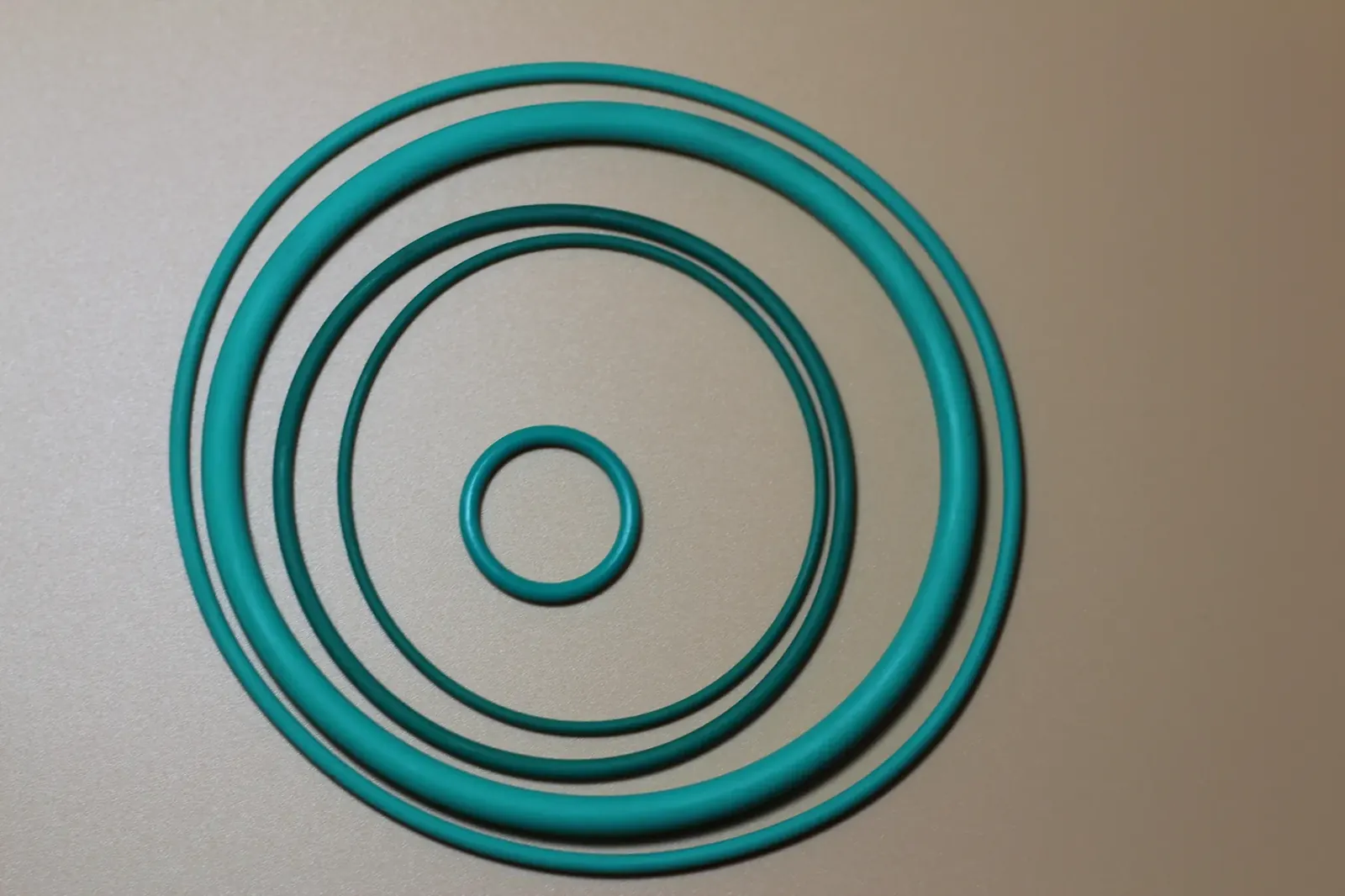
O-rings, Y seals and moulded sealing parts in twelve elastomer compounds, tooled to your size rather than substituted from stock.
Baoshida has produced sealing parts since 2007 and can mould seals from FKM, FFKM, SIR, EPDM, NBR, SBR, FVMQ, AEM/ACM, HNBR, CR, NR and CSM. Compound work and process work are done by our own formula and process engineers, so the material is selected against the medium, temperature and pressure you actually run.
An O-ring is the cheapest part in most assemblies and the most common cause of a warranty return.
View product →
We possess all the moulds for the AS568 O-ring size range, which lets us supply standard parts of the series promptly and without a tooling step.
View product →
NBR is the working compound for anything that meets oil or fuel at moderate temperature.
View product →
EPDM has good weather resistance and unusual versatility, which is why it appears across automotive, electrical and electronic products, daily necessities, sports equipment and mechanised industrial equipment, as well as in wires, cables and high voltage and ultra high voltage insulation materials.
View product →
HNBR is the compound we reach for when a nitrile seal has to stay reliable in cold medium service.
View product →
FKM and FFKM sit at the top of the seal material range and are frequently confused with each other.
View product →
FFKM O-rings exist for the applications where every other elastomer has already been ruled out.
View product →
Not every FFKM application is an O-ring.
View product →
A plain O-ring is not the right answer for every dynamic duty, which is why the Y profile exists.
View product →Vehicle circuits punish general purpose rubber. Fuel, engine oil, power steering fluid, coolant and brake systems each attack a different weakness, and a seal chosen on price alone usually fails on one of them.
In semiconductor and electronics manufacturing the seal is usually not the expensive part, but it decides whether a chamber holds and whether a process stays clean. That is why compound choice dominates the decision.
Chemical and petroleum plants replace seals on a schedule, and every unplanned replacement is downtime. The compound, not the price, sets that interval.
Appliance and consumer programmes need the rubber part, the plastic part and sometimes the tool itself to arrive together and to a fixed cosmetic standard. Splitting that across vendors is where schedules slip.
FKM, FFKM, SIR (silicone), EPDM, NBR, SBR, FVMQ, AEM/ACM, HNBR, CR, NR and CSM. Those are the twelve compounds we have formula and process experience with.
No. We hold the complete AS568 mould set, so standard imperial sizes go straight into production with no new tool.
Send the drawing or a sample. Our mould workshop designs and builds the tool, and the same team runs the first article, so the cross section is proven before series production.
Yes. Tell us the medium, the working and peak temperature, the pressure and whether there is dynamic movement, and our formula engineers will propose compounds and explain the trade offs.
Yes. A mixed schedule across several compounds is normal for us and is the main reason buyers consolidate here.
Send the drawing, size list or a photo of the existing seal by WhatsApp or email. We reply within one working day.
Send the drawing, the medium and the quantity. You will get an answer from someone who knows the process, within one working day.