
Rubber Seals
O-Rings
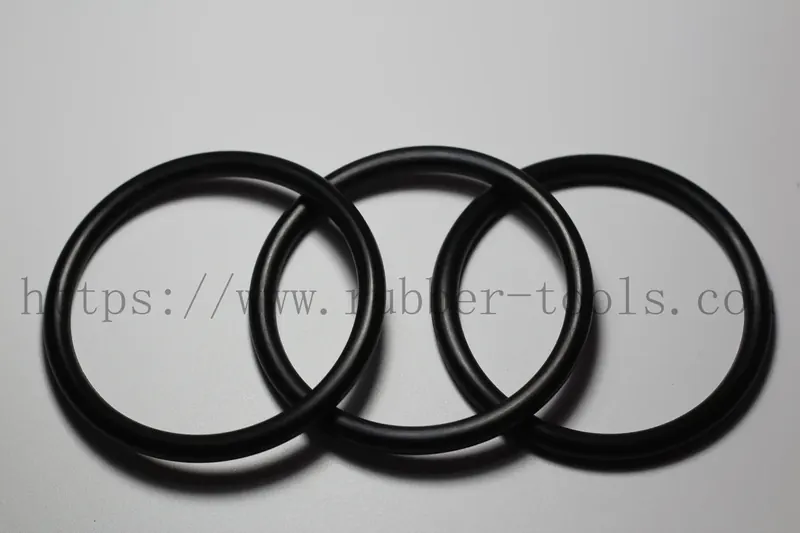
An O-ring is the cheapest part in most assemblies and the most common cause of a warranty return.
View product →
Six questions decide almost every seal material choice. Answer them before you ask for a price, and the quotation you get back will be worth comparing.
The primary medium is usually known. What sinks seals is the secondary exposure nobody mentions: the cleaning agent, the assembly lubricant, the coolant that occasionally overflows. NBR handles oils and fuels well and is the sensible default for hydrocarbon service. EPDM is excellent in water, steam and brake fluid and poor in mineral oil, which is exactly the confusion that produces swollen seals. FKM covers petroleum products, hydraulic fluids and acidic compounds. FFKM goes further, into chemistry that defeats FKM. List every fluid, not just the one on the drawing.
Buyers quote continuous temperature and forget the two extremes that matter. The peak decides whether the compound survives at all, and the cold start decides whether it is still elastic enough to seal when the machine wakes up. HNBR is what we reach for in cold medium sealing, including power steering pipes and automotive oil seals. Silicone and FVMQ hold flexibility across a wide range. Give us continuous, peak and minimum, and the shortlist usually writes itself.
A static face seal and a reciprocating rod seal are different engineering problems that happen to share a material list. Movement brings friction, heat and abrasion, and it usually changes the profile as well as the compound. Y seals and Y O-rings exist because a plain O-ring is not the right answer for every dynamic duty, and they come in hole and shaft variants for a reason.
Pressure alone is not the question. Pressure combined with extrusion gap is. A compound that is perfectly adequate at low pressure will extrude into the clearance at high pressure and shear off, and the failure looks like a material fault when it is a design one. Tell us the pressure and the hardware clearance together.
This is a commercial question disguised as a technical one. If the size is in the AS568 series, no new tooling is needed and lead time drops, because we hold the complete AS568 mould set. If it is not, the honest options are to tool it properly or to redesign the groove around a standard size. Substituting the nearest stock size is the option that comes back as a leak.
The last question sets the budget for the first five. A seal in an accessible fitting on a bench machine can be a cheap compound replaced often. The same seal inside a process chamber or a sealed gearbox is worth a compound that costs many times more, because the replacement cost is measured in downtime and contamination rather than in the price of the ring. This is why we will sometimes tell a customer that FKM is enough and FFKM is not worth it, and sometimes the reverse.
An O-ring is the cheapest part in most assemblies and the most common cause of a warranty return.
View product →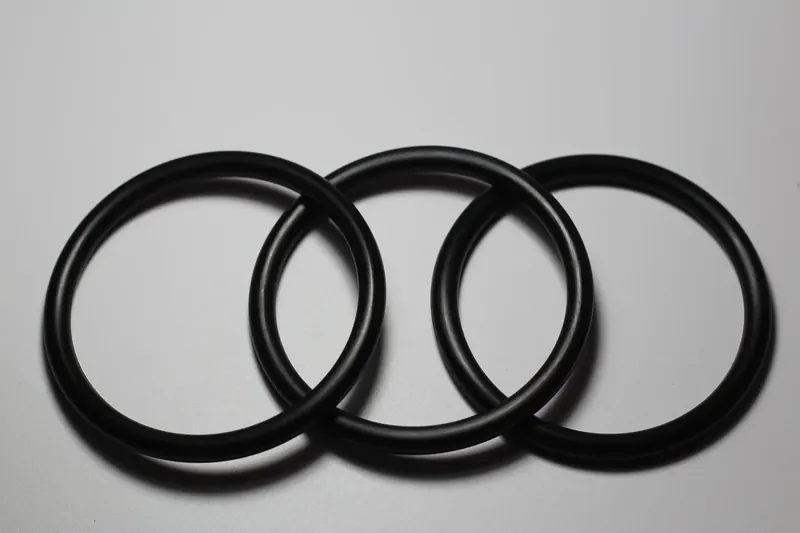
NBR is the working compound for anything that meets oil or fuel at moderate temperature.
View product →
EPDM has good weather resistance and unusual versatility, which is why it appears across automotive, electrical and electronic products, daily necessities, sports equipment and mechanised industrial equipment, as well as in wires, cables and high voltage and ultra high voltage insulation materials.
View product →
HNBR is the compound we reach for when a nitrile seal has to stay reliable in cold medium service.
View product →Yes, and it helps. We can measure the part, though identifying an unknown compound by eye is not possible, so tell us the application as well.
FKM, FFKM, SIR, EPDM, NBR, SBR, FVMQ, AEM/ACM, HNBR, CR, NR and CSM.
No. Hardness is chosen against pressure, gap and movement. A harder compound resists extrusion but seals less readily at low pressure.
Send the size, the medium and the quantity, and we will apply exactly the reasoning in this guide to your part.